


More news on this day
Track crews along northern Indiana’s South Shore Line have moved from emergency response to intensive reconstruction work after a late‑June freight derailment ripped up sections of rail and overhead power equipment near East Chicago, disrupting one of the Midwest’s key commuter links to Chicago.
Get the latest news straight to your inbox!
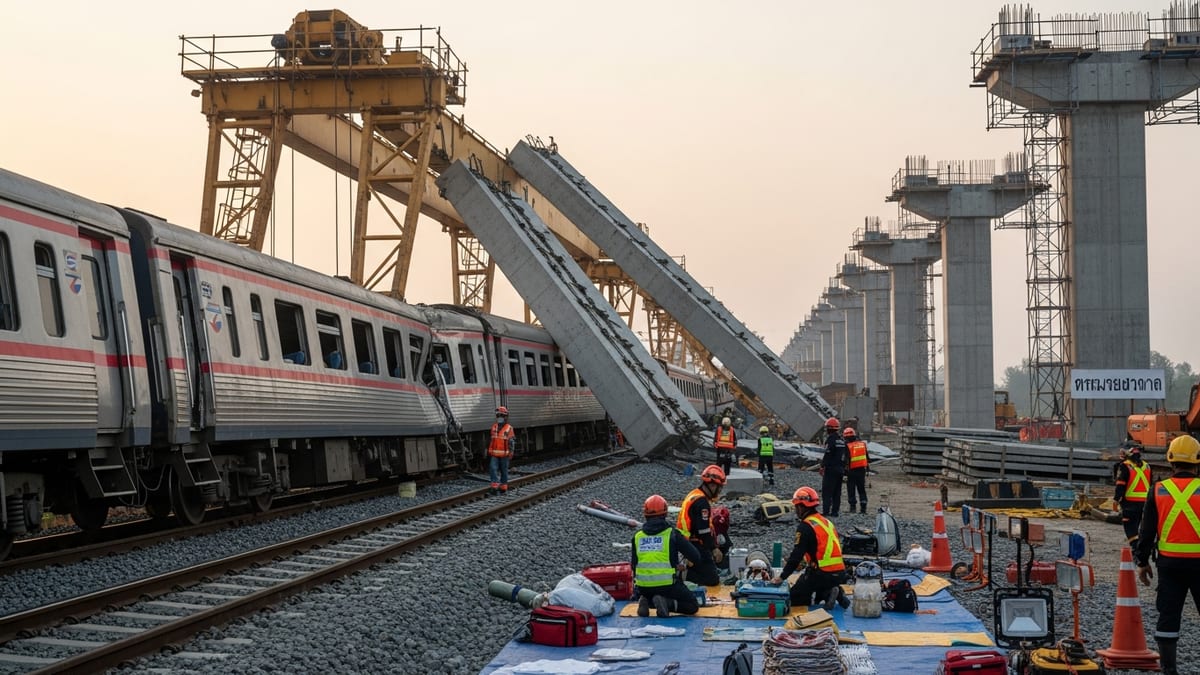
From Overnight Emergency to Intensive Repair Zone
According to published coverage, the derailment occurred on the evening of June 24, when an empty freight consist left the rails on a shared corridor used by the South Shore Line between Chicago and South Bend. Images from the scene show several freight cars jackknifed and leaning at severe angles, with rails twisted out of alignment and overhead support structures visibly damaged.
In the hours after the incident, rail operations in the area shifted into emergency mode. Publicly available information shows that South Shore commuter trains were immediately curtailed, with a patchwork of bus substitutions carrying passengers around the damaged segment. Riders heading into Chicago encountered longer journeys, irregular departure times, and crowded replacement buses as rail access through the affected stretch was shut down.
Within days, the wreck site had been transformed into a focused construction zone. Photo sequences circulated by regional media and rail observers depict heavy cranes lifting battered freight cars clear of the right of way, excavators peeling away contaminated ballast, and maintenance crews cutting back mangled rail so that new track and ties can be installed. The priority in the first phase has been to clear a safe work envelope, allowing rebuilding to proceed in parallel with limited passenger operations elsewhere on the line.
Rebuilding the Rail Bed, Track and Power Systems
Rehabilitation efforts along the South Shore corridor have centered on three intertwined tasks: reconstructing the rail bed, replacing destroyed track, and restoring the electric power system that allows commuter trains to operate. Reports indicate that contractors and in‑house maintenance teams are stripping away sections of damaged ballast and subgrade, then rebuilding the foundation to modern standards before new rail components are laid.
The South Shore Line relies on overhead wires to power its electric multiple‑unit fleet, and images from the derailment zone show gantries and support hardware bent or toppled by derailed freight cars. Publicly available information suggests that specialized line crews are working alongside track teams, installing new support structures, restringing contact wire, and testing clearances to ensure that future trains can draw power reliably at speed.
To speed reopening, work sites appear to be organized around restoring at least one through track before undertaking more cosmetic or secondary repairs. This approach mirrors recent rebuilds on other North American rail corridors where derailments have destroyed significant sections of infrastructure, with railroads first reestablishing a basic spine for traffic and then returning later to complete full double‑track capacity and ancillary structures.
Commuters Face Prolonged Disruption as Service Gradually Returns
As rebuilding progresses, South Shore riders continue to feel the ripple effects of the derailment. Coverage from regional outlets and passenger accounts indicates that the line has been operating on a modified schedule, with trains running less frequently and some departures replaced entirely by buses. Operators have leaned on a holiday‑style timetable to provide predictability while crews occupy key segments of track for reconstruction.
Bus bridges remain in place across the most heavily damaged territory, though the scope of those substitutions has gradually narrowed as sections of track are inspected and declared fit for limited use. Passengers traveling during peak periods in early July report crowded trains and longer dwell times, as dispatchers juggle work windows for construction while trying to maintain essential commuter flows into and out of Chicago.
Published service bulletins emphasize that this interim period is likely to continue until crews complete core structural repairs and safety inspections on the rebuilt line. Even once trains resume through the affected area, additional slow orders and temporary speed restrictions are expected while new track and power equipment settle under regular traffic.
Safety Reviews and Infrastructure Resilience in the Spotlight
Beyond the immediate restoration of service, the derailment has renewed attention on how shared freight and commuter corridors are managed and maintained. While formal investigations into the cause of the incident are ongoing, publicly available reports note that multiple freight cars left the rails on a busy electrified route that plays a central role in northern Indiana’s daily travel patterns.
Rail analysts observing the recovery effort point out that the South Shore corridor, like many legacy Midwestern lines, carries a mix of heavy freight trains and lighter commuter equipment over infrastructure that must withstand substantial mechanical and electrical demands. The current rebuild is providing an unplanned opportunity to install newer materials, upgraded fastenings, and revised drainage and ballast profiles intended to improve long‑term resilience.
In line with practices seen after other recent derailments in North America, the corridor is also expected to undergo a close review of inspection regimes, track geometry data, and operational rules governing freight movements over commuter territory. Any recommended changes would be implemented in stages, but the intensity of the current reconstruction highlights the cost of infrastructure failures on both daily riders and freight customers.
Next Steps for the South Shore Corridor
In the near term, the focus remains firmly on restoring dependable, all‑rail service along the South Shore Line. Recent updates from the operator and regional transportation agencies indicate that crews are working extended shifts to complete rail bed reconstruction, continuous welded rail installation, and the reenergizing of overhead lines in time for the late‑summer travel period.
Once full service resumes, attention is likely to shift to a second wave of work that may include fine‑tuning track alignment, completing cosmetic repairs to adjacent structures, and potentially integrating additional infrastructure upgrades that align with the region’s broader capacity expansion plans. For riders, the most visible change will be a gradual return to normal timetables and the disappearance of emergency bus transfers that have become a daily routine since late June.
For now, the photos emerging from the corridor capture a transitional moment: a once‑quiet stretch of track transformed into a dense forest of cranes, ballast trains, and hi‑rail trucks, with crews methodically piecing the railroad back together. As the rebuilt line comes into service, those images are likely to stand as a reminder of how quickly critical transportation links can be disrupted and how much coordinated effort is required to restore them.