


More news on this day
Commuter rail passengers on northern Indiana’s South Shore Line are being told to expect a patchwork return to service Friday, with rail operations supplemented by a temporary bus bridge around damaged infrastructure following a freight train derailment and power loss near East Chicago.
Get the latest news straight to your inbox!
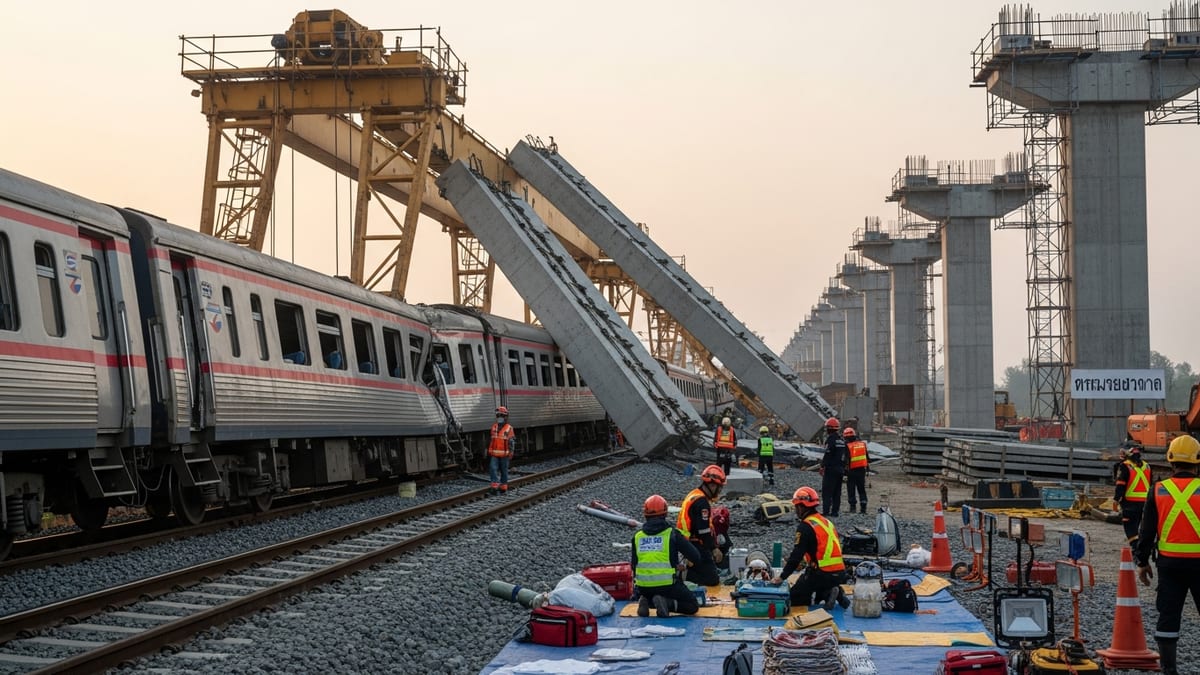
Rail shutdown follows freight derailment and power failure
According to published coverage from regional outlets, South Shore Line service was halted late Wednesday night after a freight train derailed near East Chicago and Gary, taking down overhead electrical wires and triggering a widespread power loss along a key stretch of track. The incident disrupted both the traditional Lakeshore Corridor between South Bend and Chicago and the newer Monon extension linking north Hammond with Munster and Dyer.
Publicly available information indicates that the derailment did not involve a South Shore Line passenger train, but its infrastructure and power systems were directly affected. Electric multiple units operating on the route rely on overhead wires, and the loss of power effectively stopped commuter operations for thousands of riders accustomed to using the line for daily trips into downtown Chicago.
Service alerts circulated through the railroad’s website, app and social channels advised passengers to seek alternate transportation throughout Thursday’s morning rush period. Media reports describe packed park-and-ride lots along neighboring Metra Electric lines as riders diverted to whichever services were still operating into the city.
Crews have been working along the affected segment to remove derailed freight cars and repair damaged wire supports. As of Thursday afternoon, reports suggested that structural inspections were still underway, with a full accounting of the damage to poles, crossbeams and signal equipment not yet complete.
Limited rail service set to resume, with bus bridge filling gap
By Thursday, new advisories indicated that the South Shore Line was preparing to restore a portion of its rail operations beginning Friday morning, while acknowledging that normal service would not be possible immediately. According to coverage from Chicago-area broadcasters, the plan calls for trains to resume on the undamaged sections of the Lakeshore Corridor, paired with a temporary bus bridge through the hardest-hit area around East Chicago and Gary.
The interim pattern described in those reports envisions trains operating from South Bend and points in northwest Indiana up to a designated transfer point east of the downed wires. Passengers would then be directed to board buses to cross the outage zone, reconnecting with rail service closer to Chicago at stations where power and overhead infrastructure remain intact.
Service advisories reviewed Thursday mention that the temporary bus link is intended to run throughout the day on Friday, covering both peak and off-peak periods as crews continue repairs. Passengers are being urged to allow extra time for connections, as boarding and alighting between buses and trains can lengthen overall travel times, especially during peak commuter surges.
Reports indicate that existing cross-acceptance arrangements with Metra Electric will remain in place during the transition, providing an additional fallback option for riders who prefer to avoid the bus bridge or who are closer to Chicago’s South Side than to South Shore Line stations in northwest Indiana.
Monon Corridor recovery lags behind mainline
Even as the main Lakeshore Corridor inches toward partial restoration, publicly available statements suggest that service along the shorter Monon Corridor may take longer to normalize. The spur, which opened earlier in 2026 to connect north Hammond with Munster and Dyer, depends on shared infrastructure near the derailment site for both power and access to the broader network.
Some regional reports on Thursday pointed to a phased approach in which priority is being given to restoring at least limited through service between South Bend and Chicago. Under that model, Monon trains may initially operate on a reduced schedule or remain suspended during the earliest stages of the Friday restart, with additional departures added only as capacity and infrastructure conditions allow.
The imbalance underscores how a localized infrastructure failure can ripple across newer extensions. While the Monon segment itself may not have experienced direct track damage, its dependence on junctions, substations and overhead power in the East Chicago area leaves it vulnerable whenever disruptions occur there.
Riders in Munster and Dyer are being encouraged through public advisories and local media coverage to monitor alerts closely, as timetables for that corridor could shift day by day while crews work through the backlog of repairs and inspections.
Commuter impact and guidance for travelers
For regular South Shore Line users, the derailment and power loss have translated into two days of uncertainty and, for some, lengthy detours. Accounts compiled by local newsrooms describe commuters turning to carpools, highway driving and alternative rail lines to reach downtown Chicago on Thursday, with many facing heavier traffic and higher parking costs than they would typically encounter when using the train.
Travel-planning advice released through regional coverage emphasizes that Friday’s partial restart should not be viewed as a full return to normal. Passengers are being urged to confirm the latest schedules before heading to the station, to build in a margin of extra time for the bus transfer, and to consider earlier departures if they must arrive in Chicago by a fixed hour.
Riders boarding at intermediate Indiana stations are being advised to pay close attention to signage and announcements directing them toward bus loading areas, which may differ from usual train boarding platforms. Some stations may see temporary crowding around the transfer points as passengers adjust to the new pattern.
Travelers bound for Chicago’s Millennium Station are also being reminded, through published alerts, that Metra Electric offers all-day service into the same terminal from several South Side and south suburban locations. For some riders, driving directly to a Metra park-and-ride lot and bypassing the bus bridge may offer a more predictable trip while South Shore Line repairs continue.
Ongoing repairs and outlook for full restoration
Transportation analysts watching the situation note that incidents combining derailment damage with extended power loss can be among the most complex to resolve, particularly on electrified commuter lines. Every span of overhead wire must be inspected and tensioned correctly, while substations and signal systems require testing before trains can safely resume normal speeds.
Based on the information released so far, the South Shore Line appears to be adopting a step-by-step restoration strategy, starting with limited through service supported by bus connections and gradually shifting back to full rail operations as crews complete work in the affected corridor. The temporary bus bridge is expected to function as the primary workaround at least through the early stages of Friday’s service, with updates to follow as conditions change.
Regional reporting suggests that riders may experience some level of disruption into the weekend, even if the bulk of the infrastructure is restored relatively quickly. Timetables could be adjusted on short notice to accommodate work windows for final repairs or inspections, especially during traditionally lighter mid-day and late-evening periods.
Travelers planning near-term trips along the South Shore Line are being encouraged to check the latest advisories on the morning of departure, to remain flexible in their choice of route, and to expect that the mix of trains and buses may continue until the damaged power and signaling infrastructure around East Chicago is fully repaired and tested.