


More news on this day
Commuter rail service on the South Shore Line between Chicago and northern Indiana was thrown into disarray after a freight train derailment and resulting power loss near East Chicago shut down operations, stranding thousands of riders and forcing emergency changes to Thursday’s travel plans.
Get the latest news straight to your inbox!
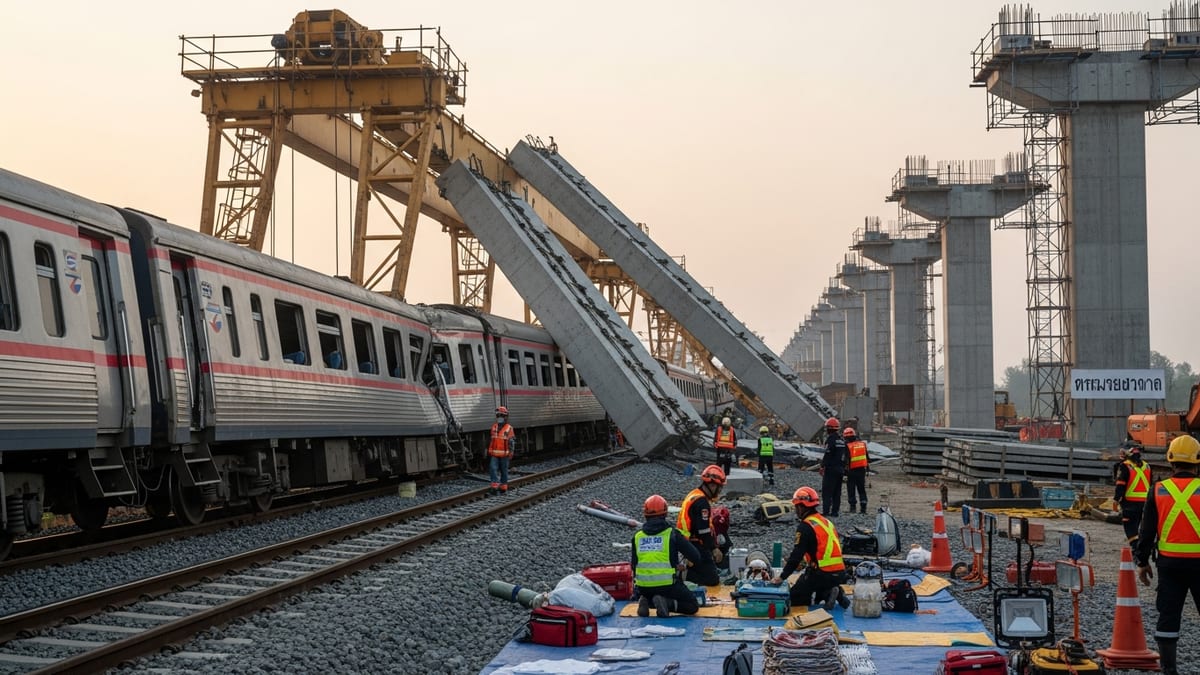
Derailment near East Chicago triggers full shutdown
Publicly available information indicates that the incident began around 9:30 p.m. on Wednesday, June 24, when a freight train derailed along the South Shore Line corridor near East Chicago and the Gary Metro area in northwest Indiana. Coverage from regional outlets describes rail cars tipped or leaning near the tracks, close to the Indiana Toll Road, in an area that carries both freight and electric commuter trains.
The derailment caused a significant power loss along the corridor, cutting electricity to the overhead wires that supply the South Shore’s electric trains. According to published coverage, the loss of power quickly forced a shutdown of all remaining South Shore Line service Wednesday night as crews moved in to assess damage to infrastructure, including catenary lines and communication systems.
Initial advisories issued late Wednesday indicated that the railroad would suspend all trains for the rest of the evening. Passengers already en route were delayed or forced to seek alternative connections, while those planning late-night trips between Chicago and Indiana were advised to postpone or find other transport.
The stoppage affected both the long-established Lakeshore route between South Bend and Chicago and the newer Monon Corridor extension into Hammond, Munster and Dyer, disrupting a key commuter artery for the Chicago region.
Morning commute disruptions for Chicago–Indiana travelers
By early Thursday, June 25, service advisories and local media reports confirmed that South Shore Line trains would not operate for the morning rush hour on the portions of the system affected by the derailment and power failure. Notices urged commuters to plan for alternate ways of reaching downtown Chicago, including driving, carpooling or using other rail services where available.
Reports indicate that the complete halt in Lakeshore service left regular riders from South Bend, Michigan City and other Indiana communities without their usual connection into the city. Many travelers faced longer journeys on crowded highways, as regional interstates and toll roads absorbed additional traffic from displaced rail users.
The shutdown also created uncertainty for travelers who rely on the South Shore Line to reach Chicago airports and major attractions, as well as for visitors heading into Indiana’s lakeshore communities. With no clear early timeline for full restoration, riders had to monitor updates throughout the morning and adjust work schedules or appointments.
Published coverage notes that, similar to other recent freight-related incidents around the country, the derailment underscored how a single event on shared infrastructure can ripple quickly through a wider regional transport network, upending commuter routines with little warning.
Partial restoration focused on Monon extension
By Thursday afternoon, the picture for travelers began to improve slightly. Updated service notices reported that crews had made enough progress to allow some trains to resume on the Monon Corridor, the eight-mile southern extension that links north Hammond to Munster and Dyer and opened earlier in 2026.
According to regional broadcast reports, the first eastbound Monon Corridor train from Chicago’s Millennium Station was scheduled to depart in the mid-afternoon, followed by a limited set of eastbound and westbound runs aimed at covering the evening commute. Additional extra trains were planned later in the night, making all Monon stops to provide more options for riders who normally use the suspended Lakeshore service.
Despite this partial restart, the mainline Lakeshore Corridor remained out of service through Thursday evening, leaving the core South Bend to Chicago route without trains. Travelers from communities along Lake Michigan continued to rely on cars or buses while repair work progressed near the derailment site.
The staggered restoration highlighted the complexity of bringing different sections of an electrified commuter network back online after damage to power and communication systems, even when the derailment itself involves freight equipment rather than passenger coaches.
Repair efforts, alternative routes and traveler options
Through Thursday, publicly available information shows that railroad crews and utility workers focused on restoring downed power lines, replacing damaged poles and repairing fiber optic cables that support signaling and communication along the affected corridor. Images shared in local coverage depict heavy equipment, bucket trucks and work teams concentrated around the derailment zone.
Service alerts indicate that another regional commuter operator, Metra, agreed to honor South Shore Line tickets on its Electric District trains, giving some Indiana-based travelers a way to reach Chicago by combining driving or bus connections with Metra service on the Illinois side of the state line. Riders were urged to check schedules carefully and allow extra time due to higher passenger volumes.
For visitors and occasional travelers, the disruption served as a reminder of the value of flexible planning, especially during summer storm season in the Midwest, when severe weather can precede or contribute to infrastructure incidents. Many travel advisories recommend building extra time into itineraries, keeping alternative routes in mind and monitoring local news and operator alerts when moving between Chicago and nearby states.
While no injuries or hazardous material releases were reported in early coverage of the East Chicago derailment, the extended power loss and shutdown of a major commuter line illustrated how non-injury freight events can still carry substantial consequences for regional mobility, tourism and daily life.
Ongoing uncertainty for full South Shore service
As of late Thursday, the timeframe for a complete reopening of the South Shore Line’s Lakeshore Corridor remained uncertain. Service updates emphasized that crews were working to restore normal operations as quickly as possible, but the extent of electrical and communication damage meant that inspections, testing and phased reactivation were likely before all trains could resume.
Travelers planning journeys between South Bend and Chicago over the coming days were advised, through publicly available notices and local coverage, to continue checking for the latest service information, be prepared for potential bus bridges or temporary schedules, and consider backup plans if rail options remained limited.
For tourism operators and hospitality businesses along the Indiana lakeshore, the interruption came at the start of the busy summer period, when reliable train links from Chicago are especially important. Any prolonged suspension on the main line could influence visitor numbers, same-day excursions and weekend stays until full service is back in place.
As investigations into the cause of the freight derailment proceed and infrastructure repairs continue, the South Shore Line disruption near East Chicago is likely to feed into a broader regional conversation about rail resilience, shared freight and passenger corridors, and the contingency planning needed to keep people moving when a key commuter route suddenly goes dark.