


More news on this day
Passengers using Southern-branded services across Sussex and south London face longer weekend journeys in the coming weeks, as a series of planned engineering closures and diversions disrupt some of the busiest commuter and leisure routes into London Victoria and across the Brighton Main Line.
Get the latest news straight to your inbox!
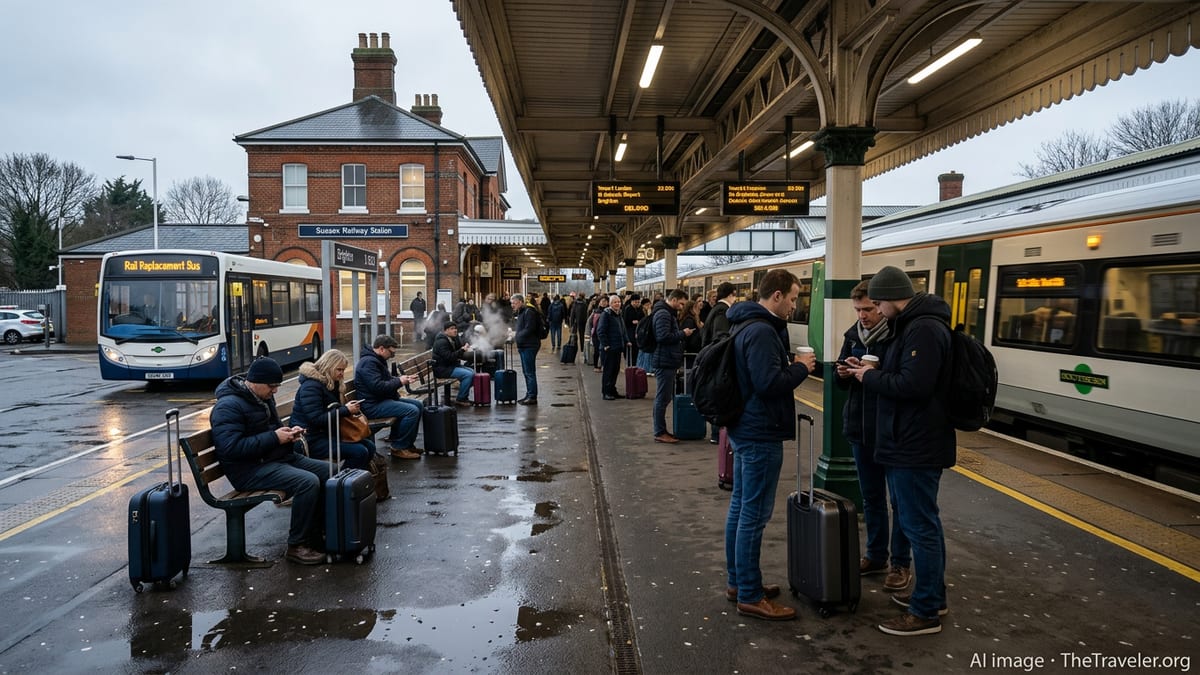
Major routes into London affected by weekend works
Publicly available engineering schedules show that key sections of the Southern network are being taken out of service on selected weekends, affecting links between London Victoria and coastal destinations such as Brighton, Portsmouth and Eastbourne. National Rail’s engineering works planner lists closures and reduced services around London Victoria on the weekend of 12 to 13 September 2026, including alterations to trains between the capital and Portsmouth Harbour, with replacement buses in operation on part of the route.
Alongside these targeted closures, the Brighton Main Line, the core artery carrying Southern, Thameslink and Gatwick Express services between London and the south coast, continues to see repeated weekend shutdowns for upgrade work. Southern’s own service-update pages highlight a programme of engineering on the Brighton Main Line, with full line blocks on specific Saturdays and Sundays and advance notice of a more extensive nine-day closure over February half-term in 2027. The operator indicates that such works cannot be completed within standard overnight maintenance windows and therefore require longer daytime stoppages.
Network Rail describes these schemes as essential to replace life-expired signalling, track and junction layouts on one of the country’s most intensively used mixed-traffic corridors. The Brighton Main Line carries commuters, leisure travellers and air passengers to and from Gatwick Airport, and has long been identified as a performance bottleneck where infrastructure failures can have rapid, network-wide impacts.
Passengers are being advised through online journey planners to check their routes carefully before travel, as trains that do run may start and terminate at different stations, call at fewer intermediate stops, or follow slower diversionary routes via Redhill and other suburban lines.
Longer journeys, diversions and bus replacements
The practical effect for many Southern customers is extra time added to weekend trips that would normally be direct and relatively fast. During previous and upcoming Brighton Main Line blockades, published travel advice shows London to Brighton services diverted away from their usual fast route, instead running via Hove, Worthing, Littlehampton and Horsham before rejoining the main line towards the capital. National Rail journey planners indicate that such diversions can add 30 minutes or more to typical end-to-end journey times.
In other cases, direct rail links are replaced entirely by bus services. Recent disruption notices on National Rail’s site for the corridor between Gatwick Airport, East Croydon and south London highlight instances where engineering overruns or planned works have required rail-replacement buses and route closures, temporarily breaking the through connection between Sussex and central London. Travellers heading to events on the south coast or making airport transfers at Gatwick have reported having to use a combination of replacement buses, slower stopping services and alternative operators to complete journeys.
Southern’s travel updates emphasise that timetables may also be recast around the works, with some weekday off-peak trains between Eastbourne, Ore and London Victoria already reduced and weekend patterns altered. While core services are generally maintained, the published plans note that frequencies can be lower, last trains may depart earlier, and connections that are normally timed to be convenient may involve longer waits.
The complexity of the Southern and Thameslink network means diversions can send trains across unfamiliar routes through south London suburbs, often subject to lower line speeds and more congestion. Rail community discussions frequently describe diverted services running at reduced speed behind stopping trains, contributing further to extended journey times even when no formal bus replacement is in place.
Part of a wider programme of upgrades and public ownership shift
The wave of weekend works is taking place against the backdrop of a broader upgrade and governance shift on the network. Network Rail’s information on planned works sets out a national programme of resignalling, track renewals and junction remodelling, with particular focus on the congested approaches to London termini. For the Southern corridor, the London Victoria and South London resignalling programme is highlighted as a major scheme intended to modernise signalling control and improve reliability into one of Britain’s busiest stations.
These upgrades coincide with a structural change in how Southern and related routes are run. Government announcements earlier in 2026 confirmed that Govia Thameslink Railway’s services, including Southern, Thameslink, Great Northern and Gatwick Express, have transferred into public ownership under a state-run operator. Official statements describe the aim of this move as delivering more accountable and reliable services, while maintaining the extensive timetable that underpins economic activity across the South East.
Policy documents outlining the history of the Thameslink, Southern and Great Northern franchise note that the contract was originally designed with long-term engineering disruption in mind, anticipating years of work around London’s core rail corridors. The current pattern of frequent weekend closures and diversions can be seen as a continuation of that strategy, concentrating major works into defined periods in order to unlock capacity and performance benefits over the longer term.
Network Rail’s national overview of planned works stresses that engineering possessions are usually scheduled for times when overall demand is lower, such as overnight or at weekends, though it acknowledges that leisure travel and events traffic can still be heavily affected. The balance between minimising disruption to weekday commuters and enabling large-scale renewals remains a recurring theme in industry planning documents.
Advice for passengers navigating disrupted weekends
For travellers, the immediate priority is understanding when and where the weekend closures will bite. National Rail’s engineering works tool and Southern’s own service-update pages both provide date-specific information on line closures, replacement buses and diverted services, typically loaded several weeks ahead for major blockades and updated as plans are refined. Rail planners recommend that passengers re-check details closer to departure in case of late changes or overrunning works.
Published guidance suggests allowing extra time for connections, particularly at hub stations such as Gatwick Airport, East Croydon and Clapham Junction, where altered stopping patterns may affect cross-platform transfers. Travellers heading to airports or time-critical events are encouraged in public-facing materials to consider earlier departures than usual or, where available, alternative routes via other operators.
Recent user reports on public forums underline the importance of checking both outward and return journeys, as work patterns can differ between Saturday and Sunday and late-evening trains may be more heavily affected. Some passengers have opted for longer but fully rail-based diversions via coastal routes or alternative London terminals to avoid bus legs, while others have chosen intercity coach services when Brighton Main Line closures have severed direct rail access to the capital.
Industry information indicates that the current wave of weekend engineering on Southern’s network is unlikely to be the last, with further line blocks already announced for autumn 2026 and major closures planned for 2027. For regular users of the Sussex and south London routes, disrupted weekends look set to remain a recurring feature as the railway trades short-term inconvenience for long-term resilience improvements.
National Rail engineering works planner
Southern: Brighton Main Line engineering work