


More news on this day
As airports fill up again, analysts increasingly point to one dominant cause of gridlock at airline counters: travelers reaching the check in desk with baggage or documents that are not ready to be processed.
Get the latest news straight to your inbox!
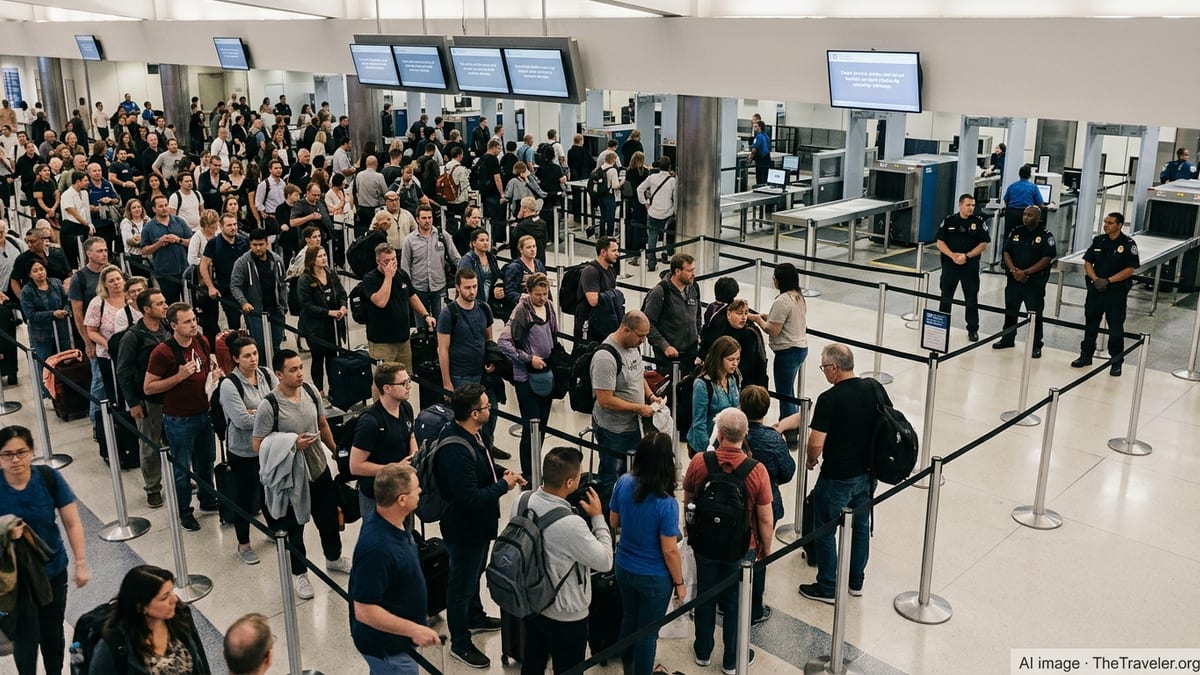
Why unprepared bags and documents create bottlenecks
Several strands of publicly available data suggest that the single biggest source of delay at check in is not airline IT glitches or staff shortages, but time spent fixing baggage and documentation problems once a traveler reaches the counter. Industry guidance describes how agents must verify passports, visas, health certificates and other paperwork while also weighing and tagging bags, tasks that become significantly slower when a passenger has not checked rules in advance or arrives with incomplete documents.
The International Air Transport Association notes that baggage and document checks are among the most time consuming parts of the departure process, particularly when different countries apply varying entry, health and visa rules that must be confirmed manually at the desk. When a passenger’s visa details are unclear, Covid-era health rules remain in place for a destination, or passport validity is borderline, staff must step away from fast routine processing and instead confirm requirements line by line, often involving supervisors and separate systems.
At the same time, bag handling issues are repeatedly cited in operational statistics as a driver of departure delays, from time spent reprinting tags to resolving overweight or oversize luggage at the counter. Each exception requires additional payment processing, repacking or even rerouting baggage, which can add several minutes per passenger and quickly ripple into longer queues during peak periods.
Airport and airline reports also show that late check in associated with baggage problems can contribute indirectly to wider schedule disruptions. Guidance from regulators explains that baggage loading and related ramp services are part of the “air carrier” causes of delay, meaning that when check in takes longer than planned, those minutes can cascade into later boarding, missed departure slots and knock-on delays for subsequent flights.
Overweight luggage: a preventable problem with real consequences
Excess baggage is one of the most common triggers for extended conversations at the counter. While weight and size limits vary, IATA’s passenger baggage information notes that airlines apply strict thresholds for both checked and cabin bags, sometimes starting as low as 5 kilograms for certain carry on items. When a suitcase exceeds the allowance, travelers may be asked to pay additional fees, remove items or redistribute weight between bags, all of which take time in an already crowded check in area.
These individual baggage issues have a broader operational impact. International delay coding standards used by airlines include specific categories for weight and balance problems, baggage and cargo loading issues and through check in errors where passengers and their bags are not correctly matched. Each of these can translate into delayed departure if ramp teams must reopen holds to remove items or recheck tags because check in took place too late for normal processing.
There are also implications for what happens after a flight leaves. U.S. Department of Transportation guidance on mishandled baggage notes that delays and missed connections are more likely when bags move between multiple flights and carriers, especially if they are checked in late or require manual intervention. For passengers, that can mean arriving on time while a suitcase lags behind, or waiting for compensation and delivery when a bag is considered significantly delayed.
Travel experts therefore recommend treating airline baggage limits as hard rules rather than flexible suggestions. Checking weight and dimensions at home, using a simple luggage scale and measuring tape, can eliminate many last minute surprises. For travelers connecting across more than one airline, reviewing each carrier’s policy before leaving for the airport reduces the risk that a bag accepted on the first segment is refused or repriced on the second.
Document checks and visa rules that stall the line
Documentation checks are the other major contributor to slowdowns at the check in counter. Analysis from aviation bodies indicates that verifying passports, visas and other entry requirements has grown more complex as countries adjust digital entry forms, transit rules and health documentation. For staff, every case that falls outside straightforward rules adds minutes of manual processing to an otherwise predictable queue.
International guidance describes how agents must confirm that each passenger meets the entry criteria of the destination, including visa validity, passport expiration buffers and, in some cases, proof of onward travel or health certificates. If anything is unclear, the process can involve contacting immigration databases, consulting internal guidance or asking supervisors to review documents. When this happens repeatedly during busy departure waves, what should be a continuous flow of passengers can instead become a stop start process with visible bottlenecks.
Travelers themselves sometimes underestimate the impact of small discrepancies. A passport that expires within a few months of travel, a missing digital travel authorization or an unconfirmed transit visa can all prompt additional checks. Airlines may deny boarding if requirements are not met, because they are often liable for the cost of returning passengers who are refused entry on arrival. As a result, frontline staff are expected to resolve any doubt before issuing a boarding pass, which can further extend interaction times at the desk.
Published advice from government and airline portals consistently points travelers toward advance verification tools to reduce this friction. Many carriers provide online eligibility checkers for visas and entry rules, while some airports and national authorities maintain travel information sites that are updated as regulations change. Using these resources before departure reduces the chance of discovering a problem only when a passport is on the counter and a line of people is waiting behind.
How to prepare before you reach the counter
Although much of the airport experience feels outside individual control, preparation can significantly cut the risk of being the passenger who holds up the line. Transportation agencies recommend arriving early enough to absorb unexpected issues at parking, check in and security, with some recent TSA travel guidance advising travelers to allow at least two hours before domestic departures to complete formalities such as baggage drop and document checks.
Well before that, passengers can take simple steps at home to speed their way through the airport. Reviewing baggage rules on the airline’s website, measuring luggage and weighing each bag can help ensure that check in becomes a quick tag and go interaction rather than a negotiation over fees and repacking on the floor. Keeping essential items, medications and electronics in carry on bags that comply with size and safety rules also reduces stress if checked luggage needs to be adjusted or delayed.
Documentation deserves similar attention. Travelers are urged to confirm that their passport meets validity requirements for their destination, secure any necessary visas or digital travel authorizations and check whether transit airports impose additional conditions. Printing or downloading confirmations, including proof of onward travel or accommodation where required, can help resolve questions quickly if agents need to verify details.
Finally, passengers can make use of self service technology where available. Many airports now offer online or kiosk check in combined with automated bag drops, systems that industry reports say can reduce waiting times when passengers arrive with compliant luggage and complete documentation. Used properly, these tools allow travelers to move from the terminal entrance to the security checkpoint with minimal time spent at a traditional counter, even during busy travel periods.