


More news on this day
Southport’s Metro-North train station in Fairfield, Connecticut, was temporarily closed on Thursday afternoon after what police described as an isolated incident, prompting short-term service disruptions and delays for New Haven Line riders.
Get the latest news straight to your inbox!
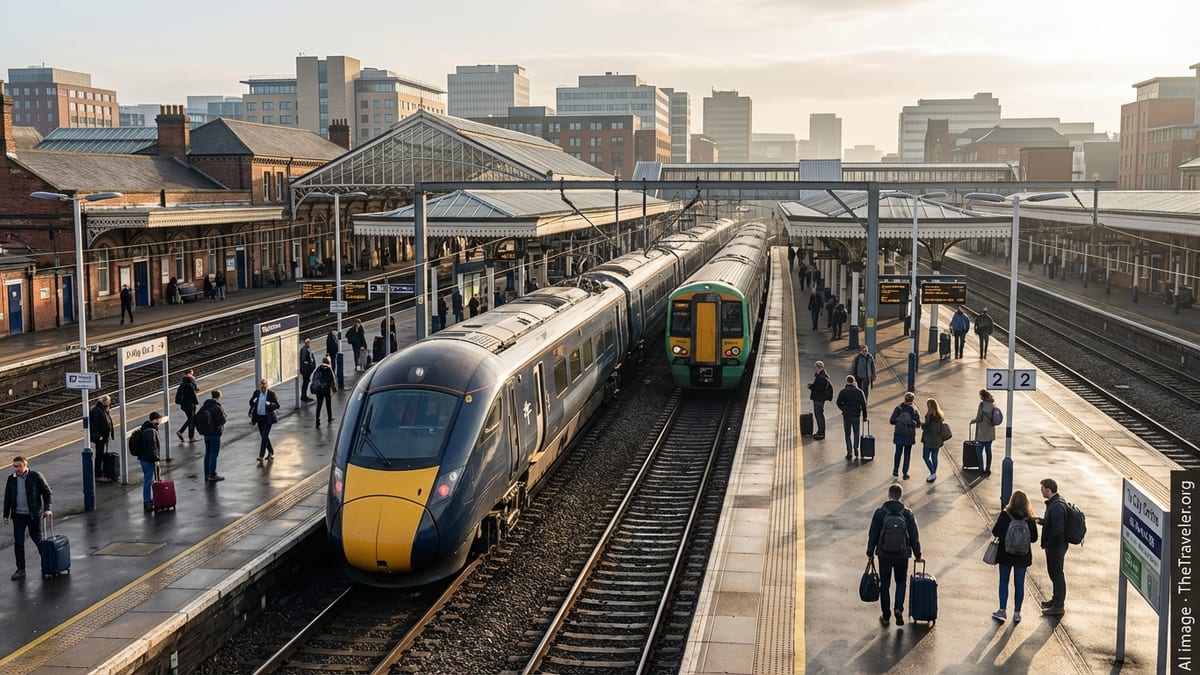
Brief closure at historic Fairfield commuter hub
Reports indicate the closure affected Southport station on the Metro-North New Haven Line, a small but heavily used stop that serves commuters between Fairfield, Bridgeport and New York City. Publicly available information shows police activity centered in the station area, with rail customers advised to avoid the site while the incident was addressed.
According to published coverage, the situation began in the afternoon period, typically a busy time for workers and students returning to Fairfield’s coastal neighborhoods. Train movements through the immediate area were adjusted while personnel responded, and the station itself was temporarily inaccessible to the public.
By later in the day, rail service had resumed normal operations, and local reports noted that activity at the station had largely returned to routine commuter patterns. No extended disruption to the broader New Haven Line was reported, and neighboring stations continued to serve travelers.
Police describe matter as isolated with no ongoing threat
Initial public statements from Fairfield law enforcement characterized the event as an isolated incident. Based on the language used in those statements, there was no indication of a broader threat to the surrounding community or the rail network.
Published accounts indicate that the designation of the incident as isolated helped limit public concern at a time when any disruption involving trains can quickly attract regional attention. Descriptions in regional news outlets emphasized that the situation was contained to the station area and resolved within a relatively compact time frame.
Further details regarding the individuals involved or the specific nature of the incident had not been fully disclosed in early reports. Coverage instead focused on the operational impacts to Southport station, the police presence in the vicinity and the message that the incident did not represent an ongoing safety risk.
Impacts on Metro-North riders and local travel patterns
Service advisories for the New Haven Line indicated that some trains were affected as the response unfolded at Southport. In many recent events along the corridor, rail operators have temporarily bypassed affected stops or held trains outside an active scene, and available information suggests a similar pattern occurred in Fairfield on Thursday.
Passengers traveling to or from Southport faced delays and, in some cases, the need to use neighboring stations such as Fairfield, Fairfield Metro or Westport. Local coverage noted that the closure occurred during a time when commuters are particularly dependent on predictable schedules, heightening frustration even during a relatively short disruption.
Despite those challenges, the limited scope of the issue and its characterization as isolated meant that broader road closures and townwide disruptions did not materialize. Traffic on nearby streets and coastal routes remained mostly routine, aside from temporary congestion linked to the increased presence of emergency and rail personnel around the station.
Safety at smaller suburban stations under renewed focus
The brief closure at Southport has renewed attention on safety and emergency readiness at smaller suburban stations that line the New Haven Line. Public records and earlier incidents elsewhere along the corridor illustrate that even modest, historic stations can periodically become focal points for medical situations, police investigations or infrastructure problems.
Transportation specialists who study commuter rail operations often note that stations like Southport combine close proximity to residential neighborhoods with steady passenger traffic across relatively confined platforms and parking areas. This mix can complicate responses when unusual activity arises, requiring coordinated efforts between local police, rail agencies and, when necessary, state-level partners.
In Fairfield, the incident has prompted informal discussion among riders and residents about communication practices, including how quickly alerts are pushed out through town notification systems, media outlets and rail service advisories. While early reports suggest information about the isolated nature of the event was shared relatively quickly, the episode underscores how critical clear messaging can be in maintaining public confidence.
Southport’s role in Fairfield’s rail network
Southport station, located in Fairfield’s coastal village of the same name, plays a distinct role within the local transportation network. Public documents describe the stop as a historic two-platform station that serves both eastbound and westbound New Haven Line trains, connecting the surrounding neighborhoods to employment centers in Stamford, New Haven and New York City.
The station’s smaller footprint, relative to nearby Fairfield and Fairfield Metro, often makes it a convenient choice for residents who prefer calmer platforms and easier parking. At the same time, that scale means any temporary closure can quickly displace a notable share of local riders, who must then re-route through busier hubs or adjust travel times.
As operations normalize following Thursday’s isolated incident, attention is likely to remain on how rapidly service was restored and whether any procedural adjustments emerge from the review that typically follows such episodes. For travelers who rely on Southport’s compact, village setting as their daily rail gateway, the station’s swift return to regular service offers reassurance that the disruption was limited in scope and duration.