


More news on this day
Fire department activity near Southport station in Fairfield, Connecticut, led to delays on Metro-North’s New Haven Line on Thursday, disrupting peak-period trains and forcing many riders to seek alternative routes along the busy coastal corridor.
Get the latest news straight to your inbox!
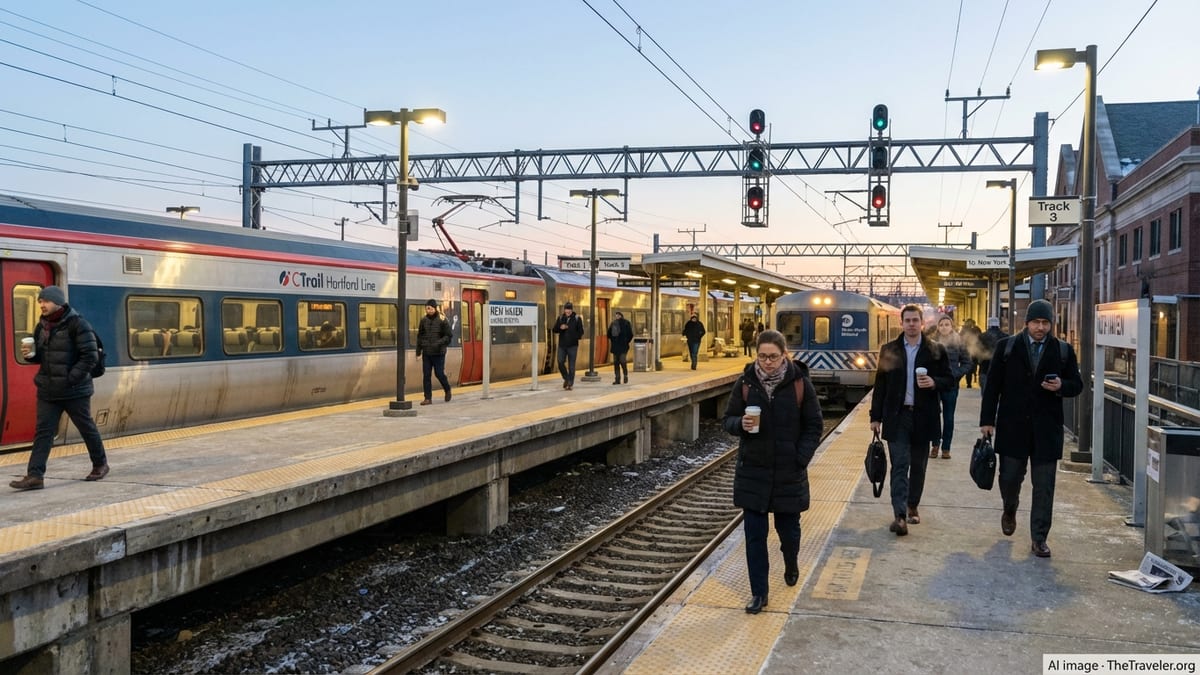
Service disrupted around Southport on New Haven Line
New Haven Line trains experienced significant delays after a fire department response in the vicinity of the Southport station, a small but heavily used stop between Fairfield and Bridgeport on the main electrified route linking New York and New Haven. The incident prompted temporary operating restrictions while emergency crews worked near the right of way, affecting both eastbound and westbound traffic.
According to publicly available service alerts and rider reports, trains were held outside the area or moved at reduced speed, leading to late arrivals and crowded conditions on several peak and off-peak runs. Some trains skipped intermediate stops to recover time, while others accumulated backlog as dispatchers worked to move equipment safely past the scene.
Initial indications suggested that the emergency response did not involve a train on the New Haven Line itself but required access to locations close enough to the tracks that railroad power and movements had to be carefully managed. Similar restrictions have been documented in past incidents in the Southport corridor when emergency vehicles or fire equipment needed clearances near the catenary and adjacent infrastructure.
The disruption unfolded along one of the most constrained parts of the New Haven Line, where a mix of Metro-North commuter trains, Amtrak services and freight traffic share limited track capacity. Any unplanned stoppage in this segment can create a ripple of knock-on delays that travel far beyond the original problem point.
Delays compound on a critical regional corridor
The New Haven Line is the busiest commuter rail segment in the United States and a core link in the Northeast Corridor. When service slows around Southport, passengers on through trains between New York City, Stamford, Bridgeport and New Haven often feel the effects for hours, even after an incident is cleared. Thursday’s fire department activity followed a pattern that has been seen in previous years, when infrastructure problems and external emergencies in the same stretch caused delays of up to an hour.
Recent performance summaries for the line have highlighted how incidents in coastal Connecticut, including overhead wire problems and right-of-way access for emergency responders, can quickly undermine the schedule. When a single track or interlocking is taken out of full service between Norwalk and Bridgeport, trains may need to wait for opposing movements or operate in a single-track pattern through the affected zone, sharply reducing capacity.
Riders sharing information on social platforms and transit-focused forums described crowded platforms and limited information as trains stacked up around Fairfield and Westport. Many noted that once trains began moving again, they frequently bypassed one or more local stations to restore overall timetable spacing, a common strategy when dispatchers attempt to prevent cascading delays during the recovery phase.
The situation underscored the sensitivity of the New Haven Line to any emergency response close to the tracks. Even a relatively localized event near Southport can quickly lead to wider disruption at hubs such as Stamford and New Haven, where trains must be re slotted into crowded station approaches and yard leads.
Emergency responses and rail safety protocols
Fire department activity near active railroad tracks typically triggers strict safety procedures. Publicly available railroad operating manuals for the Northeast Corridor and related lines describe how power to overhead wires can be reduced or shut off when emergency crews need to work near the tracks, especially if there is any possibility of equipment coming into contact with electrified infrastructure.
In some documented incidents on other regional rail networks, fire equipment parked close to tracks has required trains to slow significantly or stop altogether while responders worked. When this occurs on a multi track main line, dispatchers may be able to reroute some trains around the affected area, but that option depends on the exact location of the incident, the presence of crossovers, and whether multiple tracks remain available.
Reports on Thursday’s disruption around Southport indicated that the response was concentrated near the station area, a location where the right of way passes close to residential streets and commercial buildings. In such settings, fire department access routes and staging points can overlap with railroad property, increasing the likelihood that rail movements will be temporarily curtailed.
Transit analysts note that these kinds of events, while disruptive, are a product of conservative safety planning intended to prevent conflicts between trains and emergency vehicles. Even short stoppages are generally favored over any situation where train crews must navigate active firefighting operations at normal line speed.
Rider impact and interim travel options
For New Haven Line passengers, fire related restrictions near Southport translated into longer journey times and, in some cases, missed connections to branch services and Amtrak trains. Evening commuters attempting to reach smaller shoreline communities faced uncertainty about when local trains would resume regular stops, as priority was given to clearing backlogged equipment through the constrained section.
Some riders reportedly shifted to parallel roadways, including Interstate 95 and the Merritt Parkway, though those routes are often heavily congested during the same peak periods, particularly when rail service falters. Others looked for space on later trains once service began to normalize, adding to crowding on subsequent departures.
Transit information channels encouraged passengers to allow extra time for their trips and to monitor real time updates for track and departure changes. In previous emergencies affecting the Southport area, riders have been advised to consider nearby stations such as Fairfield or Westport as interim boarding points, depending on where trains were able to stop safely during incident resolution.
While Thursday’s fire department response was eventually cleared and normal schedules gradually restored, the disruption highlighted the limited redundancy in southern Connecticut’s rail and highway network. With few parallel rail routes and road corridors that already operate near capacity, even brief service interruptions can quickly translate into broader regional congestion.
Calls for resilience along the Southport segment
Transportation planners and passenger advocacy groups have increasingly focused on the vulnerability of the New Haven Line to localized incidents in areas like Southport. Public reports and planning documents for the corridor emphasize the need for upgraded catenary, modernized signals, and expanded crossover locations to provide more flexibility when emergencies occur near a station or bridge.
Recent infrastructure programs in Connecticut have targeted aging bridges and track components, but many of the most complex improvements, such as new interlockings and power systems, are multi year projects. During that period, the line remains exposed to disruptions from weather, infrastructure failures and external incidents that require a fire department response close to the tracks.
Analysts argue that clearer communication and more robust contingency plans for riders can help mitigate the effect of sudden stoppages. Suggestions in public forums range from more detailed push alerts about the nature and approximate location of incidents to standardized guidance about when to seek alternate stations or modes.
The latest Southport disruption added to a series of recent incidents on the New Haven Line and other regional railways that have been linked to fire department activity, power issues and right-of-way emergencies. For thousands of daily commuters who depend on the corridor, it served as another reminder that behind each short service alert lies a complex balancing act between safety, capacity and reliability.