


More news on this day
A Southwest Airlines Boeing 737-800 operating as Flight SWA1067 from Fort Lauderdale to Nashville diverted to Louisville Muhammad Ali International Airport on July 21, after an in-flight route change that left passengers bound for Tennessee briefly grounded in Kentucky.
Get the latest news straight to your inbox!
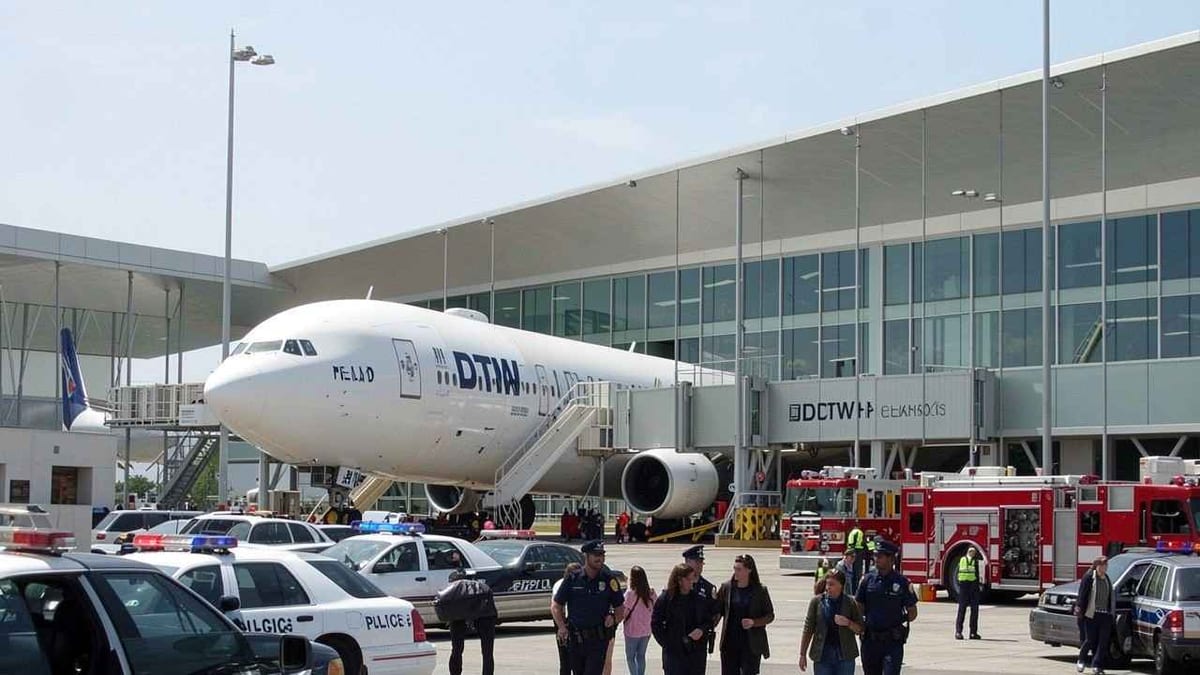
Unscheduled stop turns Florida–Tennessee trip into three-state journey
Publicly available flight-tracking information indicates that Flight SWA1067 departed Fort Lauderdale–Hollywood International Airport on July 21 on a scheduled domestic service to Nashville International Airport. Midway through the journey, the Boeing 737-800 altered course and headed toward Louisville, where it landed instead of continuing to Nashville.
The diversion transformed what is typically a straightforward south Florida to Tennessee route into a three-state itinerary, with passengers disembarking in Kentucky before being re-accommodated. The aircraft involved is one of the workhorse types in Southwest’s all-737 fleet, commonly used on medium-haul routes such as Fort Lauderdale to Nashville.
Although precise operational details have not been formally summarized in a public incident report, the available data show the change in destination occurred while the aircraft was already en route, fitting the pattern of an operational diversion rather than a preplanned schedule change.
Services between Fort Lauderdale and Nashville are usually flown nonstop by several carriers, including Southwest, and the route has become a busy corridor for leisure and business travelers linking south Florida with one of the fastest-growing metro areas in the Southeast.
Possible factors behind the diversion
Airline diversions typically result from a mix of factors such as adverse weather near the destination, congestion in the terminal area, runway or airspace constraints, or technical and medical considerations. Published coverage of similar Southwest diversions into and around Nashville on July 21 points to challenging weather and traffic conditions in the region that day, with multiple flights either holding or diverting to nearby airports.
Reports describing another Southwest service to Nashville from Orlando on the same date show a separate Boeing 737-800 flight diverting to Indianapolis after getting close to its planned arrival. That pattern, combined with accounts of aircraft holding over Kentucky while waiting for conditions to improve near Nashville, suggests that the Fort Lauderdale flight’s diversion to Louisville likely formed part of a broader operational response across the network.
Louisville often serves as an alternate for flights heading into Nashville because of its relative proximity and its ability to handle large numbers of arrivals. Once on the ground in Louisville, crews can refuel, wait out weather or traffic restrictions and coordinate onward options for travelers.
While precise reasons for Flight SWA1067’s diversion have not been detailed in a single public narrative, the combination of regional weather, air traffic flow management and the airline’s broader operational pressures this summer provide a contextual backdrop for the decision to reroute to Louisville.
Impact on passengers and onward travel
For customers on board, the diversion meant an unplanned arrival at Louisville Muhammad Ali International Airport rather than Nashville. Standard airline practice in such situations includes deplaning passengers, updating them on the evolving plan and arranging either a continuation flight to the original destination or alternative transportation options when feasible.
Where diversions are linked to significant delays, travelers may be eligible under Southwest’s general customer policies for rebooking assistance, travel credits or refunds, depending on the circumstances and whether they choose to continue or cancel their trip. The airline’s published guidance emphasizes that eligibility often depends on whether a disruption is considered within the carrier’s control or primarily driven by weather and air traffic constraints.
The Fort Lauderdale to Nashville corridor is popular with vacationers connecting beach destinations and music tourism, as well as with families and students relocating between Florida and Tennessee. For these travelers, even a relatively short diversion can lead to missed connections, changed hotel plans and added costs on the ground, underscoring the knock-on effects of a single operational decision.
Passengers affected by diversions like that of SWA1067 commonly turn to mobile apps, social media and airport information boards to track updated departure times, gate changes and rebooking options as airlines work through revised flight sequences.
Louisville–Nashville link underscores regional network role
The choice of Louisville as the diversion airport also reflects how closely tied the region’s mid-sized hubs have become in airline network planning. Southwest has invested in linking Louisville and Nashville with nonstop service, making it easier for travelers to move across the central and southeastern United States without relying solely on larger coastal hubs.
Louisville’s airport has promoted its Nashville connection as part of an expanding list of nonstop routes, highlighting the role of short-haul links in feeding longer-distance itineraries. For Southwest, these connections help balance aircraft utilization, crew scheduling and customer demand across its point-to-point network, particularly during peak travel periods.
On July 21, the arrival of a diverted Fort Lauderdale service effectively turned Louisville into an unexpected waypoint for a group of Nashville-bound passengers, illustrating how flexible use of regional airports helps airlines navigate weather and congestion while keeping aircraft and crew moving.
While diversions can be disruptive on an individual level, they are also a reminder of how tightly integrated cities like Fort Lauderdale, Louisville and Nashville have become through high-frequency routes and shared airline networks.
Summer reliability challenges for Southwest and travelers
The diversion of Flight SWA1067 occurred during a summer in which Southwest’s on-time performance and schedule reliability have attracted heightened scrutiny from travelers and aviation watchers. Industry data and customer discussions indicate that the carrier’s punctuality has slipped compared with prior years, with weather volatility and tight scheduling regularly cited as contributing factors.
Southwest, like other major U.S. airlines, has been operating in a demanding environment shaped by strong travel demand, evolving staffing levels and frequent convective weather in key markets. Routes touching Florida and the central United States, including cities such as Orlando, Fort Lauderdale, Nashville and Louisville, are particularly exposed to thunderstorms, heat-related air traffic restrictions and ground delays.
Under these conditions, diversions become one of several tools airlines use to maintain safety margins and manage the flow of aircraft into constrained airspace. While unwelcome for passengers in the moment, they reflect the priority placed on landing in suitable conditions and avoiding extended airborne holding or fuel concerns near saturated destination airports.
For travelers planning trips on the Fort Lauderdale–Nashville route and similar corridors, recent experience suggests building in additional time for connections, closely monitoring flight status in the hours leading up to departure and being prepared for rerouting through alternate cities such as Louisville when summer storms and congestion develop.