


More news on this day
Air travel across Spain is facing renewed disruption as a combination of rolling strikes and operational strains triggers fresh waves of cancellations and schedule changes at Madrid and Barcelona, affecting flights on carriers including Iberia, British Airways, Pegasus Airlines and Kuwait Airways, and impacting key routes to Boston, London, Brussels, Kuwait City and beyond.
Get the latest news straight to your inbox!
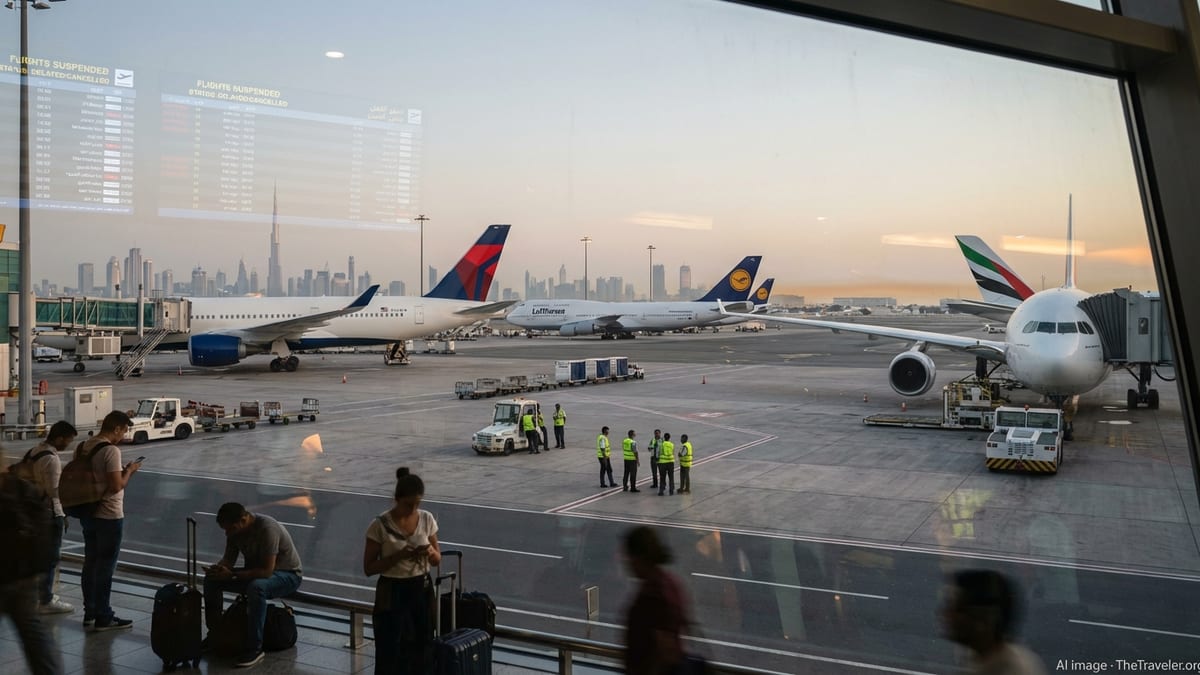
New Wave of Disruptions at Madrid and Barcelona
Madrid Barajas and Barcelona El Prat, Spain’s two busiest gateways, are again at the center of air travel disruption as airlines adjust operations in response to industrial action affecting air-traffic control and ground services. Publicly available airport departure boards on 14 May show dense schedules punctuated by late-notice changes, with some services removed from sale or retimed and others operating under different flight numbers or partner carriers.
Route data for Madrid to Barcelona illustrates how complex these adjustments have become. Multiple services marketed by British Airways, Qatar Airways and Kuwait Airways are currently operated by Iberia or Air Europa, reflecting the heavy reliance on codeshares to keep capacity moving between Spain’s primary hubs and the rest of Europe and the Middle East. However, even where flights operate, rolling delays and aircraft swaps are increasingly common, complicating onward connections to long-haul destinations.
Travel industry analysis published in recent days highlights that these disruptions are not confined to domestic Spanish routes. With Madrid and Barcelona acting as major transfer points, any instability quickly ripples outward to long-haul and regional services, including North America, the United Kingdom, Benelux and Gulf states. For travelers, this means a higher risk of missed connections and same-day rerouting, even when their original flight continues to operate.
Strikes and Operational Pressures Behind the Cancellations
Reports from aviation and travel advisory services indicate that Spain has been contending with an indefinite air-traffic control strike since mid-April, recently extended through at least the end of May. Ground-handling and baggage staff at key airports, including Madrid and Barcelona, have also announced recurring stoppages several days each week. These overlapping actions have significantly reduced operational flexibility at precisely the moment airlines were ramping up for the summer travel season.
Under Spanish and European regulations, minimum service levels must be maintained, so a complete shutdown is unlikely. Instead, airlines are trimming frequencies, consolidating lightly booked flights and advancing pre-planned cancellations on days when disruption risk is highest. This approach is visible in the pattern of schedule changes from Madrid and Barcelona, where some frequencies disappear from sale weeks in advance while others are removed closer to departure.
Operational data from network managers also points to continuing technical and capacity constraints in Spanish airspace. Recent reports highlight repeated traffic-flow restrictions in sectors managed from Barcelona and Madrid due to a combination of staffing, maintenance and airspace management issues. When layered on top of strikes, these constraints increase the likelihood that airlines will proactively cancel or reroute services to avoid cascading delays.
Key Airlines and Routes Feeling the Impact
Iberia, Spain’s flag carrier and the largest operator at Madrid Barajas, is at the forefront of the disruption. Schedule databases show Iberia adjusting numerous intra-European and transatlantic frequencies, including services that act as feeders to and from Boston, Brussels and London. Some flights have been merged, while others have shifted departure times to align with slots that are more likely to be honored during strike windows.
British Airways, which relies heavily on Madrid and Barcelona for both point-to-point traffic and connections into its partner network, is also affected. Several flights between Spain and the United Kingdom, including services to London, currently operate under Iberia flight numbers with British Airways codes attached. While this helps maintain connectivity, it leaves limited slack in the system: if an Iberia-operated sector is cut, passengers booked on British Airways codes are equally impacted.
Low-cost and regional networks are feeling similar pressure. Pegasus Airlines, which routes passengers between Spain and its hubs in Turkey, and Kuwait Airways, which uses codeshares via Madrid and Barcelona to feed its Kuwait City services, both rely on stable operations at the Spanish end to preserve onward connections. Travel forums and booking data suggest that some passengers on these carriers are being rerouted through alternative European hubs such as Frankfurt or Rome when Spanish operations are curtailed.
North American routes are not immune. Iberia’s transatlantic services between Spain and Boston have already seen equipment changes and re-timings this spring, and consumer reports indicate that selected departures have been pulled from sale or rebooked via alternative gateways on specific dates. Similar patterns have appeared on flights linking Spain with Brussels, a key political and business route, making these services a barometer of broader schedule stress.
What Travelers Through Spain Need to Know Now
For travelers with upcoming itineraries through Madrid or Barcelona, the current situation demands closer-than-usual monitoring. Published coverage from consumer travel advisories recommends checking bookings repeatedly in the days leading up to departure, since some cancellations and reroutings are being finalized only 24 to 48 hours in advance, particularly on strike days. Passengers on codeshare itineraries should pay special attention to which airline is actually operating each segment, as rebooking rules and support can differ.
European passenger-rights regulations generally require airlines to provide re-routing or refunds when flights are canceled, as well as meals, accommodation and basic assistance when travelers are stranded. However, the practical experience can vary when disruption is driven by strikes or airspace limitations, especially if multiple carriers are involved on a single ticket. Travel experts therefore advise allowing longer connection times in Madrid and Barcelona and avoiding tight self-connecting itineraries while the current wave of disruption continues.
Travel insurance with robust trip-interruption coverage has also become more important for those transiting Spain in the coming weeks. Policies that cover missed connections, extra hotel nights and alternative transport can significantly reduce the financial impact of late-notice cancellations or diversions. Travelers are encouraged to review policy terms carefully, as coverage for strike-related disruption can differ between providers.
Outlook for the Summer Travel Season
Looking ahead, aviation forecasts suggest that the pressure on Spain’s air travel system may persist at least through late June if no negotiated settlement is reached with air-traffic and airport staff unions. Industry briefings warn that peak summer dates could see higher-than-normal cancellation rates from Madrid and Barcelona, especially on domestic and short-haul European routes where alternative ground transport exists.
Airlines including Iberia, British Airways, Pegasus Airlines and Kuwait Airways are expected to keep refining schedules, consolidating lower-demand frequencies and leaning further on partner networks and codeshares. While this may protect connectivity on trunk routes such as Madrid to London or Barcelona to major European capitals, it also increases the chance that specific flights to cities like Boston, Brussels or Kuwait City will be periodically adjusted or withdrawn on certain days.
For now, Spain remains open to air travel, but the operating environment is more fragile than in recent pre-pandemic summers. Anyone planning to connect through Madrid or Barcelona in the coming weeks should build flexibility into their plans, keep a close eye on airline communications and be prepared for last-minute changes as the situation evolves.