


More news on this day
Hundreds of air travelers across Spain have been left stranded or facing long delays as a wave of disruption hits key airports including Madrid, Barcelona, Ibiza and Palma de Mallorca, with published data indicating 53 flight cancellations and 1,489 delays affecting carriers such as easyJet, British Airways, Air France, United Airlines and several European low cost operators.
Get the latest news straight to your inbox!
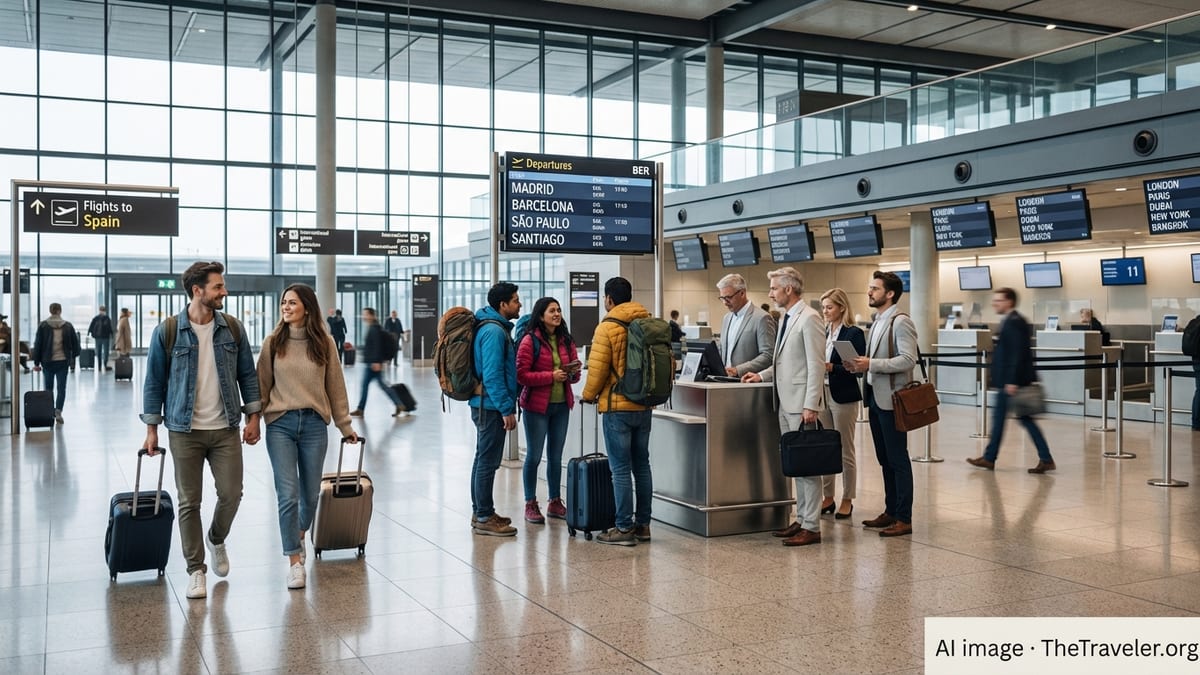
Major Hubs across Spain Log Cancellations and Long Delays
Operational data from flight tracking and airport information platforms shows that Spain’s busiest hubs, among them Madrid Barajas and Barcelona El Prat, have recorded dozens of cancellations and an unusually high volume of delays in a single trading day. Secondary but highly seasonal airports such as Ibiza and Palma de Mallorca report similar patterns, with tight turnarounds and heavy traffic amplifying the impact on schedules.
Across the country, 53 flights are listed as cancelled while approximately 1,489 services show significant delay, ranging from minor hold ups at departure to knock on disruptions that push arrivals several hours behind schedule. The figures reflect conditions across both domestic and international routes, including key holiday links between mainland cities and the Balearic Islands, as well as trans European services to and from major hubs in France, the United Kingdom and the United States.
The disruption has coincided with the peak of the summer travel build up, when Spanish airports traditionally see sharp increases in leisure traffic. Routes connecting Madrid and Barcelona with popular island destinations such as Ibiza and Palma de Mallorca appear particularly exposed, as even short hold ups can cascade through tightly stacked daily rotations.
Real time boards at Madrid and Barcelona show a dense pattern of late departures and arrivals alongside the cancelled services, underlining how quickly apparently localised issues can ripple across wider networks when airports are operating close to capacity.
Impact on easyJet, British Airways, Air France, United and Others
Published schedules indicate that the disruption is affecting a broad mix of airlines, from low cost operators such as easyJet to full service carriers including British Airways, Air France and United Airlines. Many of these airlines rely on Spanish airports as key points in their European or transatlantic networks, meaning that local problems in Spain can in turn affect passengers in other countries.
On the short haul side, easyJet flights linking Spanish cities and popular holiday hotspots are among those showing delays, reflecting the carrier’s strong presence in markets such as the United Kingdom to Barcelona and Palma de Mallorca. British Airways and Air France services to and from their home hubs are also listed with extended departure and arrival times, adding further pressure on passengers hoping to make onward connections.
Long haul operations are not immune. United Airlines and other transatlantic carriers that operate to Madrid and Barcelona are navigating the same congested airspace and ground handling constraints, with delayed ground turns potentially compressing crew duty windows and putting additional strain on carefully balanced schedules. Passengers connecting in Spain from long haul to short haul flights, or vice versa, may be among the most severely affected when a delay at one end forces missed connections at the other.
While each airline applies its own policies on rebooking and support, the scale of the day’s disruption means call centres, help desks and digital channels are likely experiencing elevated demand as travelers seek alternative routings or overnight accommodation.
Holiday Routes to Ibiza and Palma de Mallorca Hit Hard
Balearic gateways that depend heavily on peak season tourism are seeing a disproportionate share of the disruption. Flights between Madrid or Barcelona and Ibiza, along with services linking Palma de Mallorca to major European cities, show a high incidence of late operations in live tracking data. These routes are typically flown multiple times per day, often by a mix of network carriers and low cost airlines, leaving little slack when aircraft or crews run behind schedule.
Ibiza Airport, which serves a mix of leisure travelers and seasonal workers, has seen both arriving and departing services pushed back, straining limited terminal and ramp resources. Palma de Mallorca, one of Europe’s key summer leisure hubs, displays a similar pattern, with late inbound aircraft in turn causing outbound flights to depart well behind planned times.
Such conditions can create particular difficulty for package holiday customers, cruise passengers aiming to meet ship departure times and independent travelers who have arranged tight same day transfers, for example from air to ferry services. Travel industry observers note that even a single cancelled rotation to an island destination can leave hundreds of passengers seeking scarce replacement seats during the busiest weeks of the year.
Reports from passenger advocacy platforms also highlight the risk of luggage delays on days when flights, ground operations and baggage systems all run under heavy load, increasing the likelihood that bags miss tight connections even where passengers themselves make their onward flights.
What Travelers Are Experiencing on the Ground
Accounts shared on consumer forums and social media describe long queues at check in counters, airline service desks and security checkpoints in several Spanish airports affected by the disruption. Travelers report uncertainty around departure times as boards cycle through successive delay estimates, with some flights ultimately cancelled after repeated schedule revisions.
In Madrid and Barcelona, where terminals handle complex banks of domestic, European and long haul departures, even a modest number of cancellations can translate into large numbers of people seeking rebooking options at short notice. Families heading to beach destinations, stag and hen party groups bound for Ibiza and business travelers connecting through major hubs all find themselves competing for limited spare capacity on later services.
Some passengers have turned to online and mobile self service tools in an effort to secure new itineraries ahead of airport queues, although same day options may be scarce once large scale delays are visible to the wider market. Others face unplanned overnight stays in gateway cities if the final flights of the day are scrubbed or leave too late to enable onward connections.
Travel community discussions also suggest that accommodation around major airports can quickly sell out on heavily disrupted days, with prices rising as remaining rooms are snapped up by stranded travelers who are not covered for hotels through airline or package protections.
Rights, Compensation and Practical Advice for Affected Passengers
Consumer information portals emphasise that passengers departing from or arriving in Spain on European or many partner airlines may be protected by European Union regulations governing delays and cancellations, depending on the exact cause and length of disruption. These rules can provide rights to care in the form of meals and refreshments, hotel stays where necessary, and in some circumstances fixed sum compensation.
However, the applicability of such protections hinges on specific factors, including whether the disruption is judged to stem from extraordinary circumstances outside the airline’s control or from issues related to operations, staffing or aircraft availability. Travelers are therefore encouraged by public guidance to retain boarding passes, booking confirmations and any written notifications of changes to aid later claims.
Industry observers advise those currently booked to fly to or from Madrid, Barcelona, Ibiza, Palma de Mallorca or other Spanish airports to monitor flight status closely before leaving for the airport, using official airline channels and airport information pages where available. Allowing extra time for check in, security and potential gate changes can help mitigate the impact of crowded facilities on heavily disrupted days.
For passengers already affected, experts often recommend prioritising communication with airlines via multiple channels, including mobile apps and web portals in addition to airport desks, while keeping receipts for any out of pocket expenses. While the current wave of cancellations and delays underscores the fragility of peak season schedules, careful planning and awareness of passenger rights can help travelers navigate the challenges more effectively.