


More news on this day
Hundreds of air passengers were stranded across Spain on Thursday as Madrid, Barcelona and Malaga airports reported 639 delayed and 20 cancelled flights, disrupting operations for Iberia, KLM, American Airlines, Scandinavian Airlines and several other carriers at the height of the summer travel rush.
Get the latest news straight to your inbox!
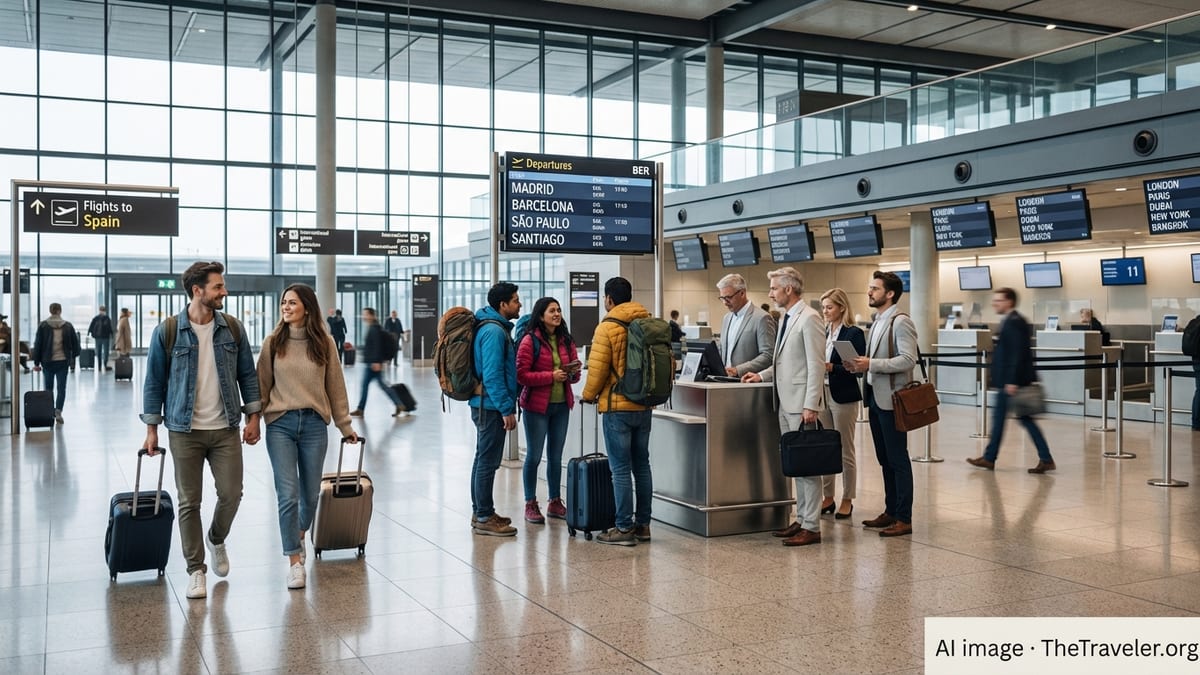
Delays Ripple Through Spain’s Busiest Hubs
The latest disruption hit three of Spain’s key aviation hubs on what was already forecast to be a heavy traffic day. Madrid Barajas, Barcelona El Prat and Malaga Costa del Sol collectively reported hundreds of delays, with a smaller but still significant number of outright cancellations. Publicly available flight-tracking data and industry reports indicate that the combined tally reached 639 delayed departures and arrivals and 20 cancellations, affecting domestic routes, intra-European links and several long haul services.
The pattern of disruption mirrors wider pressure on the European air network at the start of the peak holiday season. Recent briefings from air traffic management bodies highlight Spain, alongside France and Greece, as among the principal hotspots for en route delays, driven by a combination of capacity constraints, staffing limitations and strong seasonal demand. These structural issues mean that when operational bottlenecks appear at one or two major airports, knock-on effects are quickly felt across the wider network.
At terminal level, congestion in security lanes and at border-control checkpoints has further slowed passenger flows. Industry commentary in recent days has pointed to the impact of new and more intensive checks at certain European external borders, with airlines warning that even modest slowdowns at passport control can compound delays at already busy airports such as Malaga and Barcelona during peak arrival waves.
For travelers on the ground on Thursday, the result was long waits at departure gates, sudden gate changes and missed onward connections, with some passengers facing unplanned overnight stays in airport hotels or nearby accommodation when rebooking options were limited.
Multiple Airlines Caught In The Operational Snarl
The disruption cut across airline groups and alliances, affecting both home carriers and foreign operators. Spain’s flag carrier Iberia, which relies heavily on Madrid for short haul and long haul connections, experienced a series of delayed departures and arrivals. Low cost and hybrid operators with a strong Spanish presence, including pan-European groups, also reported significant schedule disruption at Madrid, Barcelona and Malaga.
Published coverage indicates that carriers based elsewhere in Europe were swept up as well. KLM services to and from Spain were among those affected, with delays on rotations linking Amsterdam to Spanish cities feeding back into the airline’s broader European schedule. Scandinavian Airlines flights connecting Nordic hubs with Spanish holiday destinations also reported hold-ups, exacerbating crowding on already busy leisure routes.
American Airlines, which operates transatlantic links into Spanish gateways and shares traffic with Iberia on certain routes, saw its own schedules disrupted where aircraft or crews were due to position through the affected airports. When a long haul arrival lands significantly behind schedule, subsequent flights using the same aircraft can easily face substantial delays or require substitution, and publicly available data shows several such rotations impacted across the day.
Airport operations analysts note that the breadth of carriers involved underlines the networked nature of air travel disruption. Once a wave of delays builds at a hub such as Madrid or Barcelona, both local and foreign airlines operating even a small number of daily flights can feel the impact through missed connection windows, displaced crews and aircraft, and congestion on shared air traffic control routes.
Underlying Causes: Strikes, Capacity Strain And Summer Demand
The immediate disruption on Thursday occurred against a backdrop of ongoing industrial action and structural strain in parts of Spain’s aviation system. Travel advisories and strike trackers continue to reference Spanish air traffic control labor disputes and ground handling stoppages at various airports, some of which have been in effect since the spring. Although minimum service requirements limit the scale of cancellations during such actions, they can still reduce operational flexibility and extend average delay times.
Network-level data from European aviation agencies for late spring and early summer shows that Spanish airspace has consistently ranked among the largest generators of en route delays in Europe. Capacity constraints at key area control centers, in combination with strong traffic growth, have increased the need for flow restrictions and airborne holding during peak periods. When those measures coincide with convective summer weather or thunderstorms near major hubs, schedules quickly become difficult to recover.
On the ground, staffing challenges among ground handlers, check-in teams and security contractors continue to feature in local media and industry analyses. While airlines and airports have worked in recent seasons to rebuild workforces cut during the pandemic downturn, rapid demand recovery and intense summer peaks mean that even small gaps in staffing can result in longer turnaround times for aircraft, slower baggage loading and delays in boarding.
Analysts also point out that European carriers have increasingly tight aircraft utilization patterns in midsummer. Aircraft are scheduled for multiple short sectors or a mix of short and long haul flying each day, leaving little buffer time to absorb disruptions. A single late inbound service to Madrid, Barcelona or Malaga can therefore cascade into multiple delayed departures and missed connections later in the day.
Passenger Impact: Missed Holidays, Connection Chaos And Long Queues
The human impact of Thursday’s disruption was felt most acutely by passengers caught in transit or beginning long planned holidays. Travellers connecting through Madrid from Latin America or North America towards Mediterranean resorts faced missed or extremely tight connections, with some itineraries breaking down entirely when onward flights departed or were reassigned before delayed inbound aircraft arrived.
Holidaymakers heading to or from Malaga and Barcelona, two of Spain’s busiest leisure gateways, encountered lengthy waits in check in halls and at boarding gates. Reports from passengers on social platforms described crowded terminals, limited access to accurate departure information and difficulty reaching airline support channels during the height of the disruption. For some, the choice was between accepting major schedule changes with longer travel times or seeking refunds and abandoning trips.
Those whose flights were cancelled altogether often faced additional challenges securing accommodation and alternative transport, particularly at night when rebooking desks and hotel capacity were already stretched. Industry guidance generally recommends that passengers in such situations seek written confirmation of cancellations and keep records of expenses, but in real time many travelers instead focused simply on finding a place to sleep and rebooking for the next available flight.
Families traveling with children and older passengers with reduced mobility were among those most affected by the uncertainty. Extended queues, repeated security checks for re-screened passengers and difficulty accessing food and water in crowded concourse areas added to the strain of prolonged delays.
What Travelers Can Do If Their Flight Is Affected
Consumer rights organizations and travel insurers regularly publish advice for passengers facing major disruption in Europe, and much of that guidance applies to the situation experienced in Spain. Travelers whose flights are significantly delayed or cancelled are generally advised to first verify the latest status of their flight using official airline channels and airport departure boards, rather than relying solely on third party apps or screenshots circulated on social media.
Once a delay or cancellation is confirmed, passengers can typically seek options such as rebooking on a later service, rerouting through a different hub or, in some cases, obtaining a refund. Under European air passenger regulations, travelers on eligible itineraries may have rights to assistance such as meals, refreshments and hotel accommodation when disruptions reach certain thresholds, even where the underlying cause involves wider network or airspace issues.
Given the widespread nature of Thursday’s disruption across multiple airlines, experts often recommend that passengers document their experience carefully, including boarding passes, booking references and receipts for expenses incurred. This documentation can be useful when submitting claims directly to airlines, to travel insurance providers or to specialized compensation services that process claims under European regulations.
With further summer travel peaks ahead, industry observers suggest that passengers flying to or from Spain in the coming weeks allow extra time at the airport, particularly at major hubs such as Madrid, Barcelona and Malaga, and build additional buffer time into itineraries that rely on tight connections. While individual travelers cannot control systemic factors such as air traffic capacity or labor disputes, informed planning and awareness of passenger rights can help mitigate some of the stress when large scale disruptions like Thursday’s occur.