


The Standard Chartered Cathay Mastercard has become one of the most talked‑about airline credit cards in Hong Kong, promising to turn everyday spending into Cathay flights, status and lounge access. But how does it really stack up once you compare its airline benefits against what savvy travelers can get from competing cards and loyalty strategies? This review takes a practical, example‑driven look at the card as of mid‑2026 so you can decide if it deserves a place in your wallet.
Get the latest updates straight to your inbox!
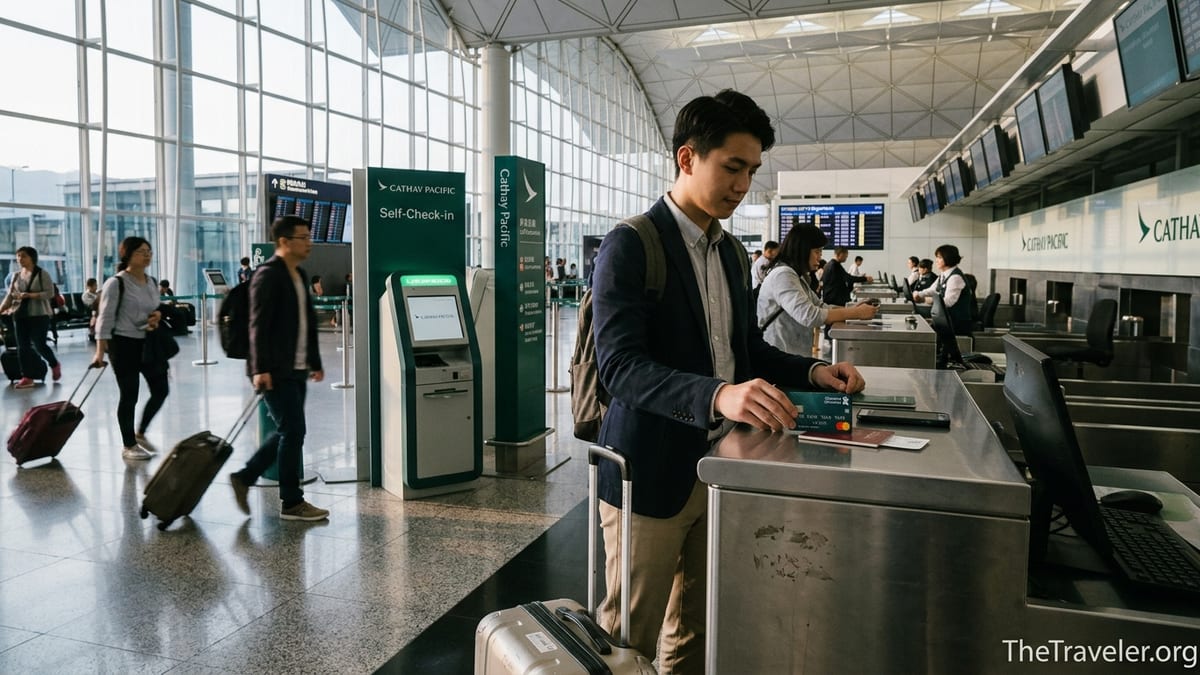
What the Standard Chartered Cathay Mastercard Actually Is
The Standard Chartered Cathay Mastercard is a Hong Kong‑issued co‑branded credit card that directly earns Asia Miles, the points currency of Cathay’s loyalty program. It sits in a small family of three tiers: the base Standard Chartered Cathay Mastercard, a Priority Banking version and a Priority Private version, each aimed at different wealth segments in Hong Kong. All three share the same core idea: use the card on daily spend, earn Asia Miles and some Cathay travel privileges, and occasionally receive targeted mileage or lounge campaigns.
The base card charges an annual fee of about HKD 2,000, though new cardholders often see a first‑year waiver and a chunky welcome miles bonus if they apply during a promotional window. Recent campaigns have advertised welcome packages of up to roughly 120,000 Asia Miles when meeting high spending requirements, though most typical applicants will walk away with something closer to tens of thousands of miles rather than the headline maximum. The minimum annual income requirement for the base card sits around HKD 96,000, which keeps it accessible to a wide slice of working residents compared with more premium travel cards.
Unlike flexible points cards from banks that let you transfer to multiple airlines, this product is laser‑focused on Cathay. That can be a strength if you are Hong Kong‑based and regularly fly Cathay or HK Express to places like Tokyo, Bangkok or London. If you are a more opportunistic fare hunter who hops between airlines based on price, the single‑program focus may feel restrictive. The honest value of this card lives or dies on how often you fly Cathay and how aggressively you use Asia Miles redemptions.
It is also important to distinguish this Hong Kong card from other Asia Miles‑earning products with similar branding. For example, Canada has a Cathay World Elite Mastercard and the United States has a separate Cathay‑branded card from another bank. Those products follow different earning structures, fees and consumer protections. When we talk about the Standard Chartered Cathay Mastercard here, we are referring specifically to the Hong Kong‑issued co‑brand that is marketed through both Cathay and Standard Chartered in the Hong Kong market.
Asia Miles Earning Rates: Strong on Travel, Average Elsewhere
At its core, the card’s pitch is that every Hong Kong dollar you spend nudges you closer to a reward flight. The reality is a bit more nuanced. For general local spending, the earn rate on the base card is typically around HKD 6 per 1 Asia Mile, which is not particularly aggressive by international standards. The card becomes far more compelling in its boosted categories, where the math often drops to HKD 2–4 per Asia Mile depending on what you are buying and which tier of the card you hold.
Concrete examples help. If you book a Cathay flight or an HK Express ticket online using the card during an elevated earn promotion, you may see an effective earn rate of up to around HKD 2 per mile. Spend HKD 8,000 on Cathay tickets for a family trip to Tokyo, and you could pick up roughly 4,000 Asia Miles from the base online rate plus extra bonus miles if a campaign is running. For dining, overseas travel and hotel transactions, the base card frequently advertises HKD 4 per 1 Asia Mile, so a HKD 2,000 dinner at a mid‑range restaurant in Hong Kong might yield about 500 Asia Miles.
The Priority Banking and Priority Private versions of the card tilt the earning table further in favor of frequent travelers. Recent Standard Chartered and Cathay materials show that Priority Banking cardholders can earn Asia Miles on overseas transactions at around HKD 3 per 1 mile, while Priority Private can drop this to as low as HKD 2 per mile in some selected categories. That difference is meaningful. A HKD 20,000 hotel bill in Paris charged to the Priority Private card could generate roughly 10,000 Asia Miles, while the same transaction on the base card might earn closer to 5,000. For affluent travelers who regularly put large overseas spends onto a card, that differential can outweigh the higher income and relationship requirements.
Another subtle, but important, angle is the ability to stack miles by earning both from the card and from Cathay’s partner network. If you dine at a Cathay partner restaurant that already awards Asia Miles and you pay with the Standard Chartered Cathay Mastercard, you can effectively earn twice: once from the merchant and once from the card. Cathay’s own guidance has cited scenarios where a member can see up to HKD 4 spent generating 2 Asia Miles when stacking in this way. Over a year of regular dining out in Hong Kong, that double‑dipping can add up to a short‑haul economy award to Southeast Asia without feeling like you are stretching your budget.
Status Points and the Path to Cathay Elite Tiers
One of the card’s more distinctive travel perks is that spending on it does not just earn Asia Miles, it can also contribute Status Points toward Cathay elite status. This feature matters if you are chasing or maintaining Silver, Gold or Diamond, especially in years where you may not fly enough segments to requalify purely through butt‑in‑seat miles. With the Standard Chartered Cathay Mastercard, Cathay has occasionally run campaigns where every block of spending (for example HKD 20,000 within a calendar year) earns a small allocation of Status Points on top of the usual Asia Miles.
Imagine a Hong Kong‑based consultant who flies Cathay to Singapore, Bangkok and Shanghai a few times a year but falls slightly short of the Status Points needed for Silver. By routing business‑class hotel stays and client entertainment onto the card, that traveler might plug the gap without adding an unnecessary mileage run. In practical terms, Silver brings priority check‑in and extra baggage, while Gold unlocks lounge access and better seating choices. For someone already loyal to Cathay, using the card as a top‑up mechanism to bridge a 20–40 Status Point shortfall can be much cheaper than purchasing an extra long‑haul ticket simply for status.
That said, the accrual of Status Points from spending is deliberately modest. You cannot swipe your way to Diamond on credit card spend alone in a single year. The bank and airline design these promos to deepen engagement, not to replace flying. Compared with some US airline cards that grant elite‑qualifying miles more aggressively, the Standard Chartered Cathay Mastercard’s path is more of a gentle nudge than a shortcut. If you are a very occasional flyer who takes one holiday per year, it is unrealistic to expect this card to transform you into a lounge‑access‑everywhere elite solely via domestic grocery and utility payments.
Another factor to weigh is that Cathay has shifted Asia Miles to a more modern, activity‑based expiry structure, where miles remain active as long as you earn or redeem at least once every 18 months. For cardholders, this effectively means that even small ongoing card spend can keep balances alive. From a traveler’s perspective, this reduces the pressure to burn miles hastily and makes the card’s ongoing earning, however incremental, more valuable in preserving savings for a big long‑haul business‑class redemption to Europe or North America.
Lounge Passes, Priority Check‑in and Other Airline Privileges
For many readers of TheTraveler.org, the decisive question is simple: does this card get me into lounges and shorter queues at the airport? The honest answer is “sometimes, and with strings attached.” The Standard Chartered Cathay Mastercard does not operate like some premium global cards that bundle unlimited third‑party lounge access. Instead, Cathay and Standard Chartered structure lounge access around a mix of sharable passes and Asia Miles redemptions, layered on top of whatever status you already hold in the Cathay program.
The most generous provisions sit with the Priority Banking and Priority Private versions. Current Cathay privilege documents indicate that eligible Priority Banking cardholders can receive around four complimentary Cathay Pacific business‑class lounge passes per card membership year, which are sharable with travel companions. These passes appear in the cardholder’s Cathay account as one‑time QR codes that can be used at Cathay business‑class lounges such as The Pier or The Wing in Hong Kong, or partner‑operated Cathay lounges in regional hubs like Bangkok and Singapore. For a family of three transiting Hong Kong once or twice a year, those four passes could comfortably cover the adults on one round trip if strategically deployed.
Holders of the base card do not typically receive automatic free lounge entries every year. Instead, they can redeem Asia Miles for lounge access through the Cathay program. Current Cathay documentation shows that co‑branded cardholders, including Standard Chartered Cathay Mastercard users, can redeem their miles for business‑class lounge access on themselves or their companions. In practical terms, if you have banked 11,000–15,000 Asia Miles that you do not plan to use for flights, you might choose to convert them into a pre‑flight shower and meal at a Cathay lounge ahead of a red‑eye departure to London.
Priority check‑in and boarding benefits are more straightforward but also tiered. Co‑branded cardholders on certain variants can access the same boarding lane as premium economy passengers on Cathay‑operated flights, which is a modest time saver at airports where economy queues are long. The Priority Private version upgrades this to business‑class boarding lanes in some cases. In Hong Kong on a Monday morning departure to Shanghai, for instance, that can mean clearing the queue in minutes rather than half an hour. However, these privileges apply only to the named cardholder, not to an entire family group, unless separate elite status or additional passes are involved.
Real‑World Trip Scenarios: Where the Card Shines and Falls Short
To move beyond theoretical benefits, it helps to walk through realistic travel scenarios. Consider a Hong Kong‑based couple planning two trips in a year: a five‑day city break in Seoul and a longer two‑week journey to London and Paris. They book their Cathay flights directly online and charge them to the Standard Chartered Cathay Mastercard, spend heavily on hotels and dining abroad, and use the card for most daily expenses at home.
On the Seoul trip, suppose they spend HKD 6,000 on economy tickets with Cathay, HKD 5,000 on a boutique hotel in Myeongdong and HKD 4,000 on dining and shopping. With promotional earn rates, that set of transactions could yield something like 4,000–5,000 Asia Miles from flights and around 2,250–3,000 from hotel and dining, ending the trip with approximately 7,000–8,000 miles. That is not enough for a long‑haul award, but it meaningfully contributes to a future redemption while the couple enjoys priority check‑in on Cathay flights if their card tier allows it.
Now look at the Europe trip. Two off‑peak economy tickets to London on Cathay might run HKD 14,000–18,000 depending on timing and sales. Add HKD 25,000 in hotels across London and Paris plus HKD 15,000 in dining and museum tickets. If these charges are routed through a Priority Banking or Priority Private version with more generous overseas earning, the couple could pull in north of 20,000 Asia Miles from this single journey. If they also take advantage of targeted bank campaigns that top up miles for hitting spending thresholds in specific months, they could cross the 30,000‑mile mark, which is within striking distance of an off‑peak short‑haul business‑class redemption from Hong Kong to Taipei or Bangkok.
On the flip side, imagine a different traveler: a Hong Kong resident who flies Cathay once every two years to visit family in Vancouver and spends most of their time transiting between work in Shenzhen and weekends in Macau. This person uses budget mainland carriers and ferries more than Cathay. For them, the value proposition of the Standard Chartered Cathay Mastercard is weaker. They may pay the annual fee, earn modest Asia Miles on domestic expenses, and still find that their balance is insufficient to meaningfully offset the cost of a long‑haul premium ticket. In such a use case, a no‑fee cashback card or a flexible points card that transfers to multiple airlines could be more rational.
How It Compares with Other Airline and Travel Cards
To judge the Standard Chartered Cathay Mastercard fairly, you need to benchmark it against the alternatives both within Hong Kong and abroad. In Hong Kong, the closest comparators are other airline‑linked or miles‑oriented cards, including co‑brands with foreign airlines and bank‑issued cards that earn flexible points convertible to Asia Miles. Many of these products offer similar or better general earn rates on local spending, particularly in categories like supermarkets or utilities where the Cathay co‑brand is unremarkable.
Where the Standard Chartered Cathay Mastercard holds its own is in the combination of targeted Cathay promotions, direct Asia Miles accrual and integration with Cathay’s digital ecosystem. Book a flight through Cathay’s site or app, pay with the card, earn extra miles, then redeem those miles for lounge access or a future ticket without ever leaving the Cathay environment. This closed‑loop experience compares favorably with, say, a generic cashback Visa that offers a straightforward 1 percent rebate but no status points, no airline‑specific bonuses and no access to airline‑run lounges.
However, when you step outside Hong Kong, co‑branded Cathay credit cards offered in other markets highlight both the strengths and weaknesses of the Standard Chartered product. In Canada, for example, the Cathay World Elite Mastercard marketed to locals earns Asia Miles on domestic spending and promises global lounge access through a network of more than 1,300 lounges. Reviewers in that market have noted that while the lounge access is a clear perk, the overall miles earning can be underwhelming for the card’s annual fee, particularly once you factor in a 3 percent foreign transaction surcharge on non‑Canadian purchases. In that context, the Standard Chartered Cathay Mastercard’s competitive foreign‑spend earn rates for Hong Kong users look more appealing, but its lack of bundled third‑party lounge access feels conservative.
Against premium global cards like those issued on the World Elite or platinum platforms from other banks, the Standard Chartered Cathay Mastercard also looks narrow. You will not find complimentary hotel elite status, extensive travel insurance or broad lounge schemes baked into the annual fee in the way you might with a top‑tier American Express or other premium travel product available in major markets. If your travel pattern is extremely varied and you value flexibility, a multi‑airline, multi‑hotel premium card paired with occasional Asia Miles transfers may deliver better net value than a single‑airline co‑brand, even if the headline earn rate on Cathay flights is lower.
Who Should Consider This Card and Who Should Skip It
After comparing the airline benefits and looking at real‑world spending patterns, a profile of the ideal Standard Chartered Cathay Mastercard customer emerges. This card makes the most sense for Hong Kong‑based travelers who fly Cathay or HK Express several times a year, particularly in economy or premium economy, and who are keen to consolidate their daily spending to deepen their relationship with a single airline. If you live within easy reach of Hong Kong International Airport, frequently visit regional destinations like Tokyo, Osaka, Bangkok and Singapore, and appreciate the familiarity of Cathay’s cabins and lounges, the card is aligned with your habits.
It is also attractive for Priority Banking and Priority Private clients of Standard Chartered who already meet the wealth thresholds and can access the enhanced overseas earn rates and complimentary Cathay business‑class lounge passes. For these customers, the incremental benefits may feel almost “free” on top of an existing banking relationship, and the ability to treat family or friends to lounge access a few times a year can meaningfully soften the edges of long‑haul economy travel.
On the other hand, if you are a price‑sensitive traveler who constantly mixes low‑cost carriers, high‑speed rail and other airlines based purely on fare sales, this card is unlikely to be your optimal choice. The annual fee, unless consistently waived, can eat into value if you are not concentrating spend and redemptions on Cathay. Similarly, if you rarely leave Hong Kong or primarily take short ferry or cross‑border bus trips into Guangdong, a no‑annual‑fee cashback card that automatically credits a percentage of your spend may be both simpler and more rewarding.
There is also a middle group: travelers who like Cathay but are not exclusive to it and who hold multiple cards. For them, the Standard Chartered Cathay Mastercard can serve as a “category card” rather than a catch‑all. They might reserve it for Cathay and HK Express ticket purchases, hotel and dining during overseas trips, and partner restaurant spending where double Asia Miles are possible, while using another bank’s card for domestic supermarkets, utilities and online shopping. In that blended approach, the Standard Chartered Cathay Mastercard behaves as a targeted tool in a broader points strategy rather than a lone workhorse.
The Takeaway
Viewed honestly, the Standard Chartered Cathay Mastercard is neither a magic wand for free flights nor a weak, overpriced accessory. It is a solid, tightly integrated airline co‑brand card whose value peaks when you lean into the Cathay ecosystem and fades when you treat it like a generic payment instrument. Its Asia Miles earn rates are competitive but not jaw‑dropping, its lounge and priority perks are meaningful but conditional, and its path to elite status is supportive rather than transformative.
If you are a Hong Kong‑based traveler who already gravitates toward Cathay, especially if you qualify for the Priority Banking or Priority Private tiers, this card is genuinely worth considering as your primary travel card or as a specialist tool for flights, overseas hotels and Cathay partner spending. Used thoughtfully over the course of real trips to places like Seoul, London or Bangkok, it can shave thousands of Hong Kong dollars off the cost of future tickets and make airport time noticeably more comfortable.
If, however, your travel life is scattered across airlines, your home base is outside Cathay’s core markets, or you strongly value maximum flexibility from your points, a more generalist rewards or premium travel card might offer greater long‑term satisfaction. As with any miles product, the right decision hinges less on glossy welcome‑bonus headlines and more on an honest look at where you fly, how you spend and how disciplined you are about using the miles you earn.
FAQ
Q1. Is the Standard Chartered Cathay Mastercard worth it if I only fly once a year?
If you only take one Cathay trip per year and do not spend much on overseas travel or partner merchants, the value is marginal. You may earn some Asia Miles and enjoy priority check‑in on that trip if your card tier allows it, but a simple cashback card could be more cost‑effective once you factor in the annual fee.
Q2. How many Asia Miles can I realistically earn from normal spending?
A typical Hong Kong resident who channels most dining, some online shopping and periodic travel bookings through the card might earn anywhere from 10,000 to 30,000 Asia Miles in a year. That is enough for a one‑way short‑haul economy redemption within Asia or a useful discount on a longer‑haul ticket, but it will not by itself cover a round‑trip business‑class fare to Europe.
Q3. Do I get automatic lounge access with the base Standard Chartered Cathay Mastercard?
No. The base card does not usually come with automatic free lounge entries every year. You can still access Cathay lounges by redeeming Asia Miles or by holding Cathay elite status, but complimentary sharable lounge passes are generally reserved for the higher Priority Banking and Priority Private card variants.
Q4. Can the card help me reach or keep Cathay elite status?
Yes, but only in a supporting role. Spending on the card can generate limited Status Points during specific promotions, which can help you close a small gap to Silver or Gold. It is not designed to let you achieve top‑tier status on credit card spend alone; you will still need significant flying activity.
Q5. How does the earning rate on Cathay flights compare with other cards?
When you book Cathay or HK Express tickets directly and pay with the Standard Chartered Cathay Mastercard, you often enjoy a higher miles‑per‑dollar rate than with generic cashback or non‑co‑branded cards. In promotional periods, the effective rate can drop to roughly HKD 2 per Asia Mile, which compares well with many rival airline or bank cards in Hong Kong.
Q6. What if my travel is split between different airlines, not just Cathay?
If you regularly mix carriers based on price or routes, a flexible points card that transfers to multiple programs may serve you better. You can still keep the Standard Chartered Cathay Mastercard as a dedicated tool for Cathay purchases and partner dining, but relying on it as your only travel card may leave value on the table.
Q7. Is it easy to get the annual fee waived?
New cardholders frequently receive a first‑year fee waiver as part of welcome offers. In subsequent years, fee waivers can be easier for Priority Banking or payroll clients of Standard Chartered, while standard cardholders may need to meet relationship or spending thresholds or request a waiver through customer service or the bank’s app.
Q8. Are the welcome bonus miles as generous as they look in advertisements?
Headline figures can be high, sometimes quoted up to around 120,000 miles, but they usually assume very large spending in a short period and strict timelines. Many everyday users will end up earning a more modest, yet still helpful, bonus of several tens of thousands of miles. Always read the promotion conditions to see if the targets realistically match your spending.
Q9. Can I share the lounge passes with family or friends?
Yes, if you hold a version of the card that offers complimentary lounge passes, those passes are typically sharable. They are issued as digital passes in your Cathay account, and you can use them either for yourself or for companions traveling on Cathay‑operated flights, subject to the pass conditions and availability.
Q10. What kind of traveler is best suited to the Standard Chartered Cathay Mastercard?
The card suits Hong Kong‑based travelers who fly Cathay several times a year, are comfortable concentrating a large portion of their spending through one airline ecosystem and value Asia Miles redemptions and occasional lounge access more than simple cashback. If that describes your travel lifestyle, the card can be a solid cornerstone of your strategy.