


If you have suffered a long flight delay, a last-minute cancellation, or a missed connection on a route covered by EU Regulation 261/2004, companies like ClaimFlights promise to turn that frustration into cash compensation. Before you hand your case to any intermediary, though, it pays to understand how these services work, what they cost, and what you can realistically expect from the process. This guide walks you through the essentials you should know before filing a claim with ClaimFlights, illustrated with real-world scenarios travelers commonly face.
Get the latest updates straight to your inbox!
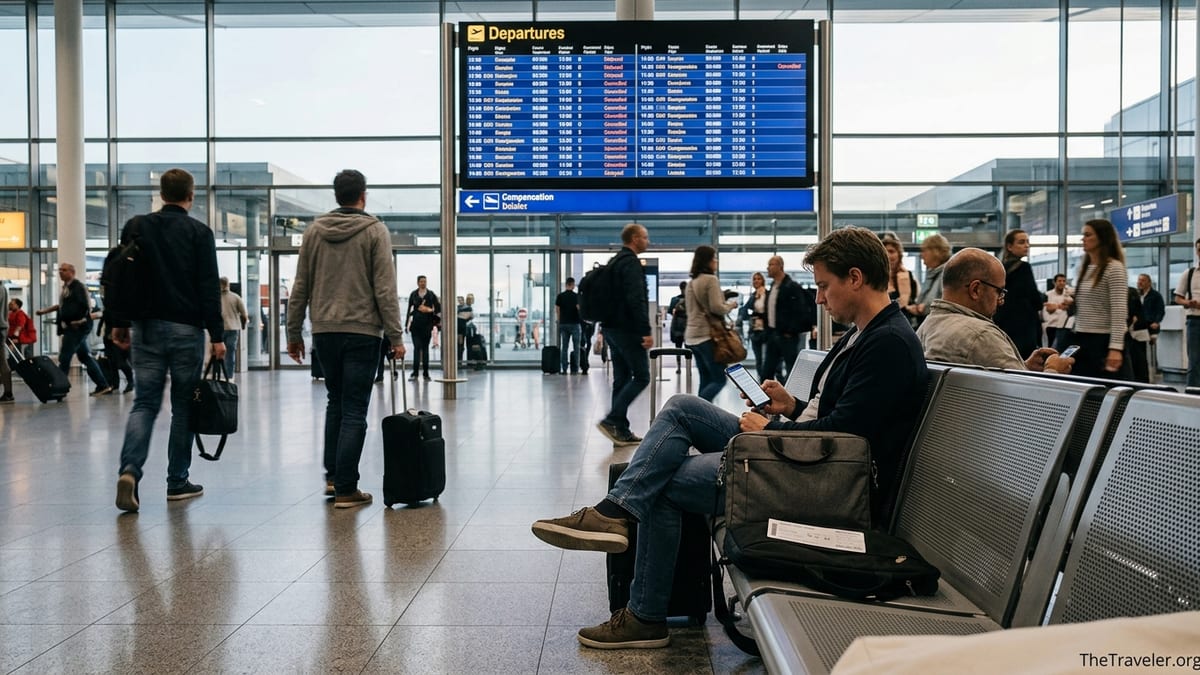
Who ClaimFlights Is And What They Actually Do
ClaimFlights is a German-based legal tech company that focuses on enforcing air passenger rights under EU Regulation 261/2004 and the UK’s equivalent rules. In practice, that means they act as a specialist intermediary between you and the airline when you seek compensation for certain delays, cancellations, missed connections, or denied boarding incidents on eligible flights. Unlike a typical law firm that bills by the hour, ClaimFlights works on a success-fee model: they only collect a fee if they manage to obtain compensation for you.
On its English-language site, ClaimFlights describes itself as a “passenger advocate” using proprietary flight data and a cross-border legal network to pursue claims, including taking airlines to court when necessary. The company advertises that it can help passengers worldwide as long as their itinerary falls under EU261 or UK261 rules. For example, a US traveler flying New York to Frankfurt on Lufthansa or Chicago to Paris on Air France could be covered if the disruption meets the legal thresholds, even though they live outside Europe.
ClaimFlights positions itself slightly differently from some competitors by highlighting its willingness to litigate where other services might walk away or accept a low settlement. On its websites it stresses that it cooperates with local partner lawyers in multiple countries and uses detailed delay statistics to argue against airlines that blame “extraordinary circumstances” too quickly. For travelers, this can be attractive if they have already tried and failed on their own or with another service.
However, using an intermediary always involves a trade-off: you give up a portion of any eventual payout in exchange for expertise, time savings, and the possibility of court action that you might not want to handle yourself. Before you submit your details, it is worth weighing that trade-off in the context of your own claim and comfort level.
How EU261 / UK261 Compensation Works In Practice
EU Regulation 261/2004 and the parallel UK rules set fixed compensation amounts in euros (or the UK-equivalent amount) for certain disruptions. Broadly, if your flight is delayed on arrival by more than three hours, canceled at short notice, or you are denied boarding against your will, and the cause is within the airline’s control, you may be entitled to a lump-sum payment. The amount usually depends on the distance of your journey and, in some cases, whether you were rerouted and how late you arrived at your final destination.
To understand what ClaimFlights might obtain for you, it helps to translate the law into numbers. On many medium-haul routes within Europe, such as London to Athens or Paris to Lisbon, compensation commonly falls around 400 euros per person. On long-haul routes above roughly 3,500 kilometers, such as Rome to New York or Madrid to São Paulo, the headline amount is often around 600 euros per person when the delay or cancellation meets the criteria. These sums apply regardless of what you actually paid for the ticket, whether that was a 50 euro low-cost fare or a 2,000 euro business class seat.
Real-world cases illustrate how this plays out. Imagine a family of four booked on a direct flight from Barcelona to Dublin that arrives more than four hours late due to a technical defect on the aircraft. If the flight distance and delay qualify, their potential compensation could approach 1,600 euros in total. On a long-haul example, a traveler flying from Berlin to Chicago with a missed connection in Frankfurt might end up more than three hours late to their final destination. If the disruption is not due to severe weather or air traffic control restrictions, the entitlement could be around 600 euros.
It is important to remember that EU261 compensation is separate from refunds, meal vouchers, or hotel accommodation that airlines sometimes provide on the day of travel. Many airlines will rebook you and pay for food or an overnight stay but never mention that you may also be due a fixed cash payment. This is where companies like ClaimFlights enter the picture, since they can often identify when compensation is due even if the airline’s frontline staff suggested otherwise at the airport.
ClaimFlights’ Business Model, Fees, And Payouts
Before filing with ClaimFlights, you should have a clear picture of what their service will cost. ClaimFlights publicly states that it charges a flat success fee of about 25 percent of the compensation amount, plus applicable VAT in some jurisdictions, and that there are no extra court costs passed to the customer if the case goes to litigation. In other words, you do not pay anything upfront, and you do not get a separate invoice for legal expenses. If they lose, they bear their own costs and you receive nothing. If they win or reach a settlement, they deduct their fee from the recovered sum before transferring the balance to you.
To put this into practical terms, consider a straightforward long-haul claim where the legal compensation amount is 600 euros and ClaimFlights manages to collect this in full from the airline. At a 25 percent success fee, ClaimFlights would retain around 150 euros (plus any VAT that might apply), and you would receive about 450 euros. On a shorter flight with a 250 euro compensation level, their fee would be about 62.50 euros, leaving you with roughly 187.50 euros. These are simplified figures, but they help set expectations before you agree to their terms.
Compared with some competitors, this fee level sits in the middle of the market. There are operators that advertise taking only around 15 percent, as well as others that may keep closer to a third of the payout once all costs and taxes are taken into account. The key is to read ClaimFlights’ current fee table and service agreement carefully. Rates and terms can change over time, and some countries treat VAT or other charges differently, which can affect your final net amount.
One subtle but important point is that when ClaimFlights negotiates or litigates, you as the passenger normally do not see the correspondence with the airline in detail. You trust the service to pursue the maximum reasonable amount and to pass on the agreed share. Some travelers appreciate not having to deal with the back-and-forth, while others would prefer full transparency. If detailed breakdowns of settlements matter to you, it is worth asking ClaimFlights in advance what documentation they can provide when a case closes.
Eligibility, Routes, And Typical Situations ClaimFlights Handles
Not every bad flight experience will qualify for EU261 or UK261 compensation, and ClaimFlights cannot change that fact. Before you file, you should check that your itinerary falls within the geographic scope of the regulations. As a rule of thumb, the law applies to flights departing from any airport in the European Union plus a few associated countries, regardless of the airline, and to flights arriving in these territories when operated by an EU or UK carrier. For example, a flight from Amsterdam to New York on Delta can be covered because it departs from the EU, while a flight from New York to Amsterdam on Delta would not be, since the carrier is not European.
ClaimFlights typically deals with four recurring disruption scenarios. The first is long arrival delays, usually more than three hours late at the final destination. The second is short-notice cancellations, especially when the airline fails to reroute passengers in a way that avoids long delays. The third involves missed connections on a single ticket, where an initial delay causes you to miss a later leg and arrive far behind schedule. The fourth is denied boarding, such as when an oversold flight leaves you behind even though you checked in on time.
Take a common textbook example: a traveler flying from Rome to London on a European carrier arrives four and a half hours late due to an aircraft rotation problem. That situation is often eligible for compensation. On a more complex itinerary, consider someone flying Edinburgh to Frankfurt to Tokyo on a single ticket with a European airline operating both segments. If a mechanical issue in Edinburgh causes a delay that cascades into a missed connection in Frankfurt and a next-day arrival in Tokyo, EU261 may cover the entire disruption, and ClaimFlights may be able to argue for long-haul compensation based on the final destination.
That said, there are major exclusions. Disruptions caused by genuinely extraordinary circumstances, such as certain air traffic control strikes, volcanic ash events, or severe storms that make flying unsafe, may not lead to compensation even though you suffered a delay. ClaimFlights uses its flight data tools and experience with case law to assess whether your situation is likely to qualify. When you run your flight details through their online checker, the system will often give you a preliminary view of eligibility before you share personal data or sign a mandate.
Pros, Cons, And When ClaimFlights May Be Worth It
Using ClaimFlights offers several clear advantages for travelers who do not want to become amateur aviation lawyers. The most obvious benefit is the time and effort saved. Writing effective complaints, tracking down the correct customer service channels, and pushing back if an airline refuses can easily take hours. For many people juggling work and family commitments, outsourcing that hassle in exchange for a quarter of the eventual payout feels like a reasonable bargain.
Another strength is persistence. Airlines often reject first-round complaints with generic references to bad weather or “operational reasons.” A passenger acting alone might stop there, unsure how to challenge the explanation. ClaimFlights, by contrast, can compare your flight against detailed historical data, check whether other services operated normally at the time, and decide whether to escalate. In some cases they may pass the matter to their partner lawyers, file a lawsuit in a local court, or pursue arbitration where available. This persistence can matter in tricky cases where an airline digs in.
On the downside, you inevitably give up money you could have kept by filing directly yourself. If your case is straightforward and the airline has a smooth online claims form, you might receive compensation in a matter of weeks without any help. For example, there are recent reports of travelers submitting a simple EU261 claim directly to major carriers such as American Airlines or United after a Europe-originating delay and being paid within two or three weeks. In those scenarios, giving up 25 percent to an intermediary for a process you could handle in under an hour may not feel worthwhile in retrospect.
Another potential drawback is the lack of control over strategy and timing. Once you sign a mandate with ClaimFlights, they generally steer the case, including decisions about whether to accept a partial settlement or pursue court action. Some travelers are comfortable delegating that responsibility; others would prefer to stay in charge of negotiations. If you are in the latter group, you might treat ClaimFlights more as a backup option if your direct attempt with the airline fails or if the airline simply stops responding.
Timelines, Communication, And What To Expect After Filing
One of the most frequently asked questions about services such as ClaimFlights is how long the process will take. The honest answer is that timelines vary widely, mostly because of how slowly airlines respond and how congested local courts can be. ClaimFlights itself highlights that some straightforward cases resolve within a few months when airlines cooperate, while complex or contested cases can drag on for a year or more, especially if litigation becomes necessary.
In practice, your claim typically moves through several stages. First, you enter your flight details into ClaimFlights’ checker to see whether the disruption appears eligible. If you proceed, you sign a mandate or contract, upload boarding passes and any supporting documents, and officially authorize the company to act on your behalf. Next, ClaimFlights prepares and submits a formal claim letter or digital request to the airline, laying out the facts and citing the legal basis for compensation. Depending on the carrier, this first phase may generate a response within a few weeks or may require repeated follow-ups over several months.
If the airline rejects the claim or fails to respond, ClaimFlights will usually decide whether escalation is justified. This might involve sending a strongly worded follow-up, involving a national enforcement body, or handing the matter to a partner law firm in the relevant jurisdiction. When a case goes to court, timelines can lengthen significantly. It is not unusual to hear of passengers who waited more than a year for a judgment on a contested EU261 claim, especially when hearings were postponed or appeals lodged.
During this entire process, communication is mostly handled by email or through a customer account page. Some travelers praise ClaimFlights for quick, clear replies to status updates, while others express frustration when weeks pass without visible movement. Before filing, it can be helpful to manage expectations realistically: if your disruption is simple and the airline has a reputation for paying claims with minimal argument, you may see a resolution in a few months. If the case is marginal or the airline is particularly combative, you should be prepared for a long wait.
Documents, Evidence, And How To Strengthen Your Claim
Regardless of whether you file directly with an airline or through ClaimFlights, the strength of your claim depends heavily on basic documentation. Before you send anything, gather all available records related to the disrupted journey. That includes booking confirmations, e-ticket receipts, boarding passes, and any messages from the airline about delays, cancellations, or rerouting. If you have photos of departure boards, screenshots of app notifications, or written explanations from gate agents, those can be valuable supporting evidence.
ClaimFlights provides templates and guidance on what they need from you. In some cases, they offer sample letters that show how to describe what happened in clear language tied to EU261 criteria. For example, a claim letter might state that your scheduled arrival in Madrid was 18:00, you actually arrived at 22:45, and the airline informed you that the cause was a crew shortage rather than bad weather. Precise times and reasons matter, because they help distinguish compensable scenarios from those that fall under extraordinary circumstances.
It can also help to keep receipts for out-of-pocket expenses, such as food, taxis, or hotels you had to pay for during the disruption. While these costs fall under a slightly different part of passenger rights law and may be reimbursed separately from fixed compensation, ClaimFlights or the airline itself might use the same claim process to address both. A delayed overnight connection in Frankfurt, for example, may generate entitlement both to a 600 euro compensation and to reimbursement for a hotel if the airline failed to provide one.
Finally, be honest and consistent in your description of events. ClaimFlights relies on the information you supply, combined with its own flight data, to argue the case. Exaggerating the length of a delay, misrepresenting weather conditions, or omitting key details can weaken your position and may come to light if the matter reaches a court. If you are uncertain about timing or facts, say so, and let the company cross-check against official records.
Alternatives To ClaimFlights And When To Go Direct
Before you commit to any one service, it is sensible to consider alternatives, including handling the claim yourself. Many major airlines now have dedicated online forms for EU261 or UK261 claims, often linked from their “contact us” or “feedback” pages. Filling out one of these forms generally takes 10 to 20 minutes and requires much the same information you would provide to ClaimFlights. For relatively clear-cut cases, such as a five-hour delay from Paris to Copenhagen due to a technical issue, filing directly can be the fastest and most cost-effective route.
Other claim management companies and legal tech platforms operate in a similar space to ClaimFlights, sometimes with different fee structures or specialties. Some advertise lower success fees but may be less inclined to take borderline cases to court. Others emphasize multilingual support, mobile apps, or particular markets, such as focusing on Scandinavian carriers or low-cost airlines. Comparing a few of these services and reading a range of reviews can help you decide whether ClaimFlights aligns with your priorities on cost, communication, and aggressiveness.
You can also pursue a hybrid strategy. Many travelers start by submitting a claim directly to the airline, referencing EU261 or UK261 and clearly stating the facts. If the airline refuses or ignores the complaint, they then consider escalating through a national enforcement body, an alternative dispute resolution scheme, or a company like ClaimFlights. This approach lets you keep 100 percent of any easy win while still having a backup if the process gets bogged down.
Your decision ultimately depends on how much you value your time and how comfortable you feel dealing with corporate bureaucracy. If you have experience drafting formal complaints and are willing to follow up persistently, doing it yourself can make sense. If, on the other hand, the thought of chasing an airline for months fills you with dread, paying ClaimFlights a portion of the result in exchange for taking over the burden may be a reasonable price to pay.
The Takeaway
Filing a claim with ClaimFlights can be a practical way to turn an eligible flight disruption into cash compensation without wading through airline bureaucracy on your own. The company combines flight data, legal expertise, and a no-win-no-fee structure to pursue claims under EU261 and UK261, including in situations where airlines resist or where court action becomes necessary. For many travelers, especially those facing unresponsive carriers or complex missed-connection cases, that combination of persistence and specialization is appealing.
Before you sign up, though, you should walk in with clear eyes. Understand that ClaimFlights will keep around a quarter of any compensation as its fee, that timelines can range from a few months to more than a year depending on the airline and whether litigation is involved, and that not every disruption is legally compensable. Take the time to check your eligibility, read the service agreement carefully, and collect strong documentation of what actually happened on the day of travel.
It is also wise to weigh alternatives. In many straightforward cases, you can obtain the same compensation directly from the airline with a well-drafted claim and a bit of persistence, keeping the full amount. In tougher disputes, or when you simply do not have the bandwidth to argue with a carrier, ClaimFlights can be a useful ally. The key is to match the tool to the situation and to treat your claim not as a lottery ticket, but as a legal right you are choosing the best way to enforce.
FAQ
Q1. Is ClaimFlights legitimate and safe to use?
ClaimFlights is an established legal tech company focused on EU261 and UK261 claims, operating for many years and working with partner lawyers in several countries. Like any service, experiences vary, but it is generally regarded as a legitimate option rather than a scam.
Q2. How much does ClaimFlights take from my compensation?
ClaimFlights typically charges a success fee of about 25 percent of the recovered compensation, plus any applicable VAT, and you pay nothing if they do not win. Always check their latest terms, as fee structures can change over time.
Q3. How long will my claim take if I file through ClaimFlights?
Timelines vary widely. Simple cases with cooperative airlines can resolve within a few months, while contested claims that go to court may take a year or more from initial filing to final payout.
Q4. Do I qualify for EU261 compensation if I live outside Europe?
Yes, residency does not matter. What counts is where you flew from and to, and which airline operated the flight. Non-European residents can claim compensation for eligible disruptions on covered routes.
Q5. Can I still use ClaimFlights if the airline already rejected my claim?
In many situations, yes. An airline’s first rejection is not a final legal decision. ClaimFlights can reassess the facts, check flight data, and decide whether to challenge the airline’s explanation or escalate to legal action.
Q6. What documents should I have ready before submitting a claim?
You should gather booking confirmations, e-tickets, boarding passes, and any written messages from the airline about delays, cancellations, or rerouting. Screenshots of departure boards, app notifications, or written explanations from staff can also be helpful.
Q7. Does ClaimFlights handle missed connections on multi-leg journeys?
Yes, ClaimFlights works with many multi-leg itineraries where a delay on one segment causes a missed connection and a late arrival at the final destination. They focus on whether your overall journey meets the legal thresholds under EU261 or UK261.
Q8. Are weather-related delays ever eligible for compensation?
Genuine severe weather that makes flying unsafe is usually treated as an extraordinary circumstance and does not lead to compensation. However, not every disruption attributed to “weather” is automatically excluded, and ClaimFlights may review data to see whether that explanation holds up.
Q9. Can I file directly with the airline instead of using ClaimFlights?
Yes. Many travelers successfully claim compensation by submitting a direct complaint to the airline, especially in straightforward cases. Doing it yourself means you keep 100 percent of any payout, though you must handle all communication and follow-up.
Q10. What happens if ClaimFlights loses my case?
If ClaimFlights does not obtain compensation, you normally pay nothing. Their business model is based on a no-win-no-fee approach, so they absorb their internal and legal costs when a claim is unsuccessful.