


More news on this day
In the small Central Otago town of Naseby, the glow that matters most now comes from the Milky Way rather than streetlights, as the former gold rush settlement has been recognised as New Zealand’s first International Dark Sky Community and a rising destination for stargazing travelers.
Get the latest news straight to your inbox!
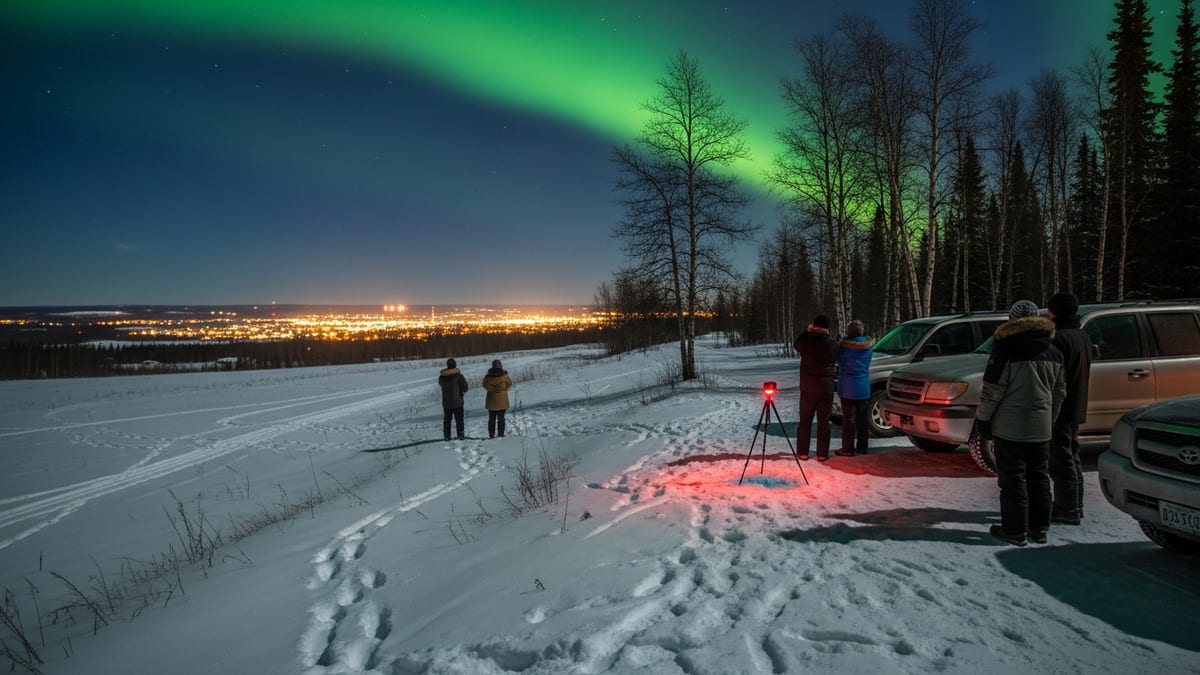
New Zealand’s First Official Dark Sky Community
Naseby received International Dark Sky Community accreditation from DarkSky International in September 2025, a milestone that observers describe as the first of its kind in New Zealand. While the country already hosts acclaimed dark sky reserves and sanctuaries, Naseby is the first town to earn community status, signalling that the settlement itself, not just the surrounding landscape, meets strict standards for night sky protection.
Publicly available information shows that work towards the designation began several years earlier, driven by a local desire to preserve the region’s naturally dark skies and to diversify the economy beyond traditional tourism and outdoor sports. The recognition places Naseby alongside a small group of dark sky communities worldwide and only a handful in the Southern Hemisphere, highlighting the town’s unusually low levels of light pollution.
Technical measurements cited in planning and accreditation documents indicate night sky brightness readings of roughly 21.1 to 21.8 magnitudes per square arcsecond around Naseby. Figures in this range are associated with the darkest categories on the Bortle scale, meaning visitors can expect prominent views of the Milky Way, dark nebulae and faint constellations that are generally washed out in suburban skies.
The new status is already being framed by tourism bodies and dark sky groups as a national benchmark. Naseby’s success is viewed as a practical example of how small communities can adapt lighting, planning rules and local business offerings to support both environmental goals and visitor experiences centered on the night sky.
How Naseby Protects Its Night Sky
Central Otago District planning documents show that the path to accreditation required formal changes to local lighting rules. These include requirements for fully shielded outdoor luminaires, limits on overall light levels in a defined dark sky precinct and guidance on colour temperature that favours warmer-toned lighting, which has less impact on night vision and the visibility of stars.
New developments in and around Naseby are now generally expected to comply with these standards, from accommodation providers to public facilities. Reports indicate that local volunteers and advocacy groups supported property owners in updating fittings and reducing unnecessary lighting, aiming to balance safety with the goal of keeping the sky as dark as possible.
The dark sky measures sit alongside Naseby’s heritage setting and outdoor recreation assets, reinforcing a low-key, small-town atmosphere rather than a brightly illuminated resort model. For visitors, the result is a settlement where the transition from daylight to darkness is subtle, and artificial light is managed so that the night sky remains the main visual feature once the sun sets.
Officials involved in New Zealand’s broader dark sky movement have noted in public commentary that Naseby’s approach aligns with national ambitions to reduce light pollution across multiple regions. As other towns explore similar designations, Naseby is likely to serve as a reference point for what can be achieved through coordinated planning and community-led change.
Planning a Stargazing Visit to Naseby
Naseby sits in the Maniototo region of Central Otago at roughly 600 metres above sea level, a location that typically delivers clear, cold winter nights and crisp conditions for observing. Travel guides describe it as a compact settlement surrounded by plantation forest and wide open landscapes, which helps shield the town from the skyglow of larger centres.
Stargazing-focused operators have begun offering guided night sky experiences, with tours that help visitors locate key Southern Hemisphere features such as the Southern Cross, Magellanic Clouds and the central band of the Milky Way. Publicly available tour information indicates that sessions often include the use of telescopes and binoculars, with commentary designed for first-time observers.
Independent travelers can also take advantage of the dark sky designation by simply stepping outside after nightfall. Many accommodation providers promote on-site or nearby vantage points, while local information centres and tourism sites suggest quiet roadside lay-bys and clearings on the edge of town where light levels are particularly low. Visitors are advised to carry red-filtered torches to protect their night vision and to dress for sub-zero winter temperatures.
As in other dark sky destinations, timing matters. Astronomers recommend planning visits around the new moon for the darkest skies, and checking seasonal visibility of key objects. In the cooler months, the central Milky Way arches overhead in the evening, while summer can offer more comfortable temperatures but shorter hours of full darkness.
What Makes Naseby’s Skies Special
Travel and astronomy writers frequently point to the quality of the southern skies as a major draw for visitors to New Zealand, and Naseby is emerging as one of the clearest examples of that appeal. The town’s high inland plateau, distance from coastal cloud and limited urban development combine to produce long winter nights with high transparency and low humidity, conditions that are favourable for both naked-eye observing and astrophotography.
The southern sky itself also offers features that are unfamiliar to many visitors from the Northern Hemisphere. The Southern Cross and its associated dark nebulae, the Coal Sack, and satellite galaxies such as the Large and Small Magellanic Clouds are all visible from Naseby on a clear night. With minimal skyglow, these objects stand out sharply against a star-rich background.
Astrophotographers have begun to showcase images from the Maniototo region that highlight how little artificial light interferes with long exposures. Publicly shared images typically show a luminous Milky Way stretching across the sky, with foregrounds ranging from frosty paddocks to historic buildings in the town centre. Such imagery is increasingly used in regional promotion, reinforcing the dark sky brand.
Local tourism material now presents the night sky as part of a broader year-round offering that includes mountain biking, walking trails, curling and winter ice sports. For visitors, this creates the opportunity to combine daytime activities with evening stargazing, turning Naseby into an overnight or multi-day stop rather than a short detour.
Naseby and New Zealand’s Growing Dark Sky Network
Naseby’s accreditation arrives at a time when New Zealand is expanding its network of formally recognised dark sky places, including reserves and sanctuaries in regions such as the Mackenzie Basin and Kaikōura. Dark sky advocates in New Zealand have publicly outlined an ambition to move toward national dark sky status by encouraging more communities to adopt lighting controls and pursue international recognition.
DarkSky International’s listings now show multiple categories of dark sky sites across the country, each with different governance models and land uses but a shared focus on protecting the natural night environment. Naseby’s International Dark Sky Community status adds a small rural town to that map, illustrating how populated settlements can contribute alongside large reserves and remote coasts.
Analysts of tourism trends in New Zealand have noted the rise of astrotourism as a niche market, with visitors seeking night sky experiences as part of itineraries focused on nature and landscapes. Naseby’s experience is likely to inform future projects that combine star-focused tourism with heritage, outdoor recreation and community-led conservation.
For travelers planning itineraries through the lower South Island, the result is a new cluster of dark sky choices. Naseby now sits alongside more established night sky destinations, offering a quieter alternative where the emphasis is on small-scale accommodation, heritage streetscapes and the promise that once the lights are dimmed, the stars will take over the show.