


Few questions stir more passionate debate among Shenandoah regulars than this one: if you only have time for a single big view, should you hike Stony Man Trail or Hawksbill Summit? Both deliver sweeping vistas over the Shenandoah Valley and the Blue Ridge, both are reachable on short hikes from Skyline Drive, and both are among the park’s most beloved overlooks. Yet they offer very different experiences on the ground. This guide breaks down what each viewpoint is really like in practice so you can choose the hike that fits your legs, your schedule, and your style of adventure.
Get the latest updates straight to your inbox!
The Big Picture: Two Classic Shenandoah Summits
Stony Man and Hawksbill sit only a few miles apart along Skyline Drive, but they occupy different roles in Shenandoah National Park. Hawksbill, topping out around 4,050 feet, is the park’s highest peak and one of the steepest short climbs reachable from the road. Hike it via Upper or Lower Hawksbill and you stand on the “roof” of Shenandoah with an almost full-circle panorama. By contrast, Stony Man is slightly lower, at about 4,011 feet, but it is the most northerly 4,000-foot peak in the Blue Ridge and widely considered one of the easiest summit hikes in the park.
In practical terms, that means Hawksbill tends to attract hikers looking for a short but substantial workout or a summit-bagging moment, while Stony Man is often the recommendation for families, casual walkers, and anyone wanting big views without a punishing climb. Typical routes to Stony Man are roughly 1.5 miles round trip with about 300 feet of elevation gain, while the popular Upper Hawksbill route runs about 2.1 miles round trip with around 500 feet of gain. Circuit options to Hawksbill from Hawksbill Gap push the distance closer to 3 miles and the elevation gain to roughly 800 to 860 feet, which many hikers describe as a “good burn” rather than a stroll.
What they share, though, is accessibility. Both trailheads sit directly off Skyline Drive, Shenandoah’s main north–south road, with large, clearly signed parking lots and well-marked, blazed trails. On a typical fall weekend, it’s not unusual to see rental cars, motorcycles, and out-of-state plates pulling into Stony Man and Hawksbill lots within minutes of each other, all chasing their own version of the same view.
To decide which is “better,” it helps to look beyond the map and consider how each hike feels underfoot, what you actually see from the top, and how things like time of day, season, and crowds might matter for your trip.
Trail Experience: Difficulty, Distance, and Who Each Hike Suits
If you are weighing pure effort, Stony Man generally comes out as the gentler option. The standard Stony Man Nature Trail from the dedicated parking area near Skyland is about 1.5 miles as a loop or lollipop, with roughly 300 feet of elevation gain spread over well-graded forest path. Most reasonably fit visitors complete it in 45 to 60 minutes, including time at the viewpoint, and many trip reports describe it as an “easy family hike” suitable for children or older relatives who may not be regular hikers.
There are longer variants to Stony Man that link Little Stony Man or sections of the Appalachian Trail, pushing the route closer to 3 to 3.5 miles with 700 to 800 feet of gain. These still feel moderate by mountain standards. A typical real-world scenario: a family staying at Skyland Resort finishes breakfast, walks or drives a couple of minutes to the Stony Man lot at milepost 41.7 on Skyline Drive, and is back in time for lunch having successfully coaxed a seven-year-old to their “first mountain summit.”
Hawksbill, by comparison, asks more of your legs, especially if you choose the steeper Lower Hawksbill route from Hawksbill Gap around milepost 45.5. That circuit, often around 2.9 miles with approximately 800-plus feet of climbing, gains elevation in a short distance, with stretches that feel relentlessly uphill. Even the “easy” Upper Hawksbill route, about 2.1 miles round trip with roughly 500 feet of gain, surprises some visitors who are accustomed to flatter walks, particularly in humid summer conditions.
This extra effort does not put Hawksbill out of reach for casual hikers; many people in average shape manage it comfortably with a couple of rest stops and plenty of water. But if you have limited mobility, are traveling with very young kids, or are not acclimated to hiking on rocky, rooty terrain, Stony Man will almost always feel more forgiving. Travelers using a national park shuttle, or those squeezing a hike into a long day of driving Skyline Drive, often choose Stony Man specifically because it offers such a high reward for relatively low exertion.
The Views: What You Actually See From Each Summit
When people argue about which view is “better,” they are usually talking about two different flavors of spectacular. From Hawksbill’s summit, a stone observation platform and open rock crown offer close to 360-degree views. To the west, the Shenandoah Valley stretches out with the Massanutten range beyond; to the east, the rolling hills of the Virginia Piedmont fade into haze. On a crystal-clear autumn afternoon, you may pick out individual farms and towns far below, while layers of Blue Ridge ridgelines stack toward the horizon.
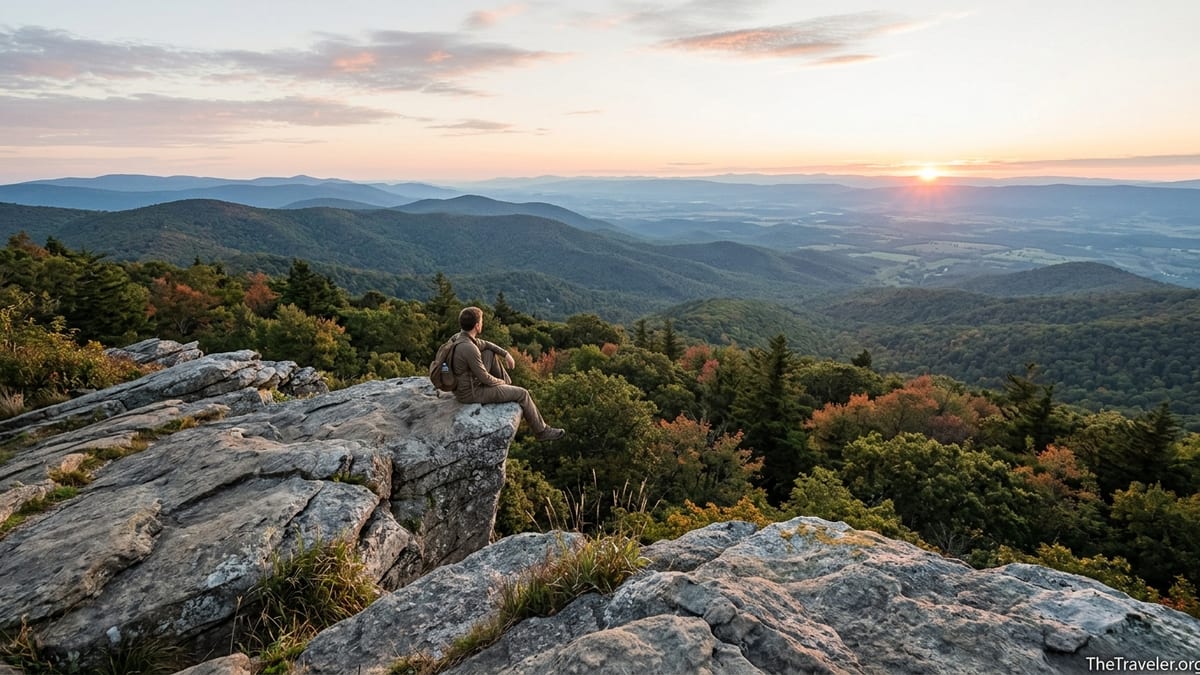
From Hawksbill, you also get that psychological thrill of standing at the park’s highest point. The elevation is only slightly higher than Stony Man in absolute terms, but many hikers describe a more dramatic sense of exposure. The platform sits above steep, rugged slopes with cliffs and talus below, so the drop-offs feel pronounced. Photographers often favor Hawksbill if they want a classic summit shot with a hiker silhouetted against the horizon or a wide-angle panorama that sweeps from north to south without much obstruction.
Stony Man’s view is a bit different in character. The main overlook faces primarily west and northwest, framing the Shenandoah Valley, Massanutten Mountain, and, in good conditions, the Allegheny Front beyond. The cliffs here are substantial, but the overall feel can be slightly cozier and more intimate than at Hawksbill. Trees often frame the view, especially in summer, and there is less of a sense of a full 360-degree sweep unless you explore the edges of the outcrop carefully and stay well back from the cliff edges.
For many travelers, the Stony Man viewpoint feels more like a balcony over the valley: you step out of the forest onto broad rock ledges where people sit in small clusters, picnicking or quietly watching the light change on the fields below. The view is no less beautiful and in some lights can be even more photogenic, particularly during fall foliage when the patchwork of color in the valley contrasts with the darker ridges. If you care most about a relaxed place to linger with a snack and soak in the scenery, Stony Man often edges out Hawksbill, which can be windier and feel more exposed.
Sunrise, Sunset, and Seasonal Timing
Both Stony Man and Hawksbill work well as golden-hour hikes, but the best choice for sunrise versus sunset can depend on your preferences and which way you want to face when the sky lights up. Stony Man’s main viewpoint, oriented more toward the west and northwest, makes it a favorite sunset destination. The sun drops toward the Shenandoah Valley, often painting the fields and ridges in warm tones, and the relatively short hike back to the car on wide, well-trodden trail feels manageable even with fading light. In practice, many visitors staying at nearby Skyland Resort time their dinner around this hike, heading up an hour before sunset and returning by headlamp or twilight.
Hawksbill’s vantage, with its expansive wraparound view, offers more flexibility. For sunrise, you can look out over the Piedmont to the east as the first light catches morning mist in the lowlands. In summer, experienced hikers often start from the Hawksbill Gap or Upper Hawksbill lot well before dawn, aiming to reach the summit as the sky turns pink. The trail’s steeper grade means you should budget extra time and bring good headlamps, but the payoff of watching light spill across both sides of the ridge can be unforgettable.
Seasonally, both peaks shine in different ways. In October, during peak fall foliage, either hike can feel like walking through a postcard, with reds and golds both in the forest and spread across the valley floor. Summer brings lush green tunnel-like sections on both routes, though the spruce and fir near Hawksbill’s summit lend it a slightly more alpine feel that surprises first-time visitors who associate Virginia with oaks and hardwoods. In winter, access depends on Skyline Drive’s status; road closures for snow and ice are common, but on days when the road is open and trails are packed down, both summits can offer striking, crowd-free vistas under low winter sun.
Spring visitors should be aware that early in the season, before full leaf-out, views are often more open even from intermediate viewpoints, which can partially equalize the experience between the two. In April, a hiker who is unsure about tackling Hawksbill’s full climb might still enjoy broad overlooks from lower sections of the trail where the lack of foliage opens up sightlines.
Crowds, Parking, and On-the-Ground Logistics
On busy weekends, your choice may come down to something as simple as where you can find a parking space. Both Stony Man and Hawksbill have dedicated lots, but these can fill by late morning during peak leaf season or on sunny Saturdays in late spring. Drivers frequently report circling for a space around midday, particularly at Stony Man, which benefits from its proximity to Skyland and its reputation as “the easy big view.”
Arriving before 9 a.m. or after 4 p.m. significantly improves your odds at both trailheads. For example, a visitor who pulls into the Upper Hawksbill lot at 8 a.m. on a June Saturday is likely to find multiple open spaces and climb mostly in relative quiet, while the same lot may be full by 11 a.m., with cars lining Skyline Drive’s shoulder where parking is prohibited. Rangers do ticket in no-parking zones, so it is worth adjusting your timing rather than improvising a spot.
As of mid-2026, entrance to Shenandoah National Park requires an entrance fee or valid interagency pass, and the park is moving toward cashless payment, so travelers should be prepared to pay by card or mobile. Once in the park, there are no separate trail fees for Stony Man or Hawksbill, but services at nearby facilities such as Skyland Resort, Big Meadows, and wayside shops can affect your day. Many hikers use the Skyland area as a base for Stony Man, grabbing coffee at the lodge before starting, while Hawksbill hikers might combine their summit with a picnic at one of the nearby overlooks along Skyline Drive.
For those using navigation apps, it is usually easier to search for “Stony Man parking Shenandoah” or “Upper Hawksbill parking Shenandoah” before losing cell service, then rely on the posted mile markers along Skyline Drive (around 41.7 for Stony Man and 45.5 to 46.5 for Hawksbill). In practice, the brown National Park Service signs are clear, but in fog or low visibility, having a general sense of distance between overlooks and trailheads helps prevent missed turns.
Safety, Weather, and Trail Conditions
While both hikes are short by mountain standards, they are still mountain hikes and deserve basic preparation. Hawksbill, in particular, can feel much colder and windier at the summit than at the parking lot. On a typical October afternoon, travelers report wearing a light T-shirt at their car and then wishing for a fleece and windproof shell at the top. Stony Man also sees quick weather changes, but its slightly more sheltered approach and shorter exposure on the cliffs mean conditions can feel marginally less harsh.
Trail surfaces on both routes combine compacted dirt with rocks and roots, and sections can become slick after rain or during shoulder seasons when ice lingers in shaded spots. Sturdy footwear with good traction is recommended for both summits, but is especially important on Hawksbill’s steeper grades. Visitors attempting either hike in early spring or late fall should watch for black ice on shaded steps and rock slabs, a common source of slips for under-equipped day trippers in running shoes.
Wildlife considerations are similar on both trails. Deer and black bears live throughout Shenandoah, and although close bear encounters on Stony Man or Hawksbill are not everyday events, they do happen. Practically, that means keeping food securely stored, giving wildlife plenty of space, and never trying to bait animals for photos. Ticks are an underappreciated concern; both hikes cut through mixed forest and brush where ticks can be present, so long pants, insect repellent, and thorough post-hike checks are smart, especially in late spring and summer.
Finally, the cliff edges at both viewpoints demand respect. At Stony Man, broad, sloping rock faces encourage people to wander for better angles, but loose gravel and hidden cracks can turn a casual stroll into a fall risk. Hawksbill’s stone platform includes low walls, yet there are still unprotected drop-offs if you push past established viewing areas. Rangers regularly remind visitors to keep children close and avoid standing on narrow outcrops for social media shots.
Which Should You Choose? Matching the Hike to Your Trip
If you are trying to pick a single hike, the answer often comes down to your group’s fitness level, your tolerance for crowds, and what kind of moment you want from your summit. For first-time visitors with mixed abilities in the group, Stony Man is usually the safer bet. A multi-generational family staying at Skyland, for instance, might find that grandparents, parents, and kids can all comfortably reach Stony Man’s viewpoint and linger there without feeling rushed or exhausted, then cap the day with ice cream at a nearby wayside.
By contrast, a pair of friends driving down from Washington, D.C. for a quick weekend may prize a sense of accomplishment and be willing to tackle steeper grades. They might choose Hawksbill via the Lower Hawksbill route in the afternoon, then drive a few minutes north or south along Skyline Drive to catch sunset from an overlook if lingering at the summit feels too windy or crowded. Fitness-focused travelers sometimes turn Hawksbill into a conditioning workout, repeating the climb for “vert” while using nearby trails like Whiteoak Canyon or Cedar Run as longer training routes on other days.
Photographers and devoted sunrise or sunset chasers might plan to do both peaks on different days. One realistic itinerary for a two-night stay: a relaxed Stony Man sunset on arrival day, followed by an early-morning Hawksbill sunrise the next. This approach avoids having to declare one viewpoint “better” and instead treats them as complementary perspectives on the same landscape. It also spreads out your time on Skyline Drive and increases your odds of catching at least one summit in good weather.
If your schedule or energy budget forces you to choose, a simple decision rule works well in practice. If you want the easiest high-payoff hike, are traveling with kids or newcomers to hiking, or strongly prefer a sunset view over the Shenandoah Valley, choose Stony Man. If you want to stand on Shenandoah’s highest point, do not mind a steeper climb, and are excited by a near-360-degree panorama, choose Hawksbill. Either way, you will see why these two summits consistently appear on “must-do” lists for the park.
FAQ
Q1. Which hike is easier, Stony Man or Hawksbill Summit?
Stony Man is generally easier. The standard loop is about 1.5 miles with roughly 300 feet of elevation gain, while popular Hawksbill routes are longer and steeper, often doubling the elevation gain.
Q2. Can I hike both Stony Man and Hawksbill in one day?
Yes, many visitors do both in a single day. A common plan is to hike Hawksbill in the morning when it is cooler, then tackle Stony Man later in the afternoon or near sunset.
Q3. Which summit has the better sunrise view?
Hawksbill usually wins for sunrise because its near-360-degree panorama includes open views toward the east over the Piedmont, making it ideal for watching first light spread across the landscape.
Q4. Is Stony Man or Hawksbill better for sunset?
Stony Man is often the more comfortable sunset choice. Its main overlook faces west toward the Shenandoah Valley, and the shorter, easier hike back to the car feels reassuring in fading light.
Q5. Are the trails suitable for young children or less experienced hikers?
Stony Man is better suited to young children and beginners, thanks to its shorter distance and gentler grades. Hawksbill is still accessible for many families but feels more strenuous, especially via the steeper Lower Hawksbill route.
Q6. Do I need special gear to hike these trails?
You do not need technical gear, but sturdy walking shoes or light hiking boots, water, and weather-appropriate layers are strongly recommended. A small headlamp or flashlight is important if you plan sunrise or sunset hikes.
Q7. How crowded do Stony Man and Hawksbill get?
Both can be crowded on weekends and during fall foliage, with parking lots filling by late morning. Arriving early or late in the day significantly improves both parking and trail conditions.
Q8. Can I reach the trailheads if I lose cell service?
Yes. Both trailheads are directly off Skyline Drive and are marked with standard National Park Service signs. It helps to note the approximate mileposts in advance and watch for signs as you drive.
Q9. Is one summit more photogenic than the other?
Both are highly photogenic in different ways. Hawksbill is excellent for wide, sweeping panoramas and summit silhouettes, while Stony Man often shines for relaxed, framed valley views, especially at sunset or during fall color.
Q10. If I only have time for one, which should I pick?
Choose Stony Man if you prefer an easier, family-friendly hike with a great sunset view. Choose Hawksbill if you want the park’s highest summit, a tougher climb, and a near-360-degree panorama.