


Ask rangers or regulars at Shenandoah National Park to name a hike with maximum views for minimum effort, and Stony Man Trail comes up again and again. Perched above 4,000 feet, this short, family friendly path climbs gently through shady forest before spilling out onto dramatic cliffs that look straight across the Shenandoah Valley and Massanutten Mountain. For visitors who want a true mountaintop moment without committing to an all day climb, Stony Man may be the single best return on investment in the park.
Get the latest updates straight to your inbox!
What Makes Stony Man Trail So Remarkably Easy
Stony Man’s secret is simple: you start high and climb just a little higher. The mountain tops out around 4,011 feet, making it the second highest peak in Shenandoah, but the classic route from the Stony Man parking area near Skyland begins just below the summit. The National Park Service lists the hike at roughly 1.6 miles round trip with about 330 to 340 feet of elevation gain, which they rate in their easiest category. In practical terms, that means most reasonably active visitors can reach the viewpoint in 30 to 40 minutes, even if they are not regular hikers.
The trail’s grade helps explain why it feels so forgiving. Instead of steep rock staircases or long, relentless climbs, Stony Man meanders uphill on a packed dirt path with occasional rocks and roots. There are no exposed drop offs along the route, and much of the way runs under a leafy canopy of oaks, maples, and mountain laurels that keep the sun at bay on hot summer days. For comparison, nearby Hawksbill, the park’s highest summit, gains roughly 450 to 550 feet in a similar distance and includes noticeably steeper pitches. Stony Man simply demands less effort for a payoff that feels just as grand.
Another factor that keeps this hike easy is its straightforward navigation. From the designated Stony Man parking lot off Skyline Drive, near mile 41.7 by Skyland Resort, you follow the white blazes of the Appalachian Trail for a short distance before turning onto the blue blazed Stony Man Trail. Clear signs and well worn tread make it hard to get lost, even for first timers who have never hiked in the park. There are no creek crossings, tricky scrambles, or confusing junctions, so you can relax and enjoy the walk instead of constantly checking a map.
The View: A Big-Mountain Payoff in Under a Mile
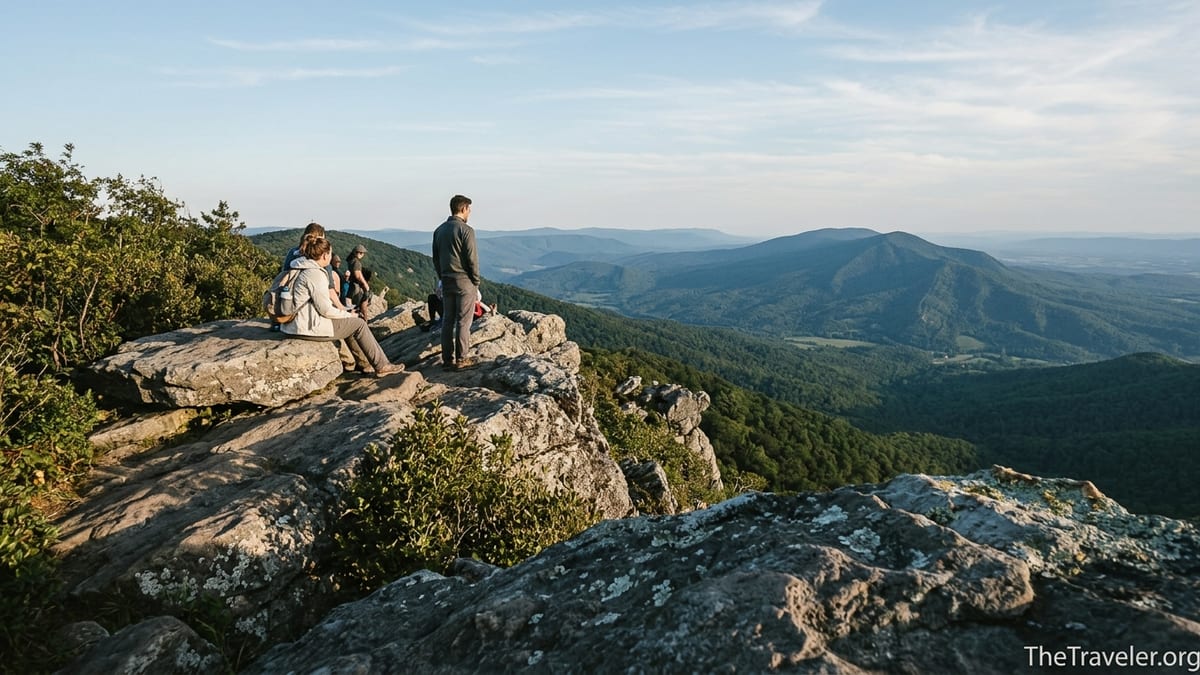
What elevates Stony Man from a pleasant forest stroll to a must do Shenandoah experience is the summit outlook. After a final, gentle climb, the trees suddenly fall away and you step out onto broad, lichen speckled cliffs that hang more than 2,900 feet above the valley floor. On a clear day, you can trace the ridgeline of Massanutten Mountain directly opposite, follow the sinuous course of the Shenandoah River, and see patchwork farm fields and small towns stretching off toward the horizon.
First time visitors often compare the payoff to that of much tougher hikes. Many people who have sweated up Old Rag or tackled longer routes like Mary’s Rock are surprised to find similarly sweeping vistas at the end of such a gentle approach. Photographers love Stony Man because the west facing cliffs capture soft golden light in late afternoon and spectacular pastel sunsets. You will frequently see tripods set up along the edge as the sun drops behind Massanutten, while families recline on the flat rocks and share snacks picked up earlier from the Skyland dining room or a cooler in the car.
The cliffs also create a real sense of exposure without requiring technical skill. You can stand safely back from the edge and still feel as if you are hovering above the valley, an effect that is particularly dramatic when wisps of cloud or low fog move through the gaps below. On windy days, gusts funnel up the face of the cliff and make the grass and low shrubs ripple, reinforcing the feeling that you are truly standing on top of a mountain. It is an experience many visitors associate with all-day climbs in western national parks but can have here in Shenandoah after less than a mile of walking.
How Stony Man Compares to Other Shenandoah Favorites
Shenandoah is rich with rewarding short hikes, but Stony Man occupies a special niche among them. Dark Hollow Falls, for example, is another park classic that covers roughly 1.4 miles out and back to a photogenic waterfall. The catch is that the climb back to your car is all uphill and can feel punishing for those not used to steep grades. Similarly, the Upper Hawksbill Trail, while relatively short, involves a steady push to reach the park’s highest point and can leave less experienced hikers out of breath.
Old Rag, the park’s most famous challenge, sits at the opposite end of the spectrum. It usually requires four to eight hours, includes exposed rock scrambles, and now involves a day-use ticket system in addition to the standard park entrance fee. Visitors planning a busy weekend that might also include Skyline Drive overlooks, a stop at Big Meadows, and dinner at one of the lodges often look for a hike that will not consume the entire day. Stony Man delivers a signature Shenandoah view with none of the logistical complications or physical strain of the park’s big-name challenge hikes.
Compared with some other “easy view” options, Stony Man also stands out for its variety. Many overlooks along Skyline Drive offer wonderful pull-out views straight from the car, but they can feel exposed on hot days, and there is a different satisfaction in walking to a viewpoint that is not immediately accessible from the road. Stony Man requires enough effort to feel earned without being exclusive, which is one reason it regularly appears on “best easy hike” lists from Virginia tourism agencies and regional hiking guides.
Practical Details: Getting There, Fees, and Timing
Reaching Stony Man is straightforward once you are inside Shenandoah National Park. Most visitors enter via one of the four main access points to Skyline Drive, then follow the road to roughly mile 41.7 near Skyland Resort. Look for signs for Stony Man and the dedicated parking area just north of the resort complex. Spaces are limited but tend to turn over fairly quickly, especially in the middle of the day as early hikers finish their outings.
To access the trail, you need a valid Shenandoah entrance pass. The park charges a per vehicle fee that covers all passengers for seven consecutive days. Exact prices change periodically, and Shenandoah has moved to fully cashless fee collection, so you should be prepared to pay by card or mobile payment at the entrance station. Frequent park visitors or those planning to pair Shenandoah with other U.S. national parks within a year often purchase an annual interagency pass instead, which typically pays for itself after a few trips.
Time of day makes a big difference in your experience. The Stony Man parking lot is relatively small and can fill quickly on peak autumn weekends when visitors come for foliage. If you arrive mid-morning on a sunny October Saturday, expect a short wait for a spot and steady traffic on the trail. Traveling in June or September on a weekday afternoon, by contrast, you might share the cliffs with just a handful of other groups. Many seasoned park goers aim for a late afternoon start, leaving the trailhead around 4 or 5 p.m. so they can linger at the summit through golden hour and descend before full darkness, carrying headlamps just in case.
Who Will Love This Hike: Families, First-Timers, and Casual Walkers
For families with children, Stony Man is a sweet spot between excitement and manageability. It is long enough that kids feel like they are going on a real adventure, but short enough that you can comfortably complete it between naps or meal times. Parents often break up the walk by pointing out the white blazes of the Appalachian Trail, letting children look for chipmunks darting across the path, or pausing to examine the gnarled trunks of high-elevation red spruce and fir near the top. At the cliffs, wide, relatively flat rock slabs provide room for supervised exploration and picnic-style snacks.
First time visitors to Shenandoah also gravitate to Stony Man because it is a gentle introduction to hiking in the Blue Ridge. Travelers who usually stick to roadside overlooks are often surprised by how capable they feel after completing the loop. People who are unsure about their fitness, older adults, or anyone recovering from an injury or illness may find this trail approachable when steeper routes are out of reach. It is a common choice for multigenerational groups where grandparents, parents, and teens all want to share a summit experience together.
One important caveat is that pets are not allowed on Stony Man Trail. Shenandoah is generally dog friendly, but the park specifically prohibits pets on a small number of popular routes, including this one, to protect sensitive plant communities and reduce crowding on narrow sections of trail. If you are traveling with a dog and want an easy hike with views, rangers often suggest alternatives such as Compton Gap, portions of the Appalachian Trail, or the Limberlost area, where leashed pets are permitted.
Season by Season: When the Reward Is Greatest
Stony Man is accessible in all but the worst winter conditions, and each season offers a slightly different flavor of reward. In late April and May, the forest comes alive with fresh green leaves and blooming wildflowers along the path. Mountain laurels and trilliums often appear in patches just off the trail, and cool spring temperatures make the modest climb feel even easier. The summit views can be especially clear in spring, with less haze hanging over the valley than in high summer.
Summer brings longer days and a lush, almost rainforest feel to the woods. Many visitors staying at Skyland Resort or Big Meadows plan Stony Man as an early morning outing before breakfast or a post-dinner walk to catch sunset, taking advantage of the cooler hours. Afternoon thunderstorms are common on hot days, and clouds sometimes build around the high peaks, so it is wise to check the forecast and carry a light rain jacket. Even so, the shady nature of the trail means it usually feels significantly cooler than walking along exposed Skyline Drive overlooks.
In autumn, the reward becomes truly outsized. From mid-October into early November, the ridges around Stony Man explode in shades of red, orange, and gold. Looking down from the summit feels like gazing over a living patchwork quilt of color, and it is easy to see why foliage reports often single out this part of the park. Crowds also peak in fall, so early starts, weekday visits, or shoulder-season trips in late September and early November can help you enjoy the colors with fewer people.
Winter is the quietest time on Stony Man, but on clear days after a snowfall the cliffs offer a stark, beautiful contrast of white drifts on the plateau and dark, leafless trees in the valley. Ice and packed snow can make the path slippery, so traction devices and warm layers are essential. On days when Skyline Drive is closed for snow or ice, the trailhead will be inaccessible by car, so it is important to check park alerts before you go. For those who catch the mountain in good conditions, though, the reward is a near-silent summit and crisp, far-reaching views.
The Takeaway
Across Shenandoah National Park, you can find hikes that are steeper, longer, wilder, or more remote than Stony Man, but few that match its ratio of effort to reward. In less than two miles and with only a few hundred feet of gentle climbing, you can stand on a true high-elevation summit, look across the entire Shenandoah Valley, and feel the wind whip up from the cliffs at your feet. The trail’s easy grade, clear markings, and proximity to amenities at Skyland make it an ideal choice for families, first-time visitors, and anyone wanting a memorable hike that still leaves plenty of day for scenic driving or lodge porch rocking.
Whether you are building a packed weekend itinerary or just slipping a short adventure into a Blue Ridge road trip, Stony Man offers something rare: the feeling of a big mountain accomplishment without the grind that usually goes with it. For many travelers, that combination of accessibility and awe is exactly what a national park hike should deliver.
FAQ
Q1. How long is the Stony Man Trail and how much time should I budget?
The classic Stony Man route from the main parking lot is about 1.5 to 1.6 miles round trip with roughly 330 to 340 feet of elevation gain. Most visitors complete the hike in 45 to 75 minutes, depending on how long they linger at the summit viewpoint.
Q2. How do I get to the Stony Man Trailhead inside Shenandoah?
Once you enter Shenandoah National Park and drive along Skyline Drive, look for Skyland around mile 41.7. Signs for Stony Man direct you to a dedicated parking area just north of the resort, where you will find trail information boards and the start of the hike.
Q3. Is Stony Man suitable for beginners or people who are not very fit?
Yes. The trail is considered one of the park’s easiest summit hikes. The distance is short, the grade is generally gentle, and there are no technical sections or scrambles. Beginners should still wear sturdy shoes, bring water, and take breaks as needed, but most people with basic mobility can comfortably reach the overlook.
Q4. Can I bring my dog on Stony Man Trail?
No. Pets are not allowed on Stony Man Trail, even on a leash. Shenandoah permits dogs on many other routes, but this particular trail is one of a small group where pets are prohibited. If you are traveling with a dog, ask rangers for alternative easy hikes with views where pets are welcome.
Q5. Do I need any special gear to hike Stony Man?
For most of the year, basic day-hiking essentials are enough: comfortable walking shoes or light hiking boots, a small backpack with water, a snack, and a light jacket. In cooler months, add warm layers, hat and gloves, and traction devices if snow or ice is present. Trekking poles are optional but can help with balance on rocky patches.
Q6. Is the trail crowded, and when is the best time to go?
Stony Man is popular, especially during fall foliage and on sunny weekends. To avoid crowds, aim for early morning or late afternoon, and consider visiting on weekdays outside peak autumn color season. Even when busy, the viewpoint area usually has enough space for people to spread out across the rocks.
Q7. Is Stony Man accessible for strollers or wheelchairs?
The trail surface is uneven, with rocks, roots, and some short, steeper sections, so it is not suitable for strollers or standard wheelchairs. Visitors seeking more accessible options may prefer paved or smoother paths near visitor centers and some overlooks along Skyline Drive.
Q8. Are there restrooms or water near the trailhead?
There are no restrooms or water fountains directly on the trail, but facilities are typically available at nearby Skyland Resort during its operating season. Many hikers use restrooms and fill water bottles at Skyland or other developed areas of the park before driving to the Stony Man parking area.
Q9. What kind of weather should I expect at the summit?
Because Stony Man sits over 4,000 feet above sea level, temperatures at the summit are often noticeably cooler and windier than in the valley. Even in summer, you may want a light layer at the overlook. Weather can change quickly in the mountains, so check the forecast before your hike and be prepared for clouds, fog, or brief showers.
Q10. Is it safe to go to the edge of the cliffs for photos?
The summit cliffs provide dramatic views, but they are still natural, uneven rock ledges with significant drop-offs. Stay well back from the edge, supervise children closely, and avoid risky poses near drop-offs. You can capture excellent photos and enjoy the panorama from safer spots a few steps away from the brink.