


More news on this day
Hungary has moved to halt new guest worker residence permits from early June 2026, a sweeping policy shift that tightens access to its labor market for many non-EU nationals and raises fresh uncertainties for foreign travelers planning long stays tied to work.
Get the latest news straight to your inbox!
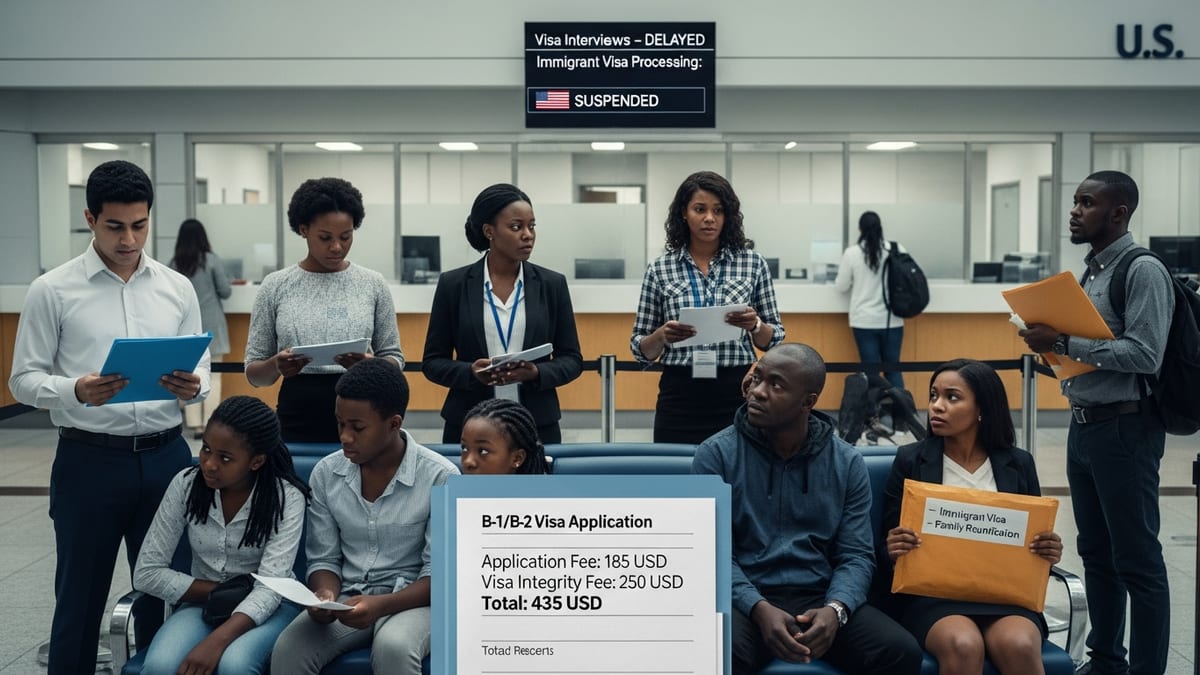
New decree suspends guest worker residence permits
Publicly available information shows that from 6 June 2026 it is no longer possible to apply for a new guest worker residence permit in Hungary. A recent government decree amending earlier rules on the employment of guest workers effectively removes the list of eligible “third countries,” leaving no nationality currently able to file a fresh application in this category.
Legal analyses of the measure indicate that the change is framed as a response to concerns about the “mass influx” of guest workers and its perceived impact on Hungarian wages. The new rules are presented as part of a broader strategy to prioritize domestic workers, especially in lower and mid-skilled roles that were previously filled in large numbers by recruits from outside the European Union.
The suspension targets a specific immigration route created to address labor shortages in sectors such as manufacturing and services. Up to 35,000 guest worker residence permits were envisaged for 2026 under earlier quota plans, but the new decree effectively closes the door on expanding that pool under the same legal framework.
Commentary from immigration specialists notes that this is a suspension rather than a formal abolition of the guest worker category. However, the absence of any eligible third-country list and the lack of a stated end date mean that, in practice, the guest worker route for new applicants has been frozen for an indefinite period.
Impact on existing permits and pending applications
While new applications are blocked, the June 2026 measures draw a distinction between future arrivals and workers already in the system. Law firm briefings explain that applications submitted and fully paid before 5 June 2026 continue to be processed under the previous rules. This carve-out is intended to avoid abruptly cancelling procedures that were already underway at the time the decree entered into force.
Third-country nationals who already hold a valid guest worker residence permit issued before 6 June 2026 retain the option to seek an extension or reissue in line with earlier regulations. For these workers, the immediate risk is less about losing status overnight and more about how future policy shifts could affect renewal prospects or transitions into other permit categories.
At the same time, guidance directed at employers highlights a tightening environment. Companies that had been planning to recruit large contingents of non-EU staff on guest worker permits are now being advised to re-evaluate staffing models, look at alternative permit types, or shift recruitment toward EU and domestic labor pools. Some commentary also points to potential knock-on effects for project timelines in sectors such as construction and logistics, where reliance on foreign labor has been significant.
Foreign workers already living in Hungary on other types of residence permits, such as standard employment or family reunification status, are not directly targeted by the June decree. However, the broader climate of restriction is prompting many to reassess long-term plans, especially if they had considered moving into guest worker roles or inviting relatives to join them under more flexible labor schemes.
Alternative work routes that remain available
Despite the halt on guest worker residence permits, other channels for employment-based stays in Hungary remain technically open. Commentaries on the new rules point out that residence permits for employment purposes, which typically cover more specialized or higher-skilled roles, continue to be available to eligible non-EU nationals, subject to existing labor and immigration requirements.
In practice, this means that certain workers who might previously have entered via the guest worker track may now need to qualify under stricter employment permit criteria. These routes generally require closer alignment with specific job offers, higher skill levels, or stronger evidence of labor-market need, making them less accessible to large numbers of low-wage applicants.
Industry-focused analyses suggest that multinational manufacturers and service providers in Hungary will feel the shift most acutely. Some reports anticipate increased investment in automation, intensified training of local staff, or the relocation of certain functions to neighboring countries with more flexible labor rules. Smaller employers that had relied on agencies to recruit guest workers from countries such as the Philippines, Georgia, or Armenia may face more immediate operational challenges.
At the same time, Hungary continues to offer a range of non-work residence options, including student permits and certain investment-related schemes. These categories operate under separate legal frameworks and are not directly changed by the June 2026 guest worker suspension, although they do not generally provide an easy substitute for the kind of mass recruitment that the guest worker system once facilitated.
Travel and border implications for foreign visitors
The June 2026 shift in guest worker policy has raised fresh questions among travelers who were planning mid- or long-term stays in Hungary that combined work and travel. Specialist immigration guides stress that the suspension of guest worker residence permits does not alter Schengen short-stay rules for tourism or business trips of up to 90 days within a 180-day period for nationals who require only a visa-free entry or a standard Schengen visa.
However, non-EU nationals who had expected to enter Hungary on a guest worker residence permit to take up employment and then travel within the Schengen Area face new constraints. Without that permit, they must either qualify for a different long-stay status or limit themselves to short visits, which do not allow legal employment in Hungary. This effectively curbs one of the main pathways that combined long-term residence, work, and intra-Schengen mobility for lower-skilled workers.
Regional reports also indicate that broader discussions on EU migration management are running in parallel with Hungary’s national measures. The timing of the guest worker freeze, just as new European-level asylum and migration rules begin to take effect, adds an additional layer of complexity for travelers and employers trying to navigate overlapping systems of regulation.
For foreign visitors whose plans center purely on tourism, family visits, or short business trips, border procedures and eligibility criteria appear largely unchanged so far. The most significant travel effects are instead being felt by those whose stays depend on the now-suspended guest worker residence permits, particularly citizens of countries that had recently become important sources of labor for Hungarian industry.
What international travelers and workers should watch next
Analysis from immigration professionals and regional media emphasizes that Hungary’s June 2026 measures are part of a fluid policy environment. The new government has signaled that it wants tighter control over low-wage labor migration, but has also left room for alternative employment routes and targeted schemes. Observers therefore expect further regulatory adjustments and clarifications in the coming months.
Prospective workers are being urged, through public guidance, to verify whether they qualify for any remaining employment-based residence options before making travel or relocation plans. Given the indefinite nature of the guest worker suspension, relying on that specific route is increasingly risky, especially for those who have not yet started an application.
Travel-focused publications note that these developments could alter Hungary’s appeal as a medium-term work-and-travel destination for non-EU nationals, even as it remains an attractive short-stay tourism market. Changes in labor rules can indirectly influence flight routes, seasonal staffing in hospitality, and the availability of certain services that depend heavily on foreign workers.
With both domestic political factors and EU-level negotiations still in play, international travelers and workers with an interest in Hungary are likely to face an evolving rulebook. Publicly available information indicates that, for now, the key constant is the suspension of new guest worker residence permits, a move that marks one of the most far-reaching shifts in Hungary’s recent immigration and labor policy.