


GMS is a well known Canadian travel insurer, covering everyone from backpackers flying to Mexico for a week to snowbirds spending months in Arizona. Yet many travelers unknowingly make choices that limit what GMS will actually pay if something goes wrong. Understanding how GMS policies really work, and what habits quietly erode your protection, can make the difference between a paid claim and a costly denial.
Get the latest updates straight to your inbox!
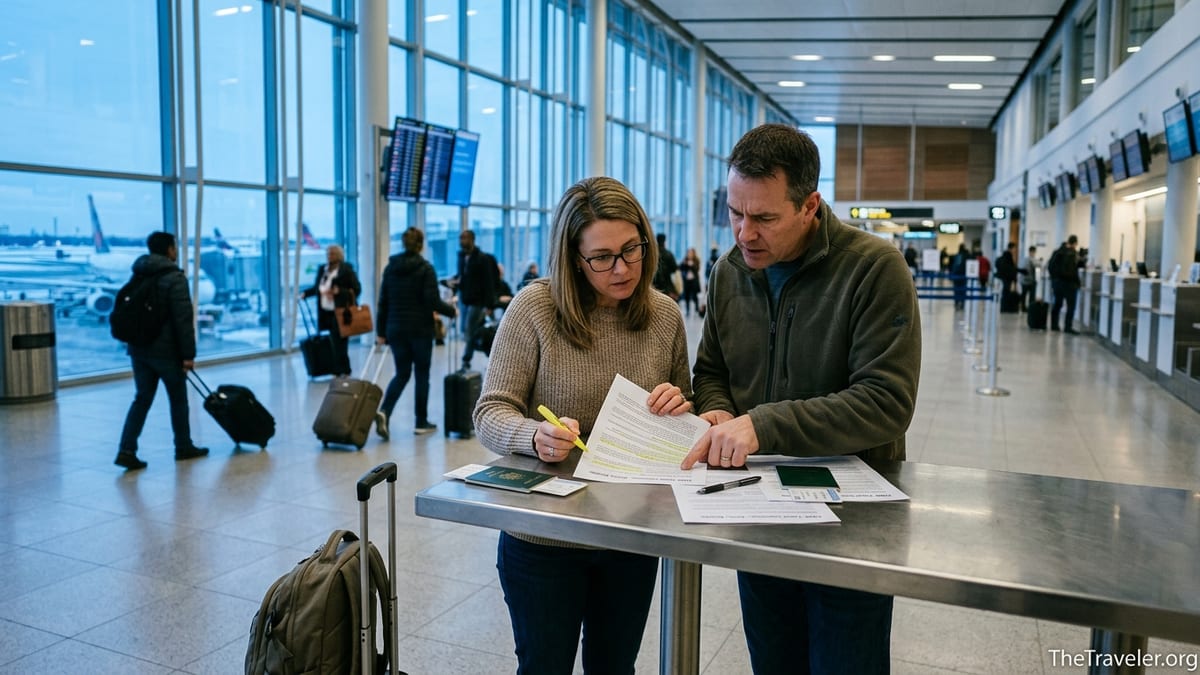
Stop Treating GMS Like a One Size Fits All Policy
One of the biggest mistakes travelers make with GMS is buying a policy as if all GMS products were interchangeable. In reality, GMS sells several distinct lines, including TravelStar Emergency Medical for Canadian residents, trip cancellation and interruption coverage, and separate Visitors to Canada policies. Each option has its own eligibility rules, limits and exclusions. Assuming that any GMS logo on your documents means you are fully protected is a fast route to disappointment at claim time.
Consider a Regina couple heading to Portugal for 14 days. They purchase a GMS TravelStar Emergency Medical plan through an online broker, believing that “travel insurance” automatically includes trip cancellation if their daughter gets sick before departure. When their child is hospitalized three days before the flight, they cancel and file a claim for their non refundable airfare and pre paid Airbnb. Only then do they discover they never bought GMS Trip Cancellation & Interruption at all. The emergency medical policy they hold is designed to pay for medical expenses during the trip, not for lost prepaid costs before it begins.
This kind of misunderstanding is common because many Canadian credit cards and tour operators bundle different protections under a single “travel insurance” heading. GMS, by contrast, sells medical and cancellation coverage as separate contracts. If you assume your GMS medical plan automatically covers baggage, delays or non refundable tours, you are essentially underinsuring yourself without realizing it.
The fix is straightforward: match the product to the trip. For a simple long weekend in Seattle, GMS TravelStar Emergency Medical may be enough. For a three week cruise and land tour worth tens of thousands of dollars, you should be looking at a combination of GMS emergency medical and dedicated trip cancellation and interruption coverage that reflects the full value of your bookings.
Stop Ignoring Pre Existing Condition Stability Rules
GMS is clear that pre existing medical conditions are only covered if they have been “stable” for a specified period before departure, typically 180 days for many TravelStar and Visitors to Canada plans. Stability has a very specific meaning in GMS documents: no new symptoms, no dosage changes, no new tests ordered, no hospitalizations and no referrals to specialists during that window. A condition can feel stable to you and your family doctor yet still be excluded under the wording of your policy.
Imagine a 72 year old snowbird from Edmonton with atrial fibrillation and high blood pressure buying a GMS TravelStar Annual Multi Trip plan. Two months before leaving for Palm Springs, her cardiologist adjusts her blood pressure medication and orders a follow up stress test. She feels better, her doctor is happy with her progress, and she assumes she is covered. But when she has a heart related emergency in California and racks up 45,000 Canadian dollars in hospital bills, GMS can review her medical records, note those recent medication changes and investigations and treat the episode as an uncovered pre existing condition, because the 180 day stability requirement was not met.
Where travelers go wrong is treating the health questionnaire as a box ticking exercise or assuming that if a doctor has “cleared” them for travel, the insurer must agree. GMS uses its own stability definitions, which may be stricter than what your doctor casually considers stable. Some Canadian insurers sell optional riders to shorten stability periods for an extra premium; GMS, by contrast, builds specific stability rules directly into many plans. If you do not take time to compare your last six months of medical history against those definitions, you can unintentionally self exclude yourself from coverage for the very conditions you worry about most.
Before you buy, sit down with a list of all diagnoses, prescriptions and recent tests for the past year. Compare that against the eligibility and pre existing condition wording in the latest GMS TravelStar policy booklet or Visitors to Canada overview. If anything has changed in the last 180 days, call a licensed broker or GMS directly and ask how that affects eligibility and coverage. Guessing or downplaying details to get a lower premium can result in a claim denial that is far more painful than paying a slightly higher price upfront.
Stop Underinsuring Expensive Trips and Side Travel
Another frequent misstep is insuring only part of your trip cost or forgetting about side trips, especially when mixing GMS coverage with other benefits such as credit card insurance. GMS’s own FAQs note that its trip cancellation and interruption products are designed for trips up to a certain per person value, and that you must insure the full amount of prepaid, non refundable costs rather than counting on partial top ups from other sources.
Take a Toronto family booking a 16,000 dollar Mediterranean cruise for four. Their premium travel credit card includes some cancellation protection, so they decide to buy GMS Trip Cancellation and Interruption only for 8,000 dollars, assuming the rest will be covered by the card. Months later, when a medical emergency forces them to cancel, GMS assess the claim and points to its rule that the entire prepaid amount must be insured under its policy, not partially split. Because the trip’s total value exceeds what they declared, GMS can reduce the payout proportionally or deny it outright, leaving them to argue with their card issuer about the shortfall.
Similarly, Visitors to Canada policies from GMS often include limited coverage for side trips outside Canada, provided those side excursions are shorter than a specified number of days and begin and end in Canada. If your visiting parents decide to add a spontaneous two week detour to Florida during a three month stay, they might unknowingly step outside the side trip conditions. A medical emergency during that detour could fall into a coverage gap between the GMS Visitors policy and any separate U.S. medical plan they did not realize they needed.
The solution is to map out the total prepaid cost and route of your trip before buying insurance. List your flights, cruise fare, tours, rail passes and prepaid accommodation, then check that the amount you declare on your GMS cancellation policy equals that full total. If your itinerary includes side trips to other countries, confirm that your GMS medical plan explicitly covers them for the right number of days. When in doubt, you can often buy an additional single trip GMS TravelStar policy to cover an extended stay beyond the limit of an annual plan or to close any gaps created by complex routing.
Stop Assuming Risky Activities and High Risk Destinations Are Covered
GMS policies, like most in the Canadian market, routinely exclude claims arising from certain adventure or extreme sports and from travel to destinations under high level government advisories. Older GMS reviews and current third party summaries highlight that activities such as bungee jumping, skydiving, hang gliding and some forms of mountaineering are treated as excluded high risk pursuits. Likewise, GMS information available through brokers notes that travel to countries under official “avoid non essential travel” or “avoid all travel” advisories can render a policy largely inapplicable to events linked to those warnings.
Picture a group of friends from Vancouver booking a budget trip to Central America. They buy an emergency medical policy from GMS through an online comparison site, planning a week of volcano trekking and zip lining. While most guided hikes and zip lines run by reputable operators fall under standard recreational activities, one friend signs up locally for an unregulated canyoning excursion involving rappelling into a gorge with minimal safety oversight. She suffers a serious fall that requires surgery. When the claim hits GMS, the insurer looks at the activity, classifies it alongside other excluded high risk sports and declines to cover the resulting costs.
Now consider a different scenario: a solo traveler from Montreal buys GMS TravelStar coverage for a long planned journey to a country that is stable at the time of purchase. Two months before departure, the Government of Canada issues a broad advisory to avoid non essential travel due to sudden civil unrest. The traveler decides to go anyway. If a claim later arises out of that unrest, such as injury during a riot or expenses related to an evacuation, GMS may rely on the advisory related exclusions to deny coverage tied to the warned risk, even though the policy was bought earlier.
To avoid unpleasant surprises, always review the exclusions in the current GMS policy booklet against your planned activities and destinations. If your main goal is heli skiing, backcountry trekking or technical climbing, talk to a broker about specialized coverage, because a standard GMS policy is not built for that risk. And if your dream destination appears under a strong travel warning when you check the federal advisory page before departing, understand that going ahead may not only void parts of your GMS coverage but also complicate any claim you later submit.
Stop Forgetting to Call GMS Assistance Before Getting Care
Many travelers assume that in a true emergency they can simply go to the nearest hospital, hand over their insurance card and sort the paperwork out later. GMS, however, like most travel insurers, emphasizes the need to contact its 24 hour assistance service as soon as reasonably possible when a medical issue arises. The assistance team coordinates care, confirms coverage with hospitals and often arranges direct billing. Failing to call does not automatically nullify every claim, but it can shrink how much GMS will reimburse or leave you responsible for large upfront payments.
An example illustrates the stakes. A Calgary couple vacationing in Maui rush their child to a private clinic when he breaks his arm on a playground. Stressed and focused on their son, they do not call the GMS assistance number printed on their wallet card until two days later. By then, the clinic has billed them several thousand dollars at premium “tourist” rates. Once GMS receives the claim, it may decide it would have directed them instead to a different facility that accepts negotiated rates, and it can limit reimbursement to what it would have paid at that preferred provider. The family is left arguing with the clinic over the balance.
Delaying contact also complicates situations where GMS requires prior approval, such as costly diagnostic imaging, ambulance air evacuation or non emergency follow up visits. Without that approval, you might discover after the fact that GMS only covers a fraction of the bill, if any, because they were not involved in the decision making before the services were provided.
The practical habit to adopt is simple: program the GMS emergency numbers into your phone and keep the printable wallet card with your passport. If you are conscious and safe, call before receiving non urgent treatment. In a life or limb threatening emergency, seek immediate care first, but contact GMS or have a travel companion do so as soon as the situation is under control. Document the call times and the instructions you receive so you can demonstrate that you complied with the assistance requirements if any questions arise later.
Stop Filing Sloppy or Late Claims With GMS
Across the travel insurance industry, a significant share of denied or delayed claims comes down to incomplete paperwork and missed deadlines rather than outright ineligibility. GMS is no exception. Its policy wording sets clear expectations about when you must notify the insurer of a potential claim and what supporting documents are required, from itemized medical bills and physician reports to proof of trip payments and cancellation penalties.
In practice, many travelers on their way home toss receipts into a backpack, forget to ask hospitals for detailed invoices, or assume that a credit card statement will be enough to prove trip costs. Weeks later, when they finally submit a claim to GMS, they are missing key items. Back and forth emails follow, sometimes stretching over months. In the worst cases, the delay pushes the claim outside the time limits spelled out in the contract, giving GMS grounds to deny it entirely.
For example, a Winnipeg teacher on a guided tour in Italy develops severe food poisoning, racks up nearly 3,000 dollars in clinic visits and hotel extensions, and then waits four months to gather all her paperwork. Her GMS policy requires that she submit a completed claim form and supporting documents within a certain window, often 90 days in the travel insurance world, unless there is a valid reason for delay. Absent such a reason, GMS can treat her late filing as grounds to limit or reject the claim, even if the underlying medical expenses would otherwise qualify.
The best defense is to treat documentation as part of your trip. Ask every provider for detailed, itemized bills that state diagnoses and services performed. Keep boarding passes and booking confirmations for flights, tours and hotels in a dedicated digital folder. As soon as you return home, download the relevant GMS claim forms from their website or request them from a broker, complete them carefully and submit by email or mail with all supporting evidence. If GMS or its claims administrator asks for additional documents, respond promptly and keep copies of everything you send.
The Takeaway
GMS can be a solid partner for Canadian travelers and visitors to Canada, but only if you stop making assumptions about what your policy does and does not cover. The most common pitfalls are treating all GMS products as interchangeable, overlooking strict pre existing condition stability rules, underinsuring expensive itineraries, assuming that high risk sports and warned destinations are protected, failing to contact GMS assistance before treatment and filing incomplete or late claims.
By reading the current policy booklet, matching the right GMS product to your trip, double checking the stability of your health conditions, insuring your full prepaid costs, respecting exclusions and taking documentation seriously, you shift the odds in your favor. The goal is not just to “have insurance” but to have insurance that actually pays when you need it. If you approach GMS as a detailed contract rather than a vague safety net, your coverage will be stronger and your travels less stressful.
FAQ
Q1. Does GMS TravelStar emergency medical insurance automatically include trip cancellation coverage?
Not by default. GMS sells emergency medical and trip cancellation or interruption as separate products. If you want protection for prepaid, non refundable trip costs, you must purchase a dedicated GMS cancellation and interruption plan in addition to any TravelStar emergency medical policy.
Q2. How long must my pre existing condition be stable for GMS to cover it?
For many GMS travel products, pre existing conditions must be stable for at least 180 days before your policy takes effect, based on GMS’s own definition of stability. That definition usually requires no new symptoms, no medication changes, no new tests or referrals and no hospitalizations in that period. Always check the current wording for your specific plan.
Q3. Can I rely on my credit card insurance and only partially insure my trip with GMS?
That approach is risky. GMS generally expects you to insure the full amount of your prepaid, non refundable trip costs under its trip cancellation and interruption policy. If you deliberately underinsure, GMS can reduce or deny a claim, and your credit card coverage may not fill the gap the way you expect.
Q4. Are activities like skiing, zip lining or hiking covered by GMS?
Many regular recreational activities are covered, but certain high risk sports such as bungee jumping, skydiving, hang gliding and some forms of mountaineering are typically excluded. If your trip revolves around adventure sports, you should discuss the details with a broker or GMS before buying, and consider specialized coverage if needed.
Q5. What happens if I do not call the GMS assistance number before getting treatment abroad?
If you delay contacting GMS, they may still review your claim, but they can limit reimbursement to what they would have paid had you followed their instructions or used preferred providers. In some cases, lack of prior approval for expensive services can lead to partial or full denial of a claim.
Q6. Does GMS cover travel to countries under a government travel advisory?
Travel to destinations under strong advisories such as “avoid non essential travel” or “avoid all travel” can trigger exclusions in GMS policies, especially for claims related to the risk described in the advisory. If your destination appears under such a warning, you should assume parts of your coverage may not apply.
Q7. I changed my medication a month before travel. Should I still buy GMS insurance?
You can still seek coverage, but a medication change that recent may mean your pre existing condition does not meet GMS’s stability requirement. That could lead to a denial for related claims. Disclose the change accurately, review the stability wording and speak with a licensed advisor about whether a different product or timing makes more sense.
Q8. How quickly do I need to submit a claim to GMS after my trip?
GMS, like many insurers, sets specific deadlines for filing claims, often within a few months of the date of loss. Exact timelines appear in your policy booklet. Submitting early, with complete documentation, is always safer than testing the outer limit of those deadlines.
Q9. Are side trips outside Canada covered under GMS Visitors to Canada insurance?
Some GMS Visitors to Canada plans include limited coverage for short side trips outside Canada, provided certain conditions are met, such as the side trip not exceeding a set number of days and beginning and ending in Canada. Longer or separate international journeys may require additional medical coverage.
Q10. What is the single most important thing I can do to avoid a denied GMS claim?
The most important step is to read and understand your policy before you travel, especially eligibility criteria, pre existing condition rules, exclusions and claim procedures. If anything is unclear, ask GMS or a licensed broker for clarification in writing so you can align your expectations with what the contract actually promises to cover.