


More news on this day
Rail passengers across parts of the United Kingdom are being urged to check their journeys before travelling, as operators alter services and prepare for widespread disruption ahead of Storm Austen’s arrival on Friday.
Get the latest news straight to your inbox!
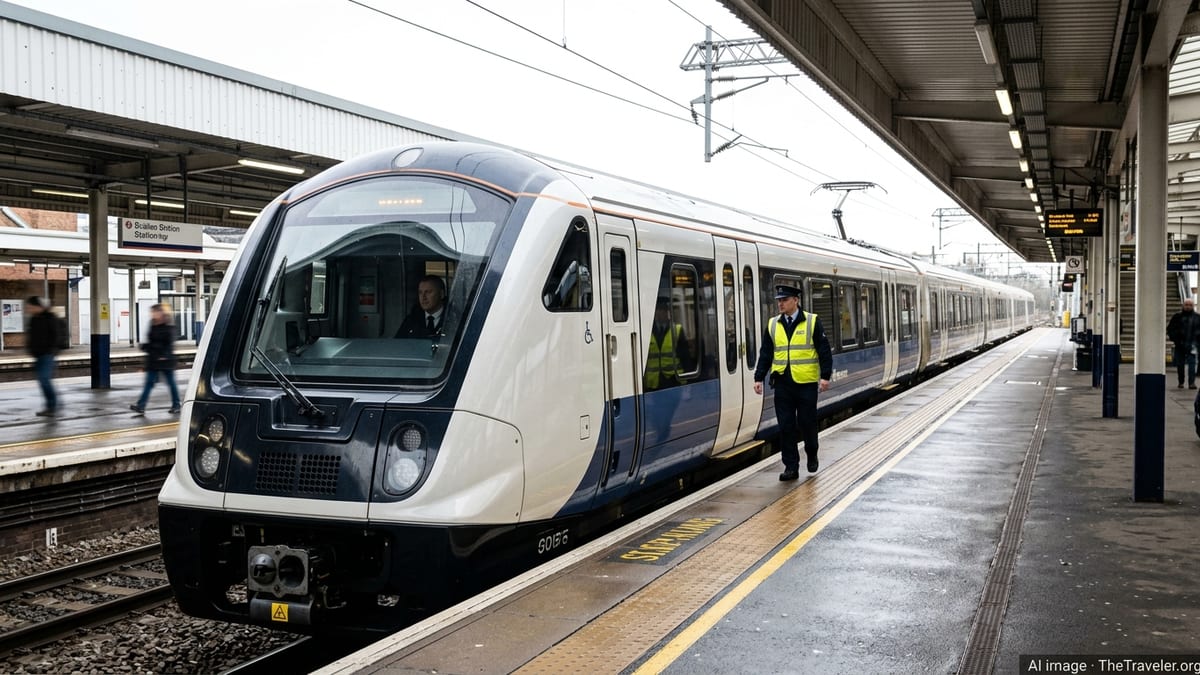
Strong winds and amber warnings trigger rail changes
Forecasts from the Met Office indicate that Storm Austen will bring a spell of very strong winds to parts of southern and western England, with an amber weather warning in force for coastal areas of Devon and Cornwall on Friday morning. Publicly available information shows that gusts could exceed 80 mph along exposed coasts, with inland areas also experiencing disruptive conditions during the morning peak.
Network Rail and train operators have begun adjusting timetables in anticipation of the storm, particularly across the South West. Guidance published ahead of the weather system notes that high winds increase the risk of fallen trees, windblown debris and damage to overhead wires, all of which can force trains to run more slowly or be cancelled at short notice.
According to recent updates from rail industry channels, passengers are being asked to build in extra time and to expect that some routes may have a reduced service, especially early on Friday. Real time journey planners and operator alerts are being highlighted as the primary tools for checking whether services are running and if any last minute alterations have been made.
Devon and Cornwall face reduced Great Western Railway services
Great Western Railway has set out specific changes for Devon and Cornwall in response to Storm Austen. Published information indicates that services in the far South West will be reduced during the period of strongest winds, with some trains suspended and others subject to extended journey times.
In Cornwall and west Devon, where the most severe coastal gusts are expected, GWR has confirmed that speed restrictions will be in place for several hours on Friday. Reports indicate that these lower speed limits are scheduled from the start of service until around early afternoon, covering the window when the amber warning is in effect and shortly afterward.
Intercity and regional routes linking Penzance, Plymouth and Exeter with the rest of the network are among those expected to see alterations. Where trains do operate, they may call at fewer stations or take longer than normal to complete their journeys, with shorter formations also possible as fleets are repositioned around the network.
Local updates show that replacement road transport has not been widely advertised at this stage, reflecting the expectation that roads may also be affected by fallen trees and difficult driving conditions. Passengers who normally rely on branch lines and coastal stretches are therefore being advised to consider whether their journeys are essential during the peak of the storm.
National Rail issues check-before-travel message
National Rail’s central information channels are echoing the message for passengers to check before they travel, highlighting that disruption may not be limited to the South West. The Met Office warning suggests that Storm Austen’s strong winds could also affect other parts of England and Wales, with a risk of longer journey times and cancellations on a wider range of routes.
Recent travel advice made available to the public notes that timetables may be altered in advance, but that further short notice changes are possible as the weather develops. Passengers are being warned that first and last train times may shift on some routes, and that intermediate services could be removed from the timetable in order to keep key links running.
Where trains are cancelled outright, published disruption guidance for recent incidents shows that passengers holding advance or off peak tickets are often allowed to travel on alternative services immediately before or after their booked train. The precise arrangements can vary by operator and by the scale of disruption, so rail users are being encouraged to check the latest conditions of travel for their specific ticket type.
Information from previous severe weather events suggests that crowding may become an issue on the services that do run, particularly once the most intense winds begin to ease and more people attempt to travel. Travellers are therefore being reminded that, when possible, shifting a journey to later in the day or to another date can reduce the risk of disruption.
What passengers in affected regions should expect
Passengers in Devon, Cornwall and neighbouring counties are expected to experience the most visible changes on Friday morning. Timetables for local stopping services, particularly along exposed coastal routes, are likely to be lighter than usual, with gaps between trains and some cancellations already built into the altered schedules.
On busier intercity stretches, speed restrictions and the potential for debris on the line mean that even those trains which do operate may arrive much later than advertised. Operators are signposting that journey planners will be updated throughout the night and early morning as inspection teams report back on any damage to tracks, signalling equipment or overhead lines.
Further north and east, rail passengers may see comparatively smaller adjustments, such as minor retimings and isolated cancellations where trains are diagrammed to run into or out of the worst affected areas. However, industry briefings on previous storms indicate that knock on effects can travel widely across the network, particularly when rolling stock and crews are out of position because earlier services have been curtailed.
Passengers connecting with long distance trains at hubs such as Exeter St Davids, Plymouth and Bristol are being urged to pay close attention to connection times. Missed links can result in extended waits where contingency services are infrequent, and operators have been using their public channels to underline the importance of checking both legs of any connecting journey.
Practical steps for travellers planning rail journeys
For those who do need to travel on Friday, rail industry guidance on severe weather disruption highlights several practical steps that can help reduce the impact of Storm Austen. The first is to recheck journey details as close as possible to departure, using official journey planners or operator updates rather than relying on printed timetables or previously saved itineraries.
Passengers holding advance tickets are being advised to monitor operator announcements regarding ticket flexibility. During recent episodes of extreme weather, some train companies have allowed customers to travel earlier or later than booked, or to use tickets on different routes where lines have been closed, and similar measures may be introduced if Storm Austen causes significant disruption.
Travellers are also being encouraged to allow extra time at stations, particularly where interchange is required, and to be prepared for short notice platform changes and crowd management measures. Publicly available safety guidance for high wind events notes that station facilities can become busy when trains are delayed, so carrying water and basic supplies is recommended for longer journeys.
While the full impact of Storm Austen will only become clear as it moves across the country, rail operators, infrastructure managers and meteorological services are aligned in advising passengers not to assume that services will run as usual. For anyone planning to travel in the most exposed parts of the network on Friday morning, the consistent message is to check before setting out and to be prepared to change plans if conditions deteriorate.