


More news on this day
A powerful late-summer storm sweeping across the Baltic region on August 23, 2026 has disrupted air and rail travel, with flight delays at Riga International Airport and widespread train cancellations and interruptions reported in Latvia and neighboring countries.
Get the latest news straight to your inbox!
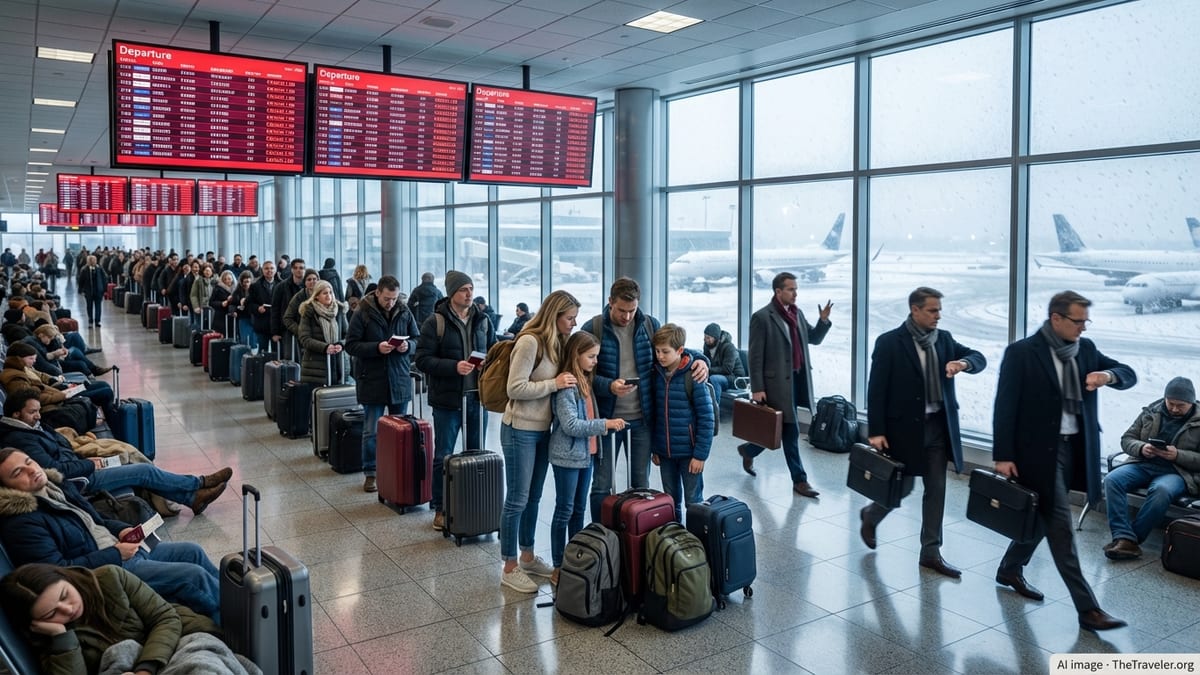
Severe Weather Brings Major Operational Disruption
Publicly available reports describe the storm system as one of the most impactful to hit Latvia in years, bringing winds above 60 miles per hour, heavy rain, and localized damage across parts of Latvia, Lithuania, and Estonia. The intensity of the weather has affected key transport corridors on both air and rail networks, particularly around the Latvian capital, Riga.
Coverage from regional outlets indicates that the cyclone moved through the area from late Saturday into Sunday morning, triggering structural damage, localized flooding, and significant power outages. In some locations, rainfall totals approached half of the typical monthly average in a single day, contributing to operational challenges for infrastructure operators.
Transport providers have been working through the morning to restore services, but the combination of high winds, debris, and ongoing network checks has kept disruption elevated. Travelers across the region are being advised to expect longer journeys, altered timetables, and potential last-minute changes.
Information available as of Sunday afternoon suggests that while conditions are gradually improving, residual disruption in both aviation and rail timetables is likely to persist beyond the immediate storm period as operators reposition aircraft and rolling stock.
Flights Delayed and Rerouted at Riga International Airport
Riga International Airport has reported operational constraints linked to the overnight storm. According to published coverage, airport information channels warned passengers on Sunday morning that flights could be delayed or rerouted while the storm moved through and its aftermath was assessed. Strong crosswinds and heavy rainfall were key factors affecting safe aircraft movements.
Available aviation weather data for the region show gusty conditions and rapidly changing visibility during the peak of the storm, prompting airlines to adjust arrival and departure times. Some services were held on the ground, while others diverted to alternate airports to avoid the worst of the weather and infrastructure impacts.
By late morning, reports suggested that overall conditions at Riga were beginning to stabilize, but that knock-on effects remained. Delayed inbound flights created a ripple effect across outbound rotations, leading to schedule compression and further delays later in the day. Airlines were encouraging passengers to monitor flight status tools closely and to allow additional time at the airport.
Industry data from previous years underline how sensitive schedules can be to severe weather events. U.S. transportation statistics, for example, show that weather and wider airspace constraints regularly account for a significant share of delays in complex networks, a pattern echoed in the current Baltic disruption.
Rail Services Hampered by Fallen Trees and Infrastructure Damage
Rail operators across Latvia and neighboring states have also experienced disruption as a result of the storm. Publicly accessible information from local news sources describes delays on services into Riga, with at least one early-morning train from Rezekne to the capital running around 25 minutes late because of adverse weather conditions along the route.
Further north and south, reports indicate that strong winds and heavy rain led to trees and other debris falling onto rail lines, overhead wires, and signaling equipment. These impacts required safety inspections and clearance operations before services could be restored, leading to extended journey times and, in some cases, service suspensions on affected sections.
In addition, ferry links to island communities in the region have faced interruptions, illustrating how a single storm system can affect multiple modes of transport simultaneously. For rail passengers, the main effects on Sunday have included delayed arrivals, reduced frequencies on certain routes, and a higher risk of missed connections onto other domestic and international services.
Operators have been using social media feeds, websites, and journey planners to flag altered timetables and replacement options where available. Passengers are being encouraged to check for the latest updates shortly before departure rather than relying solely on printed schedules.
Power Outages Compound Travel Challenges
The storm’s impact has extended beyond direct wind and rain damage to include significant power outages across the Baltic region. According to international news coverage, around half a million customers in Latvia and Lithuania lost electricity at various points, affecting homes, businesses, and some transport-related systems.
Loss of power can affect everything from station lighting and passenger information displays to signaling and level crossing equipment. In major hubs, backup systems and contingency plans are designed to keep essential operations running, but widespread outages can still slow recovery efforts and constrain capacity.
In rural areas, downed power lines and blocked access roads have complicated efforts to restore normal service, with utility crews prioritizing safety checks before reconnecting affected lines. This has, in some instances, extended the duration of transport disruption well beyond the period of peak winds.
Transport observers note that severe storms of this type can have cascading effects across regional networks, and that the combination of disrupted power supply and damaged infrastructure often represents the most significant barrier to a rapid return to normal operations.
Travelers Urged to Check Status and Allow Extra Time
With disruptions continuing across air and rail services, travelers in the Baltic region are being urged to confirm the status of their journeys before setting out. Airlines and railway operators are directing passengers to official online tools and apps for real-time updates on cancellations, delays, and rebooked departures.
Historical performance data compiled by transport authorities show that severe weather is a recurring driver of schedule disruption in many parts of the world, particularly during transitional seasons. As networks grow more interconnected, localized storms can have wider-reaching consequences for travelers far from the immediate impact zone.
For passengers already en route, contingency options may include rerouting via alternative hubs, accepting longer travel times, or postponing non-essential trips until services have normalized. Consumer guidance published by regulators typically recommends retaining receipts for additional expenses, monitoring eligibility rules for delay or disruption compensation, and keeping records of any revised itineraries.
Forecasts for the Baltic region suggest that conditions should continue to improve into Monday, which may allow both air and rail providers to progressively restore normal timetables. However, journey planners still advise allowing additional time and checking the latest information throughout the day on August 23.
Inbox.lv coverage of Baltic storm travel disruption