


More news on this day
Severe thunderstorms over southeast England have caused widespread disruption at London’s Heathrow and Gatwick airports, with hundreds of flights delayed or cancelled and industry estimates suggesting around 40,000 passengers have been left stranded or facing major disruption to travel plans.
Get the latest news straight to your inbox!
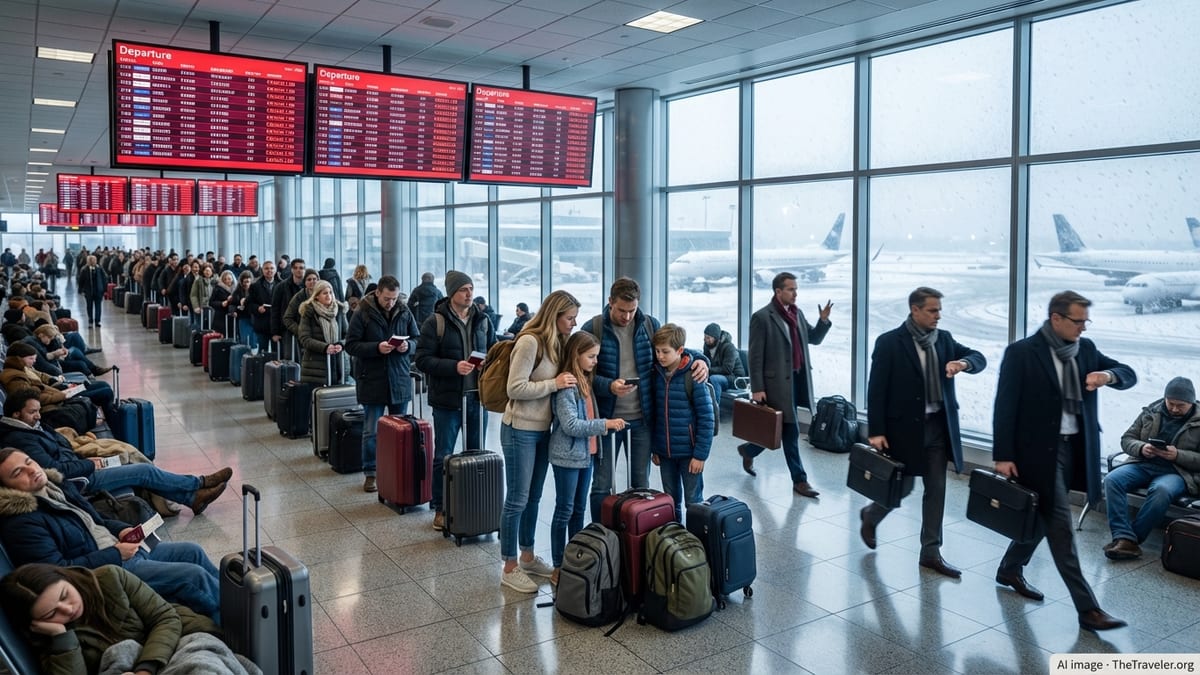
Thunderstorms hit busiest travel hubs at peak weekend
The disruption began on Saturday 27 June, when intense thunderstorms swept across southeast England and parts of northwest Europe, forcing temporary air traffic restrictions over the capital’s two largest airports. Publicly available flight tracking data and media reports indicate that more than 900 flights in and out of Heathrow and Gatwick were delayed, with dozens cancelled outright as operations slowed sharply.
The storms followed days of extreme heat, with forecasters describing an unstable air mass over the region that triggered heavy rain, lightning and gusty winds. Aviation analysts note that such conditions typically reduce runway capacity and impose tighter spacing between aircraft, which can quickly lead to backlogs at already busy hubs like Heathrow and Gatwick.
By Saturday evening, arrivals and departures boards at both airports showed long lists of services running several hours behind schedule, while some flights were diverted to other UK and near‑European airports. Passengers reported being held on aircraft waiting for departure slots, or circling in holding patterns before being allowed to land once weather conditions and airspace restrictions eased.
The wave of disruption continued into Sunday 28 June, as airlines worked through the backlog and fresh thunderstorms were forecast for parts of the region. Air traffic management updates indicated that the airspace over southeast England remained one of the worst affected in Europe, prolonging knock‑on effects for airlines and passengers.
Scale of cancellations leaves around 40,000 facing disruption
While precise passenger numbers are still being assessed, calculations based on scheduled capacity and the number of delayed or cancelled services suggest that roughly 40,000 travellers have experienced severe disruption or have been left temporarily stranded by the weather‑related chaos.
Industry data collated by aviation news outlets point to more than 600 delays on Saturday alone, alongside dozens of outright cancellations spread across British Airways, easyJet and a range of international carriers. With typical aircraft on these routes carrying between 150 and 250 passengers, analysts say the cumulative impact over the weekend would easily run into the tens of thousands.
Travel coverage from European and UK news organisations describes passengers missing onward connections, being rebooked on services departing many hours later, or in some cases being told that the earliest available seats would not be until early next week. In one widely shared account, travellers at Gatwick were advised that hotels within a broad radius were fully booked due to the number of disrupted journeys.
The disruption has been especially acute for families at the height of the summer getaway and for business travellers relying on tight schedules. With Heathrow and Gatwick together handling more than 200,000 passengers on a typical busy day in summer, even partial shutdowns or extended delays can rapidly create large groups of stranded customers both in terminals and at outstations across Europe.
Weather warnings and air traffic capacity constraints
The thunderstorms struck as the UK remained under heightened weather alerts following one of the hottest June periods on record. Meteorological forecasts had highlighted the risk that intense heat would trigger storms across a wide corridor stretching from northern Spain through France and into southern Britain, raising concerns for both aviation and ground transport networks.
Public information issued by the UK’s air traffic control provider and by Eurocontrol, the European air navigation organisation, described “heavy” delays affecting Heathrow and Gatwick at the peak of the storms. To maintain safe separation between aircraft in turbulent, lightning‑prone conditions, controllers reduced movements per hour, effectively throttling capacity at the two airports.
Airport documentation and previous operational reports show that thunderstorms can have a compounding effect on large hubs. In addition to direct impacts such as temporary suspension of ramp activities during lightning, severe weather along flight paths can force rerouting, extended holding and diversions, resulting in aircraft and crew being out of position for later departures.
Experts also point out that London’s constrained runway infrastructure leaves limited flexibility during weather events. Heathrow, the UK’s busiest airport, operates near its maximum scheduled capacity in normal conditions, while Gatwick relies on a single main runway for the majority of movements. When weather reduces the number of arrivals and departures that can be safely handled each hour, backlogs accumulate quickly and can take many hours to unwind.
Passenger experiences highlight accommodation and rights concerns
Reports from travellers across social media and in local news coverage paint a picture of long queues, limited information and intense competition for last‑minute hotel rooms near both airports. Some passengers arriving late in the evening described struggling to secure overnight accommodation or alternative transport when their flights were cancelled with little warning.
Travel forums and consumer advocates note that, under UK and European air passenger rules, airlines are generally required to provide care such as meals and hotel stays during extended disruptions. However, extraordinary circumstances like severe weather can limit entitlement to financial compensation, leaving many travellers unsure what support they can reasonably expect.
Early accounts from passengers suggest a patchwork of responses. Some airlines reportedly arranged hotels and rebooked customers at no additional cost, while others provided meal vouchers and advised passengers to seek their own accommodation, subject to later reimbursement. In a number of cases, travellers said they received only minimal assistance beyond information about revised departure times.
Consumer groups advise affected passengers to retain boarding passes, receipts and any written communication from airlines in order to support later claims. They also encourage travellers to check the specific conditions of carriage for their airline, as well as official guidance on what constitutes reasonable care and what costs are likely to be recoverable after a major weather‑related disruption.
Further delays possible as airlines work through backlog
With thunderstorms still possible across parts of the UK and near‑European airspace, aviation analysts warn that disruption at Heathrow and Gatwick may continue into the early part of the week. Even if weather conditions improve, airlines must reposition aircraft and crew, accommodate stranded passengers and manage congested departure banks created by the earlier delays.
Operational updates indicate that some early‑morning services on Sunday 28 June were already subject to schedule changes, either to clear backlogs or because aircraft were out of position after diversions and overnight delays. Travellers due to fly from both airports have been urged by travel industry commentary to monitor departure times closely and to allow extra time at the airport in case of congestion at check‑in and security.
Air travel specialists note that the episode highlights the vulnerability of major hubs to increasingly volatile weather patterns. With climate projections pointing to a higher frequency of intense heat and convective storms across northwest Europe, airlines and airports are under growing pressure to strengthen contingency planning, passenger communications and resilience measures.
For now, the immediate focus remains on moving stranded travellers to their destinations and restoring normal operations. As the clean‑up from the weekend’s storms continues, passengers across Europe are being reminded that conditions far away from their departure point can still have significant consequences for their journey when air traffic networks are operating close to capacity.