


More news on this day
Air travel across Europe is facing fresh disruption as a wave of delays and cancellations centered on Barcelona spreads through the continent’s busiest summer routes, with operational data indicating 2,379 flights delayed and 176 cancelled in a single day.
Get the latest news straight to your inbox!
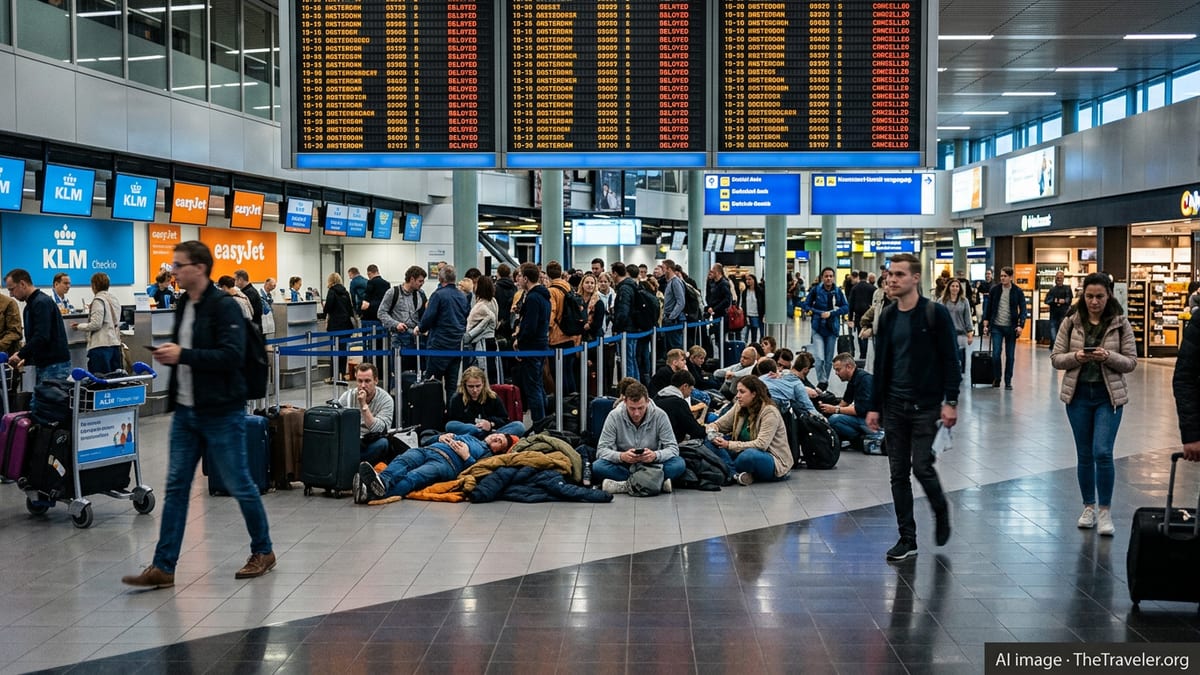
Barcelona at the Epicenter of a Difficult Travel Day
Barcelona’s El Prat airport has emerged as one of the hardest hit hubs in the latest round of European travel disruption, with hundreds of flights reportedly affected in and out of the Catalan gateway. Operational tallies circulating in industry reports show that, across Europe, 2,379 flights were delayed and 176 cancelled within a 24-hour period, with Barcelona featuring prominently among the bottlenecks.
Passenger accounts from recent days describe longer-than-normal queues at check-in and security, slower baggage handling, and late-notice schedule changes. Some travelers reported cancellations overnight or in the early morning hours, forcing last-minute rebookings and hotel stays, while others described multi-hour delays that left aircraft parked at gates awaiting slots or ground services.
The disruption in Barcelona is compounded by ongoing industrial tensions, including an indefinite walkout by key ground handling staff that began earlier this month. Publicly available notices from airlines and travel intermediaries refer to “industrial action” and “reduced ground handling capacity” at Barcelona, prompting several carriers to activate flexible rebooking policies for affected dates.
While not every airline or route is directly tied to the same handling provider, even partial slowdowns at a major hub can quickly spill over into the wider European network. Delayed turnarounds in Barcelona can lead to late departures for aircraft scheduled to operate onward legs to other cities, amplifying the knock-on effect.
Network Knock-On Effects Across Major European Hubs
The disruption has not been limited to Spain. Reports from aviation monitoring services show a chain reaction across multiple European hubs, with delays at airports such as Madrid, Paris, Amsterdam and London coinciding with Barcelona’s challenges. When one key node in the network struggles to move aircraft, crews and baggage on time, the resulting imbalance can reverberate across dozens of destinations.
Operational summaries indicate that a mix of factors is at play. Summer traffic remains at or near peak levels on many intra-European and transatlantic routes, reducing the buffer airlines have to recover from disruptions. Weather has also played a role in parts of the continent, with thunderstorms and changing wind patterns periodically limiting runway throughput or altering standard flight paths, adding to congestion in already busy airspace.
Some carriers have cited air traffic flow management constraints, including temporary route restrictions and en route capacity limitations, as an additional cause of extended delays. When sectors of European airspace become saturated, flights may be held at departure airports or slowed in flight, resulting in late arrivals that ripple into subsequent rotations.
The combined effect is a patchwork of localized problems that translate into a broader, continent-wide slowdown, particularly on high-frequency routes linking major capitals and leisure destinations. Travelers connecting through multiple hubs are often the most exposed, as a delay on the first leg can quickly cause missed onward flights.
Industrial Action and Strained Ground Operations
Industrial disputes have become a recurring theme in European aviation during recent peak seasons, and the current situation in Barcelona fits this trend. Ground handling staff, including baggage handlers and ramp workers, have been engaged in strikes over working conditions and pay, according to coverage by regional and aviation-focused outlets. These actions have led to reduced staffing at key times, contributing to slower aircraft turnarounds and baggage delivery.
Airlines reliant on affected handlers have responded by adjusting their schedules, issuing travel waivers, and advising passengers to allow extra time at the airport. Public statements emphasize that most flights are operating, but acknowledge higher-than-normal rates of delay and the possibility of short-notice changes, especially at busy morning and evening peaks.
For airport operators, the combination of industrial action and strong summer demand has placed ground infrastructure under sustained strain. Service providers are challenged to balance staffing levels, safety requirements and contractual obligations while managing heightened scrutiny from regulators and consumer groups over service quality.
Observers note that, while strikes are often planned and communicated in advance, their real-world impact can vary significantly depending on the participation levels on a given day, the availability of contingency staff, and the ability of airlines to consolidate or reroute flights.
Passenger Impact and Rights Under European Rules
The immediate impact for travelers has been a familiar mix of missed connections, rebooked itineraries, and extended time in terminals. Travelers recount receiving cancellation notifications overnight, being moved to flights a day or more later, and spending hours in customer service lines seeking rerouting or vouchers.
Under Europe’s passenger protection framework, commonly known as EU261, travelers departing from or flying within the European Union may be entitled to specific forms of redress depending on the cause and length of their delay or cancellation. Consumer advocates highlight that airlines are generally required to provide care such as meals and accommodation in the event of long disruptions, while financial compensation typically hinges on whether the root cause is considered within the carrier’s control.
In practice, this distinction can be complex. Mechanical issues or operational rescheduling tend to fall on one side of the line, while severe weather or certain types of industrial action may fall on the other. Passengers are urged by consumer organizations to keep records of boarding passes, receipts and written communications from airlines in order to support any later claims.
Several major carriers have published travel advisories in recent days that allow customers booked through Barcelona and other affected airports to change travel dates without additional fees. These waivers are designed to ease pressure on the most congested travel days and give passengers more flexibility in adjusting their plans.
What Travelers Can Expect in the Coming Days
With the European summer season still in full swing, aviation analysts expect continued operational pressure at key hubs, particularly if industrial disputes in Barcelona and elsewhere are not swiftly resolved. Even if cancellation numbers remain modest compared with total daily traffic, the volume of delays and missed connections can shape traveler perception and impact future booking decisions.
Airports and airlines are signaling that they aim to stabilize operations by fine-tuning schedules, using larger aircraft on some routes, and deploying additional staff where possible. However, recovery from a day of widespread disruption can take several rotations, meaning impacts may persist for 24 to 48 hours after the worst of the delays.
For passengers planning imminent trips through Europe, travel specialists recommend building extra time into connections, monitoring flight status closely via airline channels, and considering earlier departures when itinerary timing is critical. Flexible tickets, travel insurance, and awareness of local passenger rights are increasingly seen as essential tools rather than optional extras.
As Barcelona and other major European hubs work to clear backlogs and navigate ongoing challenges, the latest wave of disruption underscores the fragility of a system that operates near capacity for much of the peak season. Even limited interruptions at a handful of airports can quickly cascade into a continent-wide test of resilience for airlines, airports and passengers alike.