


More news on this day
India’s Vande Bharat Express is poised to enter one of its most demanding testing phases yet, with South Western Railway preparing Western Ghats trials for a potential Bengaluru–Mangaluru service that could significantly cut journey times between Karnataka’s capital and the coast.
Get the latest news straight to your inbox!
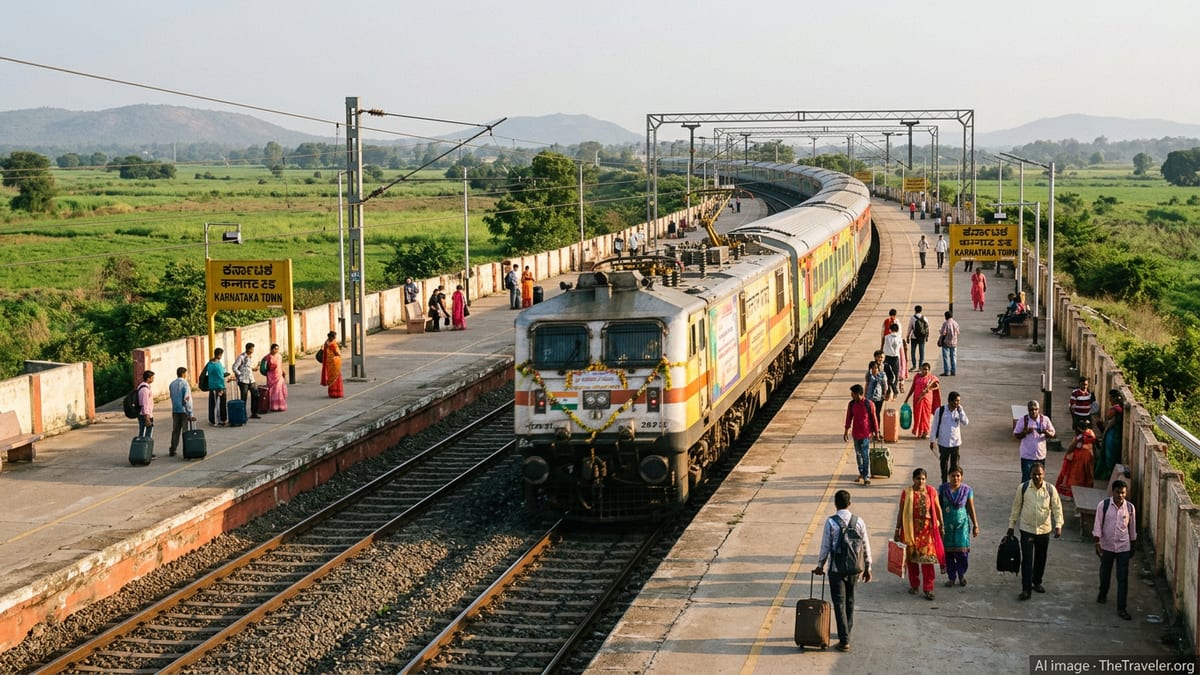
Western Ghats Trial Marks New Phase for Coastal Connectivity
Reports from regional and rail-focused outlets indicate that South Western Railway’s Mysuru division is readying Vande Bharat trial runs through the Sakleshpur–Subrahmanya Road ghat section from around August 11. The trials will take the train across a steep and curvy Western Ghats segment that has historically limited both speed and capacity on the Bengaluru–Mangaluru corridor.
The proposed service is expected to operate between Bengaluru and Mangaluru Central, creating a faster daytime rail option than the existing overnight expresses. If trials proceed as planned and technical clearances follow, travelers between the state’s tech hub and coastal districts could see journey times reduced by several hours compared with conventional services.
The Western Ghats crossing has long been seen as the missing link for a seamless Vande Bharat route connecting Bengaluru with Mangaluru and, indirectly, with the already operational Vande Bharat service to Madgaon in Goa. Publicly available information shows that policymakers have repeatedly highlighted the potential of a continuous semi high speed corridor linking the coast, the state capital, and onward to other metropolitan centers.
The forthcoming ghat tests follow months of speculation and scheduling changes. Earlier attempts to hold trials in June were postponed, keeping rail travelers and local businesses waiting for firm timelines on when premium day services might finally reach the coastal belt.
Technical Challenges on the Sakleshpur–Subrahmanya Road Ghat
The Sakleshpur–Subrahmanya Road stretch, often referred to as the Shiradi Ghat line for its proximity to the highway of the same name, is regarded as one of India’s more challenging broad gauge sections. The ruling gradient of roughly 1 in 50 and sharp curves, combined with heavy monsoon rainfall and a history of landslides, have traditionally forced Indian Railways to rely on banking locomotives and reduced speeds for conventional trains.
For Vande Bharat operations, the ghat section presents a different set of engineering questions. The train’s distributed power and higher acceleration theoretically allow it to climb the gradient without banker locomotives, but this capability also requires sophisticated safeguards. Rail enthusiasts tracking the project note that the route is being treated as a test case for how modern trainsets can be adapted to legacy mountain infrastructure.
Recent discussion in public forums and rail community platforms indicates that the trainset earmarked for Bengaluru–Mangaluru has been equipped with a dedicated Automatic Emergency Braking system. This technology is designed to monitor the train’s speed against permissible limits in real time and apply braking if thresholds are exceeded, a key safety addition on a route where visibility, curves, and gradients all contribute to operational complexity.
Monsoon vulnerabilities remain another central concern. The Western Ghats near Shiradi have seen repeated disruptions on both rail and road links due to heavy rain, making rockfall protection, monitoring systems, and drainage improvements integral to any long term plan for a premium daytime passenger service.
From Cancellations to Renewed Trial Schedules
Publicly available coverage from June showed that an earlier Vande Bharat trial run between Bengaluru and Mangaluru, initially planned for June 3, was cancelled at short notice. That decision raised questions about the readiness of rolling stock, route infrastructure, and regulatory processes in the ghat section, and briefly cast uncertainty over when a full service might materialize.
Subsequent reporting pointed to a combination of factors behind the delay, including the need for a compatible Vande Bharat rake fitted with advanced braking and the completion of testing and approvals following electrification works in the ghat stretch. The Bengaluru–Mangaluru sector has only recently seen full electrification, a prerequisite for deploying the 25 kV AC trainsets used in Vande Bharat operations elsewhere in India.
Despite the setback, rail analysts note that incremental progress has continued in the background. Earlier, electrification of the Sakleshpur–Subrahmanya Road section and testing of power systems were described as key milestones. The move toward Western Ghats trials in August represents a shift from infrastructure preparation to live performance assessment of the trainset itself.
Observers caution, however, that successful trial runs will not automatically translate into immediate commercial introduction. Clearances from technical bodies and timetable integration with existing long distance services on the busy corridor will still be required before a regular Vande Bharat schedule can be announced.
What a Bengaluru–Mangaluru Vande Bharat Could Mean for Travellers
A dedicated Vande Bharat service is seen as a potential game changer for both business and leisure travel between Bengaluru and coastal Karnataka. The existing overnight expresses and long duration day trains typically take eight to ten hours to cover the distance, depending on routing and seasonal conditions in the Ghats.
Based on performance of similar Vande Bharat routes in southern India, a Bengaluru–Mangaluru service could aim for a journey time in the six hour range, subject to ghat speed limits and operational margins. Even conservative improvements would make same day round trips more realistic for business travelers, and boost weekend tourism flows in both directions.
Improved connectivity is also expected to support the region’s ports, educational hubs, and healthcare facilities by making them more accessible to travelers from the interior. Tourism operators along the coastal belt and in the hills around Sakleshpur are closely tracking developments, anticipating that a premium train product paired with scenic Western Ghats views could attract a new segment of domestic tourists.
For passengers already using the existing Vande Bharat link between Mangaluru and Madgaon, the proposed Bengaluru–Mangaluru service would complete a semi high speed arc along the Konkan and into the state’s heartland. Such a network effect would be particularly significant during holiday peaks, when road congestion over the Ghats and along the coast can become severe.
Next Steps Before Full Service Becomes Reality
The Western Ghats trials planned from mid August are expected to focus on braking performance, acceleration on gradients, adherence to speed restrictions, and ride comfort through curves and tunnels. Railway testing protocols typically require multiple trial runs under different load and weather conditions before a route is cleared for regular Vande Bharat operations.
Once technical authorities are satisfied with the results, the route would need formal certification before the Ministry of Railways can consider schedule notifications and fare structures. Timetable planners will also have to balance the new service with freight movements and existing passenger trains using the shared Hasan–Mangaluru line, which continues to handle significant cargo traffic to and from the coast.
For now, travelers in Bengaluru, Mangaluru, and the wider coastal region are watching the trial phase with cautious optimism. After several years of announcements, electrification drives, and partial upgrades, the arrival of Vande Bharat on the Western Ghats will be seen as a visible marker of progress, even if commercial operations take additional time to materialize.
Whether the upcoming tests pave the way for a full scale launch later this year or push timelines further into 2027, the Western Ghats trials underscore how critical the Bengaluru–Mangaluru corridor has become in India’s broader push to extend semi high speed rail to challenging terrain and underserved coastal areas.