


More news on this day
Severe thunderstorms and widespread operational strain have triggered a fresh wave of disruption at Charlotte Douglas International Airport, with publicly available data on Friday indicating 161 cancellations and 342 delays affecting flights operated by American Airlines, its regional affiliates Piedmont and PSA, Southwest, Lufthansa and other carriers across a web of routes in the United States, Canada, Europe, Mexico and the Caribbean.
Get the latest news straight to your inbox!
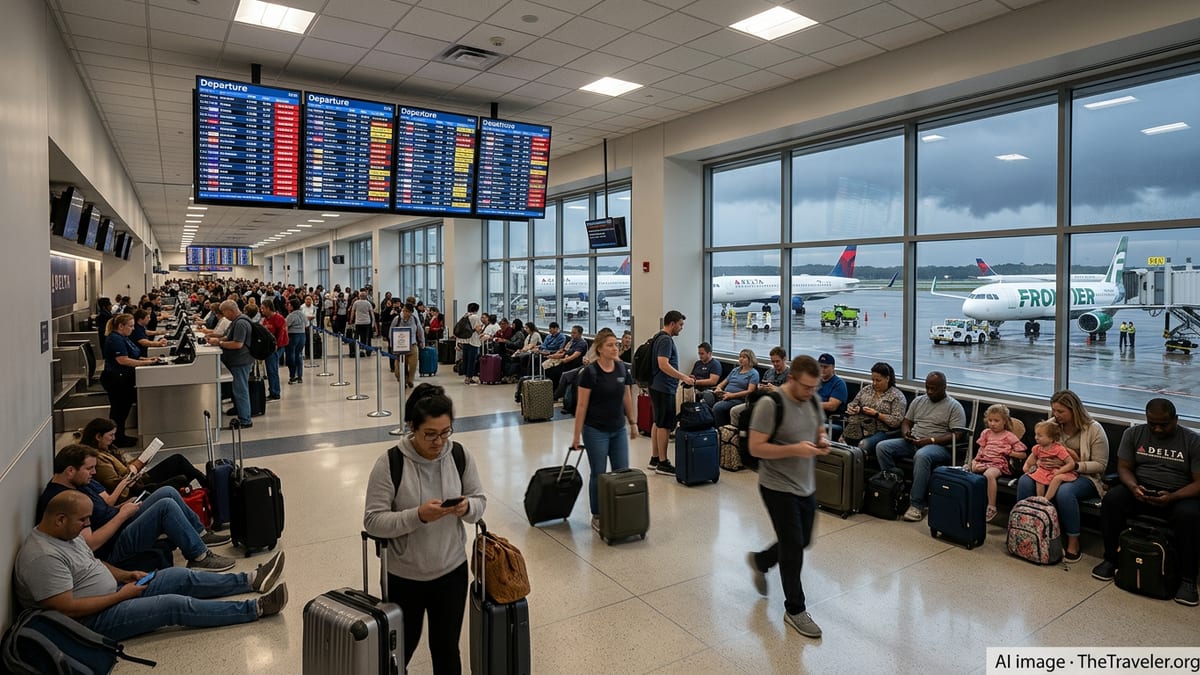
Hub Under Pressure as Weather and Operations Collide
Charlotte Douglas International Airport functions as one of American Airlines’ busiest hubs, handling tens of millions of passengers a year and supporting a dense banked schedule of domestic and international connections. That scale has amplified the impact of the latest disruption, as thunderstorms sweeping across the Southeast intersect with already tight airline operations and air traffic control constraints.
Tracking services and airport status boards on Friday showed an elevated number of grounded flights, with cancellations and long delays concentrated in Charlotte but cascading to airports across North America and overseas. Many of the affected services are short-haul links that feed American’s Charlotte hub from cities around the eastern United States, along with regional services branded as American Eagle and operated by Piedmont and PSA.
Operational data indicates that the disruption is not confined to a single carrier. While American and its regional partners account for the majority of traffic at Charlotte, Southwest, Lufthansa and several other domestic and foreign airlines also reported significant schedule changes. The knock-on effects are being felt on both sides of the Atlantic as aircraft and crews fall out of position for later departures.
Industry analysts note that when a tightly scheduled hub absorbs an extended weather event, the risk of widespread cancellations typically rises after a threshold is reached where extended delays become operationally unsustainable. The pattern seen in Charlotte on Friday, with hundreds of delays followed by a wave of cancellations, reflects that dynamic.
Ripple Effects Across the US, Canada, Europe, Mexico and the Caribbean
The immediate disruption at Charlotte is radiating across a broad route network, interrupting travel plans in multiple regions. American’s domestic services link Charlotte to major business centers such as New York, Chicago, Dallas and Miami, along with a wide range of smaller markets in the Carolinas and neighboring states. Many of those flights are now arriving late or not operating, stranding passengers and severing onward connections.
Flights between Charlotte and Canadian destinations, operated through a mix of mainline and partner services, are also being hit. Delayed arrivals from Canada are feeding into the congestion at the hub, while cancellations out of Charlotte are leaving aircraft and passengers out of position north of the border. Travelers heading to or from Toronto, Montreal and other Canadian cities are reporting extended waits, rebookings and unexpected overnights.
Internationally, services to Europe, Mexico and the Caribbean are among the highest profile casualties when a hub falls behind. Lufthansa and American jointly serve transatlantic routes from Charlotte, including connections to major European gateways, and operational data shows those flights facing significant schedule disruption. Southbound departures to Mexican resort cities and Caribbean islands are likewise experiencing schedule changes, affecting both leisure travelers and cruise connections.
Because many long-haul flights operate only once daily, a single cancellation or lengthy delay can translate into a full day’s disruption for passengers, with rebooking options limited by high summer load factors. The current pattern at Charlotte is therefore generating second-order impacts at foreign airports that depend on predictable inbound traffic.
American, Piedmont, PSA and Partner Operations Struggle to Recover
Within the American Airlines system, the strain on Charlotte underscores the vulnerability of hub-and-spoke networks to localized shocks. American’s mainline flights, together with American Eagle services flown by Piedmont and PSA, form the backbone of the airport’s schedule. When thunderstorms or ground stops force a slowdown in arrivals and departures, the tightly timed connection banks become difficult to maintain.
Publicly available industry commentary and traveler accounts indicate that regional operations are particularly exposed. Smaller aircraft serving short-haul routes tend to operate multiple legs per day, so early delays can snowball into missed crew duty limits and aircraft availability issues later in the schedule. The result is a mix of rolling delays followed by cancellations as airlines reshuffle limited resources.
Operational data suggests that recovery at Charlotte is likely to extend into the evening and potentially into the weekend as airlines work through the backlog. Once crews time out or aircraft miss assigned maintenance windows, schedule normalization can take multiple cycles. For passengers, that means even flights shown as "on time" later in the day remain vulnerable to last-minute changes if the hub continues to operate under constraint.
American and its affiliates have in recent years expanded Charlotte’s role in their networks, adding new domestic and international destinations. That growth has enhanced connectivity for the region but has also increased the stakes when major disruptions occur, as more itineraries depend on successful same-day connections through the hub.
Southwest, Lufthansa and Other Carriers Caught in the Snarl
While Charlotte is best known as an American Airlines stronghold, other carriers maintain an important presence that has also been affected by the latest turmoil. Southwest operates a portfolio of domestic routes from the airport, connecting Charlotte with its own network of focus cities and leisure markets. Data from tracking platforms on Friday showed Southwest flights subject to delays and cancellations tied to the same weather patterns and airspace constraints.
Lufthansa, which links Charlotte with Munich and onward European destinations, is confronting a different set of challenges. Long-haul international services require carefully sequenced aircraft rotations, and disruptions in North Carolina can reverberate through overnight schedules in Europe. When a transatlantic flight is delayed or cancelled, crews, aircraft assignments and passenger itineraries across multiple countries may need to be adjusted.
Smaller foreign and domestic carriers serving Charlotte are also navigating a day of uncertainty. Airlines with limited frequencies lack the flexibility to substitute equipment or add extra sections when irregular operations hit. For travelers booked on those services, options often involve re-routing through larger hubs or waiting for the next scheduled flight, which may not depart until the following day.
The situation highlights how congestion at a single major hub can quickly become a multi-airline issue, particularly during the busy summer travel period when planes are flying near capacity and spare seats for reaccommodation are scarce.
Travelers Face Long Lines, Missed Connections and Limited Alternatives
For passengers, the disruption at Charlotte is playing out in long lines at check-in counters and customer service desks, crowded gate areas and extended waits for updated information. Social media posts and traveler reports describe missed connections, overnight stays, and families scrambling to find alternative routes home or to vacation destinations.
Rebooking has become more challenging as the day wears on. With hundreds of flights across the network delayed or cancelled, remaining seats on later departures are quickly absorbed. Some travelers are turning to nearby airports in the Carolinas and neighboring states in search of available connections, while others are opting to postpone or cancel trips altogether.
Travel advisers note that during periods of severe disruption, flexibility becomes essential. Passengers affected by cancellations are generally being offered rebooking on the next available flight, while some may be able to request refunds or travel credits depending on fare rules and the nature of the delay. Those with time-sensitive commitments, such as international cruise departures or events, face particularly difficult decisions when the window for alternative travel narrows.
With storms and operational pressures expected to linger, the experience at Charlotte on Friday serves as a stark reminder of the fragility of the peak-season air travel system. Even a single day of intensified disruption at a major hub can ripple across continents, affecting travelers far beyond the airport’s immediate catchment area.