


More news on this day
Emergency crews and rail staff converged on the main line north of London on Friday afternoon after a collision between two southbound passenger trains near Bedford left at least one person dead, several others injured and a key route into the capital heavily disrupted.
Get the latest news straight to your inbox!
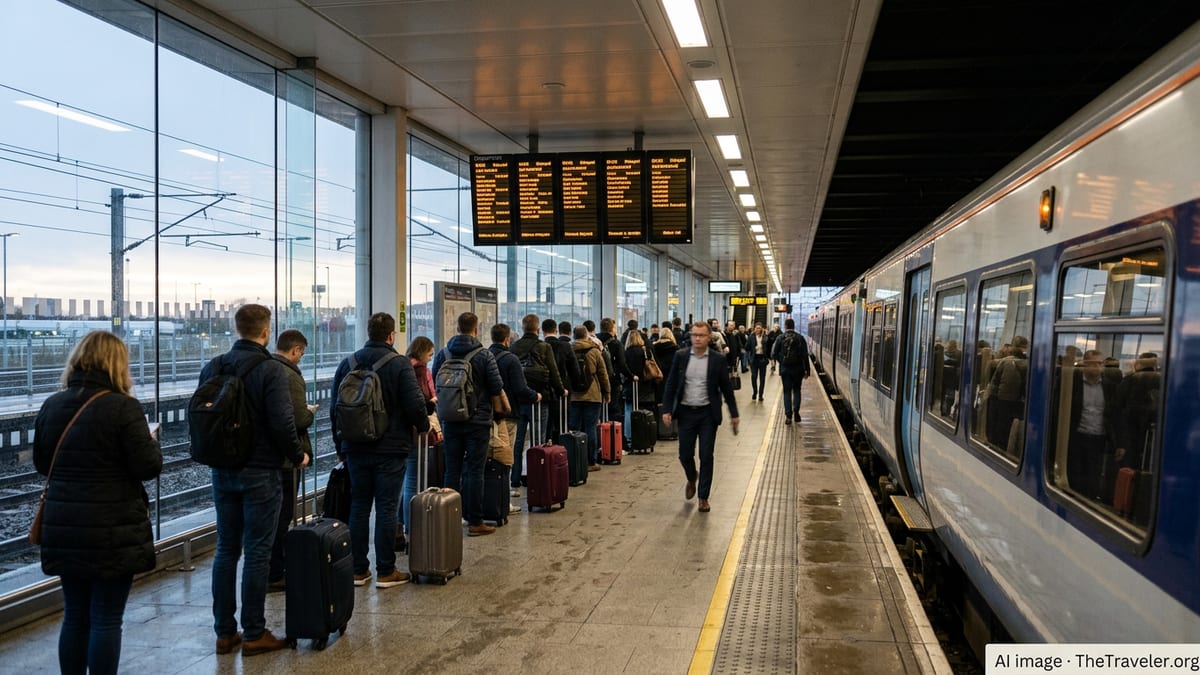
Collision on busy approach to London St Pancras
Initial reports indicate that the incident occurred on the Midland Main Line outside Bedford in the late afternoon, involving services running toward London St Pancras. Information from rail tracking platforms shows that both trains, heading south, came into contact on a stretch of line that carries intensive commuter, airport and intercity traffic into the capital.
According to published coverage, the trains involved included an East Midlands Railway service from Nottingham to London and a commuter service from Corby, with some accounts describing one train striking the rear of another already on the line. Images and witness descriptions circulating on social media suggest significant damage to several carriages and visible buckling of rolling stock.
Reports from the scene describe passengers being thrown forward on impact, with visible injuries ranging from cuts and bruises to suspected broken bones. Some accounts mention carriages partly derailed but remaining upright, a factor that may have reduced the scale of casualties on one of Britain’s busiest north–south rail arteries.
The collision comes at a time of high afternoon demand on routes into London, meaning both services are likely to have been carrying substantial numbers of passengers, including commuters, long distance travelers and airport users heading to and from Luton.
Major emergency response and on‑scene operations
Publicly available information shows that regional ambulance services, fire crews and police units mounted a large-scale response, supported by an air ambulance and specialist hazardous incident teams. Photos taken from nearby lines and adjacent roads show multiple fire appliances positioned alongside the track, with medical personnel moving between carriages.
Emergency teams appear to have established a triage area near the line to assess casualties before transport to hospital. Local media coverage indicates that several passengers with serious injuries were taken to regional trauma centers, while others were treated at the scene for shock and minor wounds.
Rail workers can be seen in high-visibility clothing moving along the formation, checking carriage interiors and the condition of couplings and bogies. In similar British rail incidents, staff typically work alongside emergency services to isolate power, secure the site and lead controlled evacuations along the track or via temporary walkways, depending on the state of the infrastructure.
As daylight faded, on-site activity appeared to shift toward stabilizing damaged vehicles and preparing for the arrival of heavy recovery equipment. Experience from past rail collisions suggests that full removal of rolling stock and track inspections could extend well into the night and possibly the weekend.
Severe disruption for travelers on a key Midlands corridor
The Bedford area sits on the main rail axis connecting London with Luton Airport, the East Midlands and cities such as Nottingham, Derby and Sheffield. A collision of this nature on double or multi-track sections tends to trigger extensive cancellations and diversions while the affected stretch is isolated for investigation and repairs.
By early evening, journey planners and operator updates were indicating major disruption on services into and out of London St Pancras, with some trains turned back short of their destination and others held in place pending further instructions. Replacement road transport is often difficult to source at short notice on such a busy corridor, leaving many travelers facing extended delays.
Passengers posting on travel forums and social media have described being held on stationary trains north of London for long periods, with drivers providing intermittent updates as information filters through from control rooms. Others reported being advised to re-route via alternative main lines into London, including Euston or King’s Cross, where capacity constraints can quickly develop during an evening peak.
For international visitors and UK-based leisure travelers, the incident creates knock-on effects that may extend to missed flight connections, rearranged hotel stays and disrupted weekend plans, particularly for those relying on direct rail links between the Midlands, Luton Airport and central London.
Rail safety record and questions for investigators
Britain’s rail network records a relatively low number of serious train-to-train collisions, in part because of layered signalling systems, speed controls and modern rolling stock design. When such incidents do occur, attention typically turns to the interaction between human decision-making, train protection technology and infrastructure layout on the specific section of line.
According to early public reporting, both trains in this incident were traveling south toward the same London terminus, raising questions about how one service came to strike the rear of another. Investigators are expected to examine data from on-board recorders, signal logs and radio communications, as well as the condition of braking systems and trackside protection equipment.
Past inquiries into rear-end collisions in the United Kingdom have often highlighted the role of Automatic Warning System and Train Protection systems, designed to reduce the risk of signals being passed at danger or trains entering occupied blocks of track. Observers are also likely to assess how the modern crashworthiness features of newer units performed in limiting deformation in passenger areas.
While early images suggest that most carriages remained broadly aligned on or near the rails, any breach of the passenger compartment or intrusion into driver cabs will be closely scrutinized. The findings could influence future investment priorities on the Midland Main Line and inform updated guidance for both operators and infrastructure managers.
Traveler advice and what to expect in the coming days
For travelers planning journeys between London and destinations such as Bedford, Luton, Corby and Nottingham over the coming days, published operator statements strongly recommend checking revised timetables before setting out and allowing significant extra time. Experience from previous incidents suggests that even once lines formally reopen, temporary speed restrictions and altered stopping patterns can persist while repairs and inspections continue.
Some long-distance passengers may find it quicker to re-plan routes that use alternative London termini, accepting additional connections in return for a more reliable overall journey. For those heading to or from Luton Airport, coach and bus links may come under pressure as displaced rail users seek substitutes, particularly during peak holiday departures.
Accommodation near key hubs, including central London and major Midlands cities, may see increased short-notice demand from travelers opting to break journeys overnight. Travel planners typically advise maintaining flexible booking options during periods of disruption and keeping digital tickets and receipts for any later claims under rail compensation schemes.
As formal investigations get under way, the Bedford collision is likely to feed into a wider public conversation about rail capacity, signalling upgrades and resilience on routes north of London. For passengers and communities along the corridor, attention will remain focused on the recovery of normal services and support for those directly affected by Friday’s events.