


More news on this day
A commuter route into London was thrown into chaos on Friday after two southbound passenger trains collided near Bedford, killing one person and injuring many others on a busy evening service toward the capital.
Get the latest news straight to your inbox!
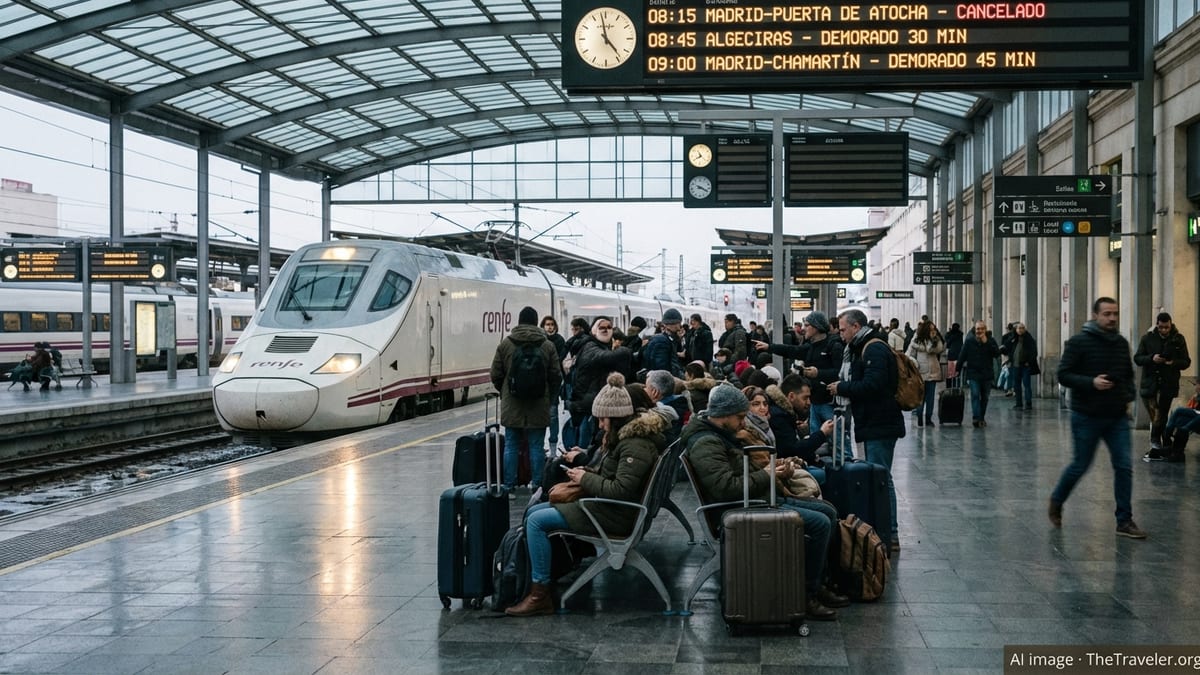
Major incident on key commuter corridor
Reports indicate that the collision occurred in the late afternoon near Bedford, on a mainline used by fast intercity and airport services running into London St Pancras. Both trains were reportedly heading south toward the capital when one struck the rear or side of the other, leaving carriages twisted on the track and passengers thrown from their seats.
Publicly available information from rail tracking data suggests the services involved were a London-bound intercity train from Nottingham and a separate airport or commuter service from the Corby or Luton corridor. The collision took place at a time when many travelers were heading into London, intensifying the human impact and amplifying disruption across the rail network.
Emergency responders declared a major incident in the Bedford area soon after the crash, with local ambulance, fire and police services coordinating at the scene. A large cordon was put in place around the railway, and passengers were guided along the track and into adjacent fields while triage and treatment were carried out beside the line.
According to early casualty figures cited in multiple news and social media reports, at least one person died as a result of the collision, while dozens more suffered injuries ranging from minor cuts and bruises to serious trauma. Images shared from the scene show bloodied passengers, damaged carriages and rescue teams working deep into the evening light.
Scenes of chaos as passengers evacuate
Passengers on board described a sudden, violent impact that hurled people against seats and into the aisles. Accounts circulating in published coverage and online forums speak of broken glass, luggage flying through the air and an immediate rush to help those lying on the floor of the carriages.
Several travelers reported being led out through dark, damaged coaches and onto the embankment, where they waited in fields near the track for further instruction. With the line blocked in both directions, the stranded passengers had no quick route back to stations, and local roads around Bedford soon became clogged as emergency vehicles converged on the scene.
Publicly available information indicates that air ambulances were deployed from regional bases to assist in transporting the most seriously injured to major trauma centers. Additional resources, including hazardous area response teams and specialist rail incident units, were also sent to support operations on the trackside.
As darkness approached, images showed long lines of passengers wrapped in foil blankets or borrowed clothing, many still visibly shaken. Some were eventually taken by bus or coach to alternative stations, while others arranged lifts or taxis as the scale of the disruption became clear.
Severe disruption for London-bound rail traffic
The collision instantly severed one of the most important north–south rail arteries into London. Services between the East Midlands, Bedfordshire and London St Pancras were suspended across affected sections of the route, with operators advising travelers not to attempt journeys toward the capital on Friday evening.
Rail operators on the corridor, including intercity and airport express providers, issued statements via their websites and social channels warning of major disruption and extensive cancellations. Trains already on the network were terminated short of the incident zone, and some services were diverted where alternative lines were available, although capacity on those routes quickly became strained.
For many commuters and long-distance passengers, the incident meant significant delays or being stranded far from their intended destinations. Travelers attempting to reach London resorts, business districts and onward international connections at St Pancras International were forced to rebook, reroute or abandon plans altogether.
Industry observers noted that the timing, on a busy Friday, amplified the wider impact. Initial indications from journey planners and operator updates suggested that disruption and residual delays would continue into the weekend, with the line expected to remain closed for recovery work and investigations.
Investigation expected into cause of collision
Although the precise cause of the Bedford collision remains unclear, attention is already turning to how two modern trains, reportedly equipped with contemporary safety systems, came to collide on a busy but intensively signaled mainline. Rail safety specialists point out that Britain’s railways are designed with multiple layers of protection intended to prevent such events.
According to published coverage and commentary from railway analysts, potential lines of inquiry are likely to include the signaling arrangements at the location, the performance of train protection systems and the operational status of the line at the time of the crash. Investigators are also expected to examine the speed of the trains, braking distances, and whether any maintenance or infrastructure issues may have played a role.
Past inquiries into similar rear-end or side collisions on British railways have frequently highlighted a combination of factors, such as signal misinterpretation, technical failures or degraded operating conditions. In this case, early comments from experienced rail staff circulating in public forums underline how even a relatively low-speed impact between two heavy passenger trains can produce catastrophic forces inside packed carriages.
It is anticipated that a formal safety investigation will seek to establish not only the immediate chain of events near Bedford, but also any systemic lessons for mainline operations into major London terminals. Recommendations from such inquiries often lead to changes in signaling standards, driver training, operating rules or the deployment of enhanced automatic train protection technology.
Wider questions over rail resilience and passenger confidence
The Bedford collision immediately revived debates over rail resilience on Britain’s busy commuter corridors. Travel commentators note that while serious train accidents are relatively rare, the combination of high passenger volumes, tight timetables and aging infrastructure can expose vulnerabilities when something goes wrong.
Publicly available data show that long-distance and commuter routes into London carry hundreds of thousands of passengers each weekday, many of whom rely on a single mainline corridor to reach work, family or flights from key airports. A major disruption, especially one involving fatalities and serious injuries, can therefore have a lasting effect on perceptions of safety and reliability.
Some rail users have already taken to social media and broadcast phone-ins to share their shock and to raise questions about how long the line will remain closed, what support will be offered to those affected and whether additional safeguards will be introduced. For regular commuters on the Nottingham, Corby, Bedford, Luton and London axis, the incident may prompt a reevaluation of travel routines, at least in the short term.
As recovery teams begin the painstaking task of clearing damaged carriages and restoring the track near Bedford, attention across the rail industry is likely to focus on learning from the tragedy. The goal, many commentators suggest, will be to translate the lessons of this collision into concrete safety improvements, so that the daily journeys into London that underpin work, tourism and family life can continue with renewed confidence.