


More news on this day
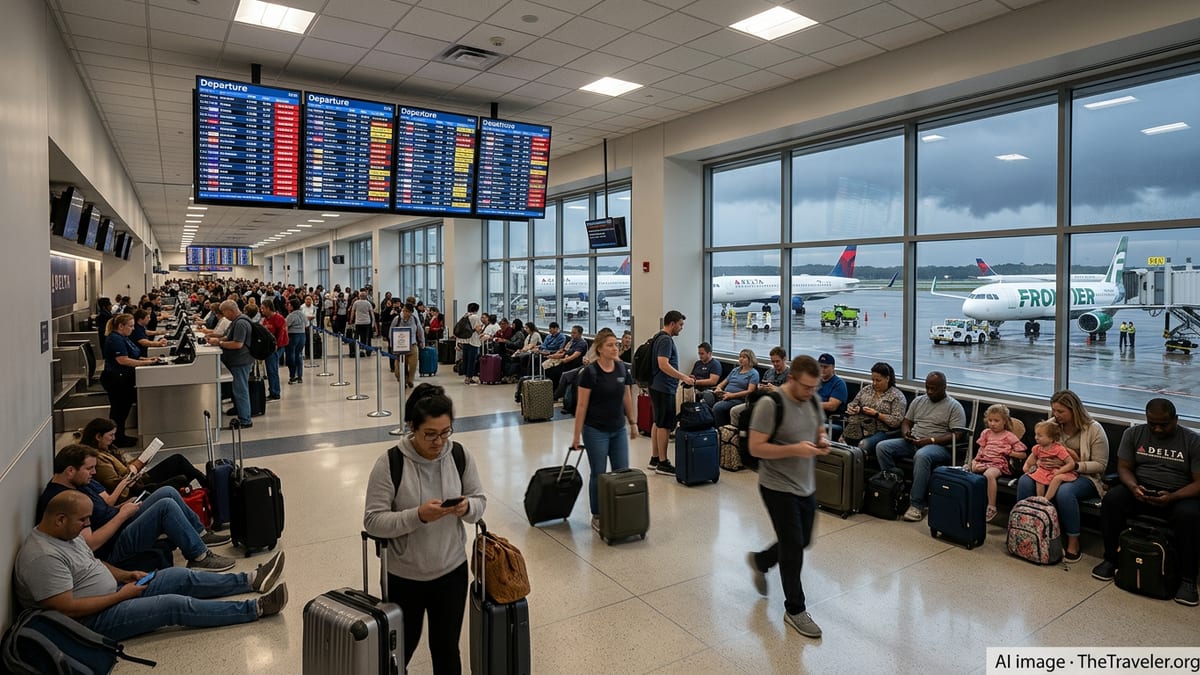
Thunderstorms sweeping across the central United States on June 15, 2026, triggered significant disruption at Des Moines International Airport, with dozens of delayed and canceled flights stranding travelers and rippling across major airline networks.
Get the latest news straight to your inbox!
Weather Turbulence Turns Routine Morning Into Logistical Gridlock
Publicly available flight-tracking data for June 15 shows a sharp uptick in delays across multiple Midwestern and Great Plains airports as a line of storms moved east, contributing to mounting disruption at Des Moines International Airport. Airlines serving the Iowa capital, including American Airlines, Delta Air Lines, United Airlines, Southwest Airlines, Allegiant Air, and Frontier Airlines, all saw schedule impacts as crews and aircraft became out of position.
While Des Moines itself reported overcast and relatively calm surface conditions early in the day, the broader storm system passing through major hubs such as Chicago, Denver, and Minneapolis created knock-on effects for arrivals and departures connecting through the city. As flight banks stacked up, delays lengthened, and a growing number of travelers found themselves stuck in terminal seating areas awaiting updated departure times.
Operational data from industry trackers indicates that by mid-morning roughly three dozen departures and arrivals tied to Des Moines were experiencing meaningful delays, with additional schedule changes through the afternoon as airlines attempted to recover. Several services were ultimately removed from the day’s schedule, reducing options for passengers trying to rebook.
The timing of the disruption, at the start of the busy summer travel stretch, magnified the impact. With many flights operating near capacity, the usual fallback of moving affected passengers to later same-day departures was far more limited, extending wait times and overnighting needs for some travelers.
Broad Impact on Major and Low-Cost Carriers
Des Moines International Airport is primarily served by six large carriers: American, Allegiant, Delta, Frontier, Southwest, and United. Together they operate about 70 flights per day to more than 70 destinations, a schedule that relies heavily on tight turn times and on-time performance at larger hub airports.
On June 15, that finely balanced system came under strain as weather-related slowdowns at major hubs propagated into Des Moines. Public flight-status boards and airline trackers showed delays on multiple American Airlines departures to Dallas and Chicago feeder routes, along with regional services operated under the American Eagle brand. Delta’s regional network, which normally connects Des Moines with hubs such as Minneapolis and Detroit, also reflected extended departure and arrival holds as thunderstorms passed through the upper Midwest.
United Airlines operations between Des Moines and Denver and Chicago likewise faced rolling delays, with some morning flights pushed back to accommodate arriving aircraft and crew duty-time limitations. Southwest, which typically funnels Des Moines passengers through Denver, Chicago, and other focus cities, adjusted several turn times as aircraft arriving from storm-affected regions reached the gate later than scheduled.
Allegiant and Frontier, both of which operate less-frequent, point-to-point services from Des Moines, experienced particular pressure on affected routes. With only a handful of departures scheduled on a typical day and aircraft assigned to multi-leg rotations, any single delay or cancellation created a shortage of alternatives for passengers hoping to depart the same day.
Stranded Travelers Face Long Lines and Limited Options
As delays mounted, terminal conditions at Des Moines International reflected a pattern seen at other U.S. airports during disruptive weather events. Social media posts and local coverage described crowded gate areas, long lines at airline service counters, and families camped out near charging stations while monitoring departure boards for updates.
Because Des Moines functions primarily as an origin and destination airport rather than a large-scale connecting hub, many travelers had built their plans around fixed departure times. Families starting vacations, students heading to summer programs, and business travelers with same-day meetings encountered rebooking challenges when their flights were pushed back by several hours or removed from the schedule entirely.
With an estimated 35 flights delayed and five canceled in connection with the storm-related disruptions, several hundred passengers were left seeking alternative options. For those holding tickets on low-frequency routes, available seats on subsequent flights were scarce, forcing some to consider driving to larger airports in Chicago, Minneapolis, or Kansas City in hopes of catching replacement flights from there.
Airport concessions and services experienced their own surge in demand as travelers waited out the delays. Food courts, coffee outlets, and seating near the central concourse filled early in the day, with many passengers remaining airside rather than risk missing potential rebooked departure windows.
Ripple Effects Across the National Air Network
The disruptions at Des Moines formed part of a wider pattern of weather-driven delays across the United States on June 15. Industry data from flight-tracking services indicated that by early morning nearly a thousand flights nationwide had been delayed, with more disruptions expected as storms continued to track east across heavily trafficked corridors.
Because Des Moines sits at the intersection of several key domestic route networks, delays there did not remain isolated. Late departures on regional flights to hubs such as Denver, Chicago, and Dallas contributed to additional schedule pressure as those aircraft and crews fed into afternoon and evening rotations serving other parts of the country.
Analysts note that the current summer schedule, characterized by high load factors and lean spare capacity after years of network adjustments, leaves airlines with less flexibility to absorb weather events. When storms disrupt a morning bank of flights, the rest of the day’s operations can be affected, especially at medium-sized airports like Des Moines that are heavily dependent on connections through a limited set of hubs.
The events at Des Moines highlight how swiftly a localized bout of severe weather in one region can cascade across multiple states and carriers. Even airports that appear to be experiencing relatively benign local conditions can face significant operational stress when inbound aircraft, crews, and connecting passengers are tangled in a broader web of delays.
What Travelers Can Expect in the Coming Days
With summer storms forecast to remain a feature across parts of the Midwest and Great Plains, travelers using Des Moines International Airport over the next several days can expect residual congestion and the possibility of further rolling delays. Airlines typically work to realign aircraft and crew schedules after a disruption of this scale, but the process can take multiple rotations to fully normalize.
Passenger advocates recommend that travelers monitor flight status closely in the 24 hours before departure, particularly for early-morning flights that depend on aircraft arriving the previous evening. Building additional time into connections at larger hubs and remaining flexible on routing can reduce the risk of missed onward flights when delays occur.
The June 15 disruption underscores the importance for travelers of being prepared for irregular operations. Having contingency plans, such as knowledge of alternative routings or nearby airports, can make a significant difference during large-scale weather events that affect multiple airlines and regions simultaneously.
For Des Moines and its airline partners, the coming days will be focused on restoring stable operations while managing lingering passenger backlogs. The episode serves as a reminder that even well-performing regional airports are vulnerable to shocks originating far beyond their own runways.