


Open air museums are some of the most rewarding places a traveler can spend a day, combining fresh air with immersive history, architecture, crafts and food. From Skansen in Stockholm to Beamish in northern England or the Göreme Open Air Museum in Cappadocia, these sprawling sites feel less like traditional museums and more like time travel in the open countryside. Understanding how they work and planning ahead will make the difference between a confusing wander and an unforgettable experience.
Get the latest updates straight to your inbox!
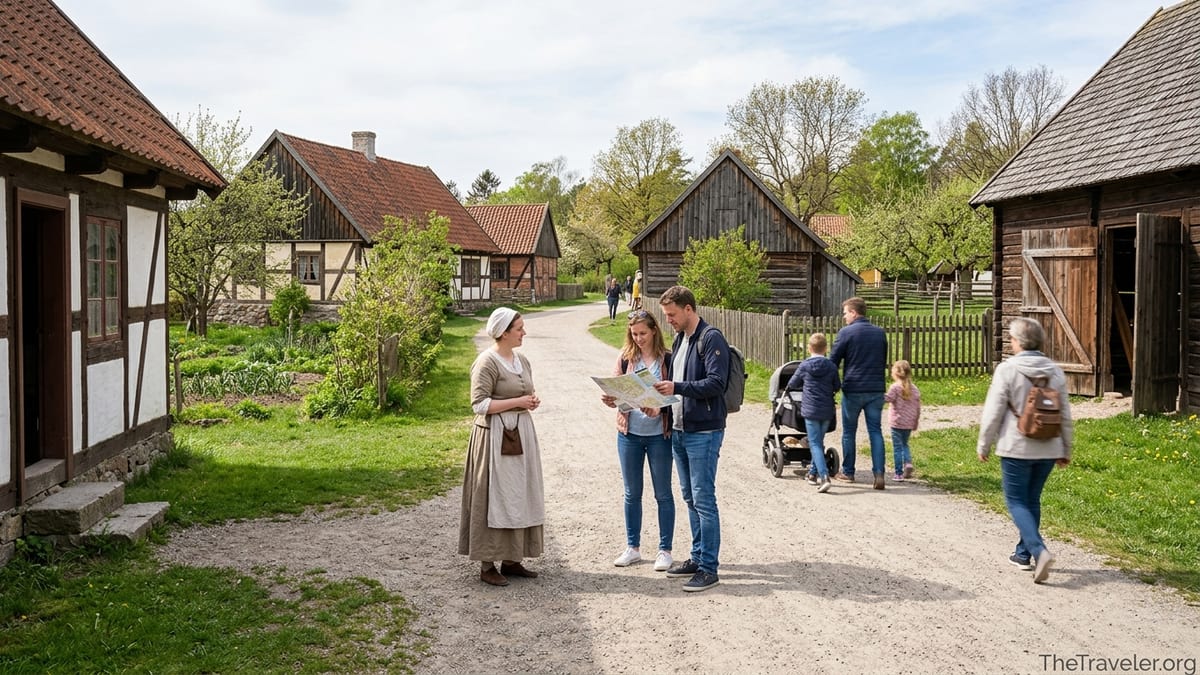
What Exactly Is an Open Air Museum?
Unlike a conventional museum housed in a single building, an open air museum spreads its collection across a landscape of historic structures, recreated streets and working farms. Visitors walk through real houses, barns, mills or even entire villages that have been relocated or reconstructed to show how people lived in the past. The idea took shape in Scandinavia in the late 19th century and is often associated with Skansen in Stockholm, widely regarded as the world’s oldest open air museum and still one of the most influential examples.
Today open air museums come in many forms. Skansen showcases Swedish rural life and traditional architecture, with farmsteads from different regions and a small zoo focusing on Nordic animals. Beamish, the Living Museum of the North in County Durham, England, recreates a 1900s town street, a colliery and a 1950s terrace, complete with trams and period shops. In Belgium, Bokrijk near Genk is known for its historic village that reflects everyday life in Flanders from the 17th to the mid 20th century. In Turkey, the Göreme Open Air Museum preserves rock-cut churches and monasteries carved into Cappadocia’s soft volcanic tuff.
Many of these museums are also “living history” sites, where costumed interpreters bake bread in wood-fired ovens, forge metal in smoky smithies or explain how families once shared single-room cottages. Others, such as the Middelheim Open Air Sculpture Museum in Antwerp, focus on art installed in parkland rather than historic houses. Before you visit, read a short description on the museum’s own site or local tourism page so you know whether you are walking into a recreated village, an archaeological park, a sculpture garden or a mix of all three.
Because open air museums often cover dozens of hectares, they feel more like national parks or heritage landscapes than traditional galleries. That means they demand a different kind of preparation. You are managing weather, uneven paths, outdoor dining and long walking distances as much as you are looking at exhibits.
Planning Your Visit: Tickets, Timing and Seasonality
Open air museums are highly seasonal. Many in northern Europe operate on reduced hours in winter or close some historic houses on weekdays outside peak season. Beamish, for example, publishes detailed opening times and notes that last admission is typically an hour before closing. The Dutch Open Air Museum in Arnhem runs historic trams and heritage activities more frequently in the warmer months. When planning, always check the current season dates and hours just before your visit, especially if you are traveling in shoulder months like April or October.
Ticketing models also vary. Beamish sells an “unlimited pass” that is valid for multiple visits within a year, which can be good value if you are staying in the region for a while. Some, like Skansen, are included in city tourist passes that bundle popular attractions and public transport. Others, such as the Salzburg Open Air Museum outside the Austrian city, offer discounted late afternoon tickets, which can be useful if you only have a few hours and want to avoid mid-day crowds. In Turkey, the Göreme Open Air Museum is included in some regional passes that cover nearby valleys and underground cities, which can reduce overall costs if you are exploring Cappadocia in depth.
Because many open air museums are full-day destinations, consider your timing carefully. Arriving near opening time gives you cooler temperatures in summer and quieter paths to take photos. In busy sites like Skansen, school groups and tour buses tend to arrive mid-morning. If the museum offers timed tours of specific houses or churches, as Göreme does for certain chapels, secure those as soon as you arrive or in advance where possible. In high season, popular guided tours in English can fill quickly.
Weather is a decisive factor. In northern Europe, spring and early autumn often combine manageable temperatures with less crowding, though some farms or gardens may not yet be in full bloom. In very hot regions such as central Turkey, plan Göreme for early morning or late afternoon to avoid intense midday sun on exposed paths. Open air museums rarely close completely for light rain, so be prepared to go ahead in drizzle and adjust your expectations rather than counting on last-minute cancellations.
Getting There and Getting Around on Site
Because these museums occupy large tracts of land outside city centers, reaching them often requires a combination of public transport and walking. The Dutch Open Air Museum in Arnhem can be reached from Arnhem Central Station by city buses that stop directly at the “Openluchtmuseum” stop, while the rural open air museum at Bad Sobernheim in Germany sits on hiking and cycling paths and is linked by regional buses and a nearby train station. In north-east England, many visitors reach Beamish by local bus from Newcastle or Durham, or by car using signposted routes from the A1.
Parking is usually available but not limitless. Arnhem’s Open Air Museum has a large car park with spaces for more than 700 cars and a smaller number of coaches, and still warns that it can fill on very busy days, when staff direct vehicles to overflow options. In some places, such as the Cappadocia valleys near Göreme, parking is on unshaded gravel lots where cars can become extremely hot in summer. If you are driving, keep water in the car and avoid leaving sensitive items inside.
Inside the museum, distances can be surprising. At Bokrijk, walking from the entrance through multiple historic hamlets and back can easily add up to several kilometers. Salzburg’s open air museum stretches along a wooded valley, linked by a heritage narrow-gauge railway that many visitors use to shuttle between clusters of farmsteads. Beamish operates vintage trams and buses on a loop that connects its town street, colliery and 1950s area, which is especially useful for families with small children or visitors with mobility limitations.
Check the museum map early and note slopes, gravel stretches and uneven stone surfaces. If you or someone in your group has mobility concerns, look for information pages or access guides. Beamish, for instance, publishes an access guide that explains gradients, tram access and wheelchair-friendly routes. Some sites offer a small number of wheelchairs at the entrance, but availability can be limited on busy days. For travelers with strollers, remember that historic interiors often have narrow doorways or steps, so you may need to leave a stroller outside before entering cottages or barns.
Weather, Clothing and What to Pack
Because almost all circulation in an open air museum happens outside, your comfort depends heavily on what you wear and carry. Think of your visit as a light hike through a heritage landscape. Sturdy, broken-in walking shoes are more important than stylish sneakers, especially at sites with dirt paths, cobbled streets or grassy slopes. At Skansen and similar northern sites, spring visits can still be chilly in the shade, so pack layers and a compact rain jacket.
Sun and heat are the main challenges in southern sites such as Göreme. Cappadocia’s volcanic rock reflects light and can intensify glare, so a wide-brimmed hat, sunglasses and high-factor sunscreen are essential. Paths between churches at Göreme are often dusty, uneven and exposed, making closed shoes preferable to sandals if you plan to explore beyond the main, paved loop. Even at European sites known for milder climates, such as Bokrijk in Belgium or the Middelheim sculpture park in Antwerp, a day of slow outdoor walking can leave unprepared visitors sunburned or chilled if the weather shifts.
Pack a small day bag with the basics: water bottle, light snacks, a phone power bank and a compact umbrella or poncho if showers are in the forecast. While most larger open air museums have cafes or kiosks, queues can build around lunchtime and prices for drinks are often higher than in supermarkets. Refillable bottles are useful at sites that provide drinking fountains, which are increasingly common in northern European museums focused on sustainability.
Finally, consider insect exposure. Rural sites with ponds and meadows, such as the Salzburg Open Air Museum or smaller regional museums in Germany’s river valleys, can see mosquitos at dusk. A small bottle of repellent is worthwhile if you plan to stay for evening events like summer concerts or open-air theatre performances that some museums host among historic buildings.
Experiences on Offer: From Costumed Interpreters to Working Farms
Much of the charm of an open air museum lies in its live interpretation. At Beamish, costumed staff play the role of shopkeepers, tram conductors and miners’ wives, engaging visitors in conversation about daily life in the 1900s or 1950s. Children can buy old-fashioned sweets in paper bags, ride a restored tram or watch a pit pony demonstration. Bokrijk in Belgium stages historical crafts such as weaving and blacksmithing, often allowing visitors to handle tools or try simple tasks under supervision.
Other museums focus on agricultural cycles. At Skansen, visitors might see haymaking in summer, seasonal markets or traditional Swedish celebrations of Midsummer and Christmas. In the Netherlands, smaller open air villages such as the PreHistorisch Dorp in Eindhoven emphasize prehistory and medieval daily life with costumed interpreters who bake bread over open fires and demonstrate archery or woodworking. Knowing the calendar matters: many of the most atmospheric demonstrations occur on weekends or during school holidays, while weekdays in low season can be much quieter.
Not all open air museums emphasize human performers. The Göreme Open Air Museum’s highlight is its rock-cut churches with Byzantine frescoes, where conservation rules restrict touching and flash photography and where silence is encouraged inside chapels. Sculpture parks such as Middelheim invite slower, independent exploration among works by modern and contemporary artists installed in lawns and woodlands. Before your visit, glance at the museum’s programme to see whether there are seasonal festivals, harvest days, concerts or after-hours openings that might coincide with your trip.
For a richer experience, consider guided options. Many larger museums offer short themed tours in several languages, which can bring context to what otherwise might look like just “old houses in a field.” In Göreme, local guides explain the symbolism in the frescoes and the history of monastic life. In Beamish, behind-the-scenes tours may focus on transport collections or the restoration of historic buildings. These paid add-ons increase your costs but often transform a pleasant walk into a much deeper encounter with the past.
Practicalities: Food, Facilities, Accessibility and Etiquette
Open air museums are usually well equipped with cafes, snack stands and picnic areas, but the details matter. At Skansen, visitors find everything from quick-service outlets selling hot dogs and waffles to sit-down restaurants in historic buildings. Salzburg’s open air museum offers a traditional inn-style restaurant early in the route and smaller kiosks further along. In many European sites, it is perfectly acceptable to bring your own picnic and use designated tables or lawns, which can significantly reduce costs for families.
Facilities are spread out. Toilets are often located near major clusters of buildings, playgrounds or restaurants rather than evenly spaced. At Arnhem’s Open Air Museum and Bokrijk, playgrounds and farm areas are designed for children to run and climb, but they may be a long walk from the entrance. If you are traveling with young children, note these locations on the map so you can plan rest and play stops rather than reacting only when everyone is tired.
Accessibility varies by site and by individual building. Many museums install discreet ramps or lifts where possible, but heritage rules and steep terrain can limit full step-free access. Beamish makes use of accessible buses, provides level access to many main streets and furnishes detailed information on gradient and surfaces in its access guide. Göreme’s rock-cut churches, by contrast, often require climbing worn stone steps and navigating low doorways, which can be challenging for visitors with limited mobility or balance issues. Wherever you go, look for an “Access” or “Visitor information” section on the official site before deciding how long to stay and whether to bring mobility aids.
Etiquette in open air museums is generally similar to that in conventional museums, with extra attention to safety. Respect roped-off areas, stay on paths where requested and supervise children closely around open water, fire or animals. In working farms, do not feed animals unless explicitly invited to do so and follow handwashing instructions after petting areas. Many sites allow photography outdoors but may restrict it inside certain historic interiors or chapels. At Göreme, for instance, flash is typically forbidden to protect delicate wall paintings.
Budgeting and Realistic Expectations
A day at an open air museum can be one of the better-value cultural outings on a trip, but costs add up faster than you might expect. Entry for major European open air museums often sits in the range of a mid-priced attraction. For example, brochures for the Salzburg Open Air Museum list standard adult tickets at a moderate price, with cheaper late-afternoon options introduced in summer. Skansen’s adult tickets are similarly priced to other major Stockholm attractions and are sometimes bundled with local passes. In Turkey, the Göreme Open Air Museum ticket is generally comparable to other major archaeological sites in the region.
Extras include parking fees, tram or railway rides inside the museum, guided tours, and seasonal events. Arnhem’s Open Air Museum, for example, charges for parking and sells separate tickets for some workshops or special programmes. Food on-site is usually more expensive than in town, particularly in popular destinations. To keep your budget under control, decide in advance whether you will buy a sit-down lunch, opt for snacks and drinks only, or bring a picnic.
Set realistic expectations about pace and coverage. It is rarely possible to “see everything” at the largest sites in a single day. At Beamish or Bokrijk, trying to visit every house and read every panel leads quickly to fatigue and frustration. Instead, choose one or two areas to explore in depth, such as the town street and colliery at Beamish or a specific hamlet at Bokrijk, and accept that other corners will remain for a future visit. For families, a rhythm that alternates between structured learning (tours, demonstrations) and unstructured time (playgrounds, farm animals, cafes) tends to work best.
Keep in mind that living-history staff are usually present to engage but not to deliver scripted performances on demand. Some will be enthusiastic conversationalists, others more reserved. If you are curious, politely ask questions about the building or activity they are presenting. Many interpreters are happy to share details that are not written on any signboard, like how families managed winter food storage or what it was like to cook daily meals on a coal range.
The Takeaway
Visiting an open air museum is less like dropping into a gallery and more like taking a day trip into another century. It rewards the same kind of planning you might apply to a hike or a small-town excursion: check opening hours, consider the season, understand how you will get there, dress for the weather and terrain, and budget for meals and extras. With a bit of preparation, sites such as Skansen, Beamish, Bokrijk, the Dutch Open Air Museum in Arnhem or the Göreme Open Air Museum can become highlights of a wider journey, offering memories that blend landscapes, stories and everyday details of past lives.
Give yourself time to slow down. Linger in a cottage kitchen listening to a guide explain how families once shared a single bed. Watch a blacksmith shape iron at the forge or a baker slide rye loaves into a brick oven. Let children help pump water from a well or run through meadows between farmsteads. In doing so, you will experience not just a collection of historic buildings but a living conversation between past and present.
FAQ
Q1. How much time should I plan for an open air museum visit?
Most larger open air museums justify at least half a day, and many reward a full day. Sites like Beamish, Skansen or Bokrijk can easily fill five to seven hours if you include demonstrations, tram rides and meal breaks. Smaller regional museums or sculpture parks may be comfortably explored in two to three hours, especially if you focus on a single themed area.
Q2. Are open air museums suitable for young children?
Yes, many are designed with families in mind. Working farms, costumed interpreters, vintage trams and playgrounds make places like Beamish, Bokrijk or the Salzburg Open Air Museum particularly engaging for children. Parents should be prepared for a lot of walking, supervise kids closely near animals, water or open fires and plan rest stops at playgrounds or cafes.
Q3. What should I wear to an open air museum?
Comfortable walking shoes and weather-appropriate layers are essential. Treat your visit like an easy outdoor hike combined with sightseeing. In cooler climates, bring a light waterproof jacket, even in summer. In hot, sunny regions like Cappadocia, add a sun hat, sunglasses and sunscreen, as paths can be exposed and reflective.
Q4. Do I need to book tickets in advance?
It depends on the museum and season. In peak periods, advance booking is strongly recommended for popular sites and for any timed tours. Some museums, such as Beamish, sell flexible passes that can be purchased on arrival but may require queuing. Checking the official website a few days before your planned visit is the best way to see whether advance tickets are advised.
Q5. Are open air museums accessible for visitors with limited mobility?
Accessibility varies. Many European museums provide step-free routes, accessible toilets and detailed access guides, and operate trams or buses that can carry wheelchairs. However, individual historic buildings often have steps, narrow doors or uneven floors, and archaeological sites like Göreme may involve steep, rocky paths. Visitors with mobility concerns should review access information in advance and consider borrowing or bringing mobility aids where possible.
Q6. Can I bring my own food and drinks?
In many open air museums, bringing a picnic is allowed and even encouraged in designated areas. This can significantly reduce costs, especially for families. Always check local rules, avoid glass near playgrounds and farms and dispose of rubbish in the provided bins. Even if you plan to buy lunch on site, carrying water and a few snacks is sensible.
Q7. Is photography allowed in open air museums?
Outdoor photography for personal use is generally allowed and very popular, given the picturesque settings. Restrictions are more common inside historic interiors or sensitive chapels, particularly where flash could damage artworks such as frescoes. Individual museums may also have policies for tripods, drones or commercial shoots, so check signage at the entrance and respect any no-photo areas.
Q8. How do open air museums differ from regular museums?
Open air museums spread their collections across a landscape of real buildings, streets or farms rather than displaying objects in glass cases inside a single building. Visitors move through outdoor spaces, often interacting with costumed interpreters, animals and working machinery. This makes them more physically demanding but also more immersive and multisensory than many traditional museums.
Q9. Are there open air museums outside Europe?
Yes. While Europe has a high concentration of open air and living history museums, similar concepts exist elsewhere. Japan has the Edo-Tokyo Open Air Architectural Museum showcasing historic Japanese houses, and many countries operate pioneer villages, frontier towns or ethnographic parks that function as open air museums under different names. The basic idea of preserving or reconstructing entire buildings and landscapes is global.
Q10. What is the best way to avoid crowds at popular open air museums?
Arrive at opening time or in the late afternoon when possible, and start your visit by walking directly to the most popular zones before buses and tour groups arrive. Weekdays outside school holidays are usually quieter than weekends. In very busy museums, look for less-visited areas such as outlying farms, walking trails or secondary hamlets, where you can often find more space even on crowded days.