


More news on this day
Passengers at Baltimore/Washington International Thurgood Marshall Airport faced extensive disruptions after Sunday evening thunderstorms triggered a temporary ground stop, leading to at least 95 delayed departures and four cancellations across multiple airlines and routes in the United States and abroad.
Get the latest news straight to your inbox!
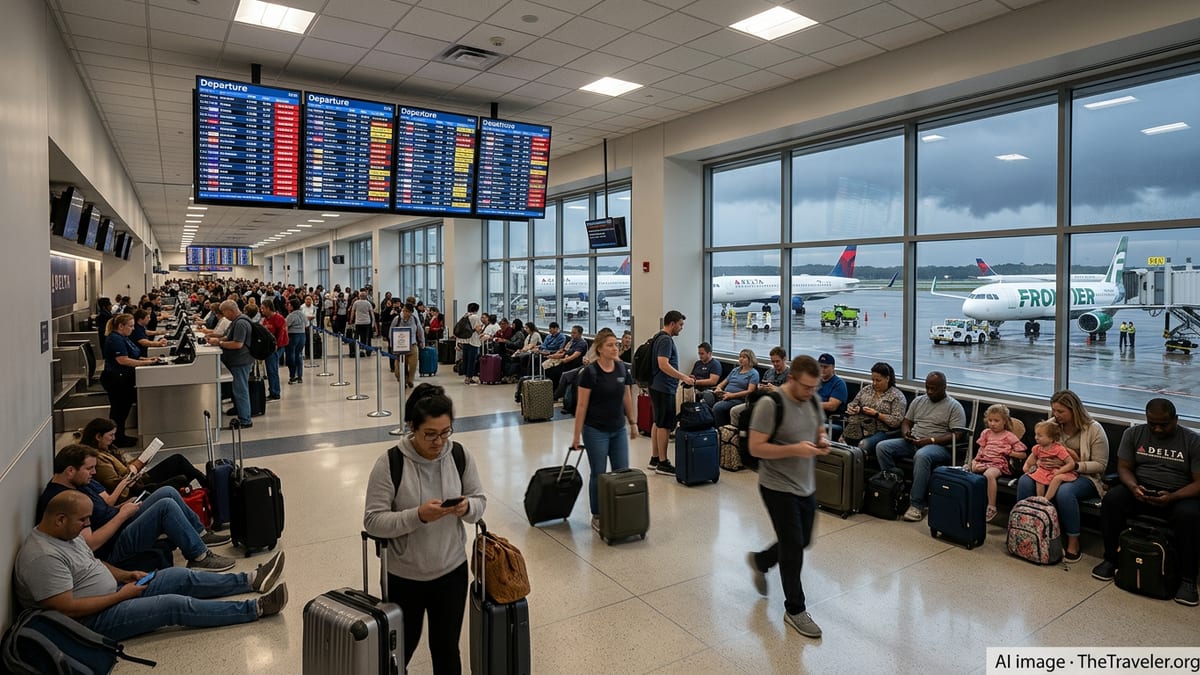
Weather-Driven Ground Stop Ripples Through BWI Operations
Publicly available flight and weather tracking data for June 14 and June 15, 2026 indicate that a line of strong thunderstorms moved through the Baltimore and Washington region, prompting a temporary ground stop at Baltimore/Washington International Thurgood Marshall Airport. The halt to departures, which followed a severe thunderstorm watch along the I-95 corridor, forced aircraft to remain at gates and on taxiways while the storms passed.
The pause in operations quickly translated into mounting delays. By early Monday, data compiled from flight-status services and airport information dashboards showed at least 95 delayed departures and four cancellations at BWI, spread across evening, late-night and early-morning banks. The majority of disruptions clustered around peak periods when carriers attempt to synchronize connections to domestic and international networks.
Because many aircraft and crews operate through tightly timed rotations, the ground stop and subsequent spacing restrictions created a knock-on effect that persisted hours after the worst of the storms had moved east. Flights that eventually departed often did so behind schedule, setting up further delays at their next destinations.
Published coverage of the storms affecting East Coast hubs on June 15 also pointed to elevated delays at airports in the wider region, including New York, Boston and Washington, suggesting that BWI’s issues were part of a broader weather-related slowdown across the eastern United States.
Southwest, Frontier, Contour and Others Among Affected Carriers
Southwest Airlines, which maintains its largest East Coast presence at BWI and operates an extensive point-to-point network from the airport, accounted for a significant share of the disruptions. Flight-history records for Southwest operations into and out of BWI on June 14 and June 15 show multiple services arriving or departing behind schedule as the storms and ground stop compressed available departure windows.
Frontier Airlines, which runs lower-frequency but often highly utilized leisure routes from BWI, also experienced schedule impacts as aircraft arriving late from other weather-affected cities missed planned departure times. Even a small number of delayed or cancelled flights can have an outsized effect for carriers with limited daily frequencies on individual routes, leaving passengers with fewer same-day rebooking options.
Regional operator Contour Airlines, which connects BWI with smaller domestic markets, appeared among the affected carriers as well. Public timetables show that Contour’s network depends on precise timing to feed travelers into larger airline systems, meaning a delay or cancellation at BWI can sever onward connections at both ends of a route.
Other U.S. and international airlines serving the Baltimore-Washington area also saw their schedules stretched, as arrival management programs and en route flow restrictions slowed the rate at which traffic could safely move in and out of the terminal airspace once the ground stop was lifted.
Disruptions Stretch From Domestic Hubs to Mexico, Costa Rica and the Caribbean
The impact of BWI’s delays extended well beyond the Mid-Atlantic. According to public schedules and route maps, services from BWI reach dozens of domestic destinations, along with holiday and leisure markets in Mexico, Central America and the Caribbean. As the ground stop and weather constraints pushed departures later into the evening, knock-on delays emerged on flights bound for cities such as Orlando, Denver, Chicago and Dallas.
Internationally, disruptions affected flights and connections to beach and resort destinations including Cancún and other Mexican gateways, Costa Rica, Jamaica and Aruba. For many travelers, BWI functions as the starting point in a multi-leg itinerary, often involving a domestic segment followed by an onward international flight from a separate hub. When initial departures from Baltimore left late or were cancelled, passengers risked missing connecting services onward to Latin America and the Caribbean.
Schedule data also show that some affected aircraft were due to route onward to Iceland and other transatlantic points as part of overnight sequences. Late departures from BWI can compress ground times and force downstream retiming, prompting airlines to swap aircraft or crews or to consolidate lightly booked flights in order to restore their schedules.
Because weather systems on June 15 were simultaneously influencing conditions at several major hubs, options for rerouting were constrained. Reports on national aviation performance for the day highlighted weather-related slowdowns at multiple East Coast and Texas airports, limiting airlines’ ability to absorb BWI’s delays by shifting passengers through alternate gateways.
Travelers Face Long Lines, Missed Connections and Limited Alternatives
For passengers inside the terminal, the operational challenges translated into crowded concourses, long waits at customer service desks and uncertainty over departure times. Social media posts and traveler accounts from recent disruption periods at BWI describe security and check in queues that can extend far beyond usual peak lengths when irregular operations coincide with high travel demand.
With at least four cancellations recorded among BWI departures during the disruption window, some travelers were forced to seek scarce open seats later in the week or accept rebookings via other airports. Leisure travelers headed to resort destinations in Mexico, Costa Rica, Jamaica and Aruba faced particular difficulties, as many flights to these markets operate only once daily or a few times per week, making same day recovery more difficult.
Passengers on low cost carriers such as Frontier often had fewer rebooking choices, since many routes are served only a handful of times each week. For some, the most viable alternative involved purchasing new tickets on other airlines at higher last minute fares, or shifting to nearby airports in Washington or Philadelphia and arranging ground transportation at their own expense.
Travel advocacy groups and consumer resources note that compensation or reimbursements for weather related delays are limited under U.S. rules, meaning that many of the passengers affected by the BWI ground stop and resulting delays may have had to cover meals, hotels and incidental expenses themselves while waiting for the next available flight.
More Storms Ahead as Summer Travel Peaks
The BWI disruptions occurred as airlines head into the busiest stretch of the summer travel season, a period historically marked by afternoon and evening thunderstorms across much of the United States. Industry performance data from previous years show that convective weather is a leading driver of delays and cancellations during June, July and August, particularly at large coastal and hub airports.
Forecasts for the coming week indicate the potential for additional storm systems to affect parts of the Mid Atlantic and Northeast, raising the prospect that further schedule disruptions could arise at BWI and other regional airports. Travel commentators are encouraging passengers to build extra time into itineraries, especially when traveling on separate tickets or connecting to international flights with infrequent service.
Aviation analysts also point to ongoing construction and infrastructure work at BWI, detailed in Federal Aviation Administration planning documents, as a factor that can marginally reduce flexibility during adverse weather. While these projects are designed to improve capacity and baggage handling in the long term, temporary runway and taxiway constraints may limit the number of arrival and departure slots available when conditions deteriorate.
For now, publicly available data suggest that operations at BWI have gradually recovered from the immediate effects of the June storms, with airlines working through residual delays as aircraft and crews return to their scheduled positions. The episode underscores how quickly a single weather system can disrupt a complex web of routes that connects Baltimore to major U.S. cities as well as popular vacation destinations across Mexico, Central America and the Caribbean.