


For many visitors to Rome, Piazza del Risorgimento is little more than a blur on the way to the Vatican Museums. In reality, this sprawling square just outside the Vatican walls is one of the city’s busiest transit hubs and a surprisingly useful base for exploring Rome. Knowing how it works before you arrive can save you time, money, and several tired, overheated arguments on the sidewalk.
Get the latest updates straight to your inbox!
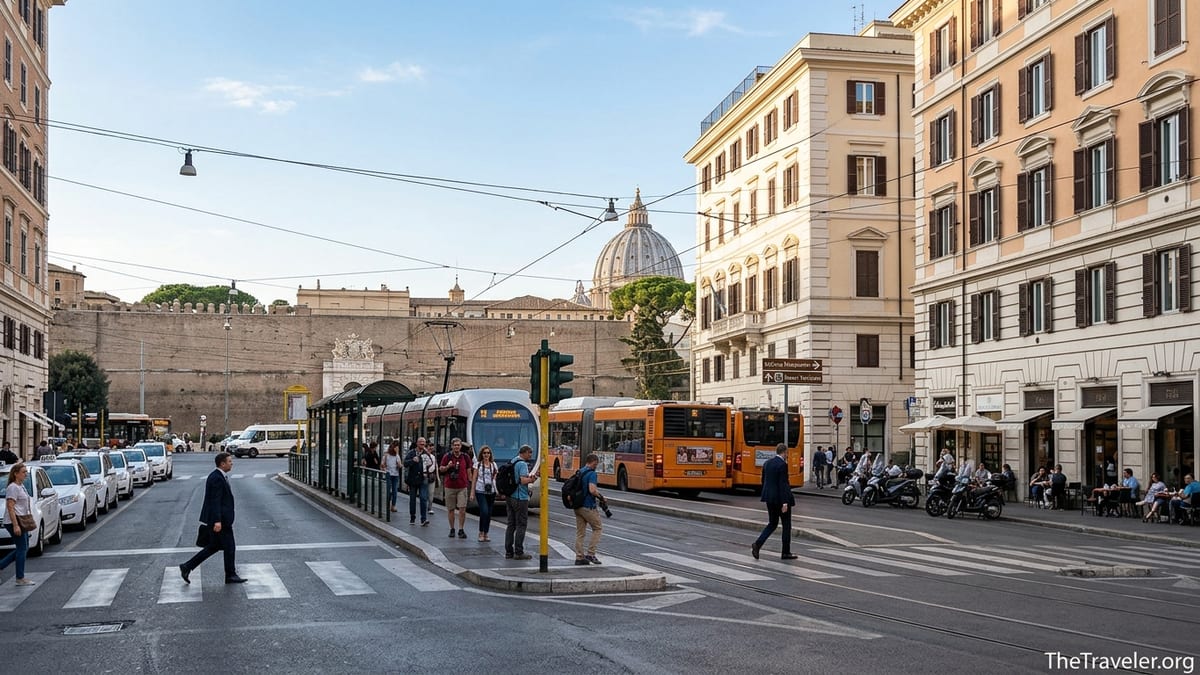
Understanding Where Piazza del Risorgimento Really Is
The first surprise for many visitors is that Piazza del Risorgimento is not inside Vatican City and not on Saint Peter’s Square. It sits just outside the Vatican walls on the Rome side, in the Prati neighborhood, roughly a 5 to 10 minute walk from both the Vatican Museums entrance and Saint Peter’s Basilica. Many hotels and tour descriptions casually say “next to the Vatican,” which is true, but you will still be walking a few blocks along busy streets.
On a map, the square is a large open rectangle bordered by Viale Giulio Cesare, Via di Porta Angelica, and Via Ottaviano. The Vatican Museums entrance is usually a 10 to 15 minute walk along Viale Vaticano, while Saint Peter’s Square is around 10 minutes through Via di Porta Angelica or Via dei Bastioni di Michelangelo. This may not sound like much, but in Rome’s summer heat or in a downpour, that extra distance can feel longer than expected.
The square itself is more of a transit and traffic space than a romantic piazza. You will not find a central fountain or elegant baroque church like you do in Piazza Navona or Piazza di Spagna. Instead, you will see a wide, paved island with bus bays, tram tracks, taxi ranks, and constant streams of people moving between public transport and the Vatican. Understanding this up front helps set the right expectations and keeps you from being disappointed when you first arrive.
On the positive side, this functional character makes Piazza del Risorgimento very practical. It is a place where you can switch between metro, tram, and numerous bus lines, grab a quick espresso, buy a phone SIM, or duck into a supermarket for cold water and snacks before or after visiting the Vatican. Travelers who know this often choose accommodation within a few blocks of the square precisely because it gives them better access to the rest of the city.
Getting There: Metro, Bus, and Tram Without the Stress
Most visitors reach Piazza del Risorgimento via the Ottaviano–San Pietro–Musei Vaticani station on Metro Line A, the red line. Ottaviano is the closest metro stop to the Vatican area, and one of the station’s exits drops you onto Via Ottaviano, just a short walk from the square. From central areas like Termini, Repubblica, Barberini, or Spagna, you simply take Line A toward Battistini and get off at Ottaviano. The metro ride usually costs about 1.50 euros per single ticket and takes around 10 to 15 minutes from Termini, not including walking and waiting times.
Buses are another major way to reach Piazza del Risorgimento. Several lines such as 23, 32, 49, 81, 280, 492, 913, and 982 frequently stop at or very near the square, linking it with districts like Trastevere, Ostiense, Tiburtina, and Piazza Cavour. For example, a traveler staying near the Colosseum might ride Metro Line B to Termini and transfer to Line A for Ottaviano, but someone based along the Tiber in Trastevere might prefer the bus 23, which runs across the river and up toward the Vatican area, stopping a short walk from the square. Real-world experience shows that buses are often slower due to traffic, but they can be more direct if your hotel is not near a metro station.
Tram 19 is another poorly understood but very useful line. It can bring you to Piazza del Risorgimento from neighborhoods like San Lorenzo, Porta Maggiore, and the northern area near Piazza Flaminio. It is especially handy on days of metro strikes, when locals advise staying above ground and relying on trams and buses. Visitors staying along the tram route sometimes use it as a scenic, inexpensive way to glide toward the Vatican instead of dealing with crowded metros at rush hour.
What most travelers wish they had known earlier is how long to budget for these connections. During peak commuting hours, buses can be delayed, and the metro platforms at Ottaviano can be extremely crowded with commuters, pilgrims, and tour groups all aiming for the same exits. Allow generous buffer time if you have a timed entry ticket for the Vatican Museums. Arriving in the square at least 45 minutes before your Vatican time slot is a realistic minimum when you consider potential delays and the time it takes to navigate crowds and security.
Orientation on Arrival: What You Actually See on the Ground
Stepping into Piazza del Risorgimento can feel chaotic at first. The square is a wide, paved expanse surrounded by multi-story residential and office buildings, with fast-moving traffic circling its perimeter. In the middle, a guarded island holds tram stops, bus bays, and a few small kiosks. Instead of a postcard-perfect piazza, you face a tangle of vehicles, wires, and people heading in every direction.
One helpful orientation point is the visible line of the Vatican walls. Looking toward the southwest side of the square, you will see the tall stone walls that mark the boundary of Vatican City. Walking alongside these walls along Via di Porta Angelica will take you toward Saint Peter’s Square, while following them in the opposite direction along Viale Vaticano leads toward the Vatican Museums entrance. Many first-time visitors mistakenly assume the museums entrance is right at the square, only to discover that there is a further uphill walk along the walls, often in direct sun.
On the opposite side of the square from the Vatican walls, you will find the streets of the Prati district. Streets like Via Ottaviano, Via Cola di Rienzo, and Via Germanico lead into a neighborhood full of mid-range hotels, apartment rentals, banks, pharmacies, cafes, and clothing shops. This is where many visitors end up staying, sometimes without realizing that the Vatican-adjacent address they booked is actually in Prati, not in Vatican City itself. For practical purposes this is often ideal, since Prati has more everyday services and easier late-night options than within the Vatican walls or right on Saint Peter’s Square.
It is also important to understand that pedestrian crossings around the piazza follow Rome’s sometimes intimidating traffic rules. Cars, buses, and scooters often move quickly, and they may not stop unless you step firmly but cautiously into the marked crosswalk. Visitors who wait for drivers to wave them across can find themselves stuck for several minutes. Locals typically advise looking carefully, making eye contact with approaching drivers, and then beginning to cross decisively on the striped lines, trusting that vehicles will slow as long as you are not darting into their path at the last moment.
Hidden Conveniences: Why Locals Actually Use This Square
Although Piazza del Risorgimento can appear unlovely at first glance, travelers who stay nearby often end up praising its day-to-day convenience. Within a few minutes’ walk you can find multiple supermarkets, bakeries, takeaway pizza by the slice, casual trattorias, gelato shops, and pharmacies. This makes it easy to assemble a simple picnic before joining the line for the Vatican Museums or to grab groceries to cook in an apartment after a long day of sightseeing.
A typical example: a family staying on Via Germanico might walk five minutes to the piazza at 7:30 a.m., stop at a local bar for cappuccini and cornetti at the counter, then pick up cold water and fruit at a supermarket before walking along the Vatican walls to their 9 a.m. museums entry. After finishing the museums around lunchtime, they might retrace their steps to Prati to find a quieter lunch spot away from the tight streets and aggressive souvenir vendors around Saint Peter’s. Using Piazza del Risorgimento as a daily starting and ending point quickly becomes second nature.
The square is also a practical meeting point for small-group Vatican tours and airport transfers. Many companies ask clients to meet “by the bus stops at Piazza del Risorgimento” or “on the corner of Via Ottaviano and the piazza” rather than inside the deeply crowded streets closer to the Vatican gates. While this can seem vague in confirmation emails, in real life it usually means standing near the center island where the tram tracks run or even under the shade of a particular newsstand that guides use as a landmark.
For longer-term visitors, the presence of services like laundromats, phone shops that sell local SIM cards, and everyday clothing stores in the streets off the piazza can be an unexpected advantage. Instead of battling the tourist-focused shops right by Saint Peter’s Square, you can handle simple errands in a more local environment, paying closer to local prices. This includes buying transit passes at nearby tobacco shops, where staff are accustomed to helping visitors navigate Rome’s public transport options.
Common Pitfalls: Taxis, Crowds, and Timed Tickets
One of the most frequent complaints from travelers around Piazza del Risorgimento involves confusion and frustration with taxis. There is a formal taxi rank close to the Vatican area, and white official taxis should use meters with transparent pricing. However, visitors report that some drivers lingering near the Vatican and the piazza try to negotiate flat fares that are far higher than the metered price, especially for routes back toward Termini or across the river to Trastevere or the Colosseum. The safest tactic is to either join a clearly signed official taxi queue, insist on using the meter, or use reputable taxi apps that connect you with licensed cars.
Crowding is another reality that many visitors underestimate. On days when the Vatican Museums offer free entry, around major religious holidays, or when major tour groups descend on the area, pedestrian traffic flows from Ottaviano station through Piazza del Risorgimento and toward the Vatican gates can feel like a slow-moving river of people. In these periods, crossing the square or walking along Via di Porta Angelica can easily double in time. Parents with strollers and travelers with mobility challenges often wish they had chosen an earlier or later entry time or even a different day to visit the museums.
Timed entry tickets for the Vatican Museums add another layer of stress if you do not factor the square’s congestion into your planning. For example, a traveler staying near Piazza Barberini may think an 8:30 a.m. museum entry allows them to leave their hotel at 8 a.m., ride the metro, and arrive with a few minutes to spare. In practice, crowds at the metro, walk times from Ottaviano, and security lines starting near the Vatican walls mean they should have aimed to be at Piazza del Risorgimento by around 7:45 a.m. instead. Building in extra time for these subtle delays can be the difference between a calm start and a panicked rush.
Finally, petty crime is something to keep in mind, particularly on crowded buses and trams feeding into the square. As with any busy tourist node in a major European city, pickpockets look for distracted travelers focused on their maps or phones. Visitors who use cross-body bags that zip, keep wallets in front pockets, and avoid keeping phones in back pockets usually navigate the area without incident. Being mentally prepared as you step off the metro into the crowds at Ottaviano and the piazza can make you feel more confident and less like an easy target.
Best Times to Be There and How Weather Changes Everything
The experience of Piazza del Risorgimento changes dramatically depending on the time of day and the season. Early morning, roughly between 7 a.m. and 9 a.m., is a mix of local commuters heading to work and early-bird tourists rushing to Vatican tours. In summer, the air is still relatively cool at this hour, and the low sun gives softer light for those hoping to snap first photos near the Vatican walls. By late morning, around 10:30 a.m. to noon, the square becomes busier but also feels more relaxed, as many visitors are already inside the museums or up on Saint Peter’s dome.
Afternoons can be oppressively hot from June to September, as the square has limited shade and a lot of heat-reflecting pavement. Temperatures often climb well into the high 20s or low 30s Celsius, making the 10 to 15 minute walk from the metro or bus stop to the museums or basilica feel intense, especially for older travelers or families with young children. In these months many travelers wish they had booked early morning or late afternoon Vatican visits, allowing them to cross the piazza in more forgiving light and heat. Carrying a refillable water bottle and wearing a hat or using an umbrella as a parasol can make a noticeable difference.
Evenings, from around 6 p.m. onward, bring a different character. While some day-trippers leave the area, many locals return from work, and the streets of Prati fill with people heading to aperitivo or dinner. The square remains busy with buses and trams, but the atmosphere lightens. Travelers staying nearby often use this time to stroll along Via Cola di Rienzo’s shop windows or to enjoy a gelato while watching the constant flow of buses, trams, and pilgrims. Nighttime photos can be surprisingly atmospheric, with tram cables and streetlights framing the silhouette of the Vatican walls.
Rain has its own implications. Because the piazza is so exposed, sudden showers can leave visitors with nowhere to shelter except under tram shelters or the small overhangs of nearby buildings. Souvenir sellers quickly appear with umbrellas and disposable ponchos at marked-up prices. Smart travelers bring a compact travel umbrella and a light waterproof jacket, allowing them to keep moving rather than waiting in crowded shop doorways for the rain to pass. In winter months, the square feels grayer and windier but also less intensely crowded, which some visitors appreciate.
Staying Around Piazza del Risorgimento: Pros and Cons
Choosing a hotel or apartment near Piazza del Risorgimento is a strategic decision that works very well for some travelers and less so for others. On the positive side, you are within easy walking distance of the Vatican Museums and Saint Peter’s Basilica, yet you remain firmly inside Rome proper, with access to regular supermarkets, coffee bars, and local restaurants that cater as much to Romans as to tourists. Public transport connections are excellent, particularly if you combine the metro at Ottaviano with buses or trams for specific trips.
For example, a couple staying for five nights might base themselves on a quiet side street like Via degli Scipioni or Via Catone. Each morning they can walk to Ottaviano to reach places like the Spanish Steps, Piazza del Popolo, or Termini by metro. In the evenings they can return to a neighborhood that feels more residential and less frenetic than central tourist hotspots. Having Piazza del Risorgimento close by means they can also spontaneously hop on a bus to Trastevere for dinner or take a tram toward the northern neighborhoods without needing to navigate a complex route.
On the downside, some streets immediately around the square are noisy, especially rooms facing busy avenues like Viale Giulio Cesare or the tram tracks. Light sleepers may prefer accommodations on side streets a couple of blocks away rather than directly on the piazza. Another drawback is that, while the area is convenient, it lacks the obvious historical charm of neighborhoods like Trastevere or the lanes around the Pantheon. Prati’s architecture is elegant but more 19th and early 20th century, and many facades are dedicated to offices and apartment blocks rather than picturesque palazzi.
Travelers also sometimes underestimate the walking distances from the Vatican area to other major sights. While the map makes it look close to central Rome, walking from Piazza del Risorgimento to the Pantheon or Piazza Navona takes roughly 25 to 35 minutes at a normal pace, crossing the Tiber and navigating busy intersections. Energetic visitors may enjoy this, but those with mobility issues might prefer a base closer to the historic center or at least be prepared to rely more heavily on buses and taxis.
The Takeaway
Piazza del Risorgimento is not the grand piazza many first-time visitors imagine when they picture the Vatican. It is a busy, sometimes chaotic transport hub that functions as Rome’s practical front porch to one of the world’s most visited religious sites. Its value lies less in scenic beauty and more in how easily it connects you to the rest of the city while giving you access to everyday services that can make a Rome stay smoother and less stressful.
Travelers who understand its role in advance tend to appreciate it: they budget sufficient time to move between metro, bus, and the Vatican entrances; they choose accommodation with eyes open to both the convenience and the noise; and they arrive prepared for the crowds, heat, and occasional hard sell of taxi drivers and souvenir vendors. With realistic expectations, Piazza del Risorgimento becomes less a confusing blur and more a useful anchor point on your mental map of Rome.
Above all, approaching the square like a local helps. Know your route options, keep a small list of nearby cafes and supermarkets in mind, and treat the piazza as a starting point rather than a destination. Do that, and this unglamorous open space may end up being one of the most helpful spots you encounter on your way to the Vatican.
FAQ
Q1. Is Piazza del Risorgimento inside Vatican City?
No. Piazza del Risorgimento is just outside the Vatican walls, in the Prati neighborhood of Rome, a short walk from both the Vatican Museums and Saint Peter’s Basilica.
Q2. What is the easiest way to reach Piazza del Risorgimento from Termini station?
The simplest route is to take Metro Line A from Termini toward Battistini and get off at Ottaviano. From there it is roughly a 5 to 10 minute walk along Via Ottaviano to the square.
Q3. How long does it take to walk from Piazza del Risorgimento to the Vatican Museums entrance?
In normal conditions, it usually takes about 10 to 15 minutes on foot, following the Vatican walls along Viale Vaticano. Allow extra time during peak crowds, hot weather, or if traveling with children or older relatives.
Q4. Are there restaurants and supermarkets near the square?
Yes. The streets around the piazza and into Prati are full of cafes, bakeries, pizzerias, and several supermarkets. Many visitors use these to grab breakfast, water, and snacks before or after visiting the Vatican.
Q5. Is it safe around Piazza del Risorgimento at night?
The area is generally considered reasonably safe, with a mix of locals and visitors even in the evening. As in any large city, keep an eye on your belongings, especially at bus and tram stops, and avoid displaying valuables unnecessarily.
Q6. Can I rely on taxis from Piazza del Risorgimento?
You can find taxis nearby, but always choose official white taxis and insist on using the meter. Avoid accepting unsolicited offers from drivers who approach you on foot, and be cautious of anyone quoting a high flat fare without using the meter.
Q7. Is it a good idea to stay in a hotel near Piazza del Risorgimento?
For many visitors, yes. The area offers excellent public transport connections and easy access to the Vatican, along with everyday services. The main trade-offs are some traffic noise and less historic charm than older central districts.
Q8. How early should I get to Piazza del Risorgimento if I have timed Vatican Museums tickets?
Aim to reach the piazza at least 45 minutes before your entry time. This gives a cushion for delays on public transport, the walk to the museums entrance, and getting through security lines.
Q9. Which public transport tickets or passes work for buses and trams serving the piazza?
Standard Rome public transport tickets and passes, such as the 100-minute single ticket or day and multi-day passes, are valid on the metro, buses, and trams that serve Piazza del Risorgimento. You can buy them at metro stations, some newsstands, and tobacco shops.
Q10. Is there anything to actually see in Piazza del Risorgimento itself?
The square is more functional than scenic, used mainly as a transport and meeting hub. Its main appeal lies in its convenience and its proximity to the Vatican and the shops and cafes of the Prati neighborhood, rather than in monuments or dramatic architecture.