


More news on this day
Washington Dulles International Airport was plunged into disruption as a wave of 35 combined cancellations and delays across Frontier Airlines, United Airlines, and Lufthansa upended travel plans for hundreds of passengers on some of the airport’s busiest domestic and transatlantic routes.
Get the latest news straight to your inbox!
Operational Strain Hits a Key East Coast Hub
The latest disruption comes during an already intense summer for Washington Dulles, where passenger traffic has been surging and airlines have been expanding and reshaping schedules for 2026. Publicly available airport planning documents show that United and Lufthansa remain among the largest long haul operators at Dulles, with Frontier continuing to target price sensitive domestic travelers through a limited network of low cost routes.
Reports from aviation tracking platforms and airline schedule data indicate that a cluster of cancellations and long delays affected flights across the three carriers, with approximately 35 departures and arrivals either scrubbed outright or pushed back for extended periods. The impact was felt most acutely on east coast and transatlantic routes that funnel passengers through Dulles to hubs such as Frankfurt and London, as well as on Frontier’s point to point domestic services.
The disruption follows a broader pattern seen this summer in which airlines at major east coast hubs have been contending with tight aircraft utilization, rolling schedule adjustments, and periodic weather related slowdowns. For passengers moving through Dulles, those pressures converged into a single day of pronounced irregular operations that rippled into missed connections and forced rebooking across alliance partners.
United Itineraries Suffer Knock On Delays
United, the dominant carrier at Washington Dulles, bore a significant share of the operational strain. Flight status records for late June show multiple United departures from Dulles to key domestic cities being retimed or re slotted, with some flights operating with extended gate and runway delays that stretched well beyond their scheduled departure windows.
Transatlantic services were also affected. Several United flights from Dulles that are marketed jointly with Lufthansa and other Star Alliance partners experienced schedule changes and delays, complicating onward connections for passengers bound for European hubs. While many of these services ultimately departed, the irregular timings contributed to missed link ups and forced passengers onto later flights or alternate routings.
United’s reliance on Dulles as a connecting gateway magnified the effects of each cancellation or delay. When aircraft and crews arrived late from preceding segments, downstream flights out of Dulles became vulnerable to rolling disruptions, compressing turnaround times and narrowing the margin for recovering the schedule as the day progressed.
Lufthansa Codeshares and Long Haul Links Disrupted
Lufthansa’s footprint at Washington Dulles is anchored in its Frankfurt and Munich links and a dense web of codeshares on United operated flights. Tracking data and published schedules for the final days of June show Lufthansa code numbers attached to several United operated transatlantic services from Dulles, creating shared exposure whenever United’s operations wavered.
When delays and cancellations struck, passengers holding Lufthansa tickets on these codeshare flights were drawn into the same disruption pattern as United customers. In several cases, Lufthansa coded services operated by United faced schedule changes that required reissued itineraries and rebooking to maintain onward European and connecting itineraries. This effect contributed to the overall count of 35 affected flights across the three brands, even when a single physical aircraft movement carried multiple airline designators.
The timing is particularly sensitive for Lufthansa, which has been preparing to enhance its premium product and long haul offering on select North American routes in the coming seasons. Any noticeable spike in operational instability during the busy summer travel period risks undercutting those efforts, especially for business and high value leisure travelers who depend on reliable overnight transatlantic connections.
Frontier Passengers Face Heightened Vulnerability
Low cost carrier Frontier, which serves Dulles through a smaller network of point to point routes, was also caught in the disruption cycle. Industry commentary and airline network updates for 2026 indicate that Frontier has been actively trimming and reshaping parts of its schedule this year, with some routes facing reduced frequencies or seasonal operation. Against that backdrop, even a limited number of cancellations or extended delays at Dulles can have outsized consequences for passengers.
Unlike travelers on hub carriers with multiple daily frequencies, Frontier customers often have fewer same day alternatives when flights are scrubbed or significantly delayed. When a Dulles departure is canceled, passengers may need to accept long rebooking windows, alternative airports in the region, or connections that add substantial time to what would otherwise be a short point to point journey.
Recent guidance materials circulating online about Frontier’s disruption handling emphasize that many cancellations are the product of cascading issues, from aircraft availability to weather and air traffic constraints earlier in the day. That pattern closely mirrors broader industry challenges at peak season but can feel particularly acute at an airport like Dulles, where Frontier’s schedule is comparatively thin next to full service competitors.
Passengers Confront Crowded Terminals and Complex Rebooking
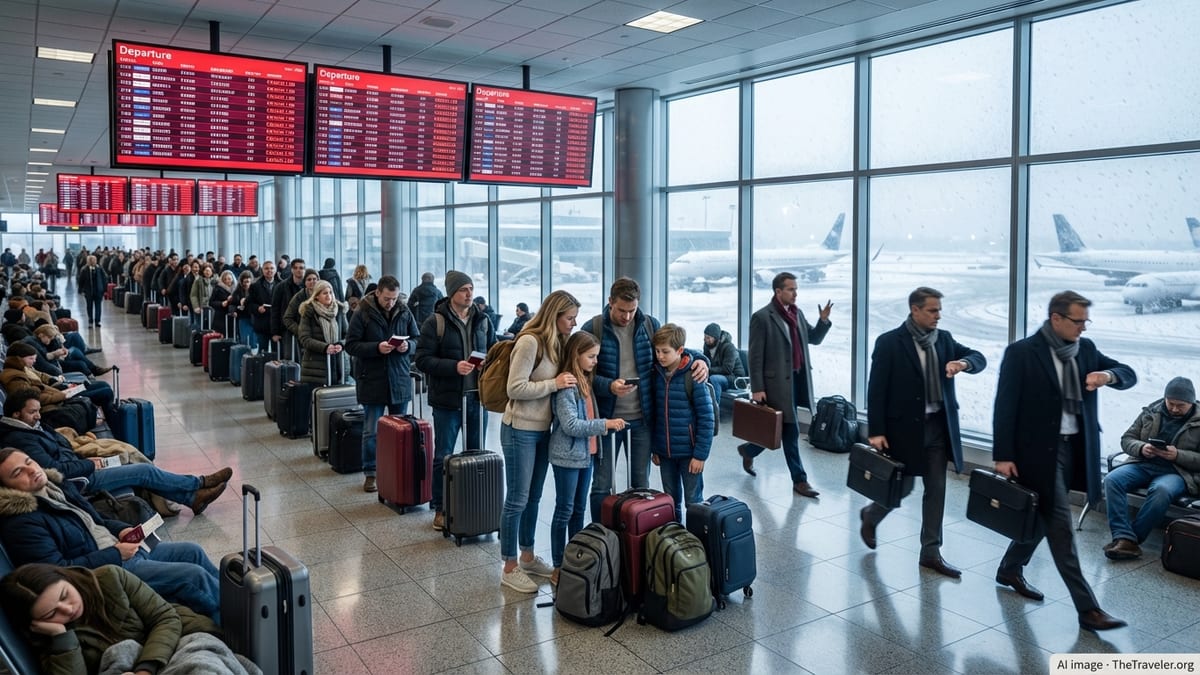
As cancellations and protracted delays accumulated, passengers at Washington Dulles faced the familiar pressures that accompany a day of irregular operations. Crowded gate areas, lengthy lines for customer service, and competition for limited hotel rooms and alternative flights combined to heighten frustration for travelers on all three affected airlines.
Travelers attempting to salvage itineraries through self service tools and call centers often encountered bottlenecks as rebooking demand spiked. Because many United and Lufthansa flights out of Dulles are tightly banked to match transatlantic departure waves, the practical rebooking window can be narrow; once those flights are full or have departed, passengers may be forced to accept travel one or more days later, particularly on popular cross Atlantic routes.
For some passengers, the best available options involved rerouting through other east coast or Midwest hubs, adding connections and travel time. Others had to pivot to nearby airports serving the Washington region, such as Reagan National or Baltimore/Washington, in search of available seats. In each case, the knock on effects of the 35 cancellations and delays extended well beyond a single airport’s departure board.