


More news on this day
Brazil’s critical air bridge between São Paulo and Rio de Janeiro descended into fresh turmoil today, as 256 combined cancellations and delays hammered LATAM, Azul, and GOL services across the country’s busiest airports.
Get the latest news straight to your inbox!
New Wave of Disruptions Across Key Brazilian Hubs
The latest day of turmoil unfolded across the main airports serving São Paulo and Rio de Janeiro, where dense shuttle schedules link Brazil’s largest metropolitan regions. Publicly available tracking data compiled for June 30 indicates a total of 256 disruptions, combining outright cancellations with extensive delays on domestic and regional routes.
The bulk of the problems were concentrated at São Paulo’s Guarulhos and Congonhas airports, along with Rio de Janeiro’s Santos Dumont and Galeão terminals. These hubs act as primary nodes for Brazil’s aviation network, and disruption on trunk routes such as São Paulo to Rio, Brasília, Belo Horizonte, and other major cities quickly rippled outward into the broader timetable.
While operations continued, the scale of schedule changes forced aircraft and crew out of position, adding further knock-on delays into the afternoon and evening. Passengers on multi‑segment itineraries reported missed connections and unplanned overnight stays as airlines struggled to rethread disrupted rotations.
The overall picture echoed a pattern seen earlier in June, when widespread delays and cancellations across São Paulo, Belo Horizonte, and Brasília left hundreds of travelers stranded and underscored the fragility of Brazil’s tightly wound domestic schedules.
LATAM, Azul, and GOL Bear the Brunt
Brazil’s three largest carriers, LATAM Airlines Brasil, Azul Brazilian Airlines, and GOL Linhas Aéreas, absorbed most of the impact as the disruption rippled through the country’s busiest corridors. All three airlines operate high‑frequency shuttle services between São Paulo and Rio de Janeiro, as well as dense banks of departures to business centers and leisure destinations nationwide.
On the affected day, publicly available flight‑tracking snapshots show dozens of delayed departures and arrivals across the main São Paulo and Rio airports. LATAM, which maintains extensive operations at Guarulhos in particular, saw recurring delays on shuttle links to Rio and on feeder flights from secondary cities that are essential for connecting traffic.
Azul, known for its diversified domestic network and heavy presence at both São Paulo and regional airports, also experienced a significant share of the 256 disruptions, with delays cascading into secondary markets far from the southeast corridor. GOL, which relies heavily on shuttle and point‑to‑point services from the same congested hubs, faced similar pressure as aircraft rotations slipped behind schedule.
The combination of tight turnarounds, high aircraft utilization, and intense peak‑hour demand meant that even relatively short interruptions translated into hours of operational strain, especially on routes where multiple carriers compete for the same departure windows.
Recent Technical Failures Set the Stage
The latest chaos comes against a backdrop of earlier operational shocks in Brazil’s southeast airspace. In early June, a communications failure between air traffic control and aircraft over São Paulo temporarily halted departures for more than an hour, triggering waves of delays and diversions at Congonhas and Guarulhos.
Reports from that incident described aircraft forced into holding patterns and flights redirected to alternate airports, with carriers including LATAM, Azul, and GOL all adjusting schedules and, in some cases, canceling services outright. The system outage underscored how quickly a technical fault can overwhelm capacity in a region where traffic already runs near saturation for long stretches of the day.
Additional operational problems earlier in the year, including localized system glitches and infrastructure issues at São Paulo airports, had already prompted airlines to review procedures and contingency measures. However, the recurrence of large‑scale disruption in June and now again at the end of the month highlights the challenge of maintaining resilience in such a tightly interconnected network.
Aviation analysts following the Brazilian market note that while safety protocols are designed to prioritize caution during any technical irregularity, the trade‑off is often severe schedule instability once services resume, particularly when carrier fleets are scheduled with minimal slack.
Passenger Impact: Missed Connections and Crowded Terminals
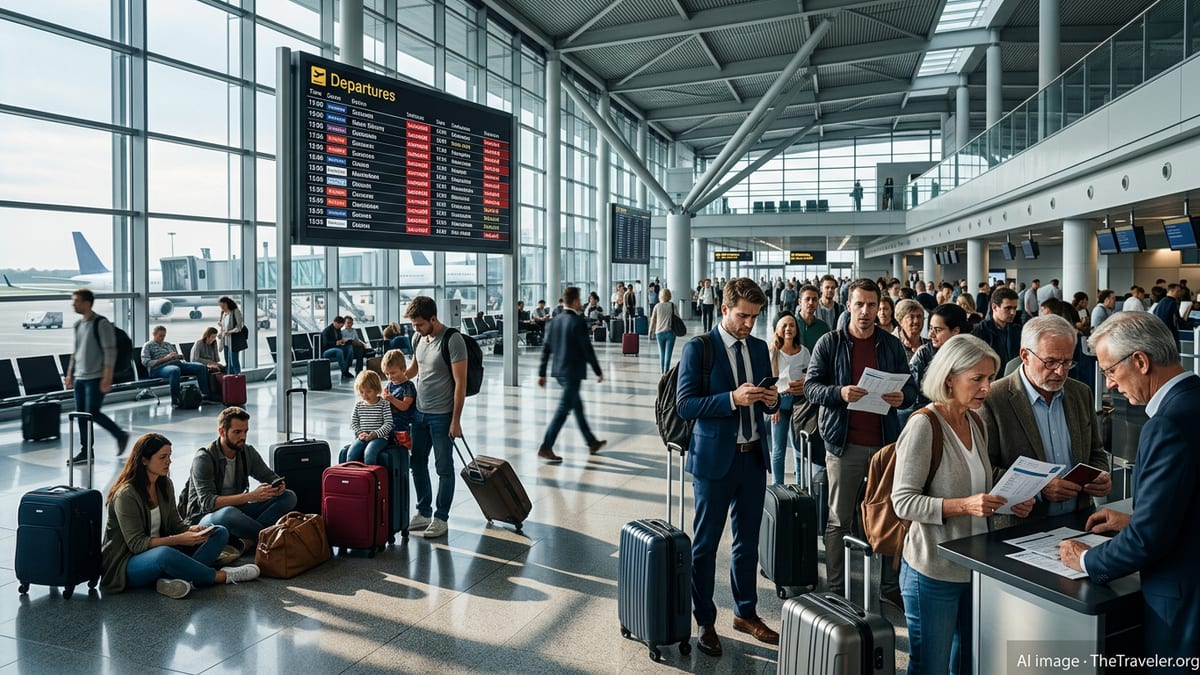
For travelers, the 256 disruptions translated into long queues, missed events, and hours of uncertainty. Terminals at Guarulhos, Congonhas, Santos Dumont, and Galeão experienced heavy crowding as departure boards filled with delayed flights and rolling gate changes.
Social media posts and local coverage from recent disruption days in Brazil have highlighted scenes of passengers sleeping on terminal floors, struggling to rebook itineraries, and facing difficulty obtaining clear information about revised departure times. The latest wave of delays appears to have produced similar conditions, particularly during peak morning and evening banks when shuttle flights between São Paulo and Rio typically run at high load factors.
Travelers on international connections were especially exposed, as missed domestic feeders into São Paulo and Rio jeopardized long‑haul departures to North America and Europe. Some passengers reported needing to overnight in São Paulo after arriving too late for their onward flights, a familiar pattern from earlier in the month when widespread disruption also left international travelers stranded.
Consumer advocates in Brazil have frequently pointed to these episodes as evidence of the pressure on the country’s aviation infrastructure, arguing that even short operational shocks can produce outsized passenger hardship when schedules are already finely balanced against limited airport and airspace capacity.
What Travelers Should Do Now
With Brazil’s main aviation corridor under repeated strain, travel specialists and publicly available advisories are urging passengers to build in extra margins when planning itineraries through São Paulo and Rio. Same‑day domestic‑to‑international connections, especially those involving separate tickets, are seen as particularly risky on days when disruption indicators spike.
Travelers are being encouraged to monitor their flights closely through airline apps and independent tracking platforms, and to verify gate and terminal information repeatedly in the hours before departure. For those with flexibility, selecting earlier departures within the day can provide more room to absorb delays and still reach a final destination as planned.
Airlines generally respond to large‑scale irregular operations by consolidating lightly booked services, retiming departures to match aircraft availability, and, where necessary, canceling rotations that would fall outside airport operating hours. This means that routes which appear unaffected early in the day can still face alterations as carriers rebalance the network.
Given the scale of the latest disruption episode, travelers scheduled to pass through São Paulo and Rio in the coming days may continue to feel residual effects. Operational data from earlier incidents in June suggests that it can take multiple days for schedules across Brazil’s domestic system to fully stabilize once such a large shock has rippled through the network.