


More news on this day
Passengers at Jacksonville International Airport faced a cascade of disruptions on June 13 as at least 18 delays and six cancellations involving PSA Airlines, American Airlines, Southwest, Republic Airways and United rippled across major U.S. hubs including Miami, Atlanta, Orlando, Dallas and Charlotte.
Get the latest news straight to your inbox!
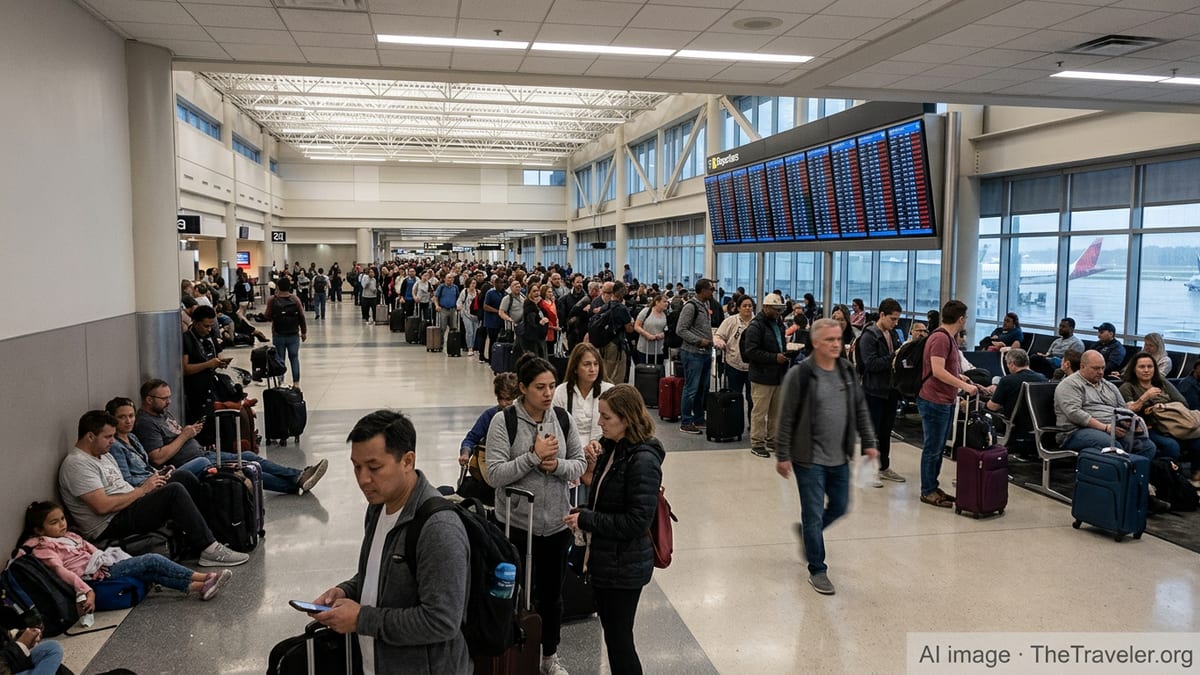
Knock-on disruptions hit Jacksonville departures and arrivals
Publicly available flight boards for Jacksonville International Airport on June 13 showed a patchwork of schedule changes, with some services operating on time while others were pushed back by hours or marked canceled. The affected flights included regional operations for American Airlines, PSA Airlines and Republic Airways, as well as mainline services from American, Southwest and United.
The six cancellations recorded through the afternoon and early evening were concentrated on routes connecting Jacksonville with large hub airports, a pattern that indicates the impact of issues developing elsewhere in the network. Several departures and arrivals linked to Dallas Fort Worth, Charlotte, Miami, Atlanta and Orlando were either withdrawn from the schedule or subject to rolling delays, leaving travelers waiting at the gate for updated information.
Jacksonville International serves as a spoke in the U.S. air network rather than a major hub, which means local operations are highly dependent on aircraft and crews arriving from other cities. When those feeder flights are disrupted by weather, congestion or operational constraints at large hubs, schedule changes tend to cascade quickly, stranding passengers at both ends of the route.
Federal aviation data for June 13 indicated that Jacksonville itself was not subject to a ground stop, suggesting that the disruptions originated from conditions and constraints at other airports rather than from a localized shutdown at Jacksonville International.
Major hubs from Miami to Dallas report weather and congestion
Operational data and weather reports for June 13 pointed to thunderstorms and unsettled conditions across parts of the Southeast and Texas, affecting some of the nation’s busiest airports. Miami, Atlanta, Orlando, Dallas Fort Worth and Charlotte all experienced periods of reduced arrival and departure rates as storms passed through, a familiar early-summer pattern that can quickly overwhelm airline schedules.
When storms move through these large hubs, air traffic controllers typically reduce the rate at which aircraft can land and take off, leading to airborne holding, reroutes and gate congestion. Reports from travelers at several of these airports on June 13 described long tarmac waits, aircraft returning to gates after exceeding three-hour tarmac limits, and multiple rebookings as downstream flights were canceled or pushed to the next day.
The effect on smaller markets like Jacksonville is often disproportionate. Because PSA Airlines and Republic Airways operate regional jets on behalf of American and other major carriers, a single ground delay program at a hub such as Charlotte or Miami can disrupt a long chain of spokes. Aircraft and crews that begin the day in one city can end up out of position by afternoon, triggering additional delays and cancellations even after the worst of the weather has moved on.
Travel forums and social media posts on Saturday referenced repeated notifications of schedule changes throughout the day on American, Southwest and United, particularly on connections involving Miami, Orlando and Dallas. Many passengers reported missing onward connections and needing overnight accommodation or alternate routings to complete their trips.
PSA, Republic and other regional partners feel the strain
PSA Airlines and Republic Airways, which fly under the banners of larger mainline carriers, play a pivotal role in connecting secondary cities such as Jacksonville to hubs including Charlotte, Miami, Atlanta and Dallas. When these regional operators encounter disruptions, the effects can be felt across dozens of smaller communities in a matter of hours.
Historical performance data from the U.S. Department of Transportation has highlighted that regional airlines typically experience higher percentages of late arrivals and cancellations than some mainline carriers, in part because they are more exposed to tight turn times, limited spare aircraft and crew availability. That structural vulnerability becomes more pronounced during active weather patterns or peak travel periods.
On June 13, several of the canceled flights into and out of Jacksonville were associated with regional services, according to live airport departure and arrival boards. Once a rotation is removed from the schedule, passengers in both the origin and destination cities can be left with few same-day options, especially late in the evening when alternative flights are already full or have departed.
Publicly available information from industry trackers and passenger accounts also suggests that ongoing crew and maintenance pressures are compounding weather-related challenges for some regional operators. When a flight is delayed by storms at a hub, the resulting duty-time limitations for pilots and flight attendants can force subsequent legs to be canceled or reassigned.
Passenger experience: overnight waits, missed connections and rebooking scrambles
For travelers at Jacksonville International, the operational realities translated into long waits in the terminal and, in some cases, unplanned overnight stays. Passengers described hours spent watching departure boards shift from "on time" to "delayed" and, in a subset of cases, to "canceled" as crews and aircraft failed to arrive from disrupted hub flights.
Across the broader U.S. network on June 13, posts on travel forums and airline-specific communities detailed similar experiences for passengers on American, Southwest, Republic-operated and United flights. Reports indicated extended ground delays, multiple rolling schedule changes and last-minute cancellations on flights connecting through Miami, Atlanta, Orlando, Dallas and Charlotte, among other cities.
Many travelers attempting to reach or depart from Jacksonville relied on these hubs for same-day connections. When an initial leg was delayed beyond a critical threshold, passengers often lost their onward flights and were forced into a scramble for rebooking options. Some described being reprotected on next-day departures or rerouted through alternate hubs, while others opted to cancel and seek refunds after extended disruptions.
Publicly available delay and cancellation policies show that compensation and amenities for stranded passengers vary significantly between carriers and depend heavily on whether the disruption is categorized as within the airline’s control or attributable to weather and air traffic control constraints. This distinction left some travelers at hubs and spoke airports unsure of what assistance they could expect for hotel stays, meals or ground transportation while they waited for new itineraries.
Summer travel outlook and advice for Jacksonville flyers
The June 13 disruptions at Jacksonville International and across multiple U.S. hubs arrived as airlines and regulators prepared for one of the busiest summer travel seasons in recent years. Federal aviation guidance has emphasized that weather remains the leading cause of delays and cancellations, particularly as thunderstorm activity ramps up across the Southeast and central United States.
For Jacksonville-area travelers, the events of June 13 underscore the importance of building flexibility into itineraries involving connections through weather-prone hubs such as Miami, Atlanta, Orlando, Dallas and Charlotte. Publicly available guidance from aviation agencies encourages passengers to monitor flights closely via airline apps, sign up for text alerts and check real-time airport status tools before leaving for the airport.
Travel experts often recommend scheduling longer connection windows during the summer months, especially when flying on itineraries that involve multiple regional legs or late-night arrivals. Booking the first flight of the day on key segments can also reduce the risk of knock-on disruptions from earlier delays.
While airlines, regional partners and air traffic managers continue to adjust schedules and staffing to meet strong demand, passengers at airports like Jacksonville International remain vulnerable to the ripple effects of storms and congestion across the national airspace system. The June 13 episode illustrates how quickly a combination of weather, operational constraints and network complexity can transform a routine travel day into an extended ordeal for hundreds of flyers.