


More news on this day
A fast-moving storm system over the Carolinas triggered a temporary ground stop at Charlotte Douglas International Airport, leaving more than 460 flights delayed and creating a ripple of disruptions for travelers across the United States as operations gradually resumed.
Get the latest news straight to your inbox!
Ground stop lifted as operations slowly stabilize
Publicly available flight tracking data on Saturday indicated that Charlotte Douglas International Airport experienced more than 460 delays after a strong storm moved through the region, temporarily halting departures and slowing arrivals. The disruption peaked while a ground stop was in effect, restricting flights headed into the busy North Carolina hub.
By later in the day, the federal air traffic coordination system showed Charlotte no longer under a ground stop, and general airport status pages reflected normal operating conditions. However, the backlog created while flights were held on the ground and in the air meant that many passengers continued to face extended waits at gates and on taxiways even after formal restrictions ended.
Charlotte serves as one of the country’s major connecting hubs, so a pause in operations can quickly translate into widespread delays. The combination of aircraft and crews stuck out of position, congested taxiways, and limited gate availability kept schedules strained well after storm cells moved away from the immediate airport area.
Data reviewed from national flight tracking services showed delays affecting both departures and arrivals, with some flights held for more than an hour as controllers worked through the congestion. While cancellation numbers remained lower than during major winter storms, the sheer volume of delayed flights left many travelers missing connections or arriving late to final destinations.
Thunderstorms and lightning trigger safety protocols
The wave of delays followed a period of intense thunderstorms over the Charlotte metro area, bringing heavy rain, low clouds, and lightning near the airfield. According to operational guidance widely used across U.S. airports, ground crews are required to suspend certain ramp activities when lightning is detected close to the airport, limiting their ability to load and unload aircraft, refuel, or guide planes in and out of gates.
When strong storms coincide with peak afternoon traffic at a large hub such as Charlotte, the effect can be immediate. Departures may be held at gates or on taxiways to keep aircraft clear of hazardous conditions on the runway approaches, while arriving flights may be slowed, rerouted, or placed in holding patterns until weather improves. These measures reduce risk but quickly erode the margins built into airline schedules.
Storm-related ground stops and ground delay programs are common tools in the national airspace system during the summer convective season. Air traffic management advisories show that Charlotte, along with other major hubs, frequently appears in planning discussions when fast-moving storm lines develop across the Southeast, reflecting the region’s vulnerability to abrupt weather changes that interfere with safe takeoffs and landings.
In this latest event, the alignment of the storm track with busy arrival and departure corridors meant air traffic controllers had limited flexibility to route aircraft around cells. Even after the most intense lightning and rainfall moved away, lingering showers and cloud layers required cautious spacing between flights, slowing the pace of recovery.
Ripple effects extend beyond Charlotte’s terminals
The disruption at Charlotte was felt well beyond North Carolina. As a key connecting point in airline networks, particularly for traffic between the Northeast, Midwest, and Southeast, operational slowdowns at the airport often cascade into secondary delays at smaller and mid-sized airports around the country.
Flight status boards at outlying airports showed departures bound for Charlotte pushed back repeatedly as the ground stop and subsequent flow controls limited how many arrivals could be accepted each hour. Travelers in those locations sometimes spent hours waiting for their aircraft to be released, even when local weather appeared calm.
Once the ground stop was lifted, a rush of departures headed toward Charlotte, creating congestion in surrounding airspace as flights converged on the hub. According to publicly available air traffic planning documents, controllers manage this influx through metering programs that assign specific arrival times, which can further lengthen delays for aircraft already en route.
Within Charlotte’s own terminals, the delayed arrival of inbound aircraft meant that subsequent outbound flights often lacked either an airplane or full crew at the scheduled departure time. Airlines adjusted by swapping aircraft, reassigning crews, and, in some cases, consolidating lightly booked flights, steps that can help restore network balance but may lead to last-minute gate or time changes for passengers.
What travelers experienced on the ground
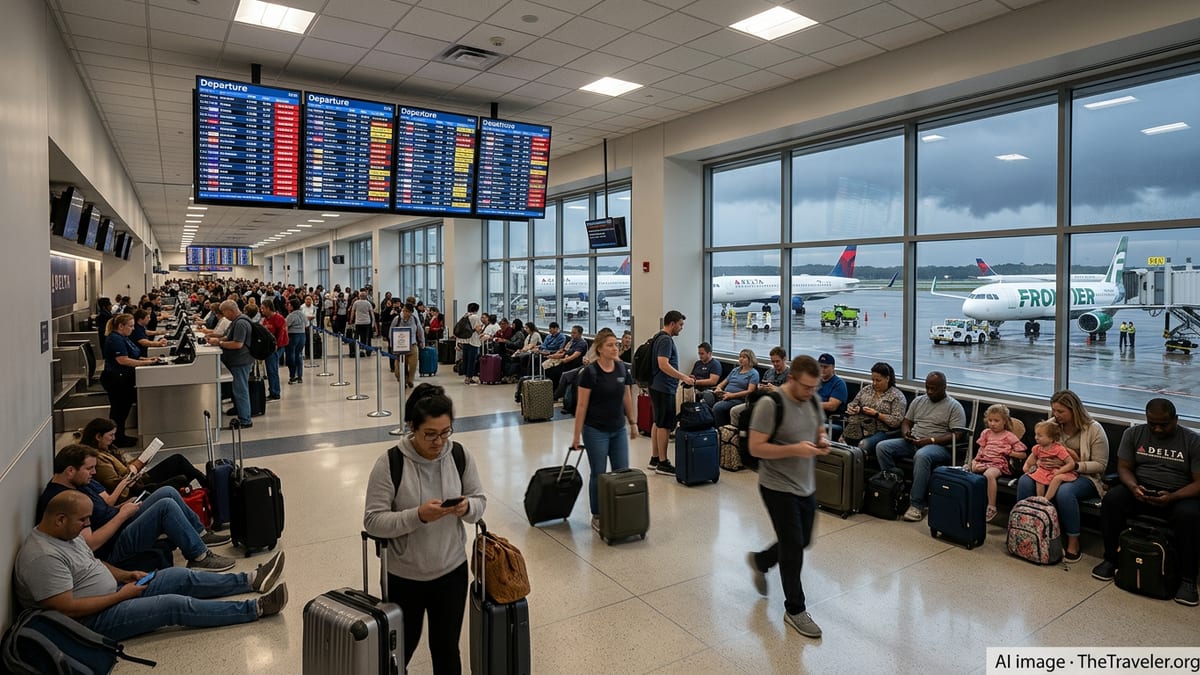
Passengers passing through Charlotte during the storm-related disruption encountered crowded gate areas, long lines at customer service counters, and frequent schedule changes on departure boards. Many connecting travelers, particularly those on tight layovers, reported missed onward flights as inbound legs arrived far behind schedule.
As in previous weather-related disruptions at large hubs, the combination of full flights and limited spare capacity left rebooking options constrained for some itineraries. With summer schedules already near peak utilization, open seats on later flights or alternate routings can be scarce, raising the likelihood of overnight stays when disruptions occur late in the day.
In the terminal, restaurants and concessions experienced intermittent surges as passengers waited out delays. Airport information displays and airline notifications urged travelers to monitor flight status closely and allow extra time to move between concourses once their flights were cleared to board, reflecting the compressed boarding windows that sometimes follow lengthy holds.
Despite the frustrations, safety protocols and air traffic controls in place during strong storms are widely considered essential measures to protect passengers, crews, and ground workers. Industry data from previous severe weather events show that temporarily pausing operations, although disruptive, reduces exposure to wind shear, lightning, and low-visibility approaches that can pose significant operational risks.
Summer storm season and planning ahead
The disruption at Charlotte highlights how quickly summer storms can upend travel across large portions of the air network. Aviation research and historical delay statistics show that convective weather in the warm months is one of the leading causes of flight delays in the United States, often rivaling winter storms in its overall impact on passenger travel time.
Analyses of previous severe weather events indicate that delays do not end when a storm clears local skies. Aircraft and crews that end up in the wrong places, along with passengers who miss connections, can keep airline operations off balance for many hours, sometimes into the next day. The Charlotte event followed this familiar pattern, with schedules gradually returning to normal only as planes and staff were repositioned.
For travelers with itineraries that route through major hubs such as Charlotte during the summer, industry guidance often emphasizes building extra time into connections, using airline and airport apps to monitor developing storms, and checking flight status before heading to the airport. While such steps cannot prevent delays, they can provide more options if schedules begin to slip.
As the storm system that affected Charlotte moves away and the ground stop recedes into flight tracking logs, attention is turning to the next round of summer weather. Forecasts across the Southeast call for continued chances of afternoon thunderstorms, meaning travelers in and out of Charlotte and other regional hubs may see additional bouts of turbulence in the weeks ahead, both in the air and on departure boards.