


More news on this day
Eurostar is raising the specification of its next generation of high speed trains so that they can keep running in temperatures of up to 55 degrees Celsius, signaling how seriously the cross Channel operator is taking the prospect of far hotter European summers in the coming decades.
Get the latest news straight to your inbox!
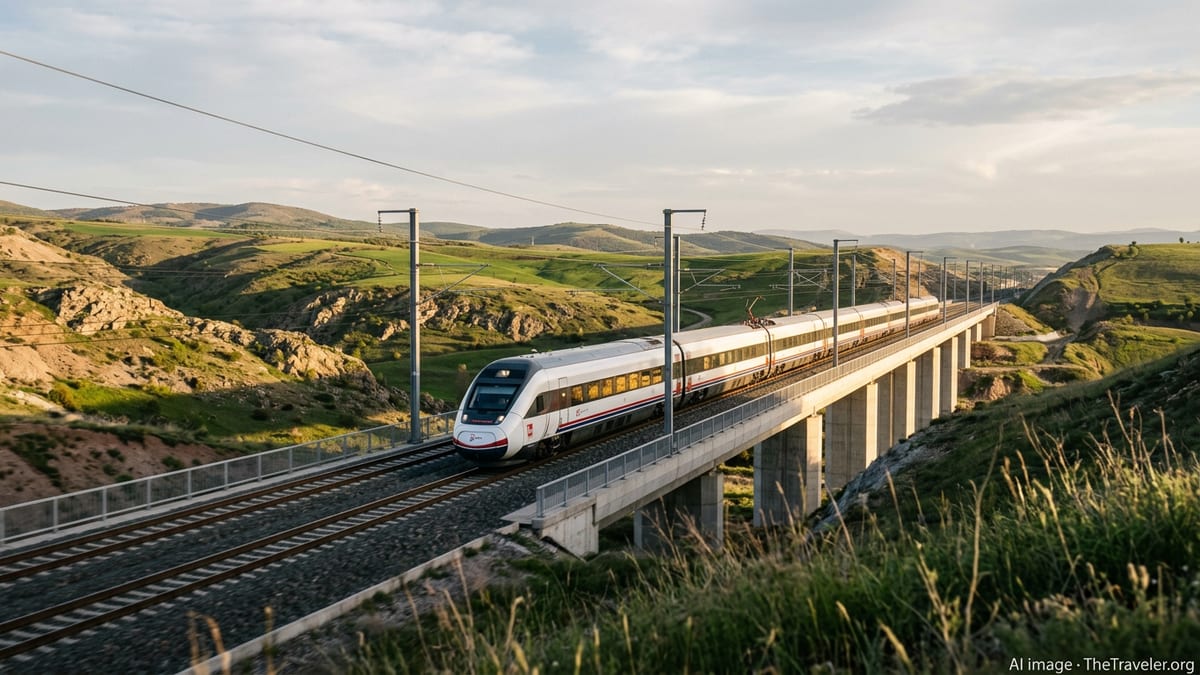
New Celestia fleet redesigned for extreme heat
Publicly available information on Eurostar’s investment plans shows that the company has ordered 30 new Avelia Horizon double deck trains from French manufacturer Alstom, with options that could take the total Celestia fleet to 50 units. The trains are due to operate through the Channel Tunnel and on high speed lines in the United Kingdom, France, Belgium, the Netherlands and Germany from later this decade.
Recent coverage of the order indicates that Eurostar has tightened the technical requirements for these trains so that key onboard systems must continue functioning when outside temperatures reach 55 degrees Celsius, significantly above the 45 degree design threshold typically used for European high speed rolling stock. The higher standard is intended to ensure that traction, signalling, air conditioning and onboard electronics remain reliable during more frequent and intense heatwaves.
Reports on the revised specification suggest that the change affects both the overall climate resilience of the train and a long list of components, from microprocessors to cooling equipment. By hardening the trains themselves, Eurostar aims to reduce weather related breakdowns and improve its ability to maintain services when temperatures climb well beyond the historical norm for northwest Europe.
Eurostar’s decision follows several recent summers in which high temperatures have disrupted rail operations across the region, including speed restrictions, buckled rails and train failures. The new tolerance level is being framed as a way to future proof its expanding international network against similar events that are expected to become more common.
Engineering for a radically warmer climate
Analyses of the order highlight that the 55 degree requirement reflects climate projections suggesting that parts of Europe, including the United Kingdom, could regularly experience conditions currently associated with North African or Arabian Gulf summers by mid century. Designers are therefore planning for a future in which temperatures that once counted as extreme outliers could occur with increasing frequency.
To reach the new threshold, Eurostar and Alstom are reported to be specifying higher grade materials and components that can tolerate sustained heat, as well as uprated cooling for sensitive electronics. Ventilation and air conditioning systems are being strengthened so that passenger spaces can remain comfortable even when the ambient temperature outside is far above 40 degrees.
Industry reports also point to changes in the way the trains will be certified and tested. Validation programmes are expected to include simulations and real world trials in controlled hot climate environments to confirm that equipment performs as required at the upper end of the temperature range. This approach mirrors methods already used for rolling stock intended for desert regions.
The design work is being carried out within the constraints of operating high speed services through the Channel Tunnel, which has stringent safety and technical standards of its own. The Celestia units must therefore combine extreme temperature capability with compliance across multiple national signalling, power and safety regimes.
Capacity boost and network growth ambitions
Eurostar has previously described the Celestia project as central to its growth strategy, with the new trains offering around 20 percent more seating capacity than its current single deck e320 sets. The double deck configuration is intended to accommodate rising demand on core routes such as London to Paris and Brussels while also supporting expansion to new cities.
Public statements and news coverage indicate that Eurostar is preparing to add further direct links beyond its existing network, with Geneva and Frankfurt among the destinations cited for future high speed services. The additional fleet capacity, combined with improved performance in hot weather, is expected to give the operator more flexibility to schedule trains across multiple corridors, including during peak summer travel periods.
Once in service, the Celestia trains are expected to operate alongside the existing fleet rather than replacing it immediately. That combined fleet could reach close to 70 trainsets, significantly increasing the operator’s total number of seats. The enlarged and more resilient fleet is positioned as a way to capture travelers who might otherwise choose short haul flights on routes where high speed rail offers competitive journey times.
The investment also aligns with broader European policy efforts to shift passengers from air to rail as a way to cut transport emissions. By emphasizing reliability in extreme heat, Eurostar is signaling that it expects rail to play a long term role even as climate change makes operating conditions more challenging.
Passenger experience and operational resilience
Beyond engineering details, the 55 degree design target has implications for the onboard experience. Stronger air conditioning and improved insulation are expected to help maintain stable temperatures in passenger areas, even if trains are delayed or held at signals during hot spells. This focus addresses concerns raised after past heatwaves in which passengers on various European networks faced uncomfortable or unsafe conditions during disruptions.
News reports suggest that Eurostar is also reviewing operational measures that complement the upgraded trains, such as enhanced water supplies on board during periods of extreme heat and revised contingency plans for handling delays. These steps are intended to reduce the risk of stranded passengers and to ensure that any unavoidable disruptions are managed in a more controlled way.
The operator’s decision fits into a broader trend in European rail, where infrastructure managers and train companies are reexamining standards that were set for a cooler climate. Track, power systems and signalling equipment are increasingly being assessed against higher temperature assumptions, and Eurostar’s rolling stock upgrade is one visible part of that wider shift.
For travelers, the changes may be most noticeable in the form of more dependable summer timetables and fewer heat related cancellations. While no system can entirely eliminate the impact of extreme weather, Eurostar’s move to specify trains that can function at 55 degrees Celsius illustrates how quickly design norms are evolving in response to accelerating climate change.
Symbol of changing expectations for European rail
The Celestia order is being interpreted by many observers as a symbolic moment for European high speed rail, marking a departure from assumptions that temperatures above 40 degrees would remain rare across much of the network. By treating 55 degrees Celsius as a realistic design case rather than an outlier, Eurostar is effectively acknowledging that climate extremes are becoming part of everyday planning.
Industry analysts note that the higher temperature standard could encourage other operators to revisit the specifications of their own future trains, particularly for services running in southern Europe and other regions already accustomed to intense summer heat. If similar requirements are adopted more widely, manufacturers may begin treating 55 degree capability as a default option for new high speed platforms.
The move also underscores how questions of climate adaptation and passenger comfort are now intertwined with competitive strategy. Operators that can demonstrate resilient services through heatwaves may gain an advantage in attracting passengers who want predictable travel during peak holiday periods, reinforcing the appeal of high speed rail on key international corridors.
As Eurostar and Alstom progress toward delivering the Celestia fleet later this decade, the 55 degree design benchmark is likely to remain a reference point in debates over how Europe’s transport systems should prepare for a hotter future. The project offers an early glimpse of what climate adapted high speed rail could look like across the continent in the years ahead.