


More news on this day
Thunderstorms pushing across North Texas on Sunday triggered a ground delay program at Dallas Fort Worth International Airport, disrupting evening flights at one of the nation’s busiest hubs as airlines worked to manage cascading schedule impacts.
Get the latest news straight to your inbox!
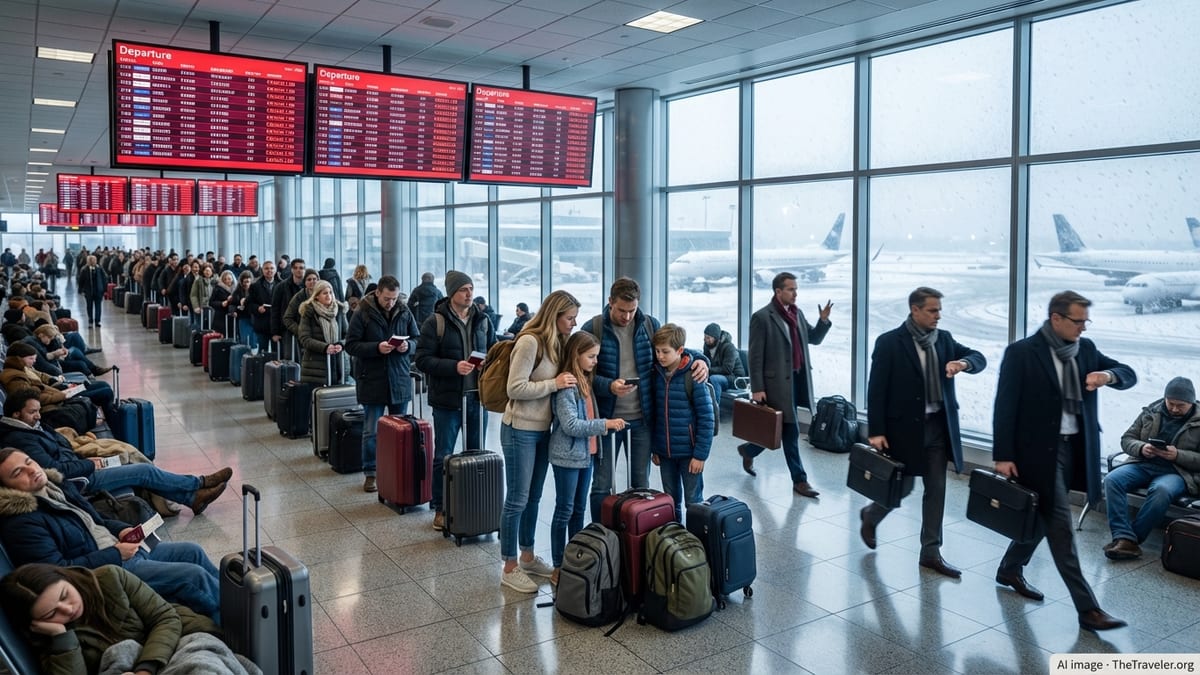
Weather system slows Sunday evening arrivals
Federal air traffic coordination advisories show a ground delay program was issued for Dallas Fort Worth International Airport on Sunday as thunderstorms moved into the region, reducing the number of flights that could safely arrive each hour. The program, which staggers departure times from other airports bound for DFW, was tied directly to convective weather in North Texas and along key arrival routes.
According to publicly available flight operations data, the delay window extended into the late evening, overlapping with one of the airport’s heavier summer travel periods. As storms developed and intensified, air traffic managers adjusted arrival rates and extended the program to keep traffic volumes in line with reduced capacity around the airport.
By Sunday night, the combination of weather and traffic management initiatives translated into longer-than-normal waits for passengers on inbound flights, along with later departures for aircraft scheduled to leave DFW after turning around. The ripple effects were visible across the domestic network, particularly on routes connecting through North Texas.
Local forecasts indicated that storms would remain possible into early Monday, raising the prospect of additional, smaller pockets of disruption even after the formal ground delay period ended. That outlook added a layer of uncertainty for travelers with tight connections or early-week business trips routed through the region.
Delays and cancellations build through the network
Tracking services and published coverage on Monday indicated that the Sunday evening controls at DFW contributed to a significant number of delayed flights and a smaller but notable group of cancellations. Many of the interruptions were concentrated in the evening push, when airlines rely on rapid turnarounds to move aircraft and crews into position for the next day’s schedule.
Some flights destined for the Dallas Fort Worth area experienced extended ground holds at their departure airports as part of the delay program, while others were assigned slower en route timings to manage arrival spacing. In cases where storms intensified faster than anticipated, additional airborne holding or last-minute reroutes around weather cells added to overall travel times.
The disruptions at DFW also affected neighboring Dallas Love Field and several smaller regional airports that feed into the North Texas airspace. When the flow of arrivals into the primary hub slowed, downstream departures from those airports were also adjusted, leading to rolling impacts across multiple carriers and routes.
As is typical during summer convective events, the imbalance between available crews, aircraft, and gate space grew more pronounced as the evening progressed. Once a certain threshold of delay is reached, airlines often begin canceling individual flights to prevent disruptions from spilling into the following day’s operation.
DFW’s role as a national hub magnifies impact
Dallas Fort Worth International Airport serves as a major connecting complex in the U.S. aviation system, handling large volumes of domestic and international traffic each day. Publicly available airport and airline data show that a significant share of passengers at DFW are connecting rather than originating or ending their journeys in North Texas.
That hub role means any ground delay program at DFW can quickly affect travelers far from Texas. Flights from the East and West Coasts, the Midwest, and Latin America often rely on timed connections through the airport, so even moderate arrival restrictions can force missed links and overnight rebooking for some passengers.
Industry analyses have highlighted how weather-driven traffic management initiatives at major hubs can propagate delays across the network. When one central node such as DFW slows down, flights that are scheduled to continue on to other destinations may depart late or be reassigned, tightening aircraft availability and putting additional pressure on crew duty time limits.
Construction and ongoing infrastructure projects around DFW have also been noted in federal reports as factors that can constrain capacity at times, though weather remains the primary driver of sudden, large-scale disruptions. Sunday’s storm-related slowdown fit into a broader pattern of summer volatility that has periodically affected the airport in recent months.
Travelers urged to plan for summer weather volatility
Recent coverage of North Texas aviation conditions has emphasized that afternoon and evening storms are a recurring feature of the summer season, often developing quickly and prompting short-notice changes to flight operations. Sunday’s ground delay program at DFW aligned with that pattern, arising as forecasters tracked thunderstorms moving through the area at the end of the weekend.
Public information from airlines and airport channels consistently encourages passengers traveling through DFW during storm-prone periods to monitor their flight status frequently and to allow additional time for connections. Same-day itinerary changes, mobile app notifications, and proactive rebooking options have become more prominent tools for managing days when weather reduces airspace capacity.
Travel data from previous seasons suggest that flexible itineraries, including longer layovers and earlier departures, can help reduce the risk of missed connections when hubs like DFW are subject to ground delay programs. Passengers with critical arrival times are often advised to consider nonstop options when available, or to route through alternate hubs that are less exposed to convective weather on a given day.
For airlines, events like Sunday’s highlight the importance of dynamic scheduling and contingency planning as climate variability influences the frequency and intensity of severe weather. Carriers increasingly rely on real-time forecasting, collaborative decision-making with air traffic managers, and more nimble crew planning systems to limit disruption when storms intrude on busy travel periods.
Looking ahead to the rest of the week
Forecast discussions for North Texas early this week point to the possibility of additional scattered thunderstorms, though not necessarily on the same scale as Sunday’s system. Even so, any new cells forming near key arrival and departure corridors can prompt renewed traffic management measures at large hubs such as DFW.
Air traffic planning documents and weather briefings typically update throughout the day, providing airlines with evolving expectations for airport acceptance rates and potential constraints. When those projections fall sharply because of storms, ground delay programs and, in more severe cases, temporary ground stops can be introduced on short notice.
Travelers heading through DFW over the coming days are likely to see relatively normal operations punctuated by occasional, weather-related slowdowns characteristic of the mid-summer pattern. For those planning trips later in the season, Sunday’s events serve as a reminder that peak travel months often coincide with the most active convective weather period in the central United States.
While modern forecasting and traffic management tools have improved the system’s ability to anticipate and respond to storms, delays remain a common outcome when safety margins around lightning, turbulence, and low visibility are reduced. For passengers, building extra time into itineraries and remaining alert to changing conditions continues to be the most practical strategy for navigating days like Sunday at Dallas Fort Worth International.