


More news on this day
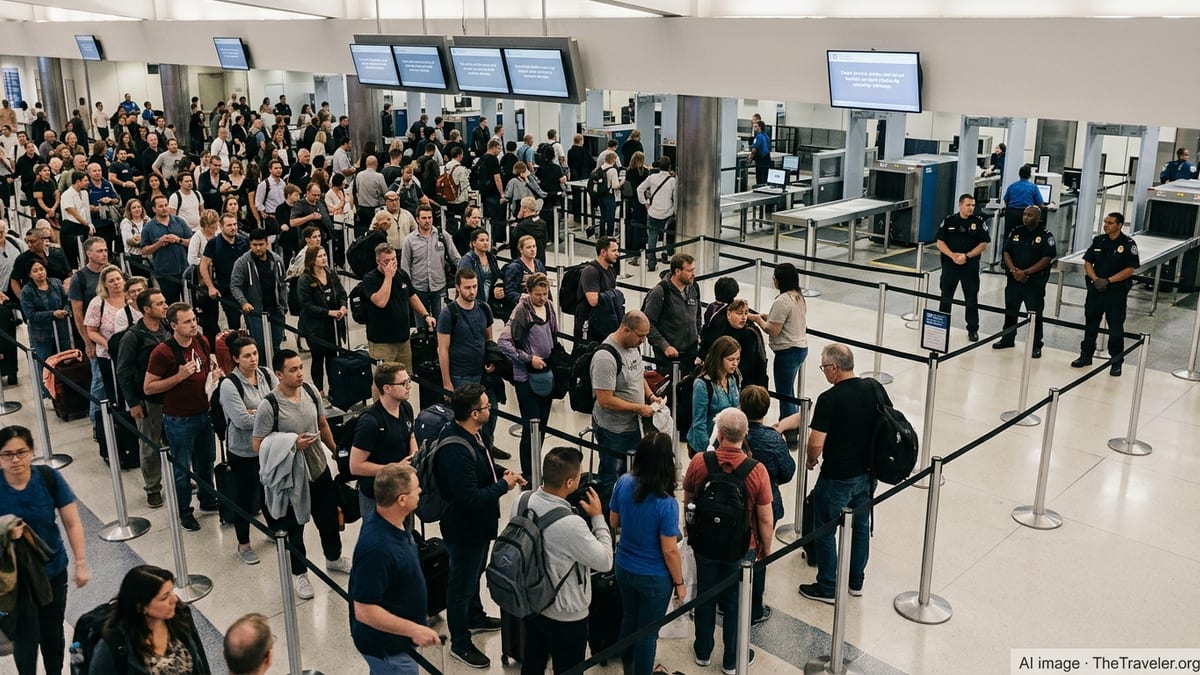
Around 1,500 passengers were funneled into an airport immigration hall at almost the same time on Sunday after a wave of delays, creating severe queues and fresh scrutiny of how well major hubs are coping with peak travel disruptions.
Get the latest news straight to your inbox!
Delays Converge Into a Single Immigration Surge
According to published coverage of the weekend’s disruption, a cluster of late-running flights led to an unusually concentrated wave of arrivals, with roughly 1,500 passengers reaching immigration control within a short period. Instead of being staggered over an hour or more, the bulk of travelers from multiple services converged on the same bottleneck, overwhelming available desks and automated gates.
Observers noted that the congestion was not linked to a single mechanical issue or weather event, but rather to a combination of minor schedule slippages that stacked up over the course of the day. By early evening, aircraft that were due to land minutes apart were touching down in rapid succession, compressing expected passenger flows into a narrow window and pushing the immigration hall to capacity.
Passenger accounts shared on social platforms described lengthy queues stretching well beyond the primary processing area and into adjacent corridors. Some travelers reported standing in line for more than an hour before reaching the front, even though their flights had not been significantly delayed on departure.
Publicly available information shows that staff levels were set for typical Sunday evening peaks rather than an extreme scenario where several full wide-body flights arrive almost simultaneously. With limited flexibility to add officers at short notice, the airport relied heavily on queue management and ad hoc triage to keep passengers moving.
Growing Summer Traffic Magnifies Strain on Border Control
The incident comes at a time when many international airports are reporting some of their busiest days of the year, particularly across North America and Europe. Recent figures from major hubs show sharp increases in summer passenger volumes compared with previous seasons, as leisure and event-driven travel rebounds and new long-haul routes launch.
Reports indicate that even marginal disruptions can now cascade into visible crowding at arrival controls when airports are operating close to capacity. Studies of airport queuing systems have long highlighted immigration and security as critical pinch points, and the latest weekend’s events underline how quickly conditions can deteriorate once scheduled flows are disrupted.
Travel industry analysts note that the pattern seen on Sunday is increasingly common: a series of modest upstream delays, such as aircraft rotation issues at other airports or congestion in regional airspace, can converge at a single hub. When those knock-on effects intersect with already heavy summer schedules, the result is a sudden spike in arrivals that outstrips planned staffing and processing capacity.
Air passenger advocacy groups have argued that such episodes are becoming less exceptional and more a feature of modern high-density travel. They point to other recent days where hundreds of flights at major European and US airports have suffered delays, with immigration halls and security checkpoints bearing the brunt once disrupted operations push terminals beyond their design assumptions.
Knock-On Effects for Missed Connections and Airline Operations
The Sunday immigration surge did not only affect those waiting in line. When large numbers of passengers are held up at border control, the impact often ripples deeper into the aviation system, contributing to missed connections, tight turnarounds for aircraft, and additional crew scheduling complications.
According to travel disruption specialists, even a relatively short delay at immigration can cause connecting passengers to miss onward flights, especially when minimum connection times are already tight. As these travelers are rebooked, airlines must rearrange seat inventories and sometimes provide accommodation or alternative routing, amplifying the operational and financial cost of what began as a ground-side bottleneck.
Airlines are also constrained by safety and regulatory rules that prevent them from departing with checked baggage on board if the corresponding passenger has not cleared immigration and reached the gate. In practice, this means that when large groups of travelers are stuck in arrival queues, carriers face a difficult choice between delaying departures to wait for them or removing bags from the hold, an operation that itself consumes valuable time and manpower.
Airport operations teams, meanwhile, must manage gate availability and stand assignments as arrivals and departures drift away from the published schedule. If incoming aircraft remain on the ground longer than planned due to waiting passengers or baggage handling delays, outbound services can lose their assigned gates, compounding congestion on the ramp and in terminal corridors.
Calls for Better Forecasting, Staffing and Real-Time Communication
The latest disruption has renewed calls from passenger groups and transport commentators for more robust forecasting of arrival flows at immigration, as well as greater real-time coordination between airlines, border agencies and airport operators. Research into passenger flow modeling suggests that more granular data on boarding, takeoff times and prevailing weather could be used to anticipate spikes and dynamically adjust staffing.
Publicly available analyses of airport performance also highlight the value of contingency plans that can be activated quickly when a cluster of delayed flights is detected en route. These measures can include temporarily opening additional immigration lanes, redirecting staff from lower-demand zones, and deploying more roving staff to guide passengers and answer questions while they wait.
Communication remains another critical theme emerging from Sunday’s events. Passengers often express frustration when they are left in long lines with little information about expected wait times, connection protection policies, or alternative processing options such as automated kiosks. Travel experts argue that clear signage, frequent public announcements and proactive messages through airline apps can help reduce anxiety, even when the physical queues cannot be shortened immediately.
Some airports in Europe and North America have recently trialed tools that provide live wait-time estimates for immigration and security, alongside route planning within the terminal to ease congestion. While such tools do not eliminate bottlenecks, they can encourage travelers to plan ahead, and they give airports an additional channel to flag extraordinary conditions on days when delayed arrivals threaten to push the system beyond its limits.