


More news on this day
Violent thunderstorms across the Midwest collided with record-breaking Fourth of July passenger volumes at Chicago O’Hare International Airport this weekend, triggering Federal Aviation Administration flow restrictions, mass delays and cancellations, and a fresh round of nationwide aviation disruptions at the height of the Independence Day travel rush.
Get the latest news straight to your inbox!
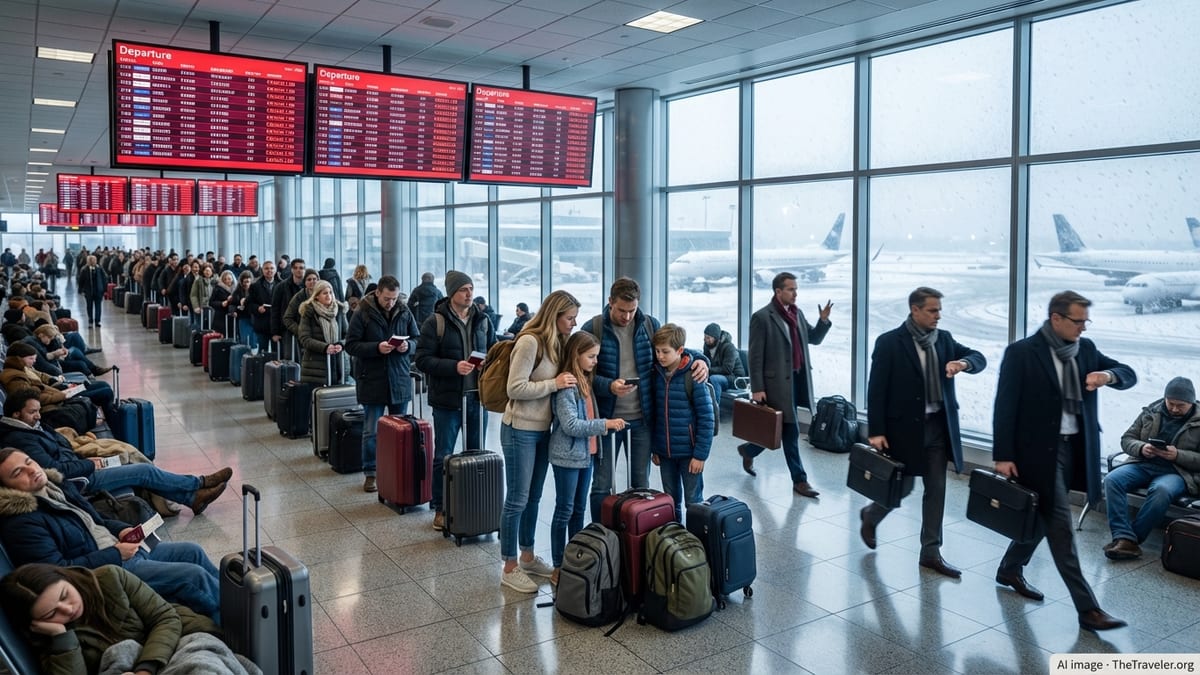
Thunderstorms Stall Departures at One of the World’s Busiest Hubs
Chicago’s primary international gateway entered the holiday weekend under unstable skies, with intense, slow-moving storm cells repeatedly sweeping across northern Illinois. Publicly available weather and aviation status data for Saturday, July 4, showed thunderstorms and light rain around Chicago O’Hare International Airport, alongside departure delays exceeding half an hour as air traffic managers throttled takeoffs during the worst of the lightning and downpours.
Radar imagery and regional forecasts described a classic summer convective pattern, with heat, humidity and wind shear spawning scattered but potent storm clusters over the metro area. As those cells passed directly over the airport complex, operations were affected on multiple fronts: air traffic controllers reduced arrival and departure rates for safety, ramp workers had to periodically suspend ground handling when lightning moved in, and taxi times lengthened as aircraft queued for limited usable runways.
The disruptions did not remain localized. Aviation enthusiasts tracking live flight data reported multiple international and domestic diversions headed for O’Hare being rerouted to Milwaukee Mitchell International Airport and other nearby fields during peak storm periods. Social media posts from travelers and spotters detailed aircraft holding patterns over Wisconsin and Michigan before crews aborted their approaches to Chicago due to convective weather near the airfield.
While summer thunderstorms are a familiar hazard for Midwestern aviation, the timing over the central United States’ busiest holiday weekend intensified the impact. O’Hare functions as a major intercontinental gateway and a key domestic hub, meaning every weather-driven slowdown reverberates quickly through airline networks across the country.
FAA Flow Controls and Ground Stops Amplify Gridlock
Alongside the storm activity, national airspace status information showed traffic management initiatives affecting Chicago operations, including flow restrictions on departures. These measures, commonly known as ground delay or ground stop programs, are used to meter flights into and out of congested or weather-affected airspace, preventing unsafe density in the sky and on approach lanes to major airports.
In practice, the restrictions translated into mounting departure queues at O’Hare as well as lengthy holds at origin airports across the United States. Pilots and passengers bound for Chicago faced rolling pushback times, with some flights kept at gates for hours while air traffic managers adjusted arrival slots to match the constrained capacity over northern Illinois. Reports from travelers indicated that some early-morning and overnight departures to Chicago were proactively canceled when forecast thunderstorm windows aligned with peak hub-bank activity.
Industry guidance on severe-weather operations indicates that thunderstorms located near final approach paths, active lightning within a defined radius of the field, and sharply reduced visibility can all trigger automatic reductions in arrival and departure rates. These factors appeared to converge repeatedly over Chicago’s airspace across July 3 and July 4, prompting several rounds of FAA-imposed controls that limited the number of aircraft allowed to flow into the region at any given time.
Because O’Hare sits at the center of multiple long-haul, domestic and regional connecting banks, such flow restrictions quickly create what network planners describe as a “hub bottleneck,” where crews, aircraft and passengers become trapped in the wrong place at the wrong time. That bottleneck effect became especially pronounced just as the Independence Day travel wave peaked.
Record-Breaking Fourth of July Demand Exposes System Strain
The weather and airspace constraints arrived as Chicago’s airports were preparing for what local aviation officials had already projected to be the busiest Fourth of July travel period on record. Recent forecasts from the Chicago Department of Aviation and regional media coverage indicated that O’Hare and nearby Midway International Airport together expected around 1.95 million passengers to pass through from midweek through Sunday, July 5, reflecting a high single-digit percentage increase over last year’s already strong holiday numbers.
Nationally, travel organizations and transportation agencies anticipated that this Independence Day period would mark a historic high for U.S. vacation volumes, buoyed by robust leisure demand, relatively stable fuel prices and a resilient labor market. AAA projections pointed to tens of millions of Americans traveling at least 50 miles from home during the extended “America 250” celebration window, with a significant share choosing to fly despite higher average airfares.
At Chicago O’Hare, the combination of elevated scheduled departures, large connecting banks and ongoing airfield construction has meant that the airport was already operating close to capacity on clear-weather days. Analysis of FAA operations data published earlier this year shows that O’Hare has returned to handling well over 2,000 daily flight movements in peak seasons, making it one of the most complex and tightly choreographed hubs in the world.
Against that backdrop, even brief weather-related reductions in throughput can trigger outsized consequences. Longer taxi times, saturated departure queues and reduced runway configurations during storms all contributed to a narrowing operational margin just as tens of thousands of additional holiday travelers attempted to move through the Chicago system each day.
Nationwide Ripple Effects as Delays and Cancellations Spread
Reports from other major airports indicated that Chicago’s troubles did not remain confined to the Midwest. Published coverage of operations at New York’s LaGuardia Airport on July 4, for example, described widespread delays and cancellations across multiple carriers, with Chicago O’Hare and Midway flagged as prominent sources of “delay propagation” because of late inbound aircraft and crews.
Online flight-tracking communities and airline-focused forums also recorded accounts of passengers bound for events across the country, including large conventions and festivals, finding their trips disrupted when aircraft positioning flights through O’Hare were delayed, diverted or canceled outright. In several cases, travelers described missing onward connections even at airports not directly affected by thunderstorms, as the reverberations of Chicago’s slowdowns rippled through network schedules.
These patterns align with long-standing analyses of hub-and-spoke airline models, which show that operational issues at a small number of critical hubs can account for a large share of nationwide disruption on busy travel days. O’Hare, Newark, Washington Dulles and other major connection points serve as essential nodes tying together regional and long-haul routes, so simultaneous weather or flow constraints at several of them can overwhelm available slack in airline schedules.
By Sunday, anecdotal accounts from travelers suggested that some carriers were still working through residual misalignments, repositioning aircraft and rotating crews to restore normal operations. While many flights were operating on time once storm bands moved east, cancellations and lengthy delays remained visible in various booking and tracking tools as airlines attempted to reconnect passengers stranded earlier in the holiday period.
Travelers Confront Long Lines, Diversions and Rebooking Challenges
On the ground, the combined impact of storms, FAA flow measures and surging demand was most visible in the passenger experience. Images and descriptions circulating on social media over the weekend depicted long security and check-in lines at O’Hare, crowded gate areas and baggage carousels, and travelers camped out near power outlets as they waited for updated departure times.
Some passengers recounted spending several hours seated on aircraft waiting for clearance to depart or for thunderstorms to clear ramp areas so ground crews could safely complete loading and fueling tasks. Others described being notified of cancellations after repeated schedule changes, then competing for a limited number of remaining seats over the rest of the holiday period as airlines’ rebooking options narrowed.
Travel forums carried accounts of travelers unexpectedly landing in Milwaukee or other alternate airports after their flights to Chicago diverted due to weather. In a few cases, passengers indicated they were instructed to complete final legs of their journeys by bus or rental car when onward flights from the diversion airport were unavailable or heavily delayed.
Industry analysts note that such experiences are becoming more common during peak travel windows as climate-driven weather volatility intersects with high load factors and leaner airline staffing models. Many carriers now enter major holidays with limited spare aircraft and crews, meaning that a few rounds of severe storms at a major hub can still create a cascading effect even several days after the initial disruption.