


More news on this day
Thunderstorms in the Southeast and unsettled weather along the West Coast have combined with an already stretched aviation system to unleash a new wave of cancellations and delays across major US airline hubs, with Atlanta, Dallas and Seattle facing particularly acute disruption in the days surrounding Memorial Day.
Get the latest news straight to your inbox!
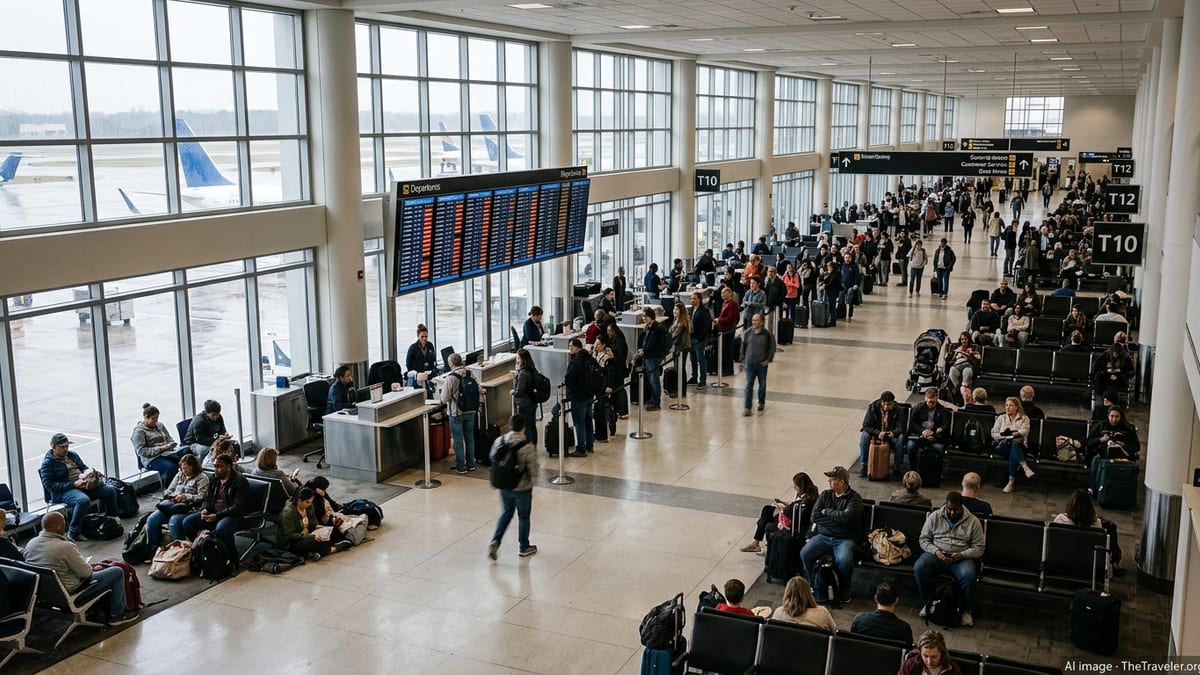
Severe Weather Slams Atlanta and Dallas Hubs
Publicly available flight-tracking data and local media coverage show that thunderstorms sweeping across Georgia and North Texas over the Memorial Day period triggered rolling ground stops and lengthy tarmac delays at Hartsfield-Jackson Atlanta International Airport and Dallas Fort Worth International Airport. In Atlanta, storms moving through metro counties on May 26 led to at least two formal pauses on departures and arrivals as lightning and heavy rain moved over the airfield, slowing ramp operations and forcing aircraft to hold at gates or on taxiways.
Reports from Dallas indicate a similar pattern as strong storms moved through the Metroplex during the same broader weather system. Travelers posting on public forums over the weekend described last-minute cancellations and diversions at Dallas Fort Worth, with evening departures scrubbed or pushed back repeatedly as thunderstorm cells intensified over the region. The combination of arrival holds and departure backlogs quickly cascaded into missed connections for passengers trying to reach smaller regional cities across the South and Midwest.
Industry data compiled for the spring storm season show that such events rarely stay confined to a single city. When severe weather simultaneously affects multiple hubs, aircraft and crews are often left out of position, making it difficult for airlines to restart tightly timed schedules once conditions improve. Atlanta and Dallas, both critical connecting points for major carriers, have repeatedly appeared among the airports with the highest numbers of weather-related disruptions this year.
Travel-focused trackers highlight how each new storm line interacts with an already fragile system. In March, a series of winter and severe weather events produced several days with thousands of cancellations across the United States, underscoring how quickly operational capacity can erode when multiple hubs are constrained at the same time. The latest wave around Memorial Day continues that pattern, with Atlanta and Dallas again at the center.
Seattle Faces Low Clouds and Knock-On Delays
While the most intense thunderstorms have focused on the Southeast and Texas, Seattle-Tacoma International Airport has also experienced pressure from unsettled conditions and ripple effects on long-haul services. Federal aviation dashboards have at times reported relatively smooth traffic flows into Seattle, yet travelers and aviation enthusiasts posting to public channels in recent weeks describe a more complicated picture, including episodes when long-distance flights were delayed, boarded, de-iced and ultimately canceled as weather deteriorated.
Low clouds, rain and changing wind patterns typical of the Pacific Northwest spring have periodically forced tighter spacing between arrivals and departures, especially during peak evening periods. When combined with late-running aircraft from storm-affected hubs such as Denver, Atlanta and Dallas, this has contributed to rolling delays on routes linking Seattle to the rest of the country. A single missed arrival window can strand an inbound aircraft at its origin, which in turn disrupts departure waves scheduled hours later from Seattle.
Seattle’s growing role as a gateway for transpacific and Alaska routes further magnifies the impact of irregular operations. If a domestic feeder flight from Atlanta or Dallas arrives too late for a long-haul connection, passengers can be left facing overnight stays and rebookings on already full services. In recent disruption cycles, publicly available information indicates that some international departures from Seattle have been scrubbed outright when crew duty-time limits were reached after extended weather holds.
The apparent contrast between official air-traffic dashboards, which may show minimal program-level restrictions, and the on-the-ground experience of travelers reflects how airline-specific operational choices translate weather stress into cancellations at particular times of day. Even when no formal nationwide ground delay program is in place, local thunderstorms or low ceilings at a single hub can quickly overwhelm gate availability and crew schedules.
Network Gridlock Exposes Systemic Fragility
The latest disruptions across Atlanta, Dallas and Seattle have again exposed how thin the margin for error remains in US airline operations, especially during peak travel periods. Publicly available tracking tools showed more than 5,000 delays nationwide on one of the key days of the Memorial Day getaway, with cancellations scattered across the network but clustered around weather-affected hubs. In Atlanta, earlier May disruptions had already demonstrated how a single day of intense storms could generate hundreds of delayed departures and dozens of cancellations.
Aviation analysts note in published commentary that US carriers continue to run tightly scheduled banks of flights through a limited number of mega-hubs, leaving little slack to recover from sudden weather impacts. When thunderstorms force a ground stop in Atlanta, for example, aircraft may miss their connection windows for onward flights to cities such as Chicago, Orlando or Denver. Those missed connections create aircraft and crew shortages in downline locations hours later, even after the original storms have cleared.
Dallas and Seattle play similar roles within their respective carrier networks. Dallas Fort Worth serves as a linchpin for domestic and Latin American traffic, while Seattle increasingly functions as a gateway for Pacific routes and Alaska services. Simultaneous weather-related delays at these hubs can reverberate through dozens of spoke airports, many of which depend on a limited number of daily flights. By the time travelers realize that a brief storm in one city has derailed their plans, the lack of spare seats on alternative services can make same-day rebooking nearly impossible.
Recent incident reports from other major airports, including Denver, further underscore how secondary disruptions compound the problem. Earlier in May, a high-profile ground incident involving a departing aircraft in Denver created additional schedule strain as airlines repositioned fleets and reassigned crews. When that type of operational shock coincides with severe storms in the Southeast and Texas, the result is a patchwork of cancellations that can appear random to passengers but trace back to a tightly interlinked system operating near capacity.
Airlines Activate Waivers and Contingency Measures
In response to the latest wave of weather-related disruptions, several major carriers have issued travel alerts and change-fee waivers for affected regions. Public advisories from large US airlines indicate that passengers scheduled to travel through storm-prone airports in the South and along the Gulf Coast around late May have been offered the option to rebook within defined date windows without additional charges, subject to seat availability in the same cabin.
Such waivers are intended to reduce congestion at the busiest times by encouraging flexible passengers to shift their trips away from the peak of a storm system. However, airline statements and consumer advocacy commentary acknowledge that these policies provide limited relief once large numbers of flights are already canceled or heavily delayed. When seats on remaining services are scarce, travelers who attempt to take advantage of waivers may still find only inconvenient routings or multi-day postponements available.
Operationally, carriers have deployed a familiar toolkit of irregular-operations responses. Aircraft are held at origin to avoid placing additional pressure on saturated hubs, even if weather at the departure airport appears calm. Crews are rerouted at short notice to keep critical long-haul or transcontinental services operating, sometimes at the expense of shorter regional routes. In some instances, airlines have proactively trimmed schedules on storm-affected days to create breathing room for recovery once conditions improve.
Publicly accessible airline performance data suggest that while these measures can shorten the length of the most intense disruption windows, they also concentrate the impact on specific flights and passenger groups. Travelers on lower-frequency routes or late-evening departures are often among the first to see their services removed from the schedule, a pattern that has repeated during recent storms affecting Atlanta, Dallas and Seattle.
What Travelers Can Expect in the Days Ahead
With the broader spring and early-summer storm season still in progress, aviation forecasters and travel analysts caution that further rounds of disruption remain possible at major US hubs. Thunderstorms are common in the Southeast and North Texas through June, while the Pacific Northwest can continue to experience low ceilings and visibility challenges that affect tightly packed arrival and departure banks in Seattle.
Consumer guidance compiled by travel organizations and flight-tracking services encourages passengers to treat the recent wave of cancellations as a reminder to build additional flexibility into their plans. Recommendations include prioritizing morning departures, which are less exposed to the accumulated delays of a busy day, allowing extra connection times at hubs such as Atlanta and Dallas, and monitoring airline mobile apps for rebooking options at the first sign of weather trouble.
For those already caught in disruption, publicly available resources emphasize the importance of acting quickly. When storms force mass cancellations, alternative seats across all airlines can disappear within minutes, particularly on popular leisure routes around holiday weekends. Using digital channels to request changes can in many cases be faster than waiting in customer service lines at the airport, which often swell when ground stops are in effect.
The latest collapse in reliability around Atlanta, Dallas and Seattle illustrates how closely US air travel is tied to shifting weather patterns and how little redundancy remains in the system. As the busy summer season approaches, the experience of Memorial Week suggests that travelers passing through these hubs should be prepared for sudden schedule changes and remain alert to evolving forecasts in the days leading up to departure.