


More news on this day
Travelers at Dane County Regional Airport in Madison faced a difficult start to the week as a cluster of weather related disruptions and operational knock on effects led to 10 delays and five cancellations affecting services operated by Endeavor Air, PSA Airlines, American Airlines, United, Southwest and JetBlue, with impacts rippling across routes to Minneapolis, Atlanta, New York and other key U.S. destinations.
Get the latest news straight to your inbox!
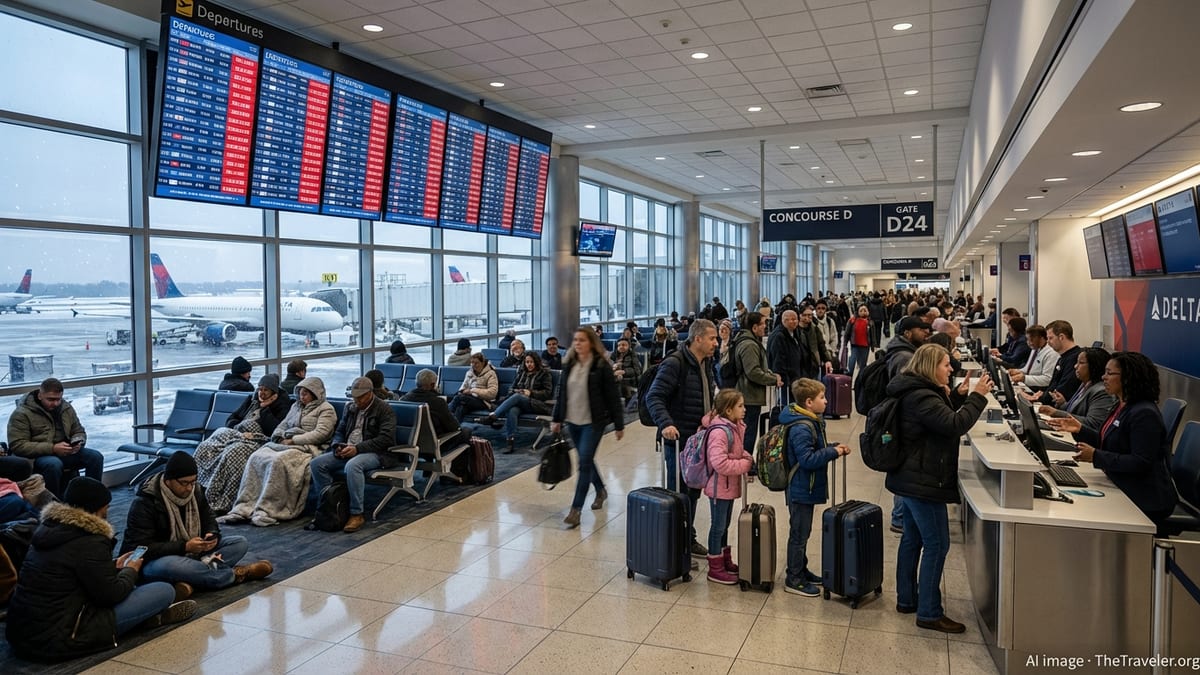
Weather Turbulence Ripples Through Madison and Major U.S. Hubs
Publicly available aviation tracking data and industry coverage indicate that a fresh round of strong storms sweeping parts of the Midwest and East Coast on June 15 has strained airline and airport operations, contributing to rolling schedule changes across multiple hubs. While Madison’s Dane County Regional Airport typically reports modest wait times and a relatively stable schedule, the combination of convective weather and congestion at larger connecting airports has led to an uptick in day of travel disruptions.
Sector wide monitoring reports describe mounting delays and cancellations at major hubs, particularly where storm cells have passed over dense air traffic corridors. Those conditions have triggered ground delay programs and tighter flow control at large airports, effects that commonly cascade to smaller markets such as Madison when aircraft and crews are held or rerouted.
Within this broader pattern, regional partners including Endeavor Air and PSA Airlines have played a visible role, as they operate many of the feeder flights that connect Madison passengers to larger networks run by American Airlines, Delta Air Lines, United Airlines and others. When aircraft cannot depart or arrive on schedule at major hubs, these regional links are often among the first to see their timings slip.
The net result on Monday has been a patchwork of delayed departures and several cancellations touching Madison’s links to Minneapolis, Atlanta, New York and other domestic destinations, turning what is normally a comparatively low stress regional gateway into a more challenging environment for travelers.
Regional Carriers at the Center of the Disruptions
Endeavor Air and PSA Airlines, two key regional operators in the U.S. system, feature prominently in the current round of service issues because they operate flights under the banners of larger mainline brands. Endeavor typically flies as a Delta Connection carrier, while PSA operates as American Eagle, linking smaller cities such as Madison to major hubs where passengers continue onward.
Industry data compiled from on time performance statistics shows that, in normal conditions, both carriers maintain relatively high completion rates, with Endeavor in particular posting strong punctuality in recent years. However, regional operations are structurally vulnerable to irregular operations because a single aircraft may cycle through several spokes in one day, so any delay early in the schedule can reverberate along the route chain.
On June 15, that dynamic has manifested in delayed departures for passengers bound from Madison toward larger connecting hubs, including flights feeding into Minneapolis and Atlanta. For many travelers, even modest schedule slips of 45 to 90 minutes can lead to missed onward connections, especially on tightly timed itineraries involving morning and early afternoon banks at the large hubs.
PSA flights into and out of Madison have also experienced extended block times and schedule adjustments as aircraft and crew rotations are rebalanced. While only a portion of the carrier’s total flying day is tied to Madison, disruptions in a few key spokes can complicate crew rest planning and aircraft positioning, prompting cancellations where buffers are insufficient.
Mainline Networks Feel the Strain
American Airlines, United Airlines, Southwest Airlines and JetBlue have all seen their operations affected as the weather system interacts with already busy summer schedules. Public tracking dashboards and airline status pages show delays accumulating at hub airports such as Chicago, New York area fields and Atlanta, each of which plays a role in moving passengers to and from Madison.
For American and United, the impact on Madison has largely taken the form of delayed inbound and outbound flights, particularly those tied to morning departures from large hubs that encountered departure holds and slower traffic management programs. When these arrivals reach Dane County Regional Airport behind schedule, subsequent turnarounds are compressed or shifted later in the day, and some rotations are removed entirely when there is no viable way to recover the timetable.
Southwest and JetBlue, while not as heavily represented in Madison as the legacy network carriers, are nonetheless part of the wider U.S. picture that has seen delays and cancellations build up across multiple cities. Publicly available coverage of national operations on June 15 notes that low cost carriers have also been contending with weather related constraints and air traffic control flow measures, contributing to a sense of nationwide strain.
The combined effect of these pressures has yielded ten delayed flights and five cancellations associated with operations touching Madison and its key connecting cities. For an airport of Dane County’s size, that total represents a meaningful disruption, particularly during peak travel hours when gate space and staffing are calibrated to a tighter, more predictable schedule.
Impacts on Routes Linking Madison, Minneapolis, Atlanta and New York
Several of the most affected routes on Monday have been those connecting Madison to major domestic hubs that serve as gateways for both business and leisure travelers. Flights that feed into Minneapolis and Atlanta are critical for passengers relying on broader northern tier and southeastern networks, while services between Madison and New York area airports support both corporate travel and growing tourism demand.
Flight status boards and third party tracking services have reflected a mix of late departures and arrivals on these links, with some rotations operating well behind schedule and others removed from the day’s lineup altogether. When a Madison departure to a hub city is canceled, travelers often face constrained rebooking options, given the relatively low frequency of daily flights compared to larger airports.
Passengers heading toward New York have encountered particular challenges when storms and congestion in the Northeast have intersected with limited spare capacity in aircraft schedules. Even when a Madison departure operates, holding patterns and ground delays at arrival airports can lengthen overall journey times significantly, complicating plans for same day meetings or onward international connections.
Atlanta bound passengers have seen similar knock on effects as one of the country’s busiest hubs manages weather impacts and high seasonal traffic. Delayed arrivals into the hub can mean missed connections for travelers originating in Madison, underscoring how disruptions at a regional airport are tightly woven into national network performance.
What Travelers Through Madison Can Expect Next
Looking ahead to the remainder of the day and into the next operating cycle, aviation planning tools and traffic management advisories suggest that conditions may remain uneven as airlines work through backlogs and reposition aircraft. Even if storms move out of the immediate area, residual congestion at major hubs and crew duty limits can continue to generate rolling delays and occasional cancellations.
For travelers using Dane County Regional Airport, this means that day of travel vigilance is especially important. Monitoring flight status directly with operating carriers, building additional connection time where possible and being prepared for gate or schedule changes can help mitigate some of the uncertainty associated with the current disruption.
Observers of airline performance note that regional airports like Madison can rebound relatively quickly once weather and airspace constraints ease, because overall volumes are manageable and turnaround operations are streamlined. However, when disruptions are tied to network wide issues at multiple hubs, recovery is often paced by the availability of aircraft and crews on a system level, not just local airport conditions.
As the latest round of storms and operational strain works through the U.S. air travel system, passengers moving through Madison, Minneapolis, Atlanta, New York and other connected cities are likely to see continued signs of stress on schedules. The ten delays and five cancellations recorded around Dane County Regional Airport on June 15 illustrate how even a modest number of affected flights can have a disproportionate impact on travelers when they involve key connecting routes.