


More news on this day
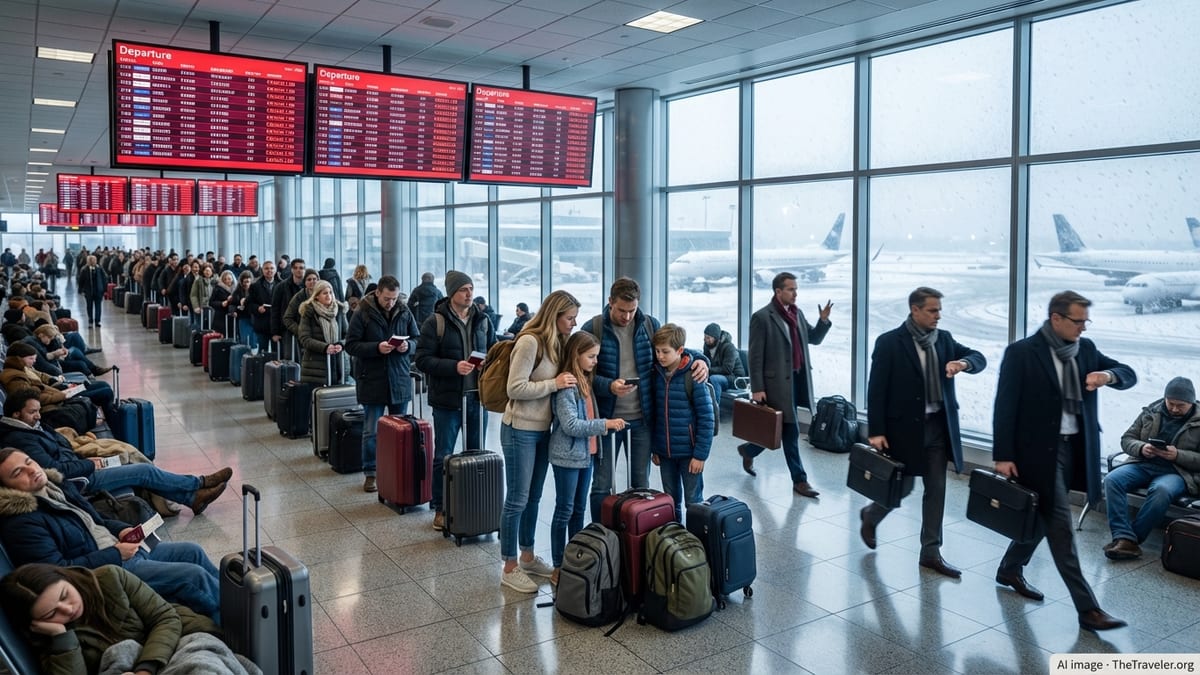
Hundreds of passengers were left stranded at Chicago’s two major airports this week as 117 flights were canceled and at least 335 delayed, disrupting American, United, SkyWest and other carriers on routes across the United States, Canada, Mexico and European destinations including Spain and Italy.
Get the latest news straight to your inbox!
Severe Storms Trigger Fresh Wave Of Disruptions
Publicly available flight tracking data and airport status boards showed a sharp spike in cancellations and delays clustered around June 11 and June 12, after powerful storms and isolated tornadoes swept through the Midwest and triggered temporary ground stops at both Chicago O’Hare International Airport and Chicago Midway International Airport. Airlines curtailed operations as the weather system brought intense thunderstorms, lightning and high winds across northern Illinois.
Data compiled from flight tracking dashboards indicated that, on one of the worst days of disruption, Chicago’s airports collectively recorded 117 cancellations alongside roughly 335 delays within a single 24 hour period. While the national tally of affected flights ran into the thousands, Chicago emerged as one of the hardest hit hubs, with knock-on effects quickly spreading through domestic and international networks.
Reports from airline-focused blogs and travel advisories noted that O’Hare, a key connecting point for transcontinental and transatlantic services, was especially vulnerable once the storms coincided with peak late afternoon and evening departure banks. As departure queues lengthened and arrival slots narrowed, dispatchers began cutting flights and extending delay windows to keep traffic within safe limits.
The severe weather episode followed a series of earlier storm systems that had already left power lines damaged and tens of thousands of homes and businesses across the wider region without electricity. Aviation analysts point out that when runways, airspace and ground facilities are all constrained at the same time, major hubs such as O’Hare and Midway have limited capacity to recover quickly.
American, United And SkyWest Bear Brunt At Key Hubs
Publicly available information from flight status platforms shows that American Airlines and United Airlines, which both operate large hub complexes at O’Hare, were among the carriers facing the highest number of disrupted flights during the latest episode. Regional operator SkyWest, which flies for several major brands under codeshare arrangements, also recorded a significant share of cancellations and lengthy delays.
Operational data reviewed by aviation blogs suggests that the 117 canceled flights were spread across mainline and regional operations, affecting departures to and from dozens of cities. United’s Chicago hub saw multiple eastbound and westbound departures scrubbed outright as crews and aircraft fell out of position. American’s network experienced similar ripple effects, particularly on routes feeding into and out of its other large hubs.
SkyWest, which serves Chicago on behalf of several major airlines, was reported to have struggled with crew availability and aircraft rotations as the storm-related ground stops forced aircraft to remain on stands for extended periods. Once duty-time limits for pilots and flight attendants were reached, some flights could no longer operate even after weather conditions began to improve.
Regional partners play a crucial role in linking Chicago to mid-sized and smaller communities across the Midwest and beyond. When even a modest portion of these flights are canceled, travelers can find themselves with fewer alternative options, since smaller airports typically have limited frequencies and fewer carriers.
Knock-On Effects Across US, Canada, Mexico And Europe
Within hours of the initial ground stops, disruption spread well beyond Illinois. According to aggregated flight-tracking data, cancellations and multi-hour delays radiated out to major hubs across the United States, including New York, Dallas, Denver and Los Angeles, as aircraft and flight crews that were scheduled to pass through Chicago failed to arrive as planned.
Routes into Canada and Mexico were also affected, as airlines adjusted schedules and, in some cases, consolidated departures to absorb stranded passengers. Travelers heading to Toronto, Montreal and Vancouver reported significant wait times, while flights to sun destinations in Mexico and the Caribbean saw rolling departure estimates as carriers worked through the backlog.
Transatlantic services were not spared. Publicly available schedules indicate that flights from Chicago to key European gateways in Spain and Italy faced delays and, in some instances, last-minute cancellations. Because long-haul services often operate with limited daily frequencies, passengers bound for cities such as Madrid, Barcelona, Rome and Milan faced the prospect of overnight stays or re-routes via other hubs.
Aviation data specialists note that when a hub airport experiences significant disruption late in the day, the impact is magnified because long-haul aircraft may lose their planned departure window over the North Atlantic. Once those slots are missed, services frequently have to be retimed for the following day, leaving passengers and aircraft out of position on both sides of the ocean.
Passengers Face Overnight Stays And Scramble For Alternatives
Social media posts and online travel forums over the past several days have described crowded terminals, long lines at customer service desks and difficulty securing hotel rooms near Chicago’s airports as the disruption wore on. In some accounts, travelers reported spending much of the night in gate areas after learning that rebooked flights would not depart until the following morning.
For many passengers, the main challenge was not only a canceled flight but also the lack of available seats on subsequent departures. With summer demand already elevated and many flights operating close to capacity, same-day rebooking options were limited, particularly for groups and families hoping to travel together. Some travelers opted to connect through secondary hubs or to fly to alternate airports and complete their journeys by rail or car.
Consumer advocates frequently point out that during weather-related events, airlines are generally not required to provide hotel or meal vouchers, although some carriers will issue goodwill gestures depending on circumstances. In this case, reports from passengers suggest that assistance varied by airline, with some offering rebooked itineraries via other hubs while others focused primarily on placing travelers on standby lists.
Experts in air travel planning emphasize that during severe disruption, passengers who act quickly often secure the most favorable alternatives. Monitoring flight status through airline apps, contacting call centers, and exploring options through online travel agencies can make a difference when thousands are competing for the same limited number of seats.
Persistent Strain On US Aviation Network
The Chicago disruption comes against a broader backdrop of heightened volatility in the North American aviation system in 2026. Recent consumer reports and industry analyses have documented an uptick in weather-related disruption, staffing constraints at both airlines and air traffic control, and strong seasonal demand that leaves little slack in schedules.
Data released by the United States Department of Transportation for the first part of 2026 shows that several large carriers have struggled with on-time performance, with certain hubs repeatedly experiencing elevated rates of delays and cancellations during peak travel periods. Chicago has featured prominently in these statistics, reflecting both its scale and its exposure to rapidly changing Midwestern weather patterns.
Aviation analysts note that while airlines have added aircraft and routes to capture strong demand, investments in resilience, such as spare aircraft and crew or additional buffer time in schedules, have lagged. As a result, localized weather events can quickly snowball into nationwide disruption, particularly when they strike at major connecting hubs like O’Hare.
For travelers planning trips in the coming weeks, experts recommend building extra time into itineraries that pass through Chicago and other congestion-prone hubs, especially when connecting to international flights. Early morning departures, flexible routing options and travel insurance policies that cover delays and cancellations are among the measures commonly suggested to mitigate the risk of being left stranded when the next round of storms rolls through.