


More news on this day
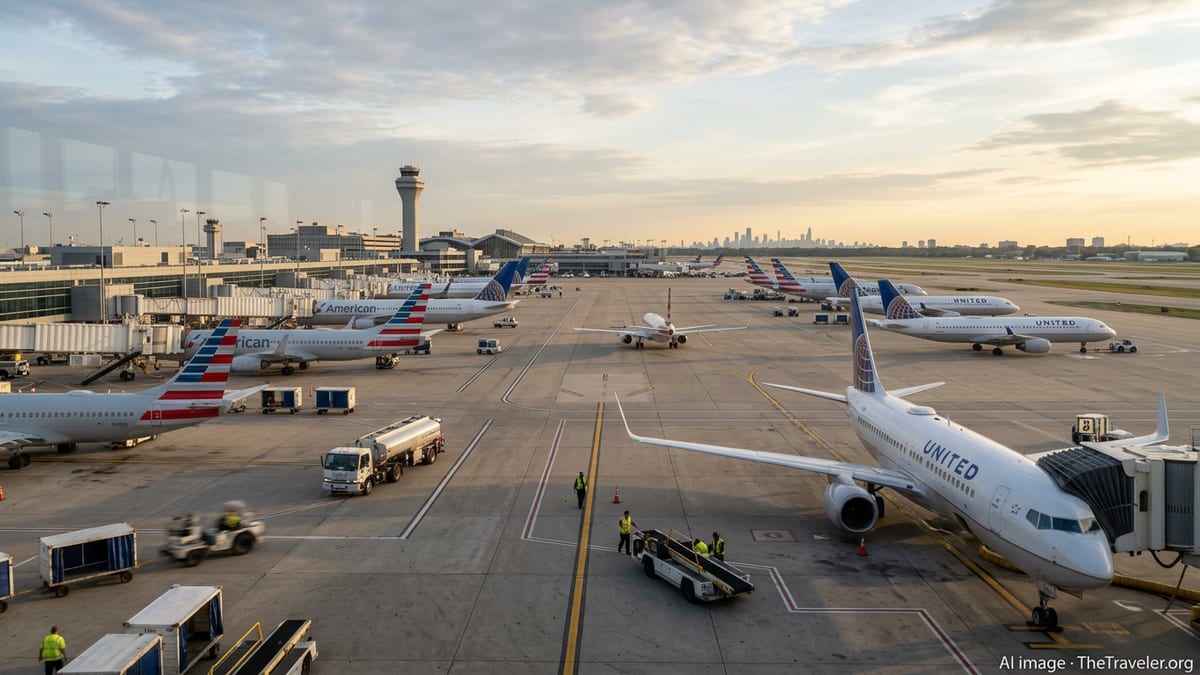
Severe thunderstorms and airspace congestion around Chicago O’Hare International Airport on June 12 and June 13 triggered a fresh wave of travel disruption, with publicly available tracking data indicating at least 255 flights delayed and 12 canceled, stranding passengers on United, American, Delta, Southwest and international connections to major hubs including New York, Miami, Toronto and London.
Get the latest news straight to your inbox!
Stormy Weather Compounds Pressure on a Key U.S. Hub
Chicago O’Hare, one of the world’s busiest connecting hubs, entered the weekend under renewed weather pressure as bands of severe storms swept across the Midwest. Published coverage and flight-tracking data for Friday, June 12, indicated that repeated ground stops and flow restrictions at both O’Hare and nearby Midway forced airlines to hold or reroute aircraft, creating a cascade of late arrivals and missed departures across the system.
Regional reporting on the severe weather pattern pointed to thunderstorms, strong winds and tornado activity across parts of Iowa and Illinois, prompting temporary halts to operations and forcing diversions away from Chicago’s airspace. As aircraft missed their scheduled arrival times, airport resources were stretched, and the backlog of delayed departures grew into the evening, carrying knock-on effects into early June 13.
Live delay-monitoring dashboards drawing on Federal Aviation Administration data still showed O’Hare categorized as “on time” by Saturday morning, but individual airlines were working through earlier disruptions. Industry analysts note that this kind of mismatch between overall airport status and traveler experience is common, because even a relatively short period of severe constraints can strand hundreds of passengers and displace aircraft from their planned rotations.
Major U.S. Carriers Face Rolling Delays and Cancellations
United and American, which operate the largest networks from Chicago O’Hare, appeared to be the most visible carriers affected, though publicly accessible tracking tools also showed schedule impacts for Delta and selected partner airlines operating through the hub. Flight monitoring services recorded dozens of late departures and arrivals on United’s domestic network, along with cancelations on certain regional routes where aircraft and crews were no longer positioned as scheduled.
American’s operations similarly reflected the strain, with scattered cancellations and extended delays on connecting services that rely on precise timing through O’Hare’s banked schedule. When storms interrupt one or two departure waves, the result can ripple through the day as crews reach duty time limits and aircraft miss subsequent rotations.
Travelers also reported significant queues at customer service desks and crowded gate areas as they attempted to rebook, particularly on high-demand routes into and out of Chicago. Social media posts and online forums described “mayhem” at O’Hare on Friday evening, with some passengers sleeping in terminal seating areas after misconnecting from delayed inbound flights.
Southwest, which has been reducing and restructuring operations at O’Hare in favor of Chicago Midway, also saw its customers impacted where journeys involved codeshare or interline connections through the airport. Industry schedules indicate that even a relatively small number of cancellations can leave travelers with limited same-day alternatives when flights are already heavily booked at the start of the busy summer period.
International Connections to Toronto, London and Beyond Affected
O’Hare’s status as a key transatlantic and transborder gateway meant that the disruption was felt far beyond the Midwest. Connection banks feeding flights to Toronto, London and other international destinations experienced rolling delays as domestic feeders ran late or diverted. In some cases, long-haul departures left behind passengers whose inbound flights had been held or rerouted because of weather.
According to publicly available flight records, several services from Chicago to major overseas hubs departed significantly behind schedule, including selected transatlantic routes. Even modest delays on long-haul flights can cause complications for onward connections in Europe and Canada, leaving travelers stranded far from their intended final destinations.
Airlines generally prioritize operating flagship long-haul flights whenever possible, but they may offload connecting passengers or baggage when payloads are constrained by weather or fuel requirements. Travel experts note that this strategy can help get aircraft and crew in position for subsequent rotations, but it often leaves individual passengers facing overnight stays or complex rerouting on already crowded services.
Knock-On Impacts in New York, Miami and Other Downline Hubs
The disruption in Chicago fed directly into congestion at other major airports linked by dense schedules to O’Hare. New York’s John F. Kennedy, LaGuardia and Newark, together with Miami International and Toronto Pearson, all rely on frequent flights from Chicago to feed domestic, Caribbean and international networks. When those inbound flights arrive late or out of sequence, gate availability and staffing plans at the receiving airports can quickly become misaligned.
According to national delay-monitoring platforms, New York airports were already handling weather-related ground delays by Friday afternoon as thunderstorms moved along the Northeast corridor. Additional delays from misaligned Chicago connections increased the strain on departure banks and contributed to longer waits on the tarmac for some flights as controllers managed traffic flows into saturated airspace.
Miami, a critical hub for Latin America and Caribbean services, also experienced schedule knock-ons as late-arriving Chicago connections forced aircraft swaps and last-minute rebooking efforts. Passengers arriving from O’Hare reported missed cruise departures and lost hotel nights, underscoring how a few hours of disruption at a central hub can derail carefully planned itineraries across multiple countries.
What Stranded Passengers Are Experiencing on the Ground
Inside O’Hare’s terminals, the most visible impact for travelers was the length of delays, which in some cases stretched beyond three hours as airlines waited for weather and air traffic constraints to ease. With flights largely full at the height of the summer travel season, many stranded passengers had limited options for same-day rebooking, forcing them to accept unwanted overnight stays or complex routings through secondary hubs.
Online accounts and photos shared publicly showed long queues at ticketing counters and customer service desks for United and American in particular. Some travelers described missing major life events after being unable to secure alternate flights to New York or Miami in time, while others reported receiving meal vouchers and hotel accommodation when delays crossed carrier-specific thresholds.
Families with children and travelers requiring special assistance faced particular challenges as they navigated crowded concourses and limited seating. Airport operations data for O’Hare highlights strong growth in both domestic and international passenger volumes over the past year, suggesting that even moderate disruption can now overwhelm terminal capacity during peak travel windows.
Consumer advocates recommend that passengers caught in similar situations monitor their flight status via airline apps, seek rebooking options as soon as delays appear likely, and keep digital copies of receipts for any out-of-pocket expenses. While compensation rules for weather-related disruptions in the United States are limited, some carriers offer travel credits or accommodations as a goodwill gesture, particularly when passengers experience extended delays or overnight misconnects.