


More news on this day
Regional travelers using Columbia Metropolitan Airport on July 9 are facing a patchwork of delays and cancellations, as thunderstorms across the Southeast and congestion at major hubs ripple through one of South Carolina’s key regional gateways.
Get the latest news straight to your inbox!
Weather and Hub Congestion Ripple Into Columbia
Publicly available aviation data for July 9 shows thunderstorms and air traffic management programs affecting several major East Coast and Southeast hubs, creating a knock-on effect for smaller spoke airports such as Columbia Metropolitan Airport. Disruption at airports including Atlanta and Northeast hubs is translating into late inbound aircraft, compressed departure windows and schedule reshuffling that particularly impacts shorter regional legs.
National airspace status reports for the day highlight multiple delay advisories tied to convective weather and traffic management initiatives. Those constraints limit the number of arrivals and departures allowed into already busy hub airports, forcing airlines to hold or retime connecting flights. For Columbia-bound and Columbia-originating passengers, that dynamic often surfaces as rolling departure delays, extended time on the ground awaiting a slot and, in some cases, last-minute cancellations.
Conditions at Columbia itself have remained within normal operating parameters, with no indication of local ground stops or extended runway closures. The operational pressure instead stems from the wider network, where weather-sensitive hubs absorb most available capacity, leaving less room for the regional spokes that rely on timed bank connections.
Aviation analysts note that this pattern is typical on peak summer travel days when thunderstorms regularly interrupt afternoon and evening traffic flows. In such scenarios, flights with shorter stage lengths and lower seat counts are frequently the first candidates for rescheduling or cancellation when airlines and air traffic managers attempt to stabilize operations.
Regional Carriers Shoulder a Disproportionate Burden
Columbia Metropolitan Airport is principally linked to the broader U.S. air network through regional affiliates of major legacy carriers, operating under familiar brand names but using smaller aircraft such as regional jets. Public filings and schedule data show that American, Delta and United all rely on these partners for a significant share of Columbia service, connecting the city to hubs like Charlotte, Atlanta and Chicago.
On a disruption-heavy day such as July 9, that structure can leave regional operations particularly exposed. When weather or traffic constraints limit the number of flights an airline can operate into or out of a hub, carriers tend to preserve long-haul and high-demand routes while trimming shorter regional sectors. Industry observers point out that this approach minimizes total passenger displacement but can concentrate inconvenience among travelers using small and mid-sized airports.
For Columbia, that often translates into delayed departures waiting on late-arriving aircraft from congested hubs, or into cancellations where downstream rotations no longer fit within crew duty-time limits. Travelers booked on regional flights late in the day can be especially vulnerable, as fewer remaining departures reduce rebooking options if an earlier disruption cascades.
Recent discussion among frequent flyers underscores that this is not unique to Columbia, but rather a systemic feature of how major carriers manage disruption. Regional routes from close-in spoke cities to their primary hubs tend to be among the first adjusted when storms or capacity programs compress a hub’s schedule, making midsummer reliability an ongoing concern for regional passengers.
Passenger Experience: Longer Days and Limited Alternatives
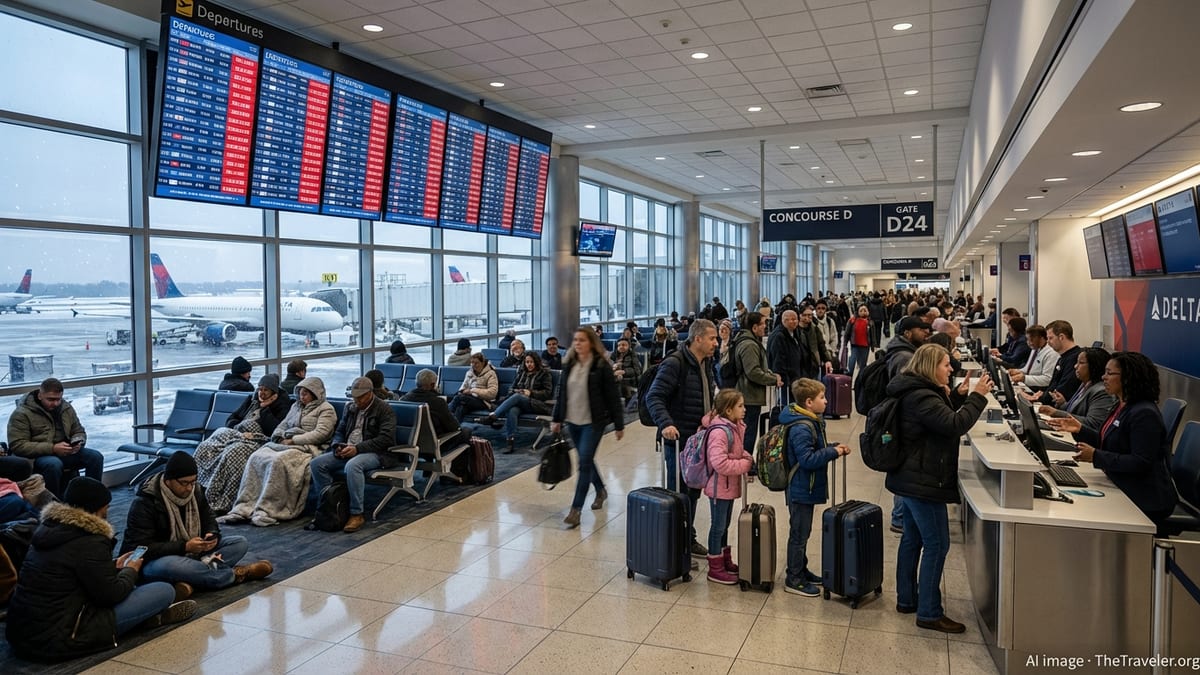
For travelers passing through Columbia on July 9, the operational pressures are most visible on departure boards that show widening delay estimates and pockets of cancellations, particularly among evening regional departures. With Columbia’s schedule already less dense than that of large hubs, a small number of disrupted flights can quickly translate into long waits or overnight stays for those without flexible itineraries.
Consumer travel guidance emphasizes that regional passengers should be prepared for exactly this type of scenario during peak storm season. Recommendations commonly include avoiding the final departure of the day when possible, building in generous connection times at hubs, and monitoring flight status closely in the 24 hours before departure. On disruption days, same-day alternatives may involve re-routing through different hubs or even shifting to nearby larger airports if ground transport is practical.
Travelers who do experience significant delays or cancellations are encouraged by consumer advocates to review carrier-specific policies on rebooking, meal vouchers and hotel accommodations. In the United States, protections and entitlements vary depending on whether a disruption is categorized as within the airline’s control or linked to weather or air traffic constraints, which typically limits mandatory compensation but may still leave room for goodwill gestures.
Reports from prior severe disruption events suggest that passengers at regional airports are often more reliant on airline-provided solutions than peers at large hubs, where multiple carriers and a denser schedule provide more self-service options. That dynamic can make advance planning and proactive communication with airlines all the more important for Columbia-based travelers on high-risk days.
Operational Context at Columbia Metropolitan Airport
Columbia Metropolitan Airport functions as a classic regional spoke within the U.S. air transportation network, with a schedule built around connecting traffic rather than a large base of nonstop, point-to-point routes. Public planning documents and airline network data highlight that the airport’s passenger service is concentrated on a handful of daily departures to major hubs, supplemented by cargo operations that connect the region to national logistics networks.
In recent years, airline schedules have gradually rebuilt and diversified following the sharp reductions of the early 2020s. New and restored routes have improved connectivity, but they have also increased reliance on tightly timed banks of regional flights that feed into major hubs at peak morning and evening periods. When hub operations slow due to thunderstorms or air traffic initiatives, those banks can quickly fall out of alignment, posing particular challenges for airports with few backup frequencies.
For Columbia, the July 9 disruption illustrates how even modest weather-related constraints at distant airports can reverberate through local service. A small number of delayed or canceled regional flights can temporarily reduce connectivity across entire regions, especially for destinations that depend on single daily frequencies. The effect is magnified for business travelers and those connecting to long-haul international services with limited departure windows.
Aviation researchers note that regional airports like Columbia play a vital role in linking smaller metropolitan areas to the global economy, yet they often lack the schedule redundancy that cushions larger hubs. As summer storm patterns persist, the balance between maintaining connectivity and managing operational risk remains a central challenge for airlines serving these markets.
What Travelers Can Expect in the Coming Days
Looking beyond July 9, operational data and seasonal patterns suggest that travelers using Columbia Metropolitan Airport should anticipate continued susceptibility to weather-driven disruption through the heart of the summer travel period. Afternoon and evening thunderstorms are a regular feature across the Southeast during July, and each event has the potential to trigger localized or regional air traffic management initiatives at the major hubs that anchor Columbia’s connectivity.
Airlines are expected to continue adjusting schedules dynamically on high-risk days, prioritizing longer-haul and higher-demand services while fine-tuning regional operations to fit within available capacity. For Columbia, that may translate into occasional short-notice schedule changes, including the retiming or consolidation of lightly booked flights. Industry observers also point to ongoing efforts by carriers to tighten turnaround times and improve aircraft utilization, which can reduce slack in the system and make any disruption more immediately visible to passengers.
Travel experts generally advise that, during this part of the summer, passengers departing from regional airports build additional time into connections, consider earlier flights when feasible, and enroll in airline alert systems to receive real-time updates. For those whose plans are inflexible or tied to critical events, purchasing refundable fares or travel insurance that specifically addresses weather-related disruption can provide a measure of financial protection.
For Columbia and similar regional gateways, the July 9 operational challenges underscore the broader reality of modern U.S. air travel: even when local skies appear calm, the intricate web of national airspace management and hub-and-spoke scheduling can quickly turn a routine travel day into a test of flexibility and patience for regional flyers.