


Jayuya sits high in Puerto Rico’s Cordillera Central, surrounded by coffee farms, pine‑covered ridges and cool misty mornings that feel far removed from the island’s beaches. Choosing where to stay here matters more than in many destinations. A traditional hacienda hotel, a town‑center property, a secluded mountain cabin and a working coffee farm cottage can deliver very different experiences, driving times and budgets. This guide compares the main types of accommodation in and around Jayuya, using recent real‑world examples to help you match the right stay to your style, comfort needs and itinerary.
Get the latest updates straight to your inbox!
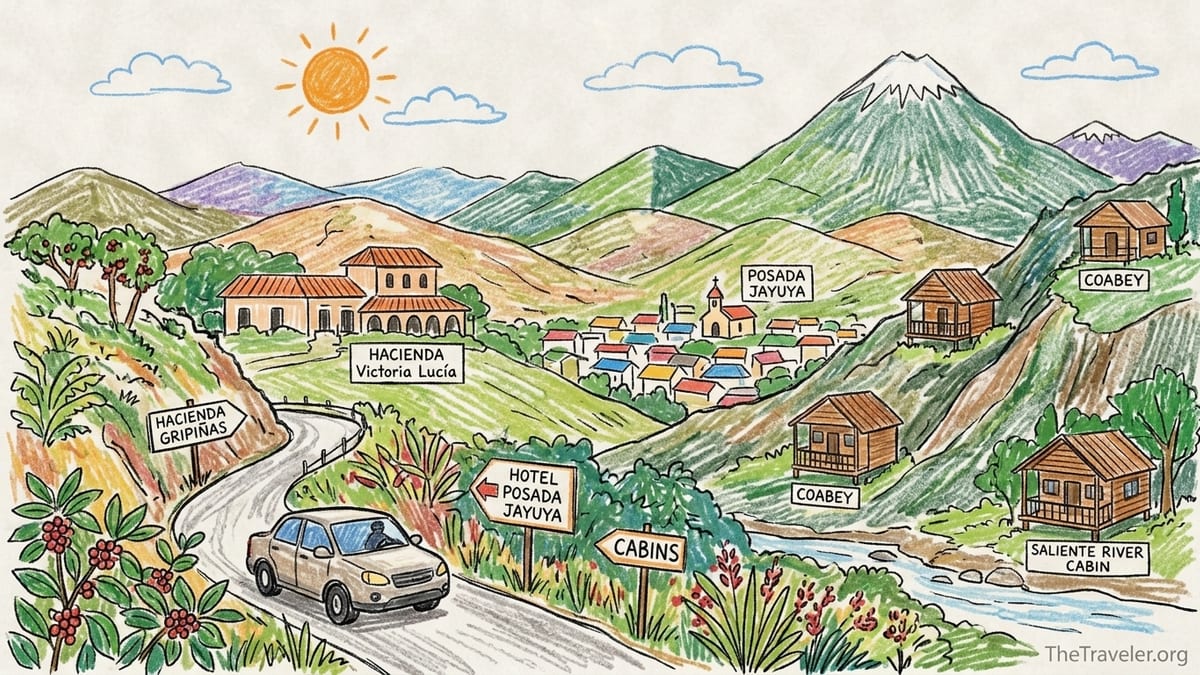
Understanding Jayuya’s Mountain Layout and Access
Jayuya’s accommodations are scattered across steep valleys and ridges, so location has a big impact on how your trip feels. The town center sits at roughly 1,500 to 1,800 feet of elevation, with barrios like Coabey, Saliente and Collores stretching higher into the hills. Driving from San Juan or Ponce usually involves curvy sections of PR‑10 or PR‑52, then narrow mountain roads such as PR‑144 and smaller local routes. Travel times from the San Juan metro area can easily reach two and a half hours even if the distance on the map looks modest.
Ordinary rental cars can reach the main hotels and most cabins in normal weather, but travelers unfamiliar with mountain driving should plan conservatively. Expect low visibility in evening fog, limited street lighting once you leave town and few guardrails along some secondary roads. A compact or mid‑size sedan is sufficient for Hacienda Gripiñas, Hacienda Victoria Lucía and Hotel Posada Jayuya when driven carefully. Some farm cottages and off‑grid cabins, however, sit at the end of steeper concrete or gravel driveways where a higher‑clearance vehicle or very slow driving is more comfortable.
Because of these conditions, where you stay affects your daily rhythm. A hotel in town makes it easy to walk or drive a few minutes to bakeries, cafés and small supermarkets. A secluded cabin along the Saliente River or in the hills above Coabey may require 20 to 30 minutes of winding roads each time you head out for dinner or sightseeing. Visitors who plan full days of hiking or coffee tours may welcome the seclusion, while those who prefer spontaneous café hopping and museum time often find town‑based stays more practical.
Cell reception in the Jayuya region varies by carrier but generally becomes patchy as you leave the town center and head deeper into the mountains. Wi‑Fi at hotels and many vacation rentals helps bridge the gap, yet it is wise to download offline maps before you leave the coastal cities and to screenshot key driving directions, especially if you are arriving after dark.
Hacienda Gripiñas: Classic Rural Mountain Hotel
Hacienda Gripiñas is the area’s classic countryside hotel, set on the grounds of a historic coffee estate near PR‑527 above Jayuya. It is recognized as a small mountain hotel by the Puerto Rico Tourism Company and sits within easy driving distance of Cerro de Punta and other high‑elevation viewpoints. Rooms are spread across a main building and annexes, many with balconies or terraces facing coffee‑covered hills and gardens. The property functions more as a traditional rural hotel than as an active coffee farm, so it suits travelers who want hacienda charm plus hotel‑style services rather than hands‑on agricultural work.
Recent traveler reports and regional lodging surveys in 2025 indicate that standard double rooms at Hacienda Gripiñas typically fall in the range of about 120 to 160 US dollars per night before tax, depending on the season and whether breakfast is included. A realistic recent example for two adults has been around 140 dollars per night plus about 15 to 20 dollars in taxes and fees, with some mid‑week promotions slightly lower. The on‑site restaurant, which the municipal tourism listings note as operating daily with extended hours on weekends, serves local dishes and breakfast, meaning guests do not need to drive back down the mountain for meals if they prefer to stay in after dark.
Facilities at Hacienda Gripiñas usually include free on‑site parking, Wi‑Fi in common areas and standard private bathrooms with hot water. Rooms in this elevation band often rely more on natural ventilation and ceiling fans than on strong air conditioning, taking advantage of cooler mountain nights compared with the coast. Not every unit is reported to have A/C, so travelers who sleep warm should confirm room type when booking. There is no large resort‑style pool complex here; instead, the appeal is the rural calm, birdlife and direct access to mountain roads for hiking excursions and driving to viewpoints.
In terms of access, an ordinary rental car can comfortably reach Hacienda Gripiñas via PR‑527 in normal weather. The road is narrow and winding, with some tight curves, but it is paved. Nighttime arrivals require slow driving and attention to signage, particularly in rain. For visitors who want a cool, traditional mountain stay with an on‑site restaurant and easy access to trails without fully isolating themselves from services, Hacienda Gripiñas is an excellent centerpiece option.
Hacienda Victoria Lucía: Resort-Style Comfort in the Mountains
Hacienda Victoria Lucía offers one of Jayuya’s more resort‑like stays. Often described by the island’s official tourism board as a stone‑castle‑style property surrounded by lush vegetation, it aims at guests who want mountain atmosphere with more of a boutique hotel feel. The complex sits within a short drive of central Jayuya, keeping restaurants, gas stations and attractions such as the Museo del Cemí and La Piedra Escrita within a 10 to 20 minute drive, depending on traffic and exact route.
Recent listings from 2025 suggest that typical nightly rates for double rooms at Hacienda Victoria Lucía hover near 150 to 190 US dollars before tax in many periods, with breakfast included in several packages. A realistic sample booking for a fall weekend showed a nightly base around 170 dollars, plus approximately 25 to 30 dollars in taxes and service fees, for a total near 200 dollars per night for two adults. There are no separate cleaning fees as in many vacation rentals, and breakfast is generally part of the nightly rate in standard packages.
Facilities are more resort‑like than at most rural lodges in the area. Guests can expect an outdoor pool, landscaped gardens, a restaurant and bar on site, free guest parking and Wi‑Fi in rooms or common spaces. Rooms almost always feature private bathrooms with hot water and air conditioning, which can matter for travelers sensitive to humidity even in the mountains. Mountain views vary by unit, but many common areas look over the surrounding ridges and coffee hillsides, creating a sense of retreat without giving up comfort.
Driving access to Hacienda Victoria Lucía is on paved roads suitable for any standard rental car. The final approach still involves curves and some grades typical of the central highlands, but the property is not as remote as certain farm cottages or riverside cabins. For couples or small groups who want countryside scenery, a pool and on‑site dining without managing self‑catering logistics, this is one of Jayuya’s best matches.
Hotel Posada Jayuya: Practical Town- Center Base
Hotel Posada Jayuya sits directly in or very near the town center, making it the practical choice for visitors who value walkable access to museums, cafés and basic services. The island’s official tourism board highlights it as convenient for short stays near the main tourist spots. La Piedra Escrita, several bakeries, small supermarkets and local restaurants such as La Casita and other criollo eateries are a short drive away, and some services are within a reasonable walk depending on your tolerance for hills.
Recent aggregated price data from 2026 hotel search engines show standard nightly rates around 120 to 150 US dollars for a double room at Hotel Posada Jayuya, with an example autumn booking advertised at 135 dollars per night before tax and about 147 dollars total for one night including taxes and fees. Breakfast is available on site for many room packages but is not always included, so travelers should confirm whether their chosen rate is room only or bed‑and‑breakfast.
Facilities at Hotel Posada Jayuya include air conditioning in guest rooms, free Wi‑Fi, free parking, a small pool and spa area, and private bathrooms with hot water. The property is one of the relatively few in this part of the island that combines A/C, a pool and town‑center convenience. Because it is not on an expansive finca, direct mountain views are more limited than at the haciendas or hilltop cabins, but upper‑floor rooms and poolside areas still feel distinctly highland compared with the coast.
Access by car is straightforward. Roads into town from PR‑144 and surrounding routes are paved, and streets around the hotel are easy for standard rental sedans. For travelers prioritizing easy dinners, café hopping, museum time and a simple drive back to the room at night, Hotel Posada Jayuya is often the most practical choice. It also works well for visitors who want to use Jayuya as a hub to explore coffee farms and viewpoints by day, returning to town in the evening.
Private Mountain Cabins in Coabey, Saliente and Collores
The hills around Coabey, Saliente and Collores host a growing cluster of private cabins and small vacation homes. These properties range from simple one‑bedroom wooden cabins to modern concrete retreats with floor‑to‑ceiling windows and plunge pools. Popular examples in recent rental listings include compact units labeled as “Serenity Cabin” or “River View Room,” along with larger houses such as country homes and “Casa Campo”‑style properties that sleep four to eight guests. Many of these rentals emphasize river access, waterfalls or high ridgeline views.
Recent price comparisons across multiple booking platforms show that one‑bedroom cabins for two guests in Coabey or along the Saliente River often start around 100 to 140 US dollars per night before taxes and platform service fees. Larger two‑bedroom or three‑bedroom houses with strong mountain views or small pools commonly range from about 180 to 260 dollars per night. Cleaning fees are a key part of the budget: a two‑night weekend in a cabin might add a one‑time cleaning fee of 60 to 120 dollars, plus platform service fees of 10 to 18 percent and a modest occupancy tax, pushing the effective nightly cost higher than the base rate suggests.
Amenties typically include full kitchens or kitchenettes, private bathrooms with hot water, Wi‑Fi and free parking on site. Air conditioning varies. Some higher‑elevation cabins promote cool nights with ceiling fans and screened windows instead of full A/C, while more upscale builds include split‑unit air conditioning in bedrooms. Many units highlight mountain or river views directly from porches, hammocks or outdoor seating. Pools, when present, are usually small plunge pools or hot‑tub‑style features rather than large shared hotel pools.
Access considerations are significant for these rentals. Main approach roads like PR‑144 are paved and manageable for compact rental cars, but final driveways can be steep, narrow and occasionally concrete strips or gravel surfaces. For example, some Coabey cabins reachable through coffee farm roads recommend arriving during daylight and driving slowly, especially in wet conditions. Guests should carefully read recent reviews and property descriptions about driveway gradients, turning space and whether low‑clearance vehicles are discouraged. Nighttime returns from town for dinner can feel long, with 20 to 35 minutes of curvy roads each way, so many guests choose to stock up on groceries and cook at the cabin instead of going out every evening.
Real Coffee-Farm Stays vs Coffee-Themed Lodging
Jayuya’s identity is closely tied to coffee, but there is an important distinction between a true working coffee farm stay and a property that simply uses coffee imagery in its branding. A genuine agricultural lodging sits within an active finca where coffee is grown, harvested and often roasted on site. Guests might see workers in the fields, drying patios or roasting rooms and can book tours or tastings as part of the visit. The atmosphere is agricultural as much as scenic.
Hacienda Prosperidad is one of the clearest examples of a working coffee farm in the Jayuya mountains. The farm cultivates coffee at elevations above 2,000 feet and offers on‑site stays such as Casa Campo Jayuya and a newly renovated cottage within the plantation. Guests booking the two‑bedroom cottage through major vacation‑rental platforms in 2025 have seen rates in the ballpark of 170 to 220 US dollars per night for four people, usually with a one‑time cleaning fee perhaps around 70 to 120 dollars and standard platform service and occupancy taxes on top. Stays here typically include access to farm trails, sweeping views over coffee rows and the chance to request coffee‑focused experiences directly from the owners.
Another working‑farm example is a cabin stay promoted specifically as “Stay in a Working Coffee Farm Cabin” in Coabey, where the lodging sits inside an active coffee property rather than merely near one. Listings emphasize on‑farm hikes, proximity to drying patios and the sound of agricultural activity in addition to mountain scenery. Nightly base rates for such cabins in 2025 have hovered around 140 to 190 US dollars for small groups, with a similar pattern of cleaning fees and taxes as other vacation rentals.
In contrast, some mountain cottages and small inns around Jayuya use coffee‑related names or decor but do not operate as active farms. These might sit on former hacienda land no longer under cultivation, or simply adopt coffee keywords to signal a mountain vibe. They still can provide excellent stays with views of nearby plantations, but guests should not expect on‑site picking, processing or roasting. When booking, indicators of a true working coffee farm include references to the estate’s own coffee label, mention of harvest periods, farm tours or cupping sessions, and sometimes sales of beans roasted on site.
For travelers specifically interested in agrotourism, it is worth messaging hosts to ask explicit questions: Is coffee currently grown and harvested on the property. Are there guided tours or tastings. Can guests see processing equipment in operation in season. Clear, specific answers help distinguish a real farm experience from thematic branding and ensure expectations match reality.
Comparing Costs and Comforts: Sample Jayuya Stay Budgets
Because nightly rates, cleaning fees and taxes combine differently across hotels and rentals, it helps to look at complete sample budgets. All examples below use recent 2025 and 2026 pricing patterns gathered from official tourism listings and major booking platforms, and they are intended as approximate planning figures rather than guaranteed quotes. Transport costs assume two travelers arriving to Jayuya from the San Juan metropolitan area with a compact rental car for a long weekend.
For a two‑night romantic getaway at Hacienda Victoria Lucía, a realistic sample could look like this. Two weekend nights at about 170 US dollars per night base yield 340 dollars, with taxes and service taking the total room bill close to 400 dollars. Breakfast is generally included. Add a compact rental car for three calendar days at roughly 45 to 60 dollars per day including basic insurance, which comes to around 150 dollars, plus about 40 dollars in fuel for the round trip and local driving. Meals might combine two dinners at the on‑site restaurant and one lunch in town, perhaps totaling 160 to 220 dollars depending on drink choices. A half‑day coffee‑farm tour nearby could add 30 to 60 dollars per person. Altogether, a couple could reasonably budget around 800 to 950 dollars for the full two‑night break, excluding flights.
For a three‑night family stay at a two‑bedroom mountain house in Coabey or Saliente, recent listings show base nightly rates near 210 dollars. Over three nights, that is 630 dollars, with a one‑time cleaning fee of around 90 dollars and platform service and tax pushing the lodging total near 780 dollars. A rental car suitable for four people for four days might run 260 dollars including taxes, with about 50 dollars in fuel for mountain driving. Since most cabins have full kitchens, a mix of self‑catered breakfasts and dinners plus lunches out at local restaurants and bakeries might average 80 to 120 dollars per day, or 240 to 360 dollars over the stay. Adding one paid activity such as a guided coffee tour or a visit to a nearby distillery brings an extra 100 to 150 dollars for the family. A realistic overall budget for three nights could therefore land somewhere between 1,200 and 1,500 dollars for lodging, transport and basic activities.
For a budget weekend in Jayuya focusing on town access, two nights at Hotel Posada Jayuya at a base rate of around 135 dollars per night come to 270 dollars, with taxes bringing the total near 300 dollars. Choosing a compact rental car with strong weekly discounts might cost about 120 to 150 dollars for three days including taxes and basic insurance if booked ahead, plus roughly 35 dollars in fuel. Eating primarily at bakeries and simple local restaurants rather than hotel dining rooms could keep meals at around 40 to 60 dollars per day for two people, so 80 to 120 dollars for the weekend. Free or low‑cost activities, such as walking around town, visiting viewpoints by car and admiring La Piedra Escrita, keep activity costs minimal. With modest paid tours or tastings, a thrifty pair might complete a two‑night stay from the San Juan area for somewhere near 550 to 700 dollars excluding flights.
Who Should Stay Where: Matching Stays to Travelers
Couples seeking a romantic atmosphere with hotel‑style services and minimal logistics tend to be happiest at Hacienda Victoria Lucía or Hacienda Gripiñas. The former offers a stronger resort feel, with a pool, bar and breakfast included, making it easy to linger on property without driving out for every meal. Hacienda Gripiñas delivers homier rural charm, gardens and mountain air, with an on‑site restaurant and less of a polished resort vibe. Both keep driving times manageable and provide staff on hand, which can be reassuring for first‑time visitors to the island’s interior.
Families who want space, kitchens and the flexibility to cook for picky eaters or manage early bedtimes are usually better matched with cabins and vacation homes in Coabey, Saliente or Collores, or with larger houses on working farms like Hacienda Prosperidad. Multiple bedrooms, living areas and outdoor space allow children to spread out. Parents should, however, weigh the longer drives to town for groceries or emergencies and bring supplies in one consolidated shopping trip to minimize back‑and‑forth along dark mountain roads.
Hikers and nature enthusiasts may prefer to base themselves slightly outside town, either at Hacienda Gripiñas, which is well placed for routes toward Cerro de Punta and high ridges, or at mountain cabins near trailheads and rivers. These travelers often accept longer drives for dinner in exchange for waking to valley fog and bird calls. Remote workers, on the other hand, should scrutinize Wi‑Fi reliability and cell backup. Town‑center hotels like Posada Jayuya and some structured haciendas typically have more consistent connectivity than off‑grid cabins, which may lose signal during storms or rely on slower connections.
Visitors who want countryside scenery without giving up convenience are usually happiest in a hybrid situation: a hacienda‑style hotel within a short drive of town or a coffee‑farm cottage like those at Hacienda Prosperidad, which combines panoramic views and farm surroundings with road access that is manageable for standard sedans. This setup offers easy breakfasts on site and realistic evening outings to Jayuya’s restaurants, striking a balance between immersion in the mountains and day‑to‑day practicality.
FAQ
Q1. Is a standard rental car enough to reach Jayuya’s main hotels and cabins.
Most visitors manage with compact or mid‑size rental cars. Hacienda Gripiñas, Hacienda Victoria Lucía and Hotel Posada Jayuya are accessible via paved mountain roads when driven slowly. Some coffee‑farm cottages and remote cabins sit at the end of steep or narrow driveways where higher clearance feels more comfortable, so it is important to check recent reviews and ask hosts about driveway conditions before booking.
Q2. How much should I budget per night for accommodation in Jayuya.
As of late 2025 and 2026, town hotels like Posada Jayuya typically run around 120 to 150 US dollars per night before tax for two people. Hacienda‑style hotels such as Gripiñas or Victoria Lucía often fall in the 140 to 190 dollar range with taxes bringing totals nearer 170 to 220 dollars. Private cabins and farm cottages span from roughly 100 dollars per night for simple one‑bedroom units to 250 dollars or more for larger houses with standout views or pools, plus cleaning fees and platform service charges.
Q3. What is the difference between staying in town and in a remote cabin.
Staying in town means quick access to bakeries, small supermarkets, museums and restaurants, and short, well‑lit drives back to your room at night. A remote cabin offers stronger mountain immersion, quiet nights and closer proximity to rivers or trails, but usually involves 20 to 35 minutes of curvy roads for each trip to dinner or supplies, more limited street lighting and less reliable cell coverage.
Q4. Are there true working coffee-farm stays in Jayuya.
Yes. Properties on active farms such as Hacienda Prosperidad and some cabins marketed explicitly as being inside working coffee estates offer genuine agrotourism. These stays sit among actual coffee trees and may provide tours, tastings and a look at processing facilities in season. Other lodgings use coffee themes in their names or decor yet are not functioning farms, so travelers interested in agriculture should confirm details directly with hosts before booking.
Q5. Do I need air conditioning in the Jayuya mountains.
Temperatures are cooler than on the coast, especially at night, and many rural rooms rely on natural ventilation and ceiling fans. However, humidity can still be noticeable, and some travelers sleep better with air conditioning. Town hotels and more modern haciendas often have A/C in rooms, while rustic cabins and traditional lodges sometimes do not. If air conditioning is important to you, confirm availability for your specific room category prior to reserving.
Q6. Is Wi-Fi reliable enough for remote work.
Town‑center hotels and structured haciendas usually provide more stable Wi‑Fi suitable for email, calls and light video conferencing, though speeds can fluctuate during bad weather. Many secluded cabins and off‑grid cottages offer Wi‑Fi but may rely on weaker connections or be more prone to outages. Remote workers should ask hosts for recent speed test screenshots or feedback from other guests, and consider having offline tasks prepared in case of brief interruptions.
Q7. How early should I arrive if I am staying in a mountain cabin.
Because of narrow, winding roads and limited lighting, it is wise to arrive in Jayuya and reach your cabin before dark whenever possible, especially on a first visit. Planning to be on the final local roads by mid‑afternoon gives you daylight to navigate steep driveways, locate gate entrances and become familiar with the route. Late‑night arrivals in rain or fog can be stressful, particularly after a long flight and drive from the airport.
Q8. What other costs should I consider beyond nightly rates.
Beyond base rates, you should factor in hotel occupancy taxes, platform service fees for vacation rentals, one‑time cleaning fees for cabins, rental‑car costs, fuel, and food. Cabins and farm stays often make it easy to save on meals by cooking, but you may spend more on groceries and occasional restaurant dinners. Activities such as coffee tours, distillery tastings and guided hikes add extra costs that can be modest or substantial depending on how many you choose.
Q9. Are Jayuya’s roads safe to drive at night.
Jayuya’s primary roads are paved and widely used, but they are narrow and sinuous, with limited lighting away from town. Driving slowly, avoiding alcohol, and using low beams supplemented by high beams where safe makes night driving manageable for confident drivers. Visitors uncomfortable with dark, winding roads may prefer to stay in town, dine within walking distance or plan dinners early so that most driving happens before full darkness or heavy fog.
Q10. Which type of accommodation is best for my first visit to Jayuya.
For a first visit, many travelers appreciate the combination of comfort and practicality found at Hotel Posada Jayuya or Hacienda Victoria Lucía, which provide structured services, easier access and the option to explore further by day. Those specifically drawn to rural scenery and farm life might instead choose Hacienda Gripiñas or a well‑reviewed coffee‑farm cottage like those at Hacienda Prosperidad. Starting with a location that keeps navigation simple while still offering mountain views makes it easier to get acquainted with Jayuya’s terrain and decide whether to go more remote on a return trip.