


More news on this day
Strong winds and blowing dust in southwest New Mexico led to a freight train derailment near Lordsburg, disrupting rail traffic along a key east–west corridor and renewing attention on how extreme weather affects transportation across the desert borderlands.
Get the latest news straight to your inbox!
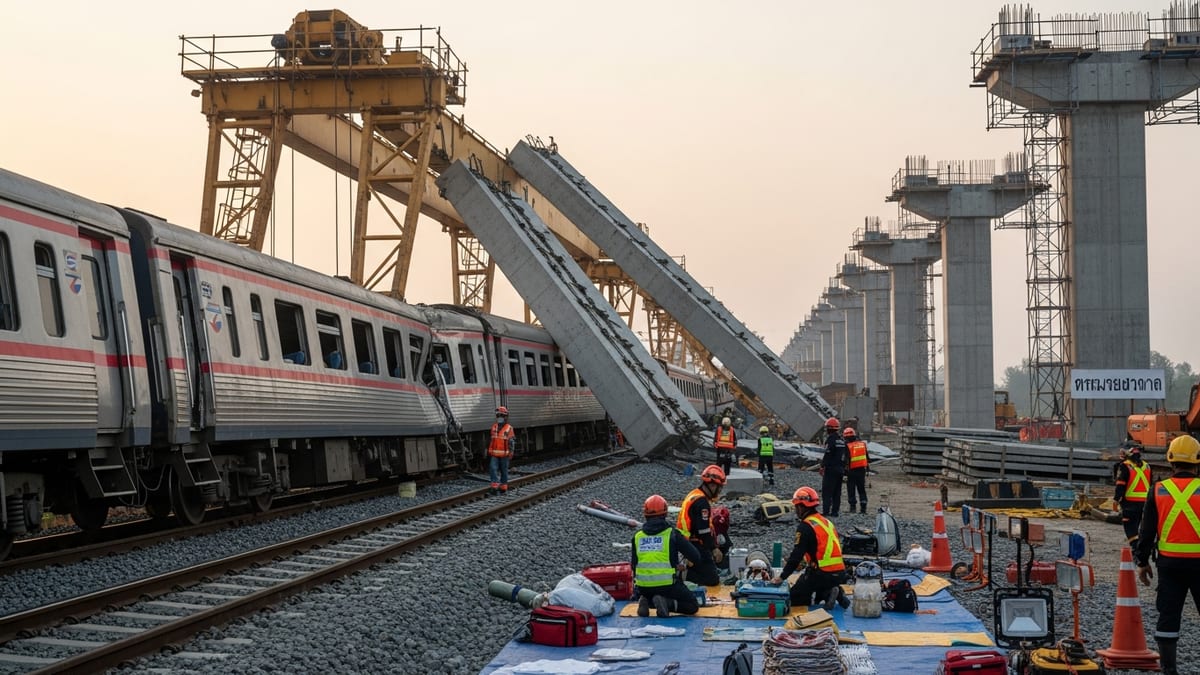
Derailment along a vital desert rail corridor
Initial reports indicate that the derailment occurred on a busy freight route near the community of Lordsburg, a small rail and highway junction close to the Arizona border. The line is part of a major transcontinental corridor used to move consumer goods, agricultural products and industrial materials between the West Coast and markets across the central and eastern United States.
Publicly available information suggests that several freight cars left the tracks after a period of strong winds in the area, with the incident unfolding in an open desert section where the line runs parallel to Interstate 10. The location is known for flat terrain, sparse vegetation and long, exposed stretches of track that can be vulnerable during intense wind events.
Early descriptions circulating in regional coverage point to wind gusts and reduced visibility as contributing factors, although a full technical assessment of the track, rolling stock and operating conditions is expected to be part of the formal investigation. No detailed timetable for that review has been made public.
Rail operators typically route multiple long freight consists through this sector each day, so even a single derailment can create a ripple effect across the network as trains are held, rerouted or rescheduled while crews secure the site and inspect nearby infrastructure.
High winds and dust a recurring hazard near Lordsburg
The Lordsburg area has a long history of hazardous wind and dust events. Climatological summaries from recent years describe repeated episodes of strong gusts over the region, with the nearby Lordsburg Playa frequently cited for blowing dust that can sharply reduce visibility across both road and rail corridors. The combination of loose desert soils and seasonal storm patterns makes this corner of New Mexico especially prone to sudden dust plumes.
Transportation bulletins and weather digests for southwest New Mexico have repeatedly noted that intense thunderstorms and pressure gradients can push wind speeds high enough to affect high-profile vehicles and exposed infrastructure. In past incidents, strong winds near Lordsburg have been linked to dust-related pileups on Interstate 10 and temporary closures, underlining how quickly conditions can deteriorate when gusts lift fine sediment from the playa.
Rail lines that cross this landscape are designed to operate in harsh desert conditions, but events involving crosswinds, localized gust fronts or dust-driven erosion of the track environment can still pose operational challenges. When trains encounter these conditions, the combination of wind forces on long, tall freight consists and reduced visibility around wayside signals and grade crossings can complicate routine movements.
Analyses of wind-related rail accidents more broadly show that strong lateral gusts have derailed freight trains in several countries, particularly on elevated structures or exposed embankments. While each incident is shaped by local engineering and operating factors, specialists often note that gust intensity, train speed, loading patterns and track geometry all contribute to overall risk.
Disruption for freight flows and regional travel
The derailment near Lordsburg is likely to affect freight operations along a wide swath of the southern transcontinental rail network as dispatchers adjust schedules and identify potential detours. When a main line is blocked, traffic can back up for many miles while railroads prioritize recovery work, safety inspections and the passage of time-sensitive shipments.
Travelers along Interstate 10 may also encounter secondary impacts around the derailment area. In previous incidents in this corridor, cleanup operations and emergency access have led to slowdowns or lane restrictions where road and rail corridors run in close proximity. Even when traffic remains open, drivers can see heavy equipment, work lights and cranes operating near the right-of-way as crews clear derailed cars and repair track.
The freight rail link through Lordsburg is particularly important for intermodal trains carrying containers, as well as for bulk shipments such as grain, fuel and industrial inputs that feed supply chains across the Southwest and beyond. Any extended outage along this line can prompt longer routing via more northerly or southerly corridors, adding distance and complexity to logistics planning.
Passenger rail in this portion of New Mexico is limited, but national rail passenger operations have at times adjusted schedules or used alternate routings when freight incidents temporarily close segments of track in the region. Travelers planning long-distance rail journeys across the southern tier of the United States often monitor route status closely when severe weather or infrastructure incidents occur near Lordsburg.
Investigations focus on weather, track and operations
Following derailments involving strong winds, investigators typically review a combination of meteorological records, train handling data and inspection histories to understand how environmental conditions interacted with infrastructure and operations. In cases elsewhere where high winds were involved, official reports have examined wind speeds, gust patterns, local topography and the orientation of trains relative to prevailing winds.
Standard practice after a freight derailment includes detailed inspections of rail, ties, ballast and signaling equipment, along with checks of locomotive event recorders and wayside detection systems. For incidents linked to weather, analysts may compare observations from nearby weather stations with the timing and location of the derailment to determine whether gusts reached thresholds previously identified as operationally significant for long freight trains.
Railroads across North America have steadily expanded their use of automated monitoring technologies that can flag track defects, excessive lateral forces or shifting loads before a derailment occurs. In regions like southwest New Mexico, where extreme weather is a recurring feature, those systems are often complemented by operational guidelines for speed reductions, additional inspections or temporary service suspensions when high wind warnings or dust storm advisories are in effect.
The incident near Lordsburg is expected to add to the ongoing body of data on how strong winds, dust and desert geomorphology intersect with modern rail operations. As findings become available, industry observers will be watching closely for any new recommendations around wind thresholds, infrastructure hardening or operational practices tailored to arid, wind-prone corridors.
Broader implications for weather-resilient transport in the Southwest
The latest derailment highlights the broader question of how transport infrastructure across the American Southwest is adapting to more frequent extremes in wind, heat and drought. In this region, prolonged dry spells can leave soils and playas bare and powdery, increasing the potential for dust storms that affect highways, railways and even aviation.
Planning documents and hazard mitigation studies for New Mexico communities already emphasize the risks associated with thunderstorm outflows, pressure-driven wind events and dust-related visibility drops along key travel routes. The Lordsburg corridor appears frequently in such assessments, reflecting its combination of heavy traffic and challenging environmental conditions.
For railroads and highway agencies alike, recent events underscore the value of integrating real-time weather data, improved dust forecasting and targeted public messaging into daily operations. Tools that allow dispatchers and traffic managers to anticipate when winds may reach critical thresholds could help reduce the likelihood that trains or motorists encounter the most hazardous conditions unprepared.
As the investigation into the Lordsburg derailment proceeds, the episode is likely to feature in regional discussions about reinforcing transport corridors against high-impact weather. For travelers and freight customers who rely on this vital desert crossing, the hope is that lessons drawn from the incident will translate into more resilient infrastructure and clearer protocols for the windy seasons ahead.