


Planning a trip to Florida’s Gulf Coast and torn between Tampa and St. Petersburg? You are not alone. These two cities sit just 30 to 40 minutes apart by car, yet they offer surprisingly different vibes. Tampa feels like a dynamic, urban gateway with major attractions and pro sports, while St. Petersburg leans more artsy, beachy and walkable. The right choice depends less on which city is “better” and more on what kind of trip you have in mind.
Get the latest updates straight to your inbox!
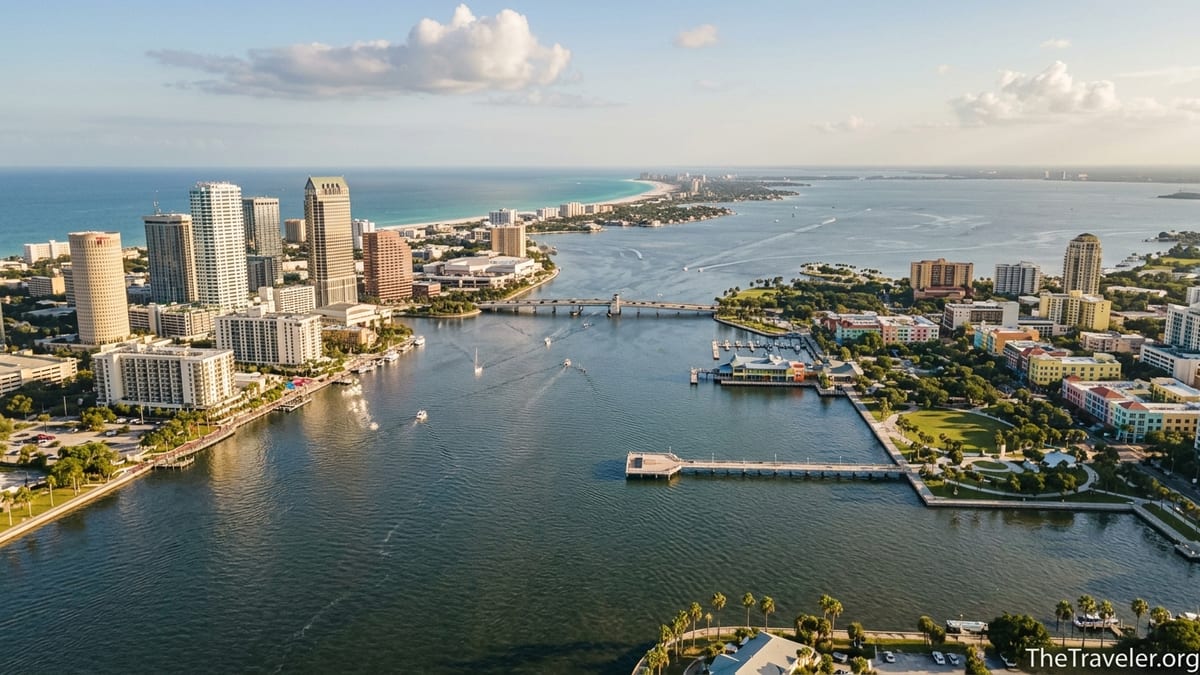
Overall Vibe: Big-City Energy vs Laid-Back Creative Coast
Tampa is the larger, busier city and feels like it. Downtown high-rises line the Hillsborough River, the Riverwalk hums with joggers and families, and major venues like Amalie Arena and Raymond James Stadium draw sports and concert crowds much of the year. Neighborhoods such as Ybor City and Seminole Heights add historic character and a growing foodie scene, but overall Tampa is firmly in “small big city” territory. If you like the feel of a proper metro area, with traffic, big conventions and skyline views, Tampa will match your expectations.
St. Petersburg, by contrast, is compact and more relaxed. Its downtown faces Tampa Bay, not the Gulf, and is filled with low- and mid-rise buildings, waterfront parks and outdoor cafes. You can stroll from the pier to Central Avenue’s bars and boutiques in minutes. Many visitors compare the feel to a smaller, sunnier version of an arts district, with murals on side streets and independent coffee shops instead of glass office towers. If you would rather walk everywhere in flip-flops than navigate city driving, St. Pete will feel instantly comfortable.
In practice, many travelers split time between the two, staying in one city and making a day trip to the other. Since the drive across the Howard Frankland Bridge or Gandy Bridge typically takes about 30 to 45 minutes in normal traffic, you can easily sample both during a long weekend. For a short two- or three-night trip, though, choosing one as your main base will keep your days less rushed.
Beaches and Waterfront: Where to Go for Sand and Sun
If your first priority is a beach vacation, St. Petersburg and its neighboring barrier islands are the clear winner. From Fort De Soto Park south of the city to St. Pete Beach and up toward Treasure Island and Madeira Beach, you have miles of wide, white-sand shoreline. Fort De Soto, a county park, is especially popular for its long natural beaches, calm shallows that are good for kids, kayak rentals and campground. St. Pete Beach mixes classic Gulf Coast resorts with casual beach bars and sunset-watching spots along Gulf Boulevard.
Downtown St. Petersburg itself does not sit on the Gulf, but it faces Tampa Bay and has a string of waterfront parks and a small bayside beach near the St. Pete Pier. The pier complex feels like an outdoor living room for the city, with green space, a splash pad, restaurants and fishing areas. From there you can often book sunset cruises, dolphin-watching trips or simple harbor tours, making it easy to get out on the water without a long drive.
Tampa has water everywhere, but it is not truly a beach city. The closest classic Gulf beaches, such as Clearwater Beach or Ben T. Davis Beach near the Courtney Campbell Causeway, are a 20 to 40 minute drive depending on where you are staying and traffic. Ben T. Davis offers a narrow but convenient beach close to Tampa International Airport, good for a quick swim before or after a flight. Many Tampa visitors, however, carve out a full day to drive to Clearwater Beach or St. Pete Beach, combining beach time with a seafood lunch and sunset cocktails.
For waterfront atmosphere without sand, Tampa’s Riverwalk and the open green spaces along downtown St. Petersburg’s bayfront both shine. The Riverwalk links parks, museums and restaurants along the Hillsborough River, while St. Pete’s waterfront parks host festivals and regular weekend events. If you care more about scenery and strolls than swimming, you can be happy in either city.
Museums, Culture and Attractions
Both cities punch above their weight in museums, but they emphasize different things. Tampa’s biggest draws include the Florida Aquarium near the Channel District, the Tampa Museum of Art on the Riverwalk and the Tampa Bay History Center, which covers everything from Indigenous history to the early cigar industry. Families often pair a visit to the Glazer Children’s Museum and the Museum of Science & Industry, whose refitted digital dome theater reopened recently as one of the largest planetariums in the country, with a day at Busch Gardens, the city’s major theme park and zoo hybrid.
St. Petersburg is known for its art. The standout is the Salvador Dali Museum, which houses one of the largest collections of the surrealist’s work outside Europe. Within a short walk you can also reach the Museum of Fine Arts, smaller contemporary spaces like the Morean Arts Center and Chihuly Collection, and newer venues such as the Museum of the American Arts and Crafts Movement. On the streets, more than 600 murals and an annual mural festival have turned entire blocks into open-air galleries, and self-guided mural walks are a popular low-cost activity.
Beyond traditional museums, each city has its own signature experiences. In Tampa, a walk or streetcar ride through Ybor City introduces you to the region’s cigar-rolling history and Latin influences. Many visitors book a guided history or ghost tour at night, stopping for Cuban sandwiches and cafe con leche along the way. In St. Pete, the shuffleboard club, waterfront markets and frequent music and pride festivals give the city a grassroots, community feel that many repeat travelers come back for.
If you are building a weekend around culture and museums, St. Petersburg offers more variety within a compact area that you can cover on foot. For families who want a mix of hands-on science, wildlife and thrill rides, Tampa’s lineup, including Busch Gardens and the aquarium, is stronger.
Nightlife, Food and Overall Scene
Nightlife in Tampa and St. Petersburg has grown more sophisticated in recent years, and neither is a sleepy town after dark. Tampa’s most famous going-out district is Ybor City, where historic brick buildings now house cigar lounges, dance clubs, breweries and late-night eateries. On a Saturday night, Seventh Avenue fills with partygoers bar-hopping from Latin clubs to rock bars. Downtown Tampa and the nearby Channelside area add rooftop bars, cocktail lounges and pre- and post-game spots around Amalie Arena, especially when the Lightning or big touring acts are in town.
St. Petersburg’s nightlife is more concentrated along Central Avenue and the “Edge” and Grand Central districts, with a heavy emphasis on craft beer, live music and casual bars. Breweries such as Green Bench Brewing and 3 Daughters Brewing anchor the scene, surrounded by taprooms, wine bars and restaurants that stay open late but rarely feel as intense as Ybor on a peak night. The walkable grid means you can wander from a taco place to a speakeasy-style cocktail bar and then to a tiny music venue without ever calling a rideshare.
Food in both cities reflects modern Florida tastes: a lot of Gulf seafood, Latin and Caribbean influences, and a growing number of vegan and gluten-free options. Tampa is known for Cuban sandwiches and deviled crab in neighborhood spots around Ybor and West Tampa, while upscale restaurants and hotel dining rooms downtown serve finer takes on local fish and farm produce. In St. Pete, many visitors remark on how easy it is to find independent restaurants in a few walkable blocks downtown, from casual brunch cafes to tasting-menu spots tucked on side streets.
If you like high-energy nights with big crowds, sports bars and clubs, Tampa, particularly Ybor City, has the edge. If you prefer a bar-hopping scene that still feels lively but more intimate and artsy, St. Petersburg is the better fit. Both cities remain relatively relaxed compared to the 24-hour party atmosphere of places like Miami or South Beach.
Where to Stay: Hotels, Neighborhoods and Typical Costs
Tampa offers the broader range of hotels, from business-style chains near downtown and the airport to luxury towers and boutique properties in the central core. You can often find big-box brands around Tampa International Airport or in Westshore with lower nightly rates than the waterfront. Downtown properties, especially those on or near the Riverwalk, tend to be pricier but put you in easy walking distance of museums, concert venues and the streetcar to Ybor City.
In St. Petersburg, most visitors choosing an urban base stay in or around downtown, within walking distance of the pier, Central Avenue and the bayfront parks. Options range from renovated historic hotels to modern mid-rise properties and smaller boutique inns. On the beach side, St. Pete Beach and adjacent communities like Treasure Island offer classic beachfront resorts, smaller motels and vacation rentals. Prices there can climb in winter and spring high season, especially for Gulf-front rooms with balconies facing sunset.
In terms of budget, Tampa often offers slightly better value for business-style hotels and airport-adjacent stays, while waterfront and beach properties around St. Petersburg typically command higher rates. For a long weekend focused on museums, food and nightlife without needing a car, a mid-range hotel in downtown St. Pete can feel like good value because you will save on parking and rideshares. For a trip that includes multiple day trips across the region and perhaps a theme-park day, a rental car and a hotel in Tampa or one of the in-between suburbs might make more sense.
Travelers who want a classic beach vacation with easy access to bars and live music should consider staying directly on St. Pete Beach or nearby islands, then planning one or two evening trips into downtown St. Petersburg or Tampa. Those who prioritize a polished urban experience, big-name hotels and quick airport access will likely be happier based in Tampa.
Airport Access and Getting Around
For most visitors flying in from other parts of the United States, Tampa International Airport is the main gateway. It consistently ranks among traveler favorites for its clear layout and relatively quick security lines. From the terminals, it is only about a 15-minute drive to downtown Tampa in light traffic and roughly 25 to 40 minutes to downtown St. Petersburg or St. Pete Beach, depending on time of day.
St. Pete–Clearwater International Airport also serves the area, mostly with low-cost carriers and domestic routes. It can be convenient if your home airport has a direct flight, especially for beach-focused trips, but many travelers still find more options and competitive fares into Tampa International. Rideshare services operate across both cities, and taxis are widely available at both airports, though many visitors choose to rent a car to reach gulf beaches and outlying attractions more easily.
Within Tampa, the streetcar system connects downtown, the Channel District and Ybor City, making it possible to stay in one area and explore the others without driving. The Riverwalk is pedestrian-friendly, and scooters and bikes are common. St. Petersburg’s downtown is even more walkable, with a compact grid that is easy to cover on foot. Local buses, a bus rapid transit line that connects downtown to the beaches, and seasonal trolleys help bridge the gap between city and sand for travelers without cars.
If you are planning a simple two- or three-night city break with no interest in the wider region, you can manage without a car in either downtown Tampa or downtown St. Petersburg. For a week-long trip that includes multiple beach days, state parks, and perhaps a visit to nearby cities such as Sarasota or Tarpon Springs, a rental car will make your life much easier.
Best Choice for Families vs Couples and Friend Groups
Families often lean toward Tampa, largely because of its marquee attractions. Busch Gardens combines major roller coasters with animal exhibits that appeal to both teens and younger children. The Florida Aquarium, Glazer Children’s Museum and MOSI all offer air-conditioned, half-day experiences that work well in summer heat or on the occasional rainy afternoon. Many hotels in Westshore and near the airport have pools and family-sized rooms at rates that are easier on the budget than beachfront properties.
St. Petersburg, however, is an excellent choice for families who prioritize the beach and a walkable downtown. Kids can spend mornings building sandcastles at Fort De Soto or St. Pete Beach, then cool off at the splash pad and small bayside beach near the St. Pete Pier in the afternoon. The Dali Museum and other galleries sometimes host family-friendly programming, but in general St. Pete is more about outdoor time, casual meals and simple pleasures like ice cream on the waterfront.
Couples and adult friend groups often find St. Petersburg’s compact downtown ideal for car-free evenings. You can check into a hotel near the bayfront, wander to a wine bar or brewery, enjoy a long dinner on Central Avenue, and finish the night listening to live music without ever worrying about parking. The city also has a strong LGBTQ+ presence and one of the state’s largest pride celebrations, giving it a particularly welcoming atmosphere for queer travelers.
For bachelor, bachelorette or sports-focused weekends, Tampa may win out. Being close to the stadiums and arena cuts down on logistics, and Ybor City offers the kind of late-night, high-energy bar scene that many groups look for. A common compromise is to base in Tampa for the sports and nightlife, then plan a full day on the sand in St. Pete Beach or Clearwater during the trip.
Weekend Trip Ideas: Sample Itineraries for Each City
If you pick Tampa for a long weekend, one good structure is to devote your first full day to downtown and Ybor City. Spend the morning at the Florida Aquarium or Tampa Museum of Art, grab lunch at an outdoor spot along the Riverwalk, then ride the streetcar to Ybor for a walking tour and dinner at a Cuban restaurant. On day two, head to Busch Gardens for rides and animal encounters, or take a break from crowds with a kayak tour on the Hillsborough River. Your final morning could be a quick side trip to a nearby beach like Ben T. Davis or a leisurely brunch before your flight.
For a St. Petersburg–based weekend, consider arriving in time for an evening stroll along the waterfront, with dinner on Beach Drive or Central Avenue. On your first full day, start with a visit to the Dali Museum and perhaps the nearby Museum of Fine Arts, then wander through downtown’s shops and murals. That evening, sample a couple of breweries and live music spots, all within walking distance. On day two, devote most of the day to the beach at Fort De Soto or St. Pete Beach, renting chairs and an umbrella or kayaking in the calm Gulf waters before returning to downtown for a sunset drink by the bay.
Travelers who want to see both cities in one trip might choose a split base. For example, spend two nights at a downtown Tampa hotel, focusing on Ybor City, the Riverwalk and Busch Gardens, then move across the bay for two nights in St. Pete Beach or downtown St. Petersburg. Because the distance is short, you will not lose much time in transit, and you will get a clearer feel for how distinct the two places are.
Whichever city you choose, keep in mind that peak season on Florida’s Gulf Coast usually runs from late fall through early spring, when temperatures are comfortable and humidity is lower. Shoulder seasons in late spring and early fall often offer better rates and fewer crowds, though you will need to plan for afternoon thunderstorms and higher heat, especially if you are walking around downtown or spending full days on the sand.
The Takeaway
So which city is better for your trip, Tampa or St. Petersburg? If you want big-ticket attractions, pro sports, theme-park thrills and a faster-paced urban environment, Tampa is the stronger choice. It functions as the region’s transportation hub, with the main international airport and a wide range of hotels that work well for families, business travelers and groups that plan to drive around the wider Tampa Bay area.
If your ideal getaway is more about beaches, art, walkable neighborhoods and evenings filled with independent restaurants and breweries, St. Petersburg will likely feel closer to your style. Between its downtown on the bay and the string of barrier-island beaches a short drive away, you can blend city culture with classic Gulf Coast relaxation in a single weekend.
The good news is that you rarely have to choose completely. With just a short drive separating the two, you can stay in one city and plan at least a day trip to the other. Decide which atmosphere you want to come home to at night, whether that is Tampa’s urban buzz or St. Pete’s laid-back creative coast, and build your itinerary around that base. From there, the best of both sides of the bay is within easy reach.
FAQ
Q1. Which city is better if I care most about beaches?
St. Petersburg is the better choice if beaches are your top priority, thanks to nearby spots like St. Pete Beach and Fort De Soto, while Tampa’s best sandy stretches require more driving.
Q2. Is it realistic to visit both Tampa and St. Petersburg in one weekend?
Yes. The cities are only about 30 to 40 minutes apart by car in typical traffic, so you can easily base in one and spend a full day exploring the other.
Q3. Do I need a rental car, or can I get around with rideshares and public transit?
You can manage without a car if you stay downtown in either city and focus on nearby attractions, but a rental car is very helpful for beach days and regional day trips.
Q4. Which city is better for families with kids?
Tampa usually works better for families who want big attractions like Busch Gardens, the aquarium and children’s museums, though St. Pete is excellent for low-key beach time.
Q5. Where should couples stay for a romantic weekend?
Couples often prefer downtown St. Petersburg or St. Pete Beach, where you can walk to waterfront parks, restaurants and bars, and enjoy sunsets over the Gulf.
Q6. Is Tampa or St. Petersburg more walkable?
Both have walkable cores, but downtown St. Petersburg is more compact, with many museums, restaurants and bars concentrated in a small, easy-to-navigate area.
Q7. Which city has better nightlife?
Tampa offers bigger, louder nightlife in areas like Ybor City and near the arena, while St. Pete has a more relaxed, brewery and live-music-focused scene along Central Avenue.
Q8. How far is St. Pete Beach from downtown St. Petersburg?
St. Pete Beach is typically a 20 to 30 minute drive from downtown St. Petersburg, depending on traffic and exactly where you are starting and ending your trip.
Q9. Is Tampa a good base if I also want to visit Clearwater Beach?
Yes. Clearwater Beach is a manageable drive from Tampa, especially from the airport and Westshore areas, and many visitors make it a dedicated day trip.
Q10. If I only have two nights, which city should I choose?
Choose Tampa if you want theme parks, sports and big-city energy in a short time, and choose St. Petersburg if you prefer art, walkable streets and easier access to the Gulf beaches.