


I thought I knew what an “expert led” wildlife trip meant. I pictured a naturalist pointing out animals, maybe giving a talk in the lodge after dinner. What surprised me about traveling with Natural Habitat Adventures was how completely that expertise shaped the entire experience. From the moment I started planning to the last early-morning wildlife sighting, it felt less like a standard tour and more like stepping into a field expedition orchestrated by people who live and breathe these places.
Get the latest updates straight to your inbox!
From Marketing Buzzword to Lived Reality
Plenty of adventure operators promise expert guides. The difference with Natural Habitat Adventures is how integral that expertise is to every decision. This is a company that has specialized in small group wildlife journeys since 1985 and is the official travel partner of World Wildlife Fund, which means their trips are explicitly built around naturalist leadership and conservation insight, not added on as an afterthought.
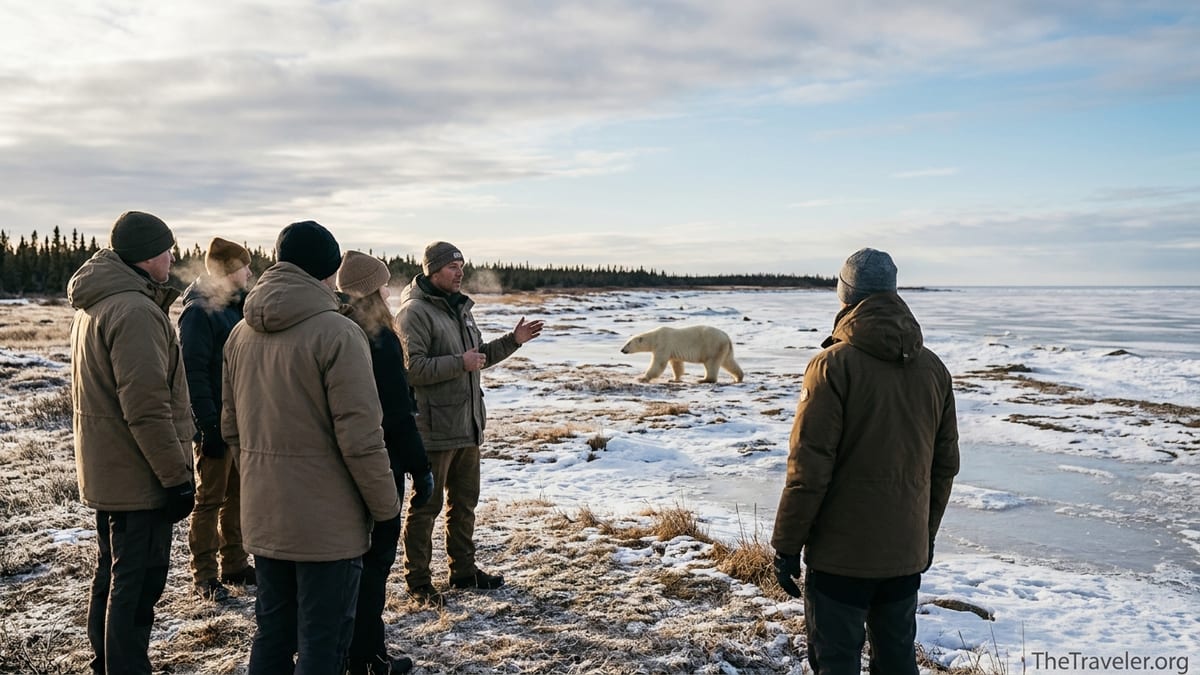
On paper, that looks like a roster of Expedition Leaders who are biologists, ornithologists, geologists and long-time field guides. In practice, it changes how your day unfolds. On a polar bear trip in Churchill, for instance, your guide is not just pointing out a distant white shape on the tundra. They are reading wind direction, bear body language and ice conditions to decide whether to linger, move on or reposition the vehicle for better behavior viewing rather than just a close-up photograph.
The surprise for many travelers is that the expert piece shows up long before you see any wildlife. Pre-trip calls and detailed materials go beyond packing lists and flight times to explain why a certain time of year was chosen, what research suggests about recent animal movements and how your presence is being managed to minimize impact. It feels less like buying a vacation and more like being briefed for a field season.
Guides Who Are True Field Experts, Not Just Escorts
Natural Habitat Adventures is very explicit that its Expedition Leaders are naturalists first, trip managers second. Many hold advanced degrees in wildlife biology, ecology or related fields and have guided in the same region for years. On a Galapagos journey, for example, you might travel with a guide who grew up in the islands, holds a degree in marine biology and is a certified Galapagos National Park naturalist. That depth shows when you are standing on a lava field watching blue-footed boobies court and the guide is connecting their behavior to ocean temperatures and plankton blooms rather than simply naming the bird.
In Mexico’s monarch butterfly reserves, WWF Insider Journeys sometimes pair a Natural Habitat Expedition Leader with a World Wildlife Fund pollinator specialist. You are not only riding horses up to the colonies but also learning how forest management around the reserve affects the butterflies’ survival. When a guide pauses on the trail to show you a sapling of oyamel fir, they are also translating decades of conservation research into something you can see and touch.
I noticed it most strongly in the way guides handled uncertainty. Wildlife trips are by definition unpredictable. Instead of covering gaps with vague reassurances, Nat Hab guides explain the ecological reasons for a slow morning: a sudden temperature shift, a change in tides, or a full moon that kept animals active all night. That transparency builds trust and reinforces the sense that you are traveling with professionals who interpret the environment, not simply follow a script.
Itinerary Design That Works Like a Field Plan
The expert led feeling also comes from how itineraries are structured. Many Nat Hab trips use privately chartered vehicles, small ships or remote camps designed specifically around wildlife behavior. Their Tundra Lodge in Churchill is placed where polar bears naturally congregate in autumn, while a private tented camp in East Africa might be positioned along a known migration corridor rather than in a busy lodge cluster. These are the kinds of choices a field research team would make to maximize observation time while limiting disturbance.
Daily schedules are anchored to natural rhythms, not to hotel buffet hours. In Alaska’s coastal brown bear country, for example, days might start with a predawn boat transfer to an estuary so that you are in place when the first bears begin digging for clams at low tide. Breakfast might be served picnic style on the beach after a productive viewing session rather than in a dining room. That kind of flexibility requires experienced leaders who can weigh safety, weather and animal behavior in real time.
Even rest periods feel thought through. Instead of filling gaps with generic sightseeing, guides might offer informal mini-classes on interpreting tracks, camera settings for fast-moving wildlife or the ethics of approaching animals on foot. On a Botswana safari, you might spend midday in the shade with your guide sketching a simple map of the Okavango Delta, tracing how seasonal floods influence where elephants and wild dogs appear later in your trip. The whole itinerary becomes an unfolding lesson in place, not just a series of scenic stops.
Partnership With WWF That Deepens the Narrative
Natural Habitat Adventures’ long-standing partnership with World Wildlife Fund is another reason the trips feel so deeply expert driven. Since 2003, Nat Hab has been WWF’s primary travel partner, contributing a portion of gross sales annually to support conservation and receiving access to WWF scientists and research. For travelers, that often translates into guest lectures, conservation briefings and itineraries timed around key ecological events that WWF monitors closely.
On some journeys branded as WWF Insider Journeys, a WWF conservation leader travels with the group for all or part of the itinerary. A river cruise in the Peruvian Amazon, for instance, may feature a WWF forests specialist who explains how satellite data is used to track deforestation in the very region you are sailing through. In the Brazilian Pantanal, a WWF wildlife expert might join to talk about jaguar corridor projects just upstream from your floating lodge.
Even when a scientist is not physically on board, the influence is obvious. Guides reference current projects, explain why certain off-limit zones are critical nesting or denning areas and are candid about both the threats and the successes. It is common to hear them say, “WWF’s latest surveys suggest...” rather than leaning on outdated information. That dynamic keeps the narrative grounded in present-day science, which is another hallmark of an authentically expert experience.
Small Groups That Let Expertise Reach Everyone
Many tour companies advertise small groups, but in practice “small” can still mean 16 or more guests sharing a single guide. Natural Habitat Adventures typically aims for group sizes closer to 8 to 12 on land-based trips, and even lower ratios in places where one-on-one interpretation matters, such as kayaking with whales or walking near habituated primates. That scale makes a difference in how expert led the trip feels day to day.
In practice, a group of ten in a polar bear vehicle or a pair of safari vehicles in Botswana means your guide has time to help each person adjust binoculars, understand camera settings or interpret subtle behavior. When a cheetah starts scanning the horizon, there is time for a quiet explanation about hunting strategies and the role of open grassland. You are not just being told “look to the left” but are being brought into the thought process of someone who knows how these animals live.
Small groups also make it easier for experts to adapt the trip to specific interests. On a combo trip with both avid birders and first-time safari travelers, a guide might split time between in-depth identification sessions for the birders and broader ecological storytelling that keeps everyone engaged. That elasticity is harder to achieve when a single guide is managing a bus-sized crowd.
Behind the Scenes Systems That You Actually Notice
A truly expert led journey shows its hand in the small operational details. Nat Hab invests heavily in guide training and safety protocols, and travelers tend to feel that not in formal briefings but in how seamlessly challenges are handled. When fog delays a bush flight in Alaska or strong winds close a zodiac landing in the Arctic, you see the guide slip into troubleshooting mode with local pilots, lodge staff and the home office, then reconfigure the plan without sacrificing core wildlife opportunities.
On a practical level, that might mean shifting a glacier hike to later in the week and using the weather delay to attend a private talk at a research station instead of simply adding more downtime at the lodge. On a Mexico gray whale trip, rough seas might cancel one afternoon’s outing. Rather than leaving guests at loose ends, the Expedition Leader could organize a behind the scenes visit with local boat captains to learn how whale watching regulations evolved in the lagoon and how scientists continue to monitor the whales.
Health and safety briefings feel like part of the expert framework rather than a legal formality. Before entering a penguin colony or approaching seals on a beach, guides calmly walk through distances, approach angles and body language to watch for. The explanation includes conservation reasoning, not just rules. As a traveler, you come away understanding not only what you may or may not do but why it matters, which reinforces your sense of being part of a responsible field operation.
Real Traveler Reactions to Being Guided This Way
If you look at recent guest reviews from independent platforms, a pattern emerges. Travelers rarely single out hotel amenities or even marquee wildlife sightings as the highlight. Instead, they name their Expedition Leader again and again, often describing them as the factor that transformed a great trip into a life-changing one. It is common to see guests who have traveled with Nat Hab more than ten times emphasize that they return because of the guiding, not simply the destinations.
On a Churchill polar bear trip, guests might mention how their guide recognized a subtle change in wind that encouraged bears to move toward the coastline earlier in the day, prompting a last-minute shift in route that led to a remarkable viewing session. On a Costa Rica journey, reviews often reference guides who can identify dozens of bird calls by ear while also making complex topics like forest succession or carbon storage easily understandable.
Several travelers comment on the educational style. Rather than lecturing, guides tend to ask questions, encourage you to share your own observations and circle back to themes over the course of the week. On an Alaska brown bear adventure, for example, you might start the trip talking about salmon life cycles and end the week connecting that knowledge to bear behavior, river health and even the forest’s nutrient cycles. It adds a sense of intellectual continuity that many people do not expect on vacation.
The Takeaway
What surprised me most about Natural Habitat Adventures was not that the guides were knowledgeable. That is the baseline promise every nature tour company makes. The revelation was how thoroughly that expertise permeated everything, from itinerary design and small group size to the way weather delays were handled and how conservation stories were woven into casual conversations.
Traveling with Nat Hab feels less like signing up for a tour and more like joining a mobile field course curated by people who have dedicated their careers to these ecosystems. You still enjoy the creature comforts of thoughtfully chosen lodges and smooth logistics, but they are clearly in service of the wildlife experience, not the other way around. If you are the sort of traveler who values understanding as much as seeing, that expert led quality may turn out to be your biggest and most rewarding surprise too.
FAQ
Q1. What makes Natural Habitat Adventures different from other wildlife tour companies?
Natural Habitat Adventures focuses on small group wildlife trips led by trained naturalist Expedition Leaders, often with academic or long-term field backgrounds, and designs itineraries around animal behavior and conservation rather than generic sightseeing.
Q2. How involved are the guides during a typical day on tour?
Guides are present from early-morning outings through evening recaps, adjusting plans based on wildlife activity, answering questions, helping with photography and continuously interpreting what you see in the field.
Q3. Does every trip include a World Wildlife Fund expert?
Not every departure includes a WWF scientist on board, but all Nat Hab trips benefit from the company’s partnership with WWF through access to current research, conservation briefings and itineraries shaped by WWF priorities.
Q4. What size are the groups on Natural Habitat Adventures trips?
Group sizes vary by destination, but many land-based trips are designed for roughly 8 to 12 travelers, with lower ratios on activities where close guidance is essential, such as walking near large wildlife or using small boats.
Q5. Are Nat Hab Expedition Leaders local to the destinations?
In many regions, especially places like the Galapagos, Costa Rica and parts of Africa, Expedition Leaders are either local residents or long-time regional specialists who speak the local language and have guided there for years.
Q6. How flexible are itineraries if weather or wildlife conditions change?
Itineraries are planned in detail but kept intentionally flexible. Guides routinely adjust departure times, activities and routes to respond to changing weather, safety considerations and wildlife movements.
Q7. What kind of traveler gets the most out of an expert led trip like this?
Curious travelers who enjoy learning, asking questions and spending extended time in the field tend to get the most from Nat Hab’s style, whether they are first-time wildlife travelers or experienced photographers.
Q8. How physically demanding are Natural Habitat Adventures trips?
Physical demands vary by itinerary, from relatively easy lodge-based polar bear trips with vehicle-based viewing to more active journeys that include hikes, zodiac landings or snorkeling, all clearly described in advance.
Q9. Are these trips suitable for families or first-time international travelers?
Many itineraries welcome older children and teens, and the strong guiding and logistical support can be reassuring for first-time international travelers who want a structured but immersive wildlife experience.
Q10. How does traveling with Natural Habitat Adventures support conservation?
Through its partnership with WWF, Nat Hab directs a portion of trip revenues to conservation projects and aligns trips with local partners, park regulations and low-impact practices that help protect the ecosystems you visit.