


More news on this day
Travelers departing Sydney Airport on June 10 faced widespread disruption as scores of international and domestic flights were delayed, affecting services operated by Air New Zealand, American Airlines, Etihad Airways, Jetstar, Qantas and other carriers across key routes to North America, the Middle East, Asia and the Pacific.
Get the latest news straight to your inbox!
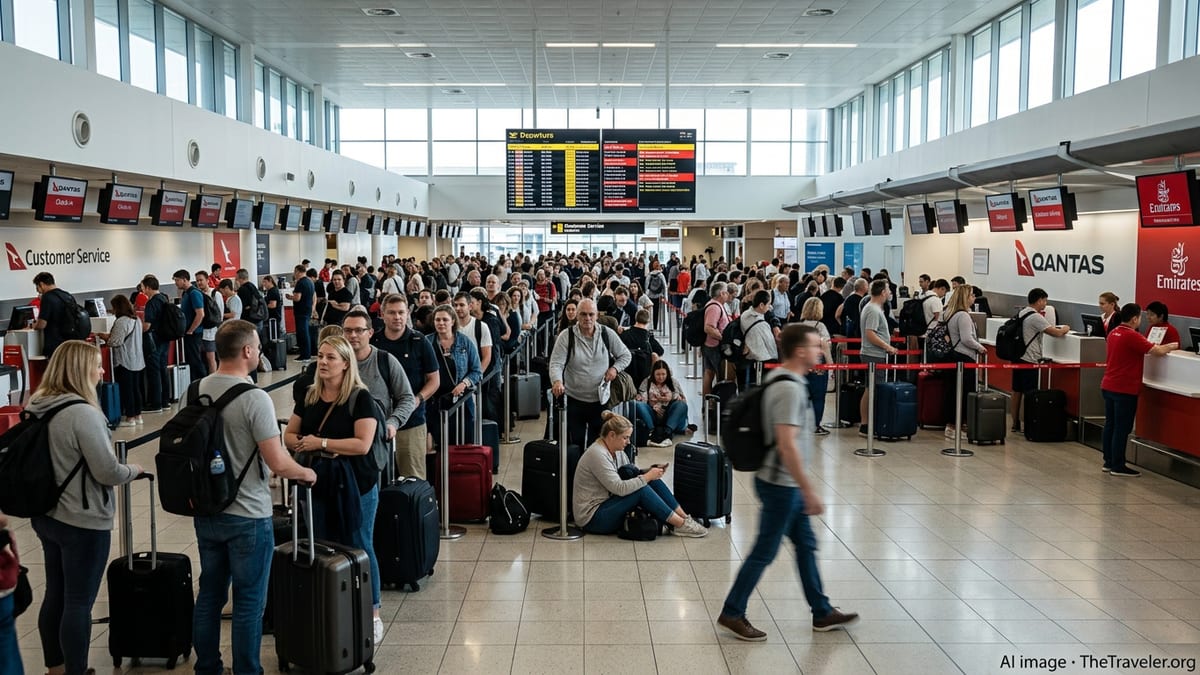
Ground Operations Strain Leads to Dozens of Delayed Departures
Publicly available airport and flight-tracking boards on June 10 showed a sharp build-up of delayed departures from Sydney’s main international and domestic terminals, with more than 80 services affected across the morning and early afternoon peaks. The disruptions ranged from modest schedule slips of 30 to 40 minutes to longer holds of several hours, creating bottlenecks at check in, security and boarding gates.
Operational data indicates that affected airlines included Air New Zealand, American Airlines, Etihad Airways, Jetstar, Qantas and several codeshare partners. Delays were most visible on popular transcontinental and regional trunk routes, where tight turnarounds can quickly ripple through an airline’s broader network once early flights run behind schedule.
Reports from airline operations updates point to a mix of contributing factors, including congested air traffic periods over the Sydney basin, crew and aircraft scheduling challenges after a busy long weekend period, and ongoing weather-related constraints elsewhere in Australia and overseas. When multiple issues occur simultaneously, even a small early backlog can cascade into dozens of late departures from a single hub.
Industry performance data from the Australian domestic market over the past year has highlighted how relatively modest disruption events can rapidly erode on-time performance, particularly during peak travel periods. As airlines continue to rebuild networks and capacity, many remain vulnerable to schedule shocks that leave little spare aircraft or crew to recover quickly from unplanned delays.
Key International Links to the US, Middle East and Asia Affected
The latest disruption at Sydney Airport had an outsized impact on long-haul travel, affecting departures to destinations including the United States, the United Arab Emirates, Qatar, Vietnam and Canada. Long-range flights typically depart in carefully sequenced banks, and delays of even 30 minutes can complicate slot timings, crew duty limits and onward connections for hundreds of passengers at the far end of each route.
Tracking data shows that American Airlines services operated in partnership with Qantas on routes such as Dallas Fort Worth to Sydney and onward connections from Sydney to North America experienced departure delays, adding extra time to already lengthy transpacific journeys. Passengers on these flights often face tight onward connections in both directions, meaning late departures from Sydney can generate missed links and overnight stays once travelers arrive in the United States.
Services connecting Australia with the Gulf region and beyond were also caught in the disruption. Etihad Airways flights between Sydney and Abu Dhabi, along with codeshare itineraries feeding into the broader networks of Middle Eastern carriers, saw schedule changes that affected connections to Europe, Africa and South Asia. With many of these itineraries built around overnight or early morning bank structures, delayed Sydney departures can lead to lengthy layovers for travelers awaiting their next flight.
Regional and medium-haul Asian routes from Sydney, including services to Vietnam and other Southeast Asian destinations, also registered delays. These routes are heavily used by both leisure travelers and those connecting onward to Europe and North America, magnifying the knock-on effects of even relatively short hold-ups at the departure gate.
Trans-Tasman and Domestic Networks Feel the Knock-On Effects
The disruption extended across the Tasman Sea, where Air New Zealand and Qantas, along with group partners, operate dense schedules linking Sydney with Auckland and other New Zealand gateways. Published schedules and operational updates show that delays on early departures from Sydney can upset carefully timed rotations, as the same aircraft are often rostered for multiple return trips in a single day between Australia and New Zealand.
When a morning aircraft departs late from Sydney, its return into the New Zealand network may also be delayed, potentially disrupting onward domestic services. In a market where many travelers rely on same-day connections between regional centers and major hubs, those compounding delays can quickly affect passengers far beyond the original Sydney departure.
Within Australia, Jetstar and Qantas experienced notable pressure on high-frequency domestic corridors such as Sydney to Brisbane, Melbourne and other major state capitals. Flight data on recent days illustrates how individual services between Sydney and Brisbane that depart late can contribute to crowding at arrival gates and baggage halls, particularly when several delayed flights arrive within a short window.
Australia’s competition and aviation performance reporting has previously underscored how low-cost and full-service carriers alike can struggle to restore normal operations once widespread delays take hold. When aircraft and crew are locked into tightly planned rotations, any disruption early in the day can leave limited room to reset schedules without resorting to cancellations or significant retiming.
Passenger Experience: Missed Connections, Rebookings and Longer Journeys
For travelers on June 10, the immediate impact of the Sydney delays was visible in long waits at departure gates, extended time spent on board aircraft before pushback and uncertainties around connection times at onward hubs. Passengers on international journeys to North America, the Middle East and Asia were particularly exposed to the risk of missed onward flights, especially when connections were planned within two or three hours of scheduled arrival.
Publicly available airline advisories suggest that carriers responded with a combination of rebookings onto later services, rerouting via alternative hubs and, in some cases, offering hotel accommodation or meal vouchers for those facing extended waits. In many instances, travelers were advised to monitor airline apps and departure boards closely, as revised departure times remained subject to further change while congestion persisted.
Experts in airline operations note that large, complex hubs such as Sydney can slip into delay cycles when multiple issues coincide, such as weather disruptions in other parts of the network, technical inspections on individual aircraft and crew reaching duty-hour limits. Once a wave of late departures forms, subsequent flights may be held to ensure required rest times and aircraft safety checks are fully met, even when passengers are already on board.
For travelers with fixed arrival commitments, such as cruise departures, business events or onward long-haul flights, these cascading delays can have significant financial and logistical consequences. Travel insurance policies often provide limited coverage for missed connections and extended delays, and passengers are frequently required to document disruption carefully using boarding passes, delay notifications and receipts.
What Travelers Should Watch in the Coming Days
Industry observers are watching closely to see how quickly on-time performance at Sydney stabilizes following the June 10 disruption. When a large number of flights are delayed on a single day, some of the effects can linger as aircraft and crews work back into position, particularly on long-haul rotations to North America, the Middle East and Europe that take several days to complete their full cycle.
Public travel advisories and recent performance trends suggest that travelers flying from Sydney in the coming days may wish to allow additional time for airport formalities and build in longer connection windows when booking itineraries through major hubs. This is especially relevant for journeys linking Australia with the United States, Qatar, the United Arab Emirates, Vietnam and Canada, where onward connections are frequently concentrated into limited bank periods at each hub.
Airlines operating at Sydney, including Qantas, Jetstar, Air New Zealand, American Airlines and Etihad Airways, have been adding capacity and new routes as travel demand remains strong. While these expansions bring greater choice for passengers, they also increase the complexity of schedules and the potential for a single disruption to reverberate widely across multiple regions.
For now, publicly available information indicates that operations at Sydney are gradually returning closer to planned schedules, although individual flights may still experience delays as airlines rebalance their networks. Travelers are being encouraged by consumer advocates to monitor their flights regularly, remain flexible where possible and keep records of any disruption that could be relevant to later claims for compensation or reimbursement.