


More news on this day
Dallas Fort Worth International Airport is absorbing one of the biggest surges of international football traffic in its history as the 2026 World Cup gets underway, yet current data and published tracking show the hub continuing to move fans through the system without sparking the widespread delays and cancellations that have plagued other major United States airports in recent weeks.
Get the latest news straight to your inbox!
World Cup Arrivals Put DFW at the Center of Global Football Travel
The opening days of the 2026 World Cup, running across the United States, Canada and Mexico from June 11 to July 19, have shifted an extraordinary volume of international visitors through Dallas Fort Worth International Airport. With nearby Arlington hosting nine tournament matches at Dallas Stadium, including group games beginning June 14 and a semi-final on July 14, airlines have scheduled dense banks of long haul and connecting flights to channel fans into North Texas.
Publicly available tournament schedules indicate that Dallas is one of the busiest U.S. gateways for the event, given its central position and proximity to host stadiums in both Texas and neighboring states. The airport has long served as a primary connecting hub for transatlantic and Latin American traffic, and the World Cup has layered concentrated waves of leisure demand on top of the already full early summer schedule.
Despite that pressure, live airport status dashboards and travel-disruption trackers viewed in mid-June show DFW operating with manageable levels of delay, with limited cancellations compared with some coastal hubs. The pattern suggests that while individual flights have been affected by weather systems and routine operational issues, the tournament inflows themselves have not tipped the airport into gridlock.
On-the-ground accounts from local transportation forums describe heavy but orderly flows of matchday fans moving between DFW, Dallas Love Field and Arlington, noting visible clusters of visiting supporters but no evidence of terminal paralysis. Several travelers report that it is still possible to transit the airport without immediately realizing a global football tournament is underway, underscoring how the hub’s scale is absorbing the influx.
Operational Planning and Infrastructure Help Contain Disruption
Industry and government documents released ahead of the tournament point to months of advance planning aimed at avoiding the sort of cascading disruptions that can ripple across the U.S. system during peak travel periods. Federal aviation and security agencies issued specific guidance naming DFW among a group of key World Cup gateway airports, highlighting the need for robust staffing, airfield capacity management and security screening throughput throughout the June and July window.
Airport performance reports for early 2026 also noted that DFW entered the summer with an active construction program but with projects phased to protect core runway and taxiway capacity where possible. That approach appears to be limiting bottlenecks during the World Cup surge, with up-to-date performance charts indicating that the airport’s on-time departure rates have so far tracked close to seasonal averages rather than collapsing under the added demand.
Operational observers say the structure of the World Cup schedule is also working in DFW’s favor. Matches in Arlington are spread across several weeks, and kickoffs are staggered through afternoons and evenings, which reduces the likelihood that tens of thousands of spectators descend on the airport at the same moment looking to depart. This diffusion of demand allows airlines to distribute extra capacity across multiple days and time bands instead of concentrating it into a few extreme peaks.
In addition, carriers with large DFW operations have refined their irregular-operations playbooks after several disruptive weather events earlier in the year. Recent storm systems that affected hubs on the East Coast and in the Midwest triggered heavy cancellations and rebookings there, but the lessons from those events appear to be informing more conservative scheduling and recovery planning at DFW as the World Cup unfolds.
Contrast With Weather-Driven Trouble Spots Elsewhere in the U.S.
The relative stability at DFW comes against a backdrop of notable disruption elsewhere in the United States this month. Severe thunderstorms and convective weather in the Northeast and Mid-Atlantic on several days in early and mid-June led to hundreds of cancellations and thousands of delays at airports such as New York’s John F. Kennedy International, Washington Reagan National and other regional gateways.
Coverage from aviation consumer sites and travel-news outlets shows that these events created knock-on effects across domestic and international networks, complicating connections for travelers headed to early World Cup matches from Europe, the Middle East and Latin America. In some cases, passengers reported extensive re-routings and overnight stays as airlines worked through weather-related backlogs at constrained coastal hubs.
By comparison, disruption-tracking dashboards for Dallas Fort Worth in the same period indicate more modest cancellation counts and a pattern of delay that aligns closely with national averages for large hubs. While weather systems moving across Texas have produced pockets of delay, particularly during afternoon storm cycles, there is little publicly available evidence of mass cancellations linked directly to World Cup flows into North Texas.
The contrast illustrates an important distinction for travelers: the biggest risks to on-time performance during the tournament remain the usual operational and meteorological pressures, rather than the presence of football crowds themselves. For now, DFW’s experience suggests that a major hub can host a global mega-event without automatically triggering the kind of systemic shock sometimes associated with holiday peaks.
Passenger Experience: Crowded, Colorful, but Largely Predictable
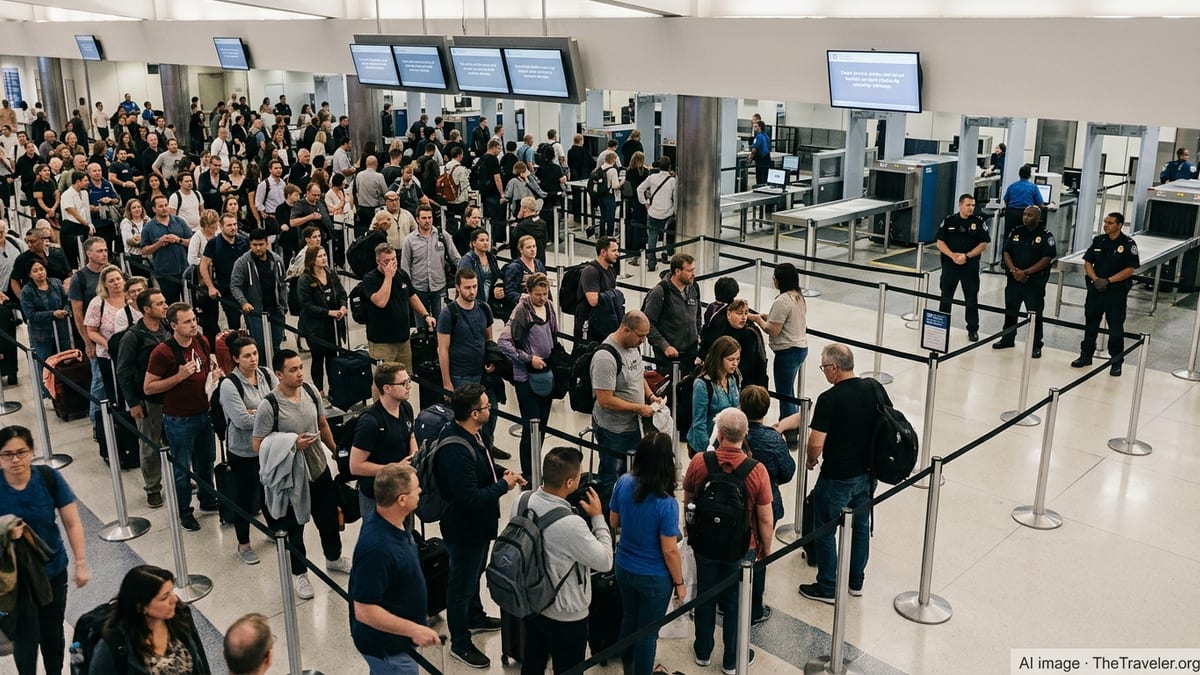
For individual passengers, the World Cup has made DFW busier and more colorful, but not unmanageable. Social media posts and local discussion boards from the opening match days describe longer lines at certain security checkpoints, heavier use of airport trains and buses, and more fully booked hotel shuttles serving the terminals. At the same time, many travelers report that wait times remain within expected ranges for a summer weekend at a major U.S. hub.
Reports from fans indicate that language assistance, wayfinding signage and tournament branding have been rolled out across key nodes in the journey, including baggage claim, ground transportation centers and rail links. These measures appear to be reducing confusion for first-time visitors who may be transiting DFW en route to other host cities or connecting immediately to domestic flights bound for Houston, Kansas City, Atlanta or other match locations.
Ground access has emerged as a tighter pinch point than the airside operation, with some travelers citing congested roads around the airport during peak arrival and departure waves tied to match days. Ride-hailing pick-up zones and car rental facilities have seen increased demand, but there are no widely reported breakdowns in surface transport between DFW and the stadiums or fan zones.
Several travelers planning to attend afternoon matches and then fly out the same evening report that itineraries allowing a three to five hour buffer between the final whistle and scheduled departure are proving realistic, provided that they build in extra time for stadium shuttles and security. That experience contrasts with many other mega-events, where late-night kickoffs and limited transit options have made same-day departure far riskier.
What DFW’s Performance Signals for the Remainder of the Tournament
As the World Cup moves deeper into its group stage and approaches the high-stakes knockout rounds, analysts will be watching closely to see whether DFW can maintain its current level of resilience. Match attendance is expected to remain strong in Arlington, and some of the most high-profile teams and fixtures are scheduled for later in June and mid-July, which could generate fresh spikes in demand.
Historical data suggest that U.S. air travel volumes typically rise further toward the Independence Day holiday, introducing additional leisure flows on top of tournament traffic. If summer weather patterns also become more volatile over the central United States, DFW’s margin for absorbing disruption could narrow quickly, testing how well the airport’s contingency and recovery plans hold up under compounded stress.
For now, however, the picture that emerges from live performance trackers, published scheduling information and traveler accounts is one of a major hub that is handling its World Cup role without becoming a national weak point. Airlines are moving large numbers of football fans through DFW while still keeping most of their operations there aligned with broader U.S. performance trends.
For passengers still planning trips to Dallas-area matches, the experience so far points to familiar best practices rather than emergency workarounds: allowing extra time at the airport, monitoring flight status closely and factoring in surface-transport congestion at peak hours. If DFW continues on its current trajectory, it may serve as a case study in how advance planning and infrastructure capacity can keep mega-event air travel from tipping into full-blown chaos.