


More news on this day
Travelers across Europe are facing another day of disruption as a fresh wave of delays and cancellations hits major airports in the Netherlands, Belgium, Switzerland and beyond, with more than 1,100 flights delayed and dozens cancelled on routes touching cities such as Paris and Oslo and affecting carriers including KLM, Lufthansa and Ryanair.
Get the latest news straight to your inbox!
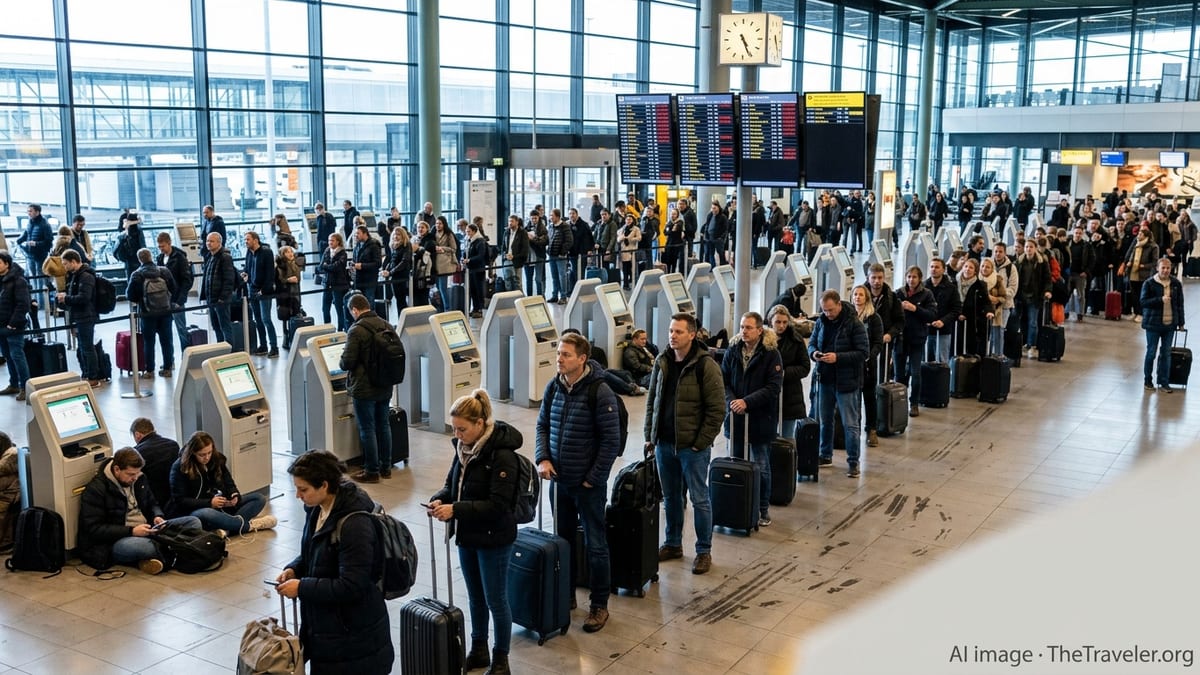
Delays and Cancellations Ripple Across Multiple Countries
Published operational data and airport status boards on Tuesday indicate that European air travel is once again under pressure, with at least 1,147 flights reported delayed and 48 cancelled across the continent over the course of the day. The disruption is concentrated in northwestern Europe, particularly the Netherlands, Belgium and Switzerland, but knock-on effects are being felt at hubs and regional airports from Paris to Oslo.
In the Netherlands, Amsterdam Schiphol remains a focal point for irregular operations whenever weather or staffing issues emerge, given its role as a major transfer hub. Publicly available tracking shows delays building through the day on short haul routes to France, Germany and Scandinavia, affecting both point to point travelers and those connecting on long haul services.
Belgium, still recovering from recent episodes of industrial unrest in its aviation sector, is seeing renewed schedule strain as airlines adjust rosters and aircraft rotations. Earlier this month, a wave of unannounced action among air traffic controllers and ground handlers led to widespread cancellations at Brussels and Charleroi, and the knock-on impact continues to filter through airline networks.
Switzerland is also recording a string of disrupted flights, with Zurich and Geneva reporting a mix of late arrivals and short notice cancellations. Data from flight information providers shows selected services between Amsterdam and Zurich withdrawn from schedules on Tuesday, contributing to the regional tally of cancellations.
Major Airlines Grapple With Network Strain
Among the carriers most exposed to the latest disruptions are KLM, Lufthansa and Ryanair, all of which maintain dense European networks that pass through the affected airspace. According to airline operations updates and published coverage, these carriers are juggling aircraft and crews to limit cascading delays as the day progresses.
KLM, based at Amsterdam Schiphol, is particularly vulnerable when congestion or weather at its home hub causes rotational delays. Even relatively short hold times can quickly propagate across its European banked-wave timetable, resulting in late evening arrivals and missed onward connections for passengers headed to long haul destinations.
Lufthansa, which has already trimmed parts of its short haul program for the summer season, is facing additional operational complexity as it navigates congested routes through Germany, the Benelux countries and Switzerland. Public timetables and aviation industry reports show the group continuing to consolidate frequencies on thinner routes to keep its core hubs supplied with capacity.
Ryanair, a major operator at secondary airports across Belgium and the wider region, has also been hit whenever ground handling or air traffic control capacity drops. Earlier in June, Belgian industrial action forced the low cost airline to cancel a significant number of flights in and out of Brussels area airports, and today’s delays suggest that the carrier is still working to absorb the residual imbalance in aircraft positioning.
Key Hubs From Paris to Oslo Feel the Impact
While the heaviest concentration of disruptions is centered on the Low Countries and Switzerland, the operational ripple reaches into France and Scandinavia. Paris area airports are reporting a higher than usual share of late arrivals, particularly on short haul flights originating in Amsterdam, Brussels and German hubs.
In Scandinavia, Oslo Gardermoen is among the airports registering delays on services linked to northwestern Europe. Publicly available arrival and departure boards show a pattern of late inbound flights from Dutch, German and Belgian airports, with some departures subsequently pushed back as airlines wait for incoming aircraft and crews.
These secondary effects illustrate how sensitive the European aviation system remains to localized shocks. When a cluster of airports in a relatively small geographic area, such as the Benelux region and western Germany, experience disruption at the same time, even distant hubs can feel the strain as missed time slots, crew hour limits and maintenance windows collide.
Travel data providers note that the overall volume of flights in Europe continues to trend above last year, which leaves less slack in the system to absorb sudden spikes in delay minutes. On peak days, this means a local problem can spread rapidly across the wider network.
Drivers Range From Weather to Staffing Constraints
The causes of today’s disruptions vary by location but reflect a familiar mix of seasonal weather, capacity constraints and residual industrial tensions. Meteorological services in parts of western and central Europe have issued warnings for thunderstorms and heavy rain, which can reduce runway capacity and require additional spacing between arriving and departing aircraft.
Operational notices and media reports also highlight the continuing challenge of staffing key aviation roles. Air traffic control centers, airport security providers and ground handling companies in several countries are still rebuilding workforces after pandemic era cutbacks, and any unexpected absences can force airports to slow the pace of operations.
Recent industrial action in Belgium, for example, showed how quickly a sudden walkout can freeze traffic flows through a small but strategically important piece of European airspace. Airlines subsequently face the complex task of repositioning aircraft, reassigning crews and rebooking passengers, a process that can take several days to normalize.
In Switzerland and the Netherlands, published accounts from regulators and passenger advocacy groups indicate that tight crew rosters and high aircraft utilization are leaving little margin for delay. Once a rotation slips, the impact can cascade across multiple flights, adding to the day’s overall disruption statistics.
What Travelers Can Expect in the Coming Days
With summer travel demand building, aviation analysts warn that further episodes of disruption are likely as airports and airlines operate close to capacity. Network performance briefings from European air traffic organizations have already flagged an uptick in average delay minutes per flight compared with earlier this year, particularly on busy cross border corridors.
Passenger advocates note that when delays exceed three hours or flights are cancelled, travelers on journeys touching the European Union may be entitled to assistance, rebooking or compensation under applicable passenger rights rules, depending on the cause of the disruption and the operating carrier.
For now, publicly available guidance from airlines and airports across the Netherlands, Belgium, Switzerland, France and Norway emphasizes the importance of checking flight status before heading to the airport and allowing extra time for connections. With schedules still in flux after today’s wave of delays and cancellations, even flights that appear on time can be subject to last minute change.
As carriers such as KLM, Lufthansa and Ryanair work to stabilize their networks, observers will be watching closely to see whether this episode marks an isolated spike in disruption or an early sign of a more challenging summer season for European air travel.